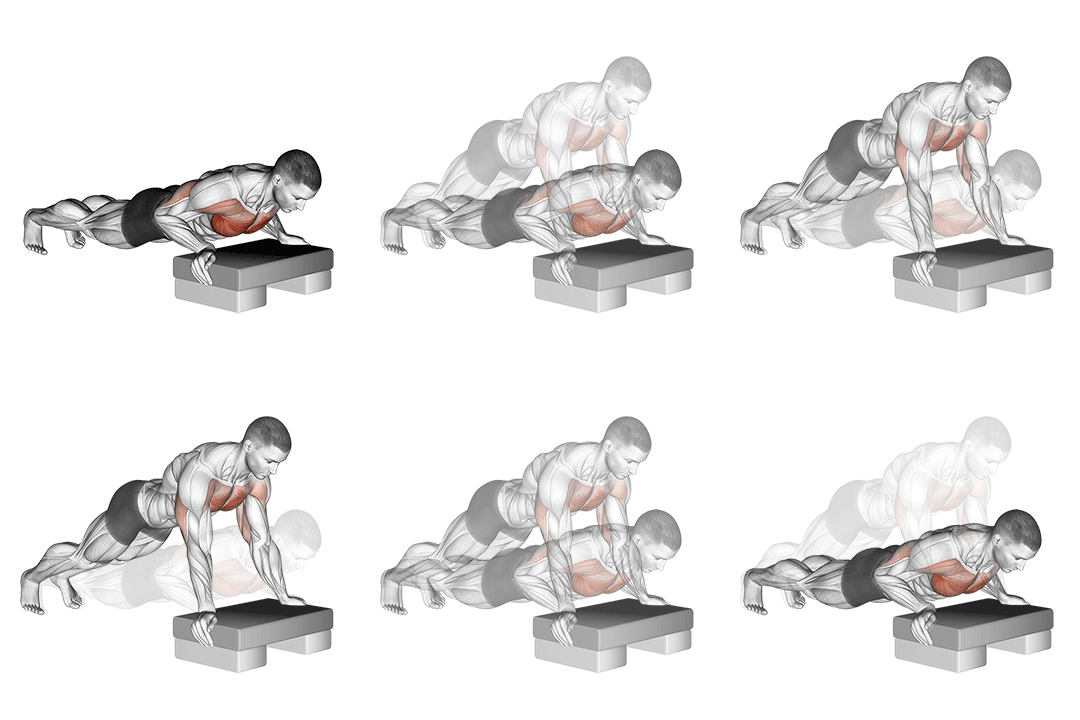
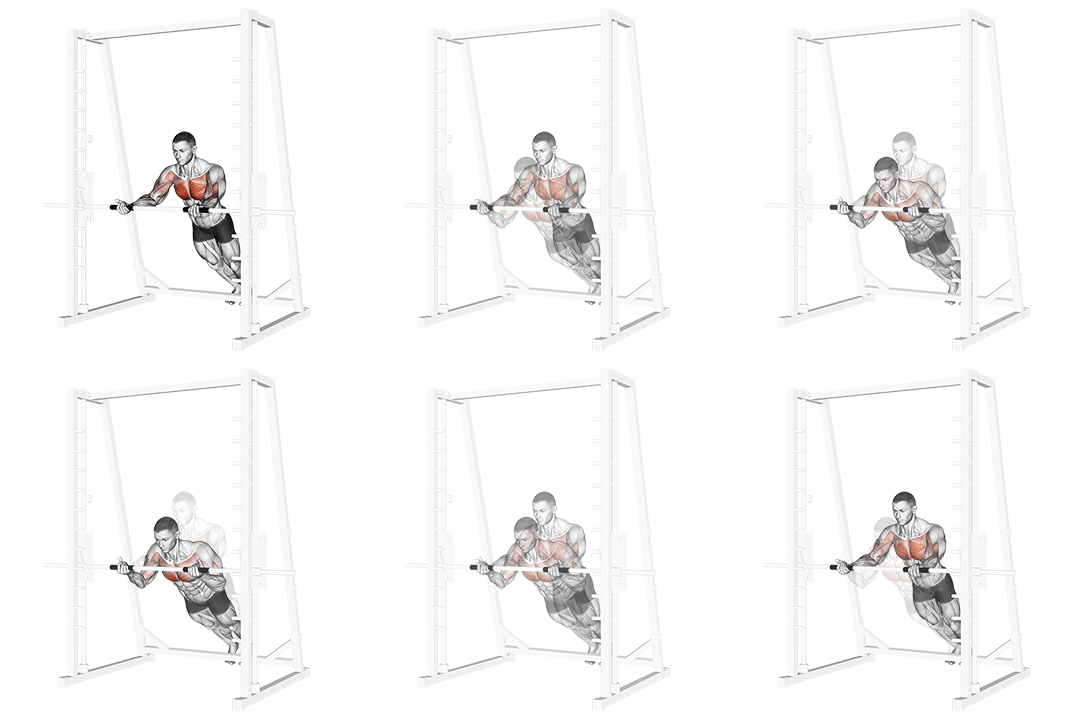
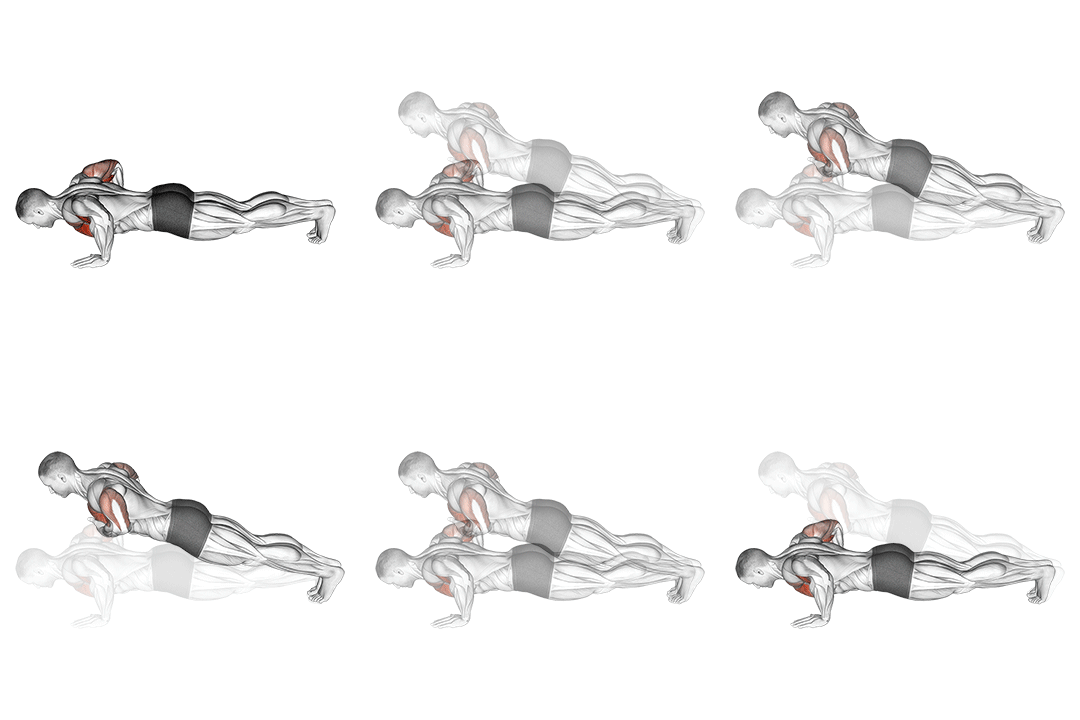
Chest Tap Push-up (male)
advanced strength exercise · body weight · targets pectorals
- Body part
- chest
- Primary target
- pectorals
- Equipment
- body weight
- Difficulty
- advanced
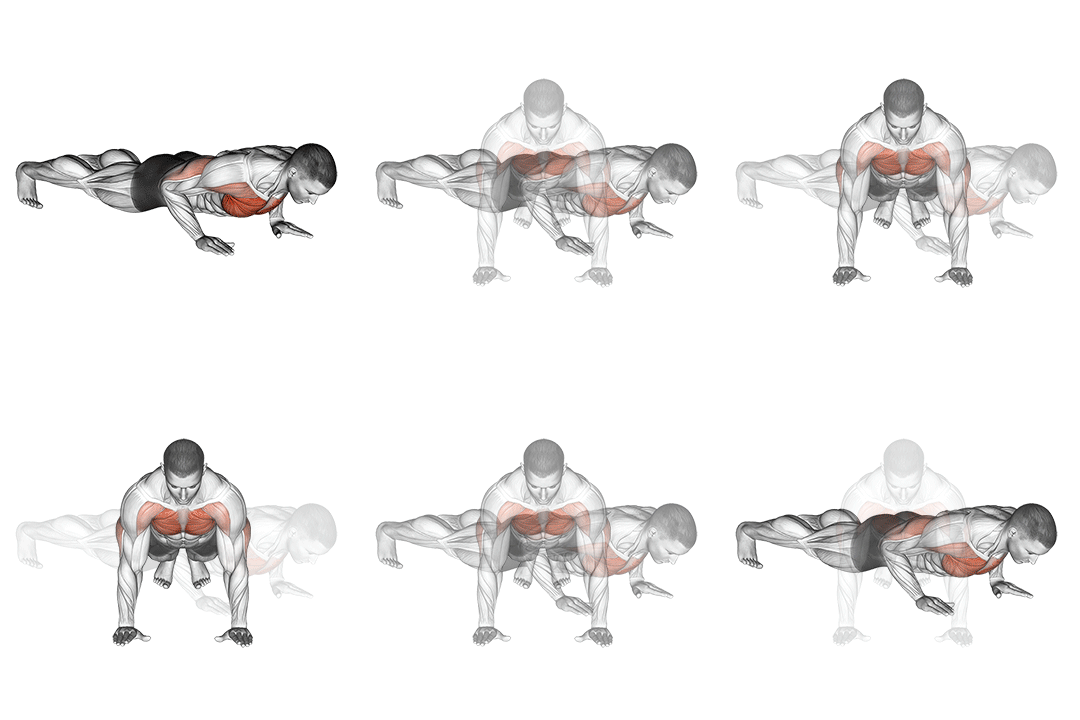
The chest tap push-up is an advanced push-up variation that adds explosive power to the standard pressing pattern. From a standard push-up start, you press up explosively enough that your hands briefly leave the floor at the top of each rep, allowing you to tap your chest with one hand before landing back into the next rep. The combination of full body weight pressing plus the explosive air-time creates a plyometric exercise that builds reactive upper body power. This is one of the more demanding push-up variations and serves a specific purpose. Where standard push-ups build pressing strength, chest tap push-ups train the rate of force production — how fast you can produce that strength. For athletes whose sport requires explosive upper body movement (boxing, MMA, throwing sports, gymnastics), the carryover is significant. Reaching strict chest tap push-ups typically takes 3-6 months of progression from a base of 25+ standard push-ups. The path runs through clapping push-ups, plyometric push-ups (hands leave the floor without the clap), and finally the full chest tap version. Trying to skip steps usually results in either incomplete reps or wrist injuries from hard landings.
Why train the Chest Tap Push-up (male)?
- Builds explosive upper body power for athletic performance.
- Trains the stretch-shortening cycle of pressing — the rapid eccentric-to-concentric transition.
- Carries over to combat sports, throwing sports, and any movement requiring explosive pressing.
- Provides clear progression beyond standard push-ups for experienced trainees.
- Adds variety to push-up programming.
- Requires no equipment.
How to do the Chest Tap Push-up (male): step by step
- 1Start in a high plank position with your hands slightly wider than shoulder-width apart and your body in a straight line.
- 2Lower your body towards the ground by bending your elbows, keeping them close to your sides.
- 3As you lower yourself, tap your chest with your right hand.
- 4Push yourself back up to the starting position.
- 5Repeat the movement, this time tapping your chest with your left hand.
- 6Continue alternating sides for the desired number of repetitions.
Muscles worked
Primary
pectorals
Secondary
triceps, shoulders
Common mistakes to avoid
Landing flat-handed and stiff-armed
Coming down with locked elbows on the rebound sends impact straight into the wrists and elbows. Land with elbows slightly bent so the arms can absorb the descent into the next rep.
Not getting enough air time
If your hands barely leave the floor, you can't actually complete the chest tap. Press explosively enough that you have time to bring one hand to the chest and back before landing — usually 0.3-0.5 seconds of air time.
Cutting depth on the descent to manage the explosive ascent
Maintain full depth (chest near the floor) on every rep. Partial reps undermine the eccentric loading that powers the explosive concentric phase.
Skipping prerequisite work
Most failed chest tap push-up attempts come from people who hadn't yet built clapping push-up strength. Don't attempt chest taps until you have 5+ strict clapping push-ups.
Doing too many reps per session
Plyometric work demands quality, not quantity. Stop sets when explosive height drops — usually 3-5 reps per set in early training. More reps with degraded power degrades the training stimulus.
Easier and harder variations
Easier
Plyometric push-ups (hands leave the floor briefly, no chest tap). Clapping push-ups (hands leave the floor and clap before landing, no chest tap). Or perform on knees to reduce load.
Harder
Add a tuck (knees toward chest in the air). Multiple chest taps per rep (tap with both hands separately). Or progress to behind-the-back claps for the most demanding plyometric push-up variation.
Alternative exercises
Clapping push-up
The standard regression. Hands leave the floor and clap before landing, no chest tap component.
Plyometric push-up
Easier still — hands leave the floor without the clap or chest tap. Builds the explosive pressing pattern before adding complexity.
Standard push-up
The bilateral baseline. Master 25+ strict reps before attempting plyometric variations.
How to program the Chest Tap Push-up (male) into your training
Chest tap push-ups are explosive specialty work. Program them with respect for the joint and CNS demand. Sets and reps: 3-4 sets of 3-6 reps with 90-120 seconds full rest between sets. Full rest matters — explosive training requires fresh muscles on every rep. In an upper body session: 3-4 sets of chest tap push-ups (early in the session when fresh), 4 sets of 8 standard push-ups (main pressing volume), 4 sets of 8 inverted rows, 3 sets of 30-second hollow holds. For athletic populations: 1-2 sessions per week of chest tap push-ups, programmed in 4-6 week blocks within larger periodized programming. Do not program chest tap push-ups daily — the joint and CNS demand requires 48-72 hours of recovery. Schedule them on the same day as other pressing work, but never as the only pressing exercise.
Recovery and frequency
Chest tap push-ups are demanding on the wrists, elbows, and shoulders. 48-72 hours between sessions is the right cadence; daily training leads to wrist tendinopathy quickly. Wrist tightness and elbow discomfort are common in early weeks. Daily wrist mobility helps. Sharp wrist or elbow pain is a stop signal.
Frequently asked questions
How many sets and reps of chest tap push-ups should I do?
3-4 sets of 3-6 reps with 90-120 seconds full rest. Stop sets when explosive height drops.
How often should I train chest tap push-ups?
1-2 times per week with 48-72 hours between sessions.
How long does it take to learn chest tap push-ups?
From a base of 25+ strict push-ups, expect 3-6 months of progression through plyometric and clapping push-ups.
Are chest tap push-ups bad for the wrists?
If volume is appropriate and landings are controlled, no. If you train them daily or land with locked elbows, yes — wrist tendinopathy is common in rushed trainees.
Will chest tap push-ups build my chest?
Modestly. The explosive nature limits rep counts, which limits hypertrophy compared to standard push-ups. Use them for power development, not primary chest building.
Should I do chest tap push-ups for general fitness?
Probably not — they're overkill for general fitness goals. Standard push-ups and weighted variations cover most needs. Reserve chest tap push-ups for athletes with specific explosive performance goals.
Useful tools for this exercise
Build a workout with the Chest Tap Push-up (male)
Puna gives you guided bodyweight workouts you can do anywhere — no equipment, no gym, just structured progressions that build real strength.