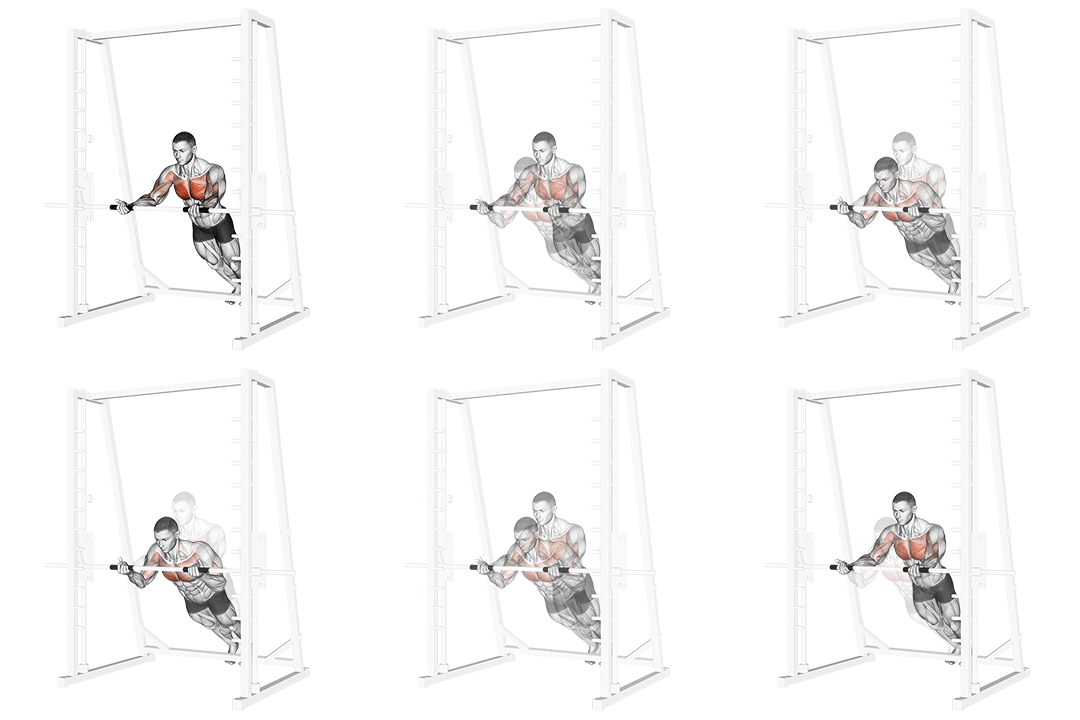
Chest Dip On Straight Bar
advanced strength exercise · body weight · targets pectorals
- Body part
- chest
- Primary target
- pectorals
- Equipment
- body weight
- Difficulty
- advanced
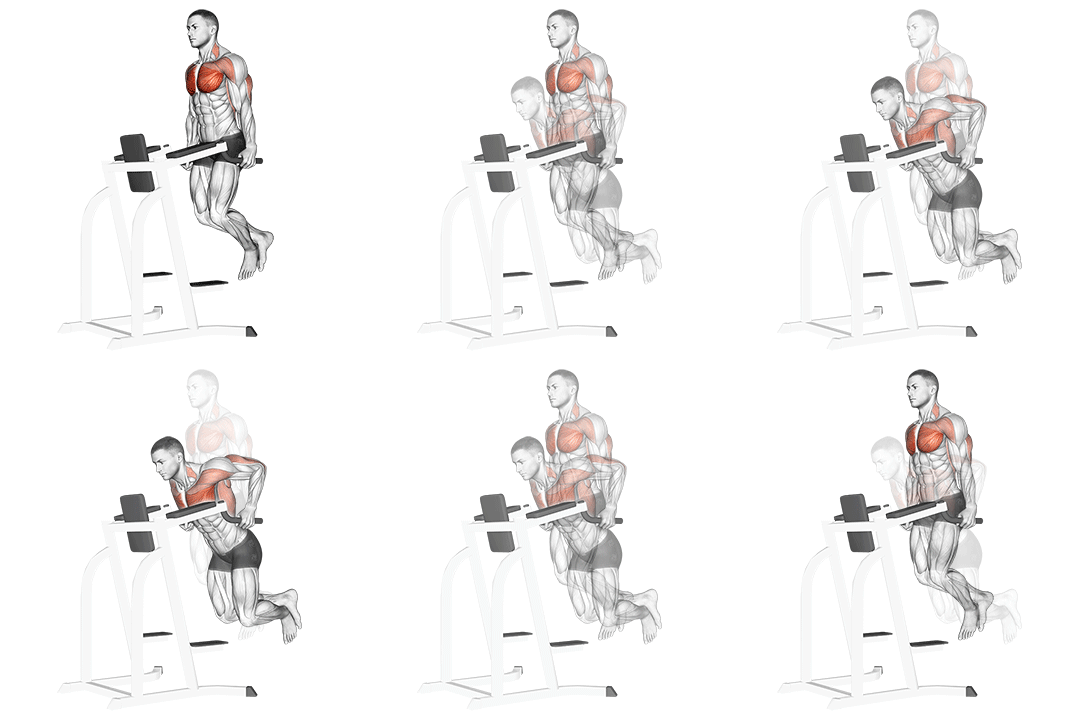
The chest dip on straight bar is performed on a single horizontal bar (like a pull-up bar) instead of parallel bars. The trainee grips the bar with both hands and supports the body in front of the bar, leaning forward to perform the dip with the chest emphasis. The single-bar setup creates a slightly different mechanical challenge than parallel-bar dips — the hands are forced into a closer grip, and the body has to lean further forward to clear the bar. This variation is most useful when parallel bars aren't available but a pull-up bar is — making it accessible at home gyms or outdoor pull-up bar setups. The single-bar position is technically harder to set up and balance than parallel bars, which is why most gyms use parallel bars for dipping when both options exist. Like all chest dip variations, the form fundamentals matter — leaning forward to engage the chest, packing the shoulders down, controlled tempo. The single-bar version may require more deliberate forward lean than parallel-bar dips because of the body position relative to the bar.
Why train the Chest Dip On Straight Bar?
- Provides chest dip work without needing parallel bars.
- Useful at home or outdoor pull-up bar setups.
- Loads the lower chest with full body-weight loading.
- Builds shoulder stability through compound pressing.
- Carries over to other pressing exercises.
- Scales with added weight.
How to do the Chest Dip On Straight Bar: step by step
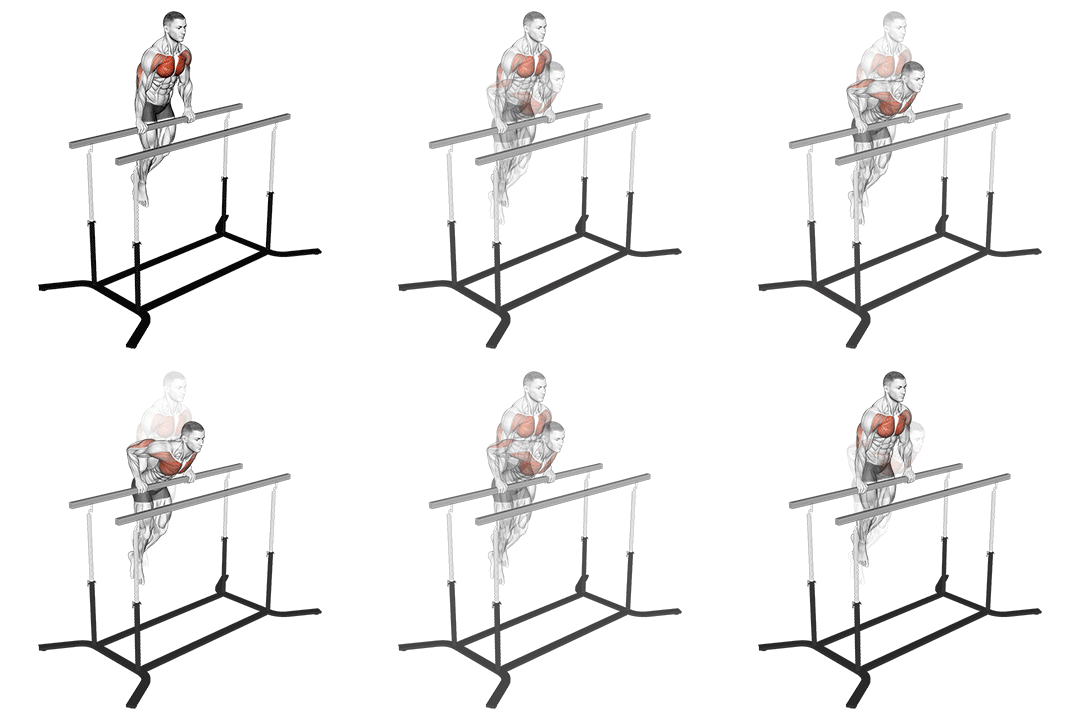
- 1Grab the parallel bars with your palms facing down and your arms fully extended.
- 2Bend your knees and cross your ankles.
- 3Lower your body by bending your arms until your shoulders are below your elbows.
- 4Push yourself back up to the starting position by straightening your arms.
- 5Repeat for the desired number of repetitions.
Muscles worked
Primary
pectorals
Secondary
triceps, shoulders
Common mistakes to avoid
Not leaning forward enough
The single-bar position requires more deliberate forward lean than parallel bars. Without the lean, you're stressing the bar with your body's center of gravity rather than performing a proper chest dip.
Going too deep at the bottom
Stop when the upper arms are roughly parallel to the floor. Going below stresses the anterior shoulder capsule.
Letting the shoulders shrug to the ears
Pack the shoulders down and maintain that position throughout the rep.
Skipping prerequisite work
Don't attempt single-bar chest dips until you have parallel-bar chest dips locked in. The single-bar setup adds balance demand.
Bouncing out of the bottom
Pause for half a second at the bottom of every rep.
Easier and harder variations
Easier
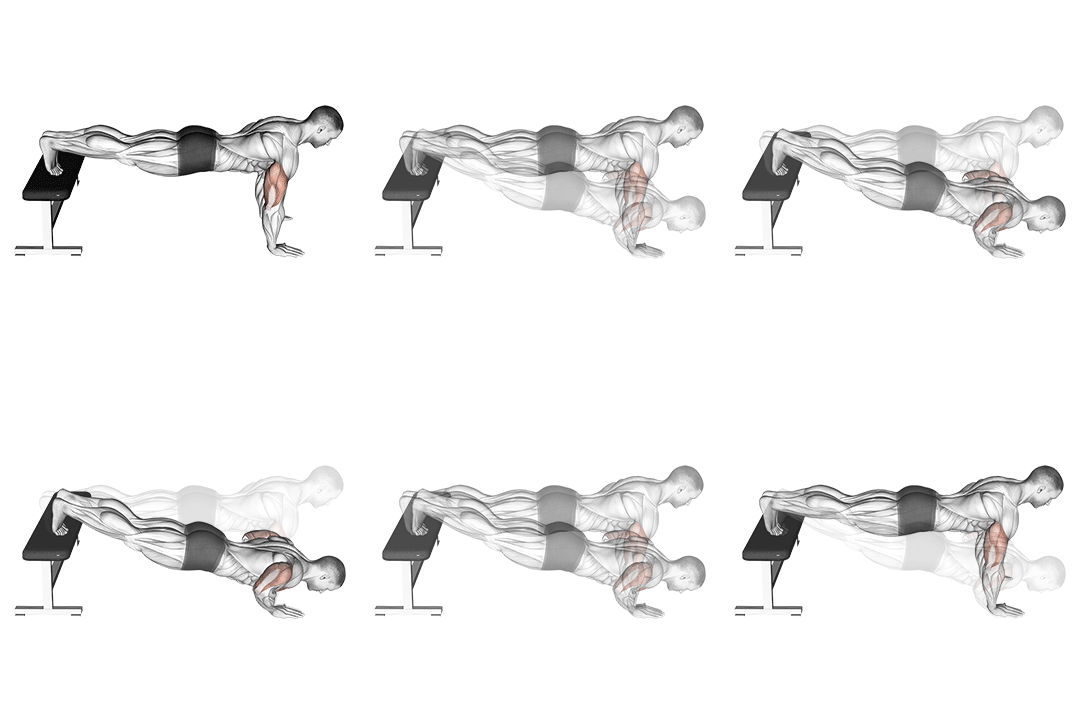
Parallel-bar chest dips. Reverse dips. Or assisted dips with a band.
Harder
Add weight. Slow the tempo. Or progress to Korean dips (specialized straight-bar chest dip variation with hands behind the body).
Alternative exercises
Parallel-bar chest dip
Standard equipment version. More stable and easier to perform with proper form.
Korean dip
Specialized straight-bar variation with hands behind the body. Significantly more demanding.
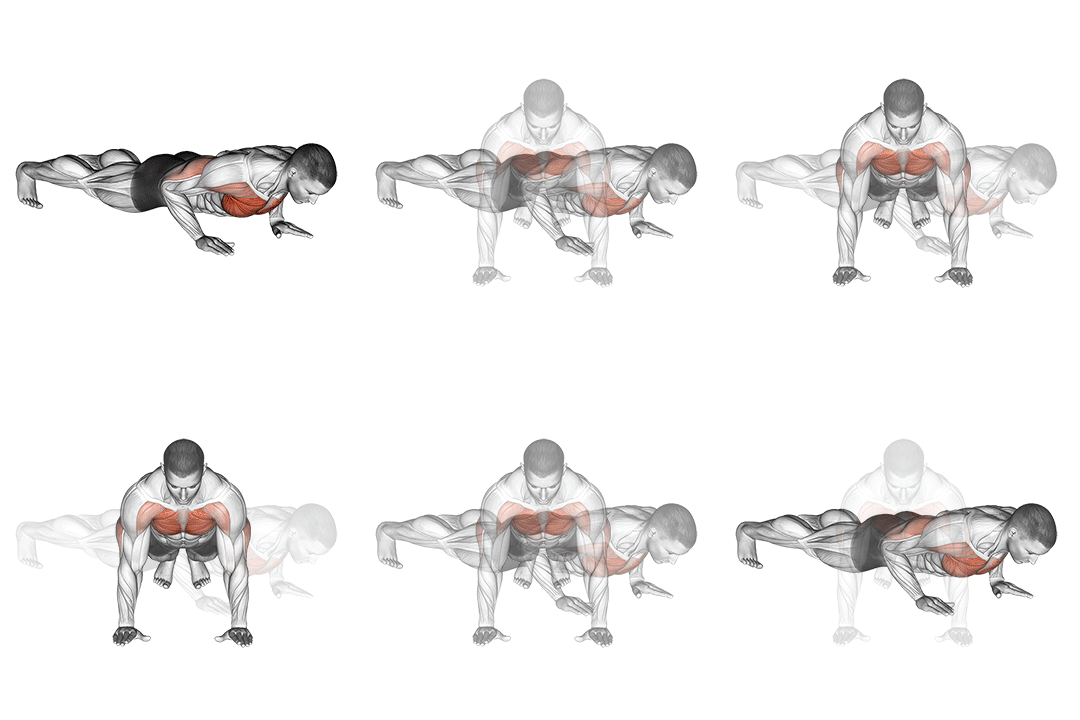
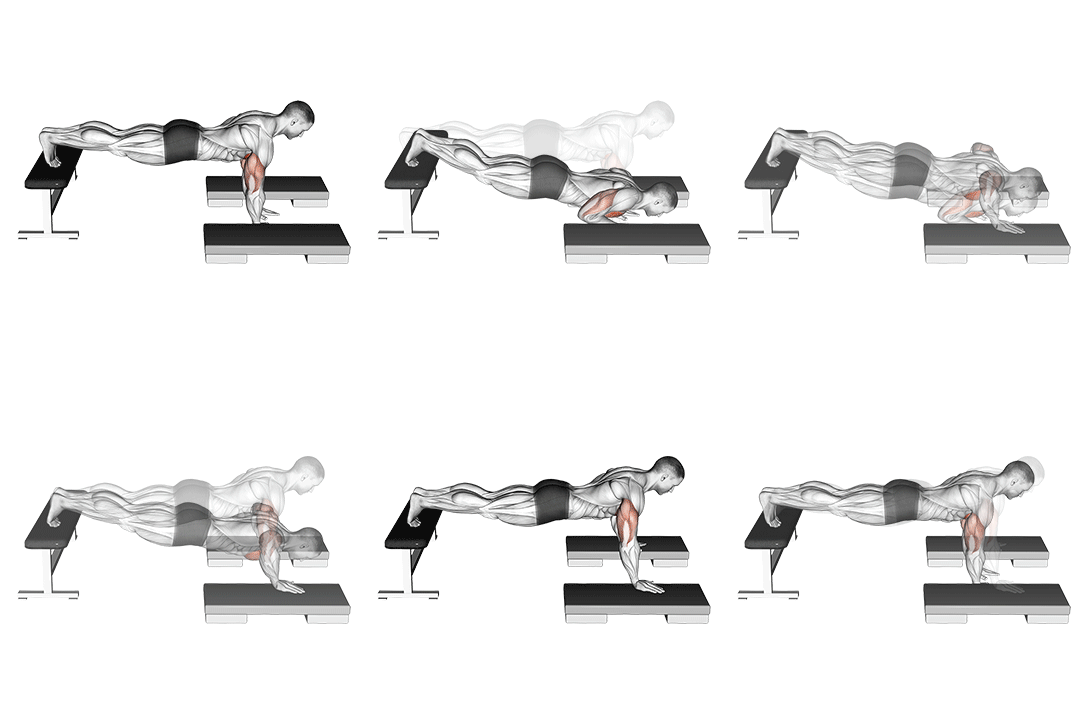
Bench dip
Easier alternative for trainees without bar access.
How to program the Chest Dip On Straight Bar into your training
Single-bar chest dips work as the primary chest dip variation when parallel bars aren't available. Sets and reps: 3-4 sets of 6-10 reps with 90-120 seconds rest. In an upper body session: 4 sets of 8 single-bar chest dips, 4 sets of 8 pull-ups (using the same bar), 3 sets of 8 push-ups, 3 sets of 30-second hollow holds. Done twice per week. Do not program more than twice per week.
Recovery and frequency
Single-bar chest dips have the same recovery cost as standard chest dips. 48-72 hours between sessions is the right cadence.
Frequently asked questions
How many sets and reps should I do?
3-4 sets of 6-10 reps with 90-120 seconds rest.
How often should I train this exercise?
2 times per week with 48-72 hours between sessions.
Single-bar vs parallel-bar chest dips: which is better?
Parallel-bar dips are easier to perform with proper form due to better balance. Use single-bar dips when parallel bars aren't available, or as variety in programming.
Are single-bar dips harder than parallel-bar dips?
Slightly, due to the added balance demand. The fundamental load is similar.
Can I do single-bar dips on any pull-up bar?
Most pull-up bars support body weight for dipping, but check the bar's weight rating before loading. Some doorway pull-up bars are not designed for the dynamic loading of dips.
Why does single-bar dipping feel different?
The single-bar position changes the body's center of gravity relative to the bar, requiring more forward lean and balance work than parallel bars.
Useful tools for this exercise
Build a workout with the Chest Dip On Straight Bar
Puna gives you guided bodyweight workouts you can do anywhere — no equipment, no gym, just structured progressions that build real strength.