Chest And Front Of Shoulder Stretch
beginner stretching exercise · body weight · targets pectorals
- Body part
- chest
- Primary target
- pectorals
- Equipment
- body weight
- Difficulty
- beginner
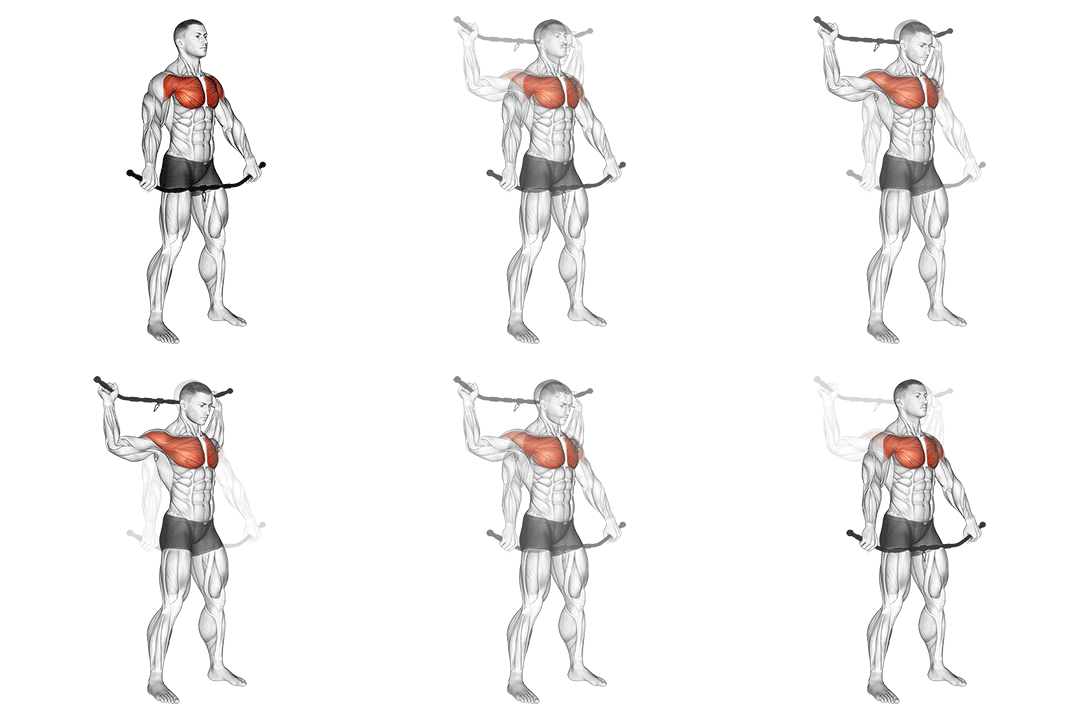
The chest and front of shoulder stretch is a static mobility drill where you cross the arms in front of the body, interlace the fingers with palms together, and gently push forward while squeezing the shoulder blades together. The combined position lengthens the pectoralis major and the anterior deltoid simultaneously — two of the most chronically shortened muscles in any modern adult who spends hours per day at a desk or scrolling on a phone. Most people don't realize how tight their chest and front delts have become until they actually feel this stretch. Years of forward-leaning posture quietly contracts the front of the upper body, and the back muscles weaken in compensation. The result is the rounded-shoulder pattern most adults carry around without noticing, which contributes to neck pain, shoulder impingement, and the kind of upper-back tightness that no amount of foam rolling resolves. The chest and front shoulder stretch directly addresses the front-side of this equation. Used daily, ideally combined with rear-shoulder strengthening (rows, band pull-aparts, face pulls), this stretch slowly reverses the postural pattern. Within 4-6 weeks of consistent practice, most people see and feel noticeable changes — shoulders sit more naturally back, breathing feels deeper, and the chronic upper-back tension softens. The 30-second cost is laughable; the compounding benefit across years is real. It's one of the few stretches that genuinely changes posture rather than just feeling good in the moment.
Why train the Chest And Front Of Shoulder Stretch?
- Lengthens the pectoralis major and anterior deltoid simultaneously, addressing the most common postural shortening in modern adults.
- Reverses the rounded-shoulder pattern when combined with rear-shoulder strengthening work.
- Reduces upper-back tension by allowing the shoulder blades to retract more easily.
- Improves breathing depth by opening the front of the chest and rib cage.
- Helps prevent shoulder impingement by restoring proper resting position of the humerus.
- Costs nothing, takes 30 seconds, and integrates easily into any post-workout cooldown or evening routine.
How to do the Chest And Front Of Shoulder Stretch: step by step
- 1Stand tall with your feet shoulder-width apart.
- 2Extend your arms straight out in front of you at shoulder height.
- 3Cross your arms in front of your body, with your right arm on top of your left arm.
- 4Interlace your fingers and press your palms together.
- 5Gently squeeze your shoulder blades together and push your hands forward, feeling a stretch in your chest and front of your shoulders.
- 6Hold the stretch for 20-30 seconds, then release.
- 7Repeat for the desired number of repetitions.
Muscles worked
Primary
pectorals
Secondary
deltoids
Common mistakes to avoid
Hunching the upper back during the press
When you push the interlaced hands forward, the body wants to round the upper back to enhance the stretch. The rounding actually shifts the stretch away from the chest and into the upper back — opposite of the goal. Keep the chest open and the upper back tall throughout.
Holding the breath
Many trainees hold their breath through static stretches. Breath-holding spikes blood pressure and reduces the body's ability to release tissue. Breathe slowly and deeply throughout — exhale slightly into the stretch position.
Pushing too aggressively
The forward push should be moderate, not maximum effort. Aggressive pushing creates tension in the wrong places (shoulders shrugged, jaw clenched) and triggers the muscle's protective stretch reflex, which reduces the actual lengthening. Gentle persistent pressure works better than forceful pushing.
Skipping the shoulder blade squeeze
The shoulder blade squeeze is what differentiates this stretch from a generic forward reach. Without active retraction of the shoulder blades, the chest doesn't open as fully. Squeeze the blades together throughout the hold.
Holding for 5-10 seconds
Static stretches require 30-60 seconds to drive meaningful tissue lengthening. Brief holds barely cue the muscle to soften. Aim for at least 30 seconds, ideally 45, and you'll feel the chest release noticeably about halfway through the hold.
Easier and harder variations
Easier
Skip the interlaced finger position — just clasp the hands behind you (without lifting them) and gently pull the shoulder blades together. The reduced leverage makes this version accessible to trainees with very tight chests or shoulder restrictions.
Harder
After clasping the hands behind the back, lift them slightly upward (away from the body) while keeping the chest open. This deepens the stretch through both the chest and biceps. Or perform a doorway pec stretch with the forearm pressed against a doorframe — the stationary leverage allows for deeper, more controlled chest opening.
Alternative exercises
Doorway pec stretch
Single-arm stretch that allows deeper chest opening through stable doorframe leverage. Often more effective for unilateral tightness.
Cross-body shoulder stretch
Targets the rear deltoid and back of shoulder — pair with the chest stretch for full upper-body postural restoration.
Standing thoracic extension over chair
Different mechanism — addresses upper back stiffness rather than chest tightness directly. Highly complementary; both pieces of the rounded-shoulder solution.
How to program the Chest And Front Of Shoulder Stretch into your training
The chest and front of shoulder stretch works best as a daily habit rather than a periodic effort. Postural tissue adaptation requires repeated exposure — daily 30-60 second stretches outperform occasional long sessions. Daily routine: 2 sets of 30-45 seconds, performed once or twice a day. Tying the stretch to an existing trigger (post-shower, before bed, after computer sessions) makes it automatic. The total time investment is 1-2 minutes per day. Desk-break protocol: 1 set of 30 seconds every 90-120 minutes during long work sessions. The frequency prevents tightness from accumulating rather than chasing it after hours of sitting. Tied to natural transitions (between meetings, before each coffee), the routine builds without willpower cost. Post-workout protocol: 2 sets of 45 seconds after upper-body sessions, especially after pressing-heavy days. The combination of warm tissue and post-exercise activation makes this an effective timing window for tissue length adaptation. For those with chronic rounded-shoulder posture: 4-5 mini-sessions per day at 30 seconds each, paired with band pull-aparts and rows for the rear shoulders. Within 4-6 weeks of consistent practice combined with rear-shoulder strength work, most people see noticeable postural improvement. Don't program this as part of an isolated 'mobility day' — daily small doses far outperform infrequent long sessions for postural tissue adaptation.
Recovery and frequency
The chest stretch has zero recovery cost. Daily practice is safe and ideal — postural tissue adapts to consistent low-volume exposure far better than to occasional intense sessions. The main warning signs are sharp shoulder pain at the front of the joint or pinching sensations during the stretch. Both indicate the position is exceeding shoulder mobility's current capacity. Reduce intensity to almost zero pressure, slow down, and skip the stretch entirely on days when the shoulder feels off. For ordinary chest tightness with only stretch sensation, the practice is safe, recovery is immediate, and consistent practice produces gradual postural improvement.
Frequently asked questions
How long should I hold the chest and front of shoulder stretch?
30-45 seconds per set, ideally 2 sets total. Holds shorter than 20 seconds don't drive meaningful tissue change. Longer than 60 seconds offers diminishing returns; better to do another set after a brief rest.
How often should I stretch my chest?
Daily, multiple times per day on long desk-bound days. Postural tissue adapts to frequency, and chest tightness is one of the fastest-recurring patterns in modern bodies.
Will this stretch fix my rounded shoulders?
Partially. Stretching the chest is one piece of the puzzle; you also need to strengthen the rear shoulders (rows, band pull-aparts, face pulls). The combination over 4-6 weeks of consistent practice produces meaningful postural change. Stretching alone is much less effective.
Should I stretch before or after lifting?
Both serve different goals. Before: brief stretches (15-30 seconds) within a dynamic warm-up. After: longer holds (45-60 seconds) when tissue is warm and adaptable. Post-workout drives most lasting tissue change.
Why does my upper back hurt when I do this stretch?
Likely the upper back is rounding to enhance the chest stretch. Keep the upper back tall and the chest open — the stretch should be felt in the chest and front of shoulders, not the upper back. If discomfort persists with cleaner technique, see a physiotherapist.
How is this different from a doorway pec stretch?
The doorway version targets one side at a time with stable leverage; this version targets both sides simultaneously through hand interlacing. Both are valuable. Use this version for daily quick stretches; the doorway version when one side is much tighter than the other.
Useful tools for this exercise
Build a workout with the Chest And Front Of Shoulder Stretch
Puna gives you guided bodyweight workouts you can do anywhere — no equipment, no gym, just structured progressions that build real strength.