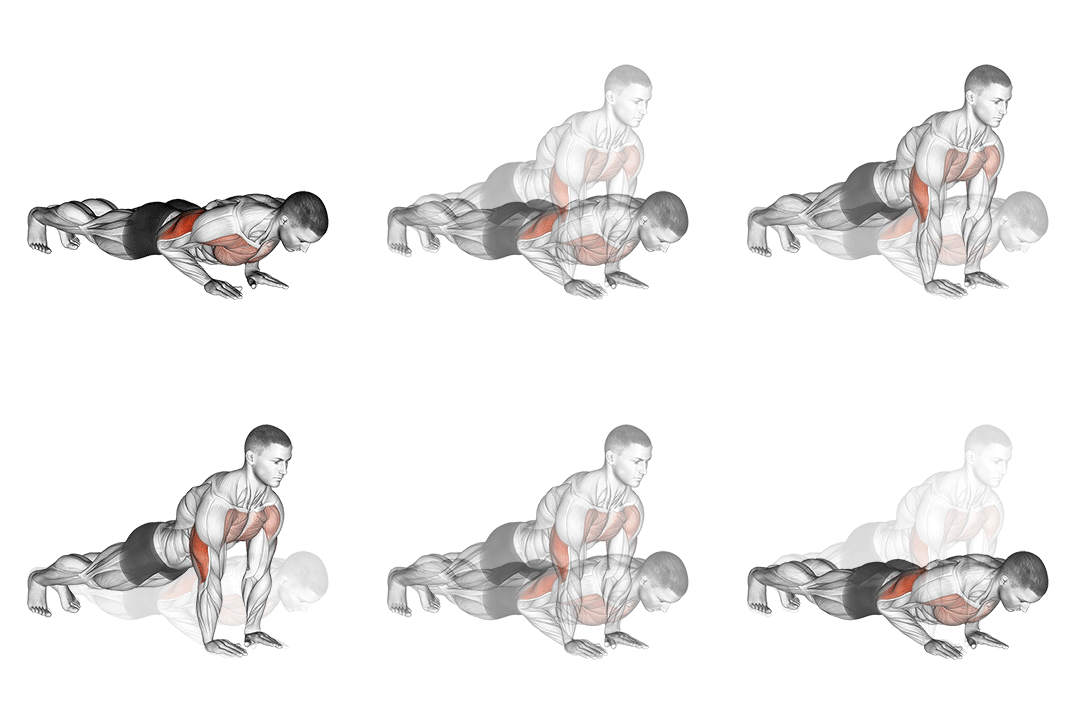
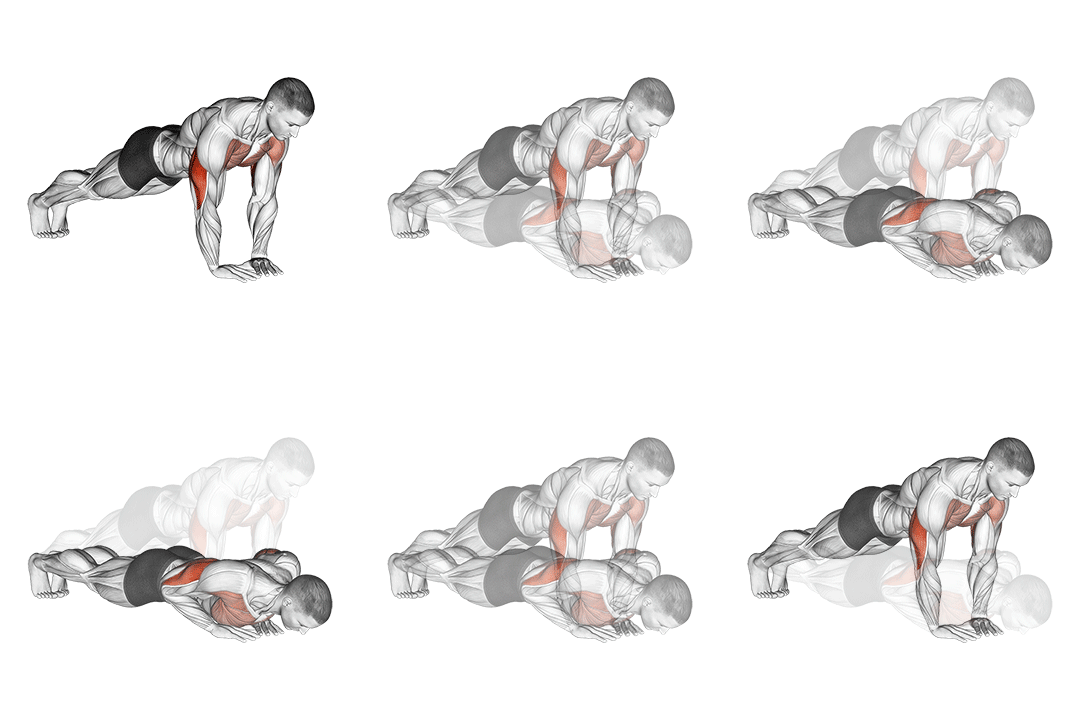
Bodyweight Side Lying Biceps Curl
beginner strength exercise · body weight · targets biceps
- Body part
- upper arms
- Primary target
- biceps
- Equipment
- body weight
- Difficulty
- beginner
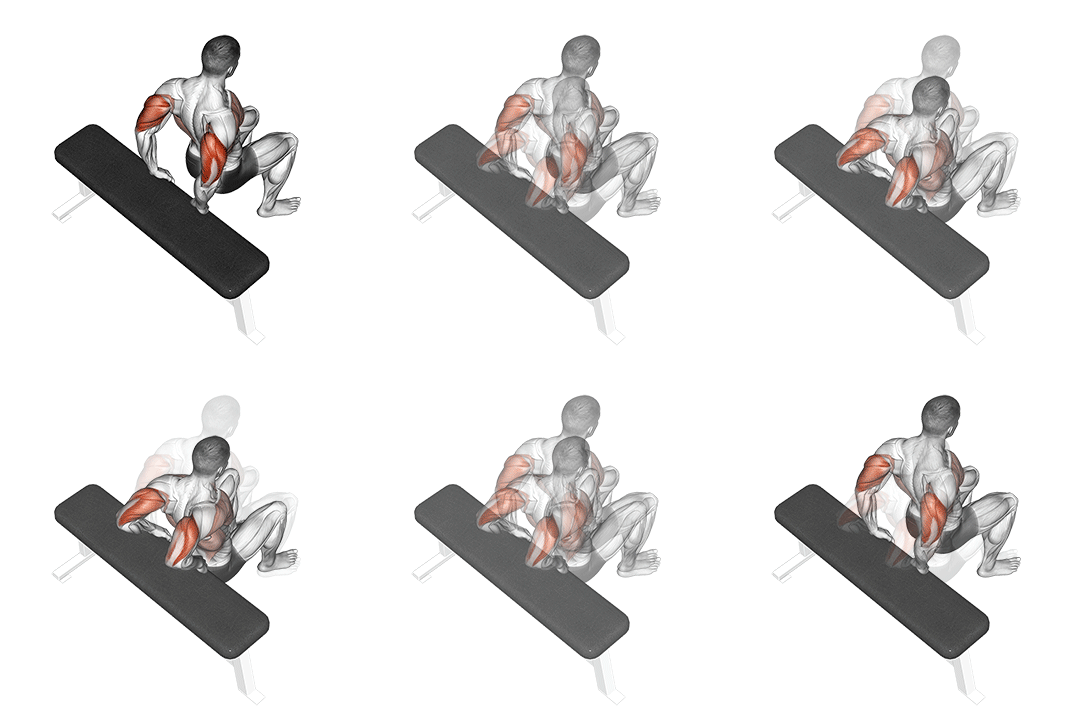
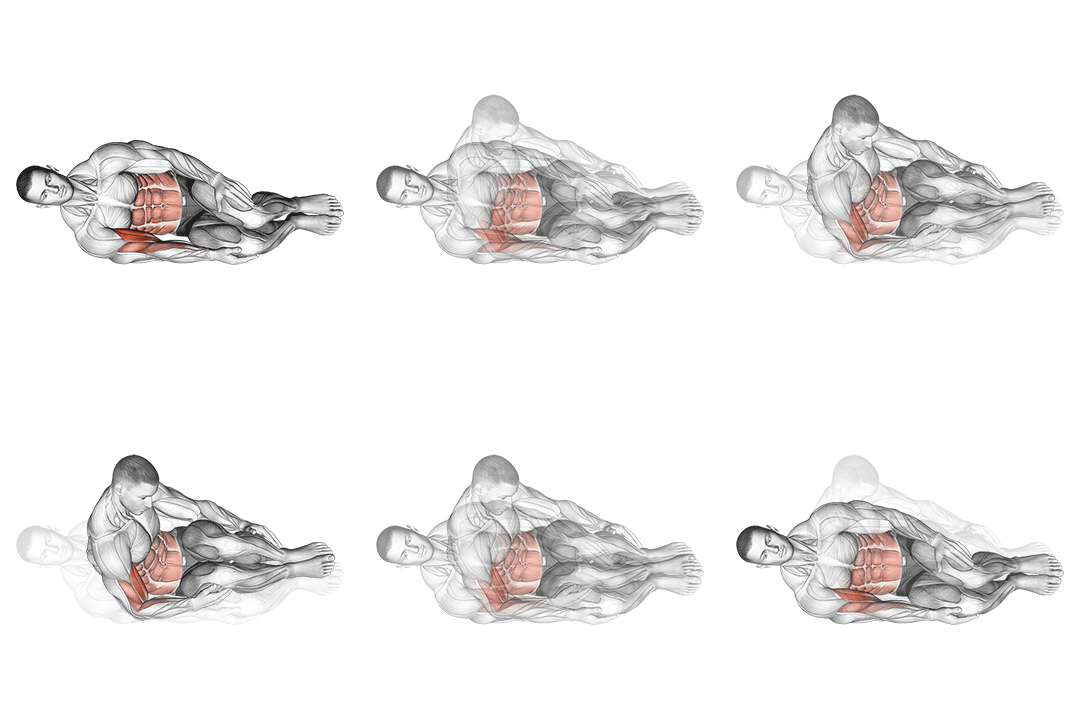
The bodyweight side lying biceps curl is an unusual exercise that loads the biceps through self-resistance while lying on one side. With the body horizontal, the upper arm pinned to the ribs, and the working forearm rising from a straight position to a curled position, you create biceps tension by actively contracting the muscle through its full range while the position of gravity provides minor resistance. It's a far cry from a heavy dumbbell curl in load, but for the right context — rehabilitation, deload weeks, or bodyweight-only situations where you still want biceps work — it earns its place. The biceps are a small muscle group that responds well to high volume and frequent training. The lying side position offers two advantages: the upper arm is locked against the body so cheating with shoulder swing becomes nearly impossible, and the weight distribution at horizontal makes the position feel surprisingly demanding for the small muscle. The curl emphasizes the peak contraction at the top of the rep, where the biceps shorten fully against the resistance of gravity acting on the forearm. This isn't a strength-building exercise in the traditional sense — bodyweight on a forearm doesn't approach the load needed to drive significant hypertrophy. Where it shines is as accessory volume, as a learning drill for biceps engagement, or as a maintenance exercise during periods when heavy curls aren't available. For home trainees with no equipment, paired with a sister exercise like a self-resisted curl using the opposite hand, it provides a baseline of biceps work that prevents complete detraining during equipment-free weeks.
Why train the Bodyweight Side Lying Biceps Curl?
- Locks the upper arm in place, eliminating the shoulder swing that often turns biceps curls into momentum exercises.
- Trains peak biceps contraction at the top of the rep, where most loaded curls under-emphasize the shortened position.
- Provides a useful biceps option during equipment-free training weeks (travel, deload, no gym access).
- Reinforces mind-muscle connection in the biceps — the small load makes deliberate engagement obvious.
- Doubles as a useful learning drill for trainees who struggle to feel their biceps working during loaded curls.
- Works well as a high-rep finisher to add biceps volume without taxing the joints further.
How to do the Bodyweight Side Lying Biceps Curl: step by step
- 1Lie on your side with your legs extended and your head supported by your arm.
- 2Hold your upper arm against your side and bend your elbow to curl your forearm towards your shoulder.
- 3Pause for a moment at the top, then slowly lower your forearm back down to the starting position.
- 4Repeat for the desired number of repetitions.
Muscles worked
Primary
biceps
Secondary
forearms
Common mistakes to avoid
Letting the upper arm leave the ribs
The whole point of the side lying position is to lock the upper arm in place. If the elbow drifts away from the body during the rep, you're cheating the biceps and turning the exercise into a poorly leveraged shoulder action. Pin the elbow to the side throughout.
Rushing through reps
Without significant load, this exercise only works if tempo is deliberate. Aim for 2 seconds up and 3 seconds down, with a brief squeeze at the top. Fast reps feel like nothing because gravity barely resists at any speed; slow reps create the time-under-tension that drives any meaningful adaptation.
Not contracting the biceps actively
Because the load is light, the biceps don't engage automatically — you have to consciously squeeze. Contract the muscle as you curl up, and resist the descent on the way down. Without active engagement, the rep is wasted motion.
Skipping the eccentric phase
Lowering the forearm passively (just letting gravity drop it) cuts the rep in half. The lowering phase is where most muscle damage and growth occurs. Resist the descent for at least 3 seconds per rep — slower if you can manage it.
Treating it as a primary biceps exercise
If you have access to dumbbells, bands, or a pull-up bar, those load the biceps far more effectively. The lying side curl earns its place when nothing better is available, not as a replacement for genuine resistance. Context matters.
Easier and harder variations
Easier
Reduce the range of motion — start with the forearm at a 45-degree angle rather than fully extended. The shorter range reduces fatigue and is appropriate for absolute beginners or anyone with elbow sensitivity. Or perform with the head elevated on a cushion to reduce neck strain during longer sets.
Harder
Use the opposite hand to add resistance against the working forearm — push down with the free hand as the working arm curls up, creating self-applied resistance that scales to whatever load you choose. Or hold a household object (water bottle, can, light dumbbell) to add gravity-loaded resistance.
Alternative exercises
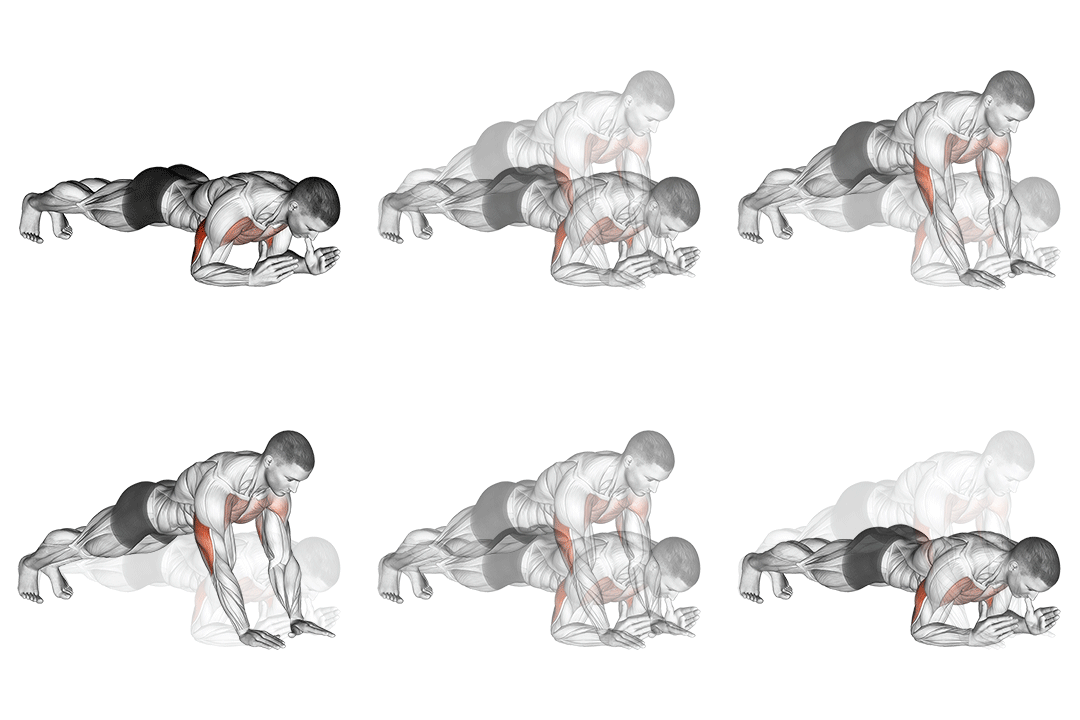
Standing self-resisted biceps curl
Uses the opposite hand to apply resistance against the curling forearm. More effective load than the unassisted side lying version, and easier to scale intensity.
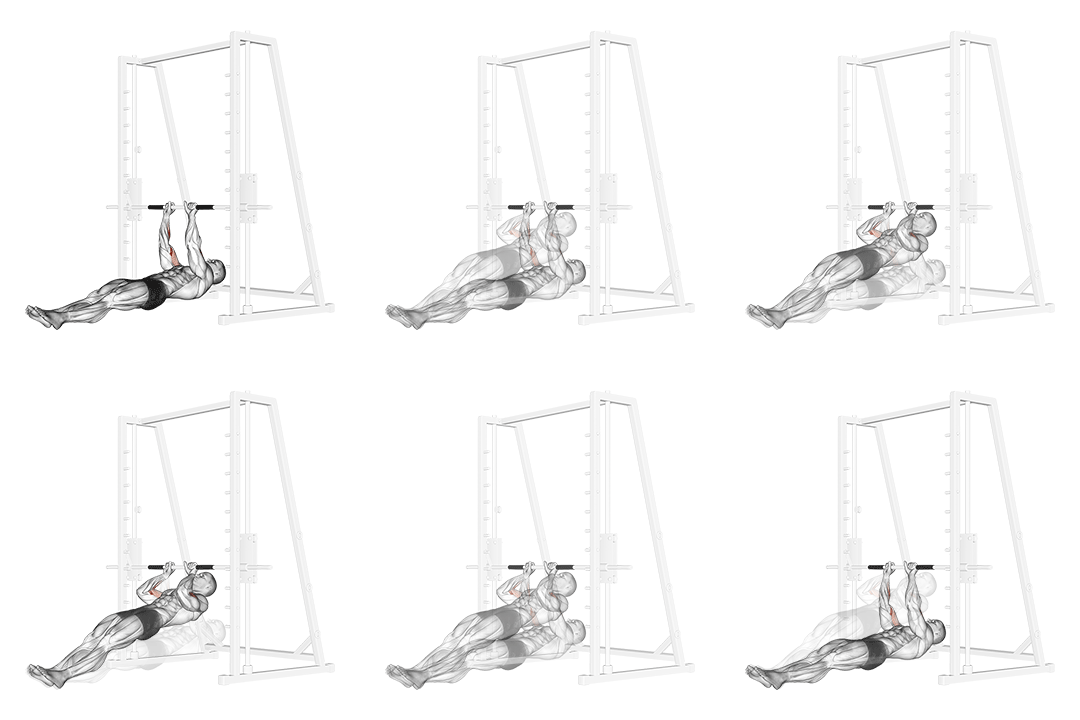
Inverted row with underhand grip
Loads the biceps significantly during the pulling phase. Uses bodyweight as resistance, which is a meaningful load. Better for actual strength building when a bar is available.
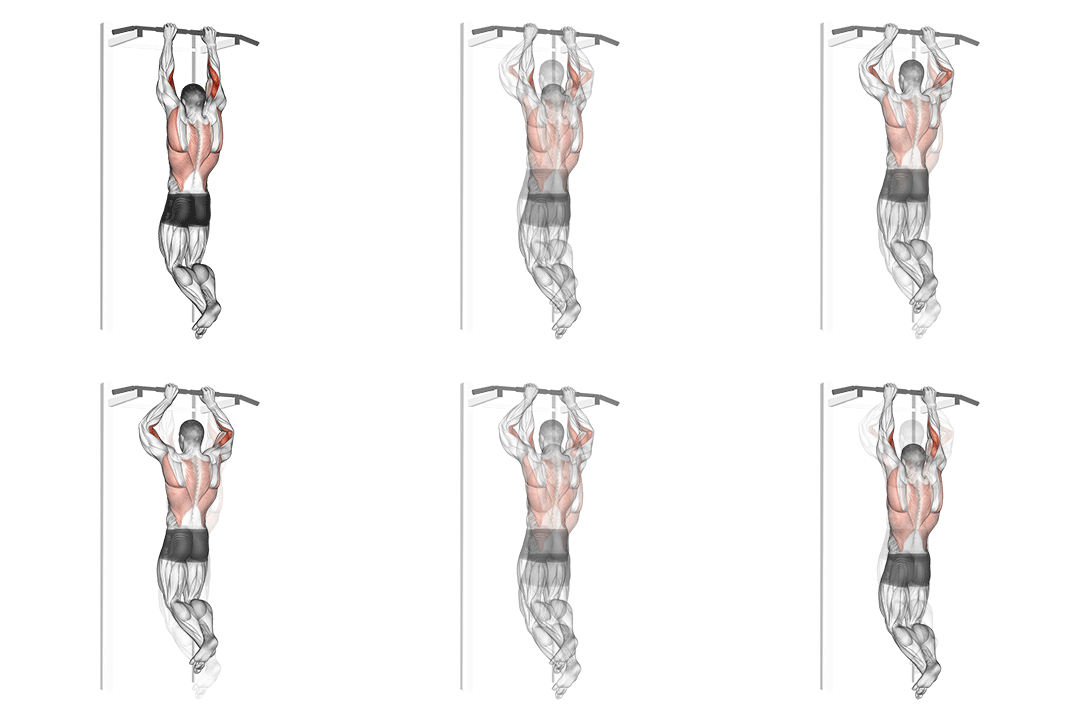
Chin-up
The most effective bodyweight biceps exercise in existence. Use this when a bar is available and you've built the prerequisite pulling strength.
How to program the Bodyweight Side Lying Biceps Curl into your training
The bodyweight side lying biceps curl belongs in the accessory or finisher slot of upper-body training, never as a main exercise. Its best uses are in equipment-free contexts and as a high-rep cap on biceps work. Sets and reps: 3 sets of 15-25 reps per arm with 30-45 seconds rest. The light load means high reps are required to create stimulus. Aim for the burn — the last few reps should feel hard. Total weekly volume of 100-200 reps per arm is a reasonable target. Frequency: 2-3 times per week, more if it's serving as your only biceps work during a travel block. The joint stress is low so frequent training is tolerated well. Equipment-free training week: combine with self-resisted curls and inverted row variations to maintain biceps stimulus during periods without weights. 4 sets of 20 reps of side lying curls, 3 sets of 15 reps of self-resisted curls, performed twice per week. As a finisher: 2 sets of 25-30 reps per arm at the end of an upper-body or arm-specific session. The high-rep burnout adds biceps volume without joint stress. For home trainees with limited equipment: this fits as one of three bodyweight biceps options (alongside self-resisted curls and inverted rows). Rotating between them keeps stimulus varied across the week. If access to dumbbells or a pull-up bar exists, deprioritize this exercise. Real loaded curls and chin-ups will outperform it for biceps strength and growth.
Recovery and frequency
Recovery cost is minimal — the biceps recover within 24-48 hours from this exercise's light load. Many people tolerate daily training at moderate volume without issue. Because the load is so light, soreness is rarely the limiting factor. The more common feeling is a sense that the exercise wasn't 'enough' to matter. If sets feel completely effortless, increase the rep range, slow tempo further, or add resistance via the opposite hand or a household object. Standard biceps soreness fades within 48 hours and indicates appropriate stimulus. No special recovery protocols apply beyond sleep, hydration, and reasonable nutrition.
Frequently asked questions
How many reps of bodyweight side lying biceps curls should I do?
3 sets of 15-25 reps per arm with 30-45 seconds rest. The light load requires high reps to drive stimulus. The last few reps of each set should feel like a real burn.
How often should I do this exercise?
2-3 times per week works well, more if it's your only biceps option during travel or deload weeks. Joint stress is low so frequent training is tolerated.
Is this a good biceps builder?
Honestly, no — at least not as your primary biceps work. The load is too light to drive serious strength or growth. It earns its place when better options aren't available, or as a finisher in an arm-focused session.
Should I do this with equipment if I have access?
Probably not. Dumbbells, bands, and pull-up bars all load the biceps significantly more effectively. The side lying curl is for equipment-free contexts; if you can do chin-ups or loaded curls, those are far better.
Can I add weight to make it harder?
Yes — holding a water jug, can of beans, or light dumbbell in the working hand transforms the exercise into a much more effective biceps movement. At that point, though, you're essentially doing a side lying dumbbell curl, which is a respected exercise with or without the bodyweight context.
Why don't I feel anything in my biceps?
Two likely causes. First, your tempo is too fast — slow each rep to 2-3 seconds in each direction. Second, you're not actively contracting the biceps — without significant load, you have to deliberately squeeze the muscle. With both fixes, the burn arrives within sets of 15-20 reps.
Useful tools for this exercise
Build a workout with the Bodyweight Side Lying Biceps Curl
Puna gives you guided bodyweight workouts you can do anywhere — no equipment, no gym, just structured progressions that build real strength.