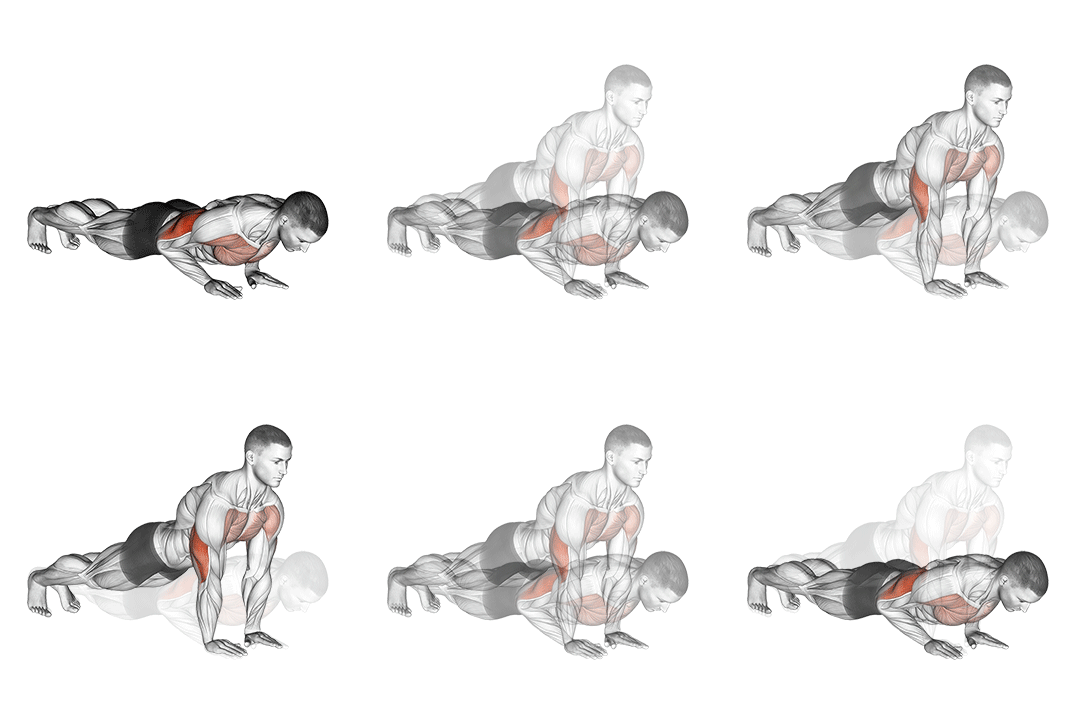
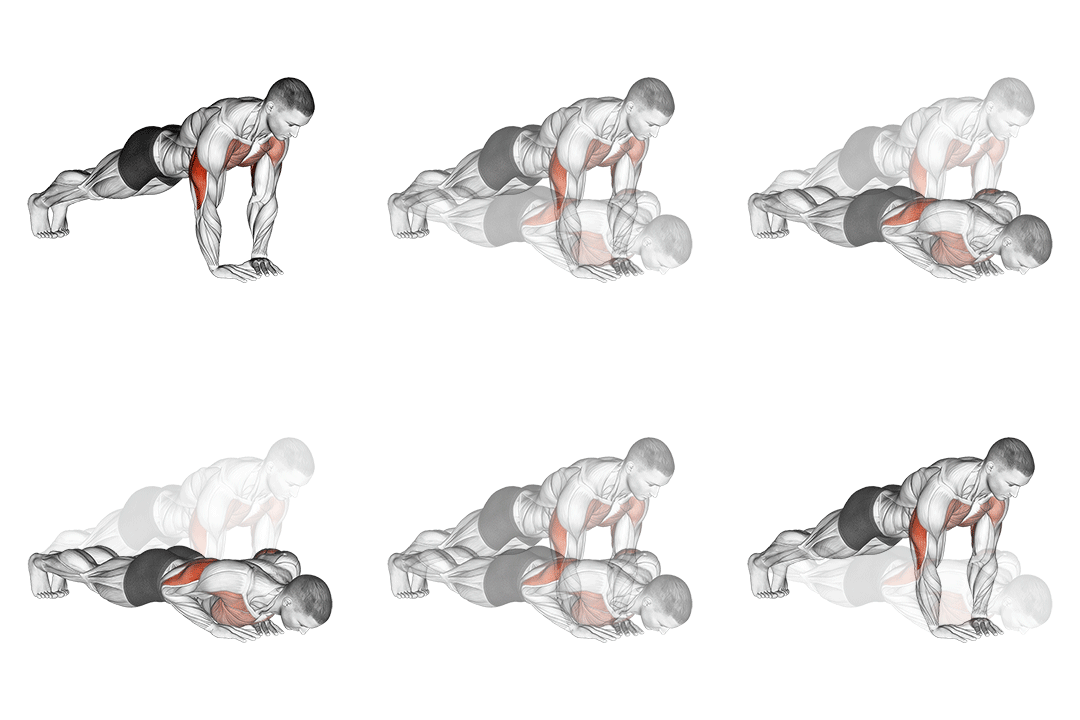
Biceps Leg Concentration Curl
beginner strength exercise · body weight · targets biceps
- Body part
- upper arms
- Primary target
- biceps
- Equipment
- body weight
- Difficulty
- beginner
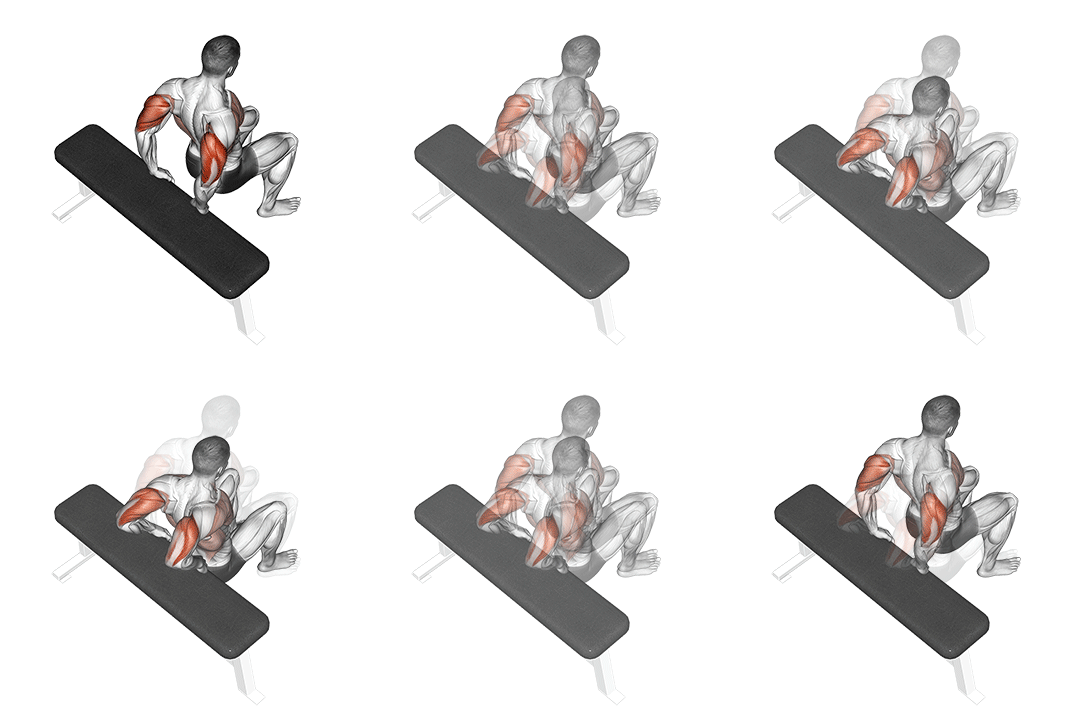
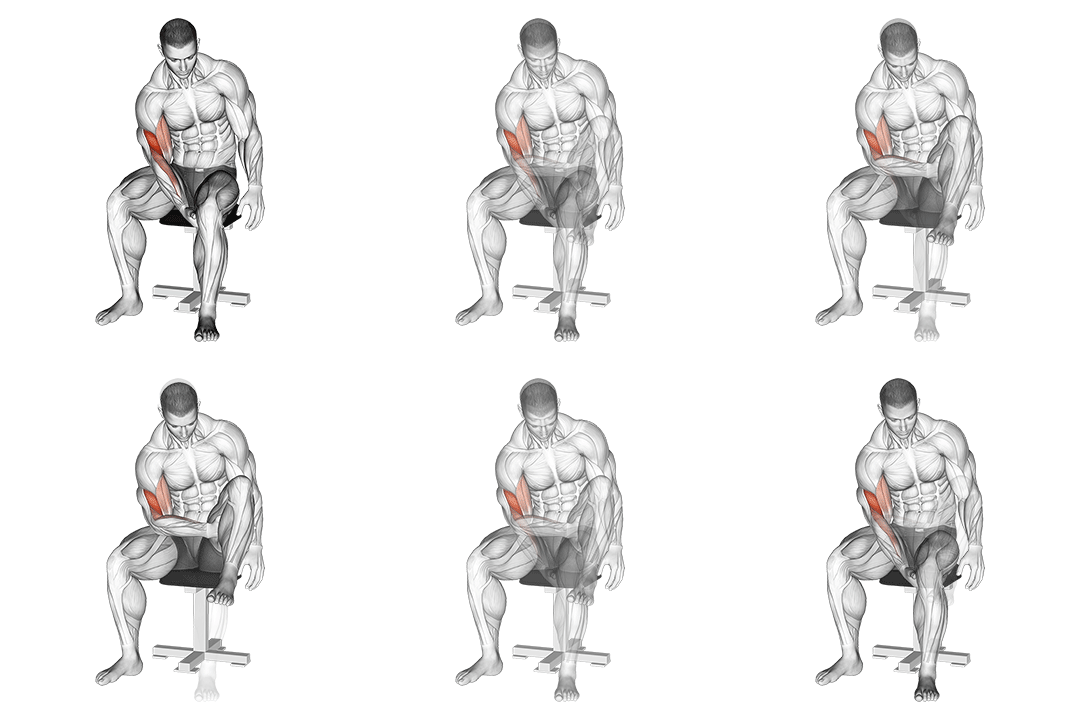
The biceps leg concentration curl is the bodyweight version of the classic seated concentration curl made famous by Arnold Schwarzenegger. Sitting on a bench with legs spread, you brace one elbow against the inside of your thigh and curl the forearm toward the shoulder using either self-resistance from the opposite hand or a held household object (water jug, can, backpack). The pinned elbow forces the biceps to do all the work — there's no shoulder swing, no body english, no momentum cheating possible. This exercise rewards trainees who care about the biceps for shape and isolation rather than pure strength. The position eliminates virtually every form of cheating: the arm is locked in place, the body is stable, the shoulder can't swing forward to assist. The biceps either does the rep or it doesn't. For people who struggle to feel their biceps engage during pulling exercises (a remarkably common complaint), this drill builds the mind-muscle connection that pays off everywhere else. The trade-off is, as with any bodyweight curl, the loading is light without external resistance. Pure bodyweight means just the weight of the forearm itself plus whatever self-applied force you create with the opposite hand. This is enough for hypertrophy in the short term, but for serious biceps growth most trainees eventually need real resistance. Used as accessory work, as a finisher, or during equipment-free training blocks, the leg concentration curl earns its place. It's particularly valuable as a learning exercise — once trainees feel their biceps fully engaged in this position, they apply that connection to chin-ups, rows, and weighted curls with much better results.
Why train the Biceps Leg Concentration Curl?
- Eliminates body swing and momentum cheating that pollute most curl variations.
- Forces full peak contraction at the top of the rep, training the shortened position most curls under-emphasize.
- Builds the mind-muscle connection that improves biceps engagement in every other pulling exercise.
- Works as accessory work in any arm-training session, accumulating volume without joint stress.
- Useful in equipment-free contexts where you still want focused biceps work.
- Pairs with self-resistance to scale to whatever load level you choose.
How to do the Biceps Leg Concentration Curl: step by step
- 1Sit on a bench with your legs spread apart and your feet flat on the ground.
- 2Hold a dumbbell in one hand and place your elbow on the inside of your thigh, just above the knee.
- 3With your palm facing up, curl the dumbbell towards your shoulder while keeping your upper arm stationary.
- 4Squeeze your biceps at the top of the movement, then slowly lower the dumbbell back to the starting position.
- 5Repeat for the desired number of repetitions, then switch arms.
Muscles worked
Primary
biceps
Secondary
forearms
Common mistakes to avoid
Letting the upper arm drift forward off the thigh
The whole point of the position is to lock the elbow in place. If the elbow lifts off the thigh, the shoulder starts assisting and the biceps no longer does all the work. Press the elbow firmly into the inner thigh throughout — there should be no daylight between them at any point in the rep.
Hunching the back to lean over the working arm
Many trainees round the upper back to get closer to the working arm, especially as fatigue builds. The hunching transfers some load to the back instead of isolating the biceps. Keep the chest open, the back straight, and stay anchored upright.
Skipping the eccentric phase
Letting the forearm drop passively after the squeeze cuts the rep in half. The lowering phase is where most muscle damage happens. Resist the descent for at least 3 seconds per rep. The slow lowering is where the real biceps work happens.
Not contracting hard at the top
The leg concentration position is unique in how it allows full peak contraction. Squeeze the biceps deliberately at the top of each rep for 1-2 seconds — visualize the muscle shortening as much as it possibly can. Skipping this hard contraction wastes the position's main advantage.
Going too fast with no resistance
Without significant load, fast reps train almost nothing. Tempo becomes the load. Aim for 2 seconds up, 1-second squeeze at the top, 3 seconds down. With this tempo, even pure bodyweight reps create real biceps fatigue by rep 15.
Easier and harder variations
Easier
Reduce the range of motion — start the rep with the forearm at 45 degrees rather than fully extended. The shorter range is appropriate for absolute beginners. Or perform with the elbow against the upper thigh (closer to the hip) for a slightly less demanding lever.
Harder
Use the opposite hand to apply resistance against the working forearm as it curls up — press down with the free hand to scale intensity to whatever level you choose. Or hold a household object (water jug, can of beans, books in a bag) for gravity-loaded resistance. Eventually, transition to a real dumbbell concentration curl for serious load.
Alternative exercises
Self-resisted biceps curl (standing)
Uses the opposite hand to apply resistance against the curling forearm. More flexible position than the seated version, and the resistance scales easily.
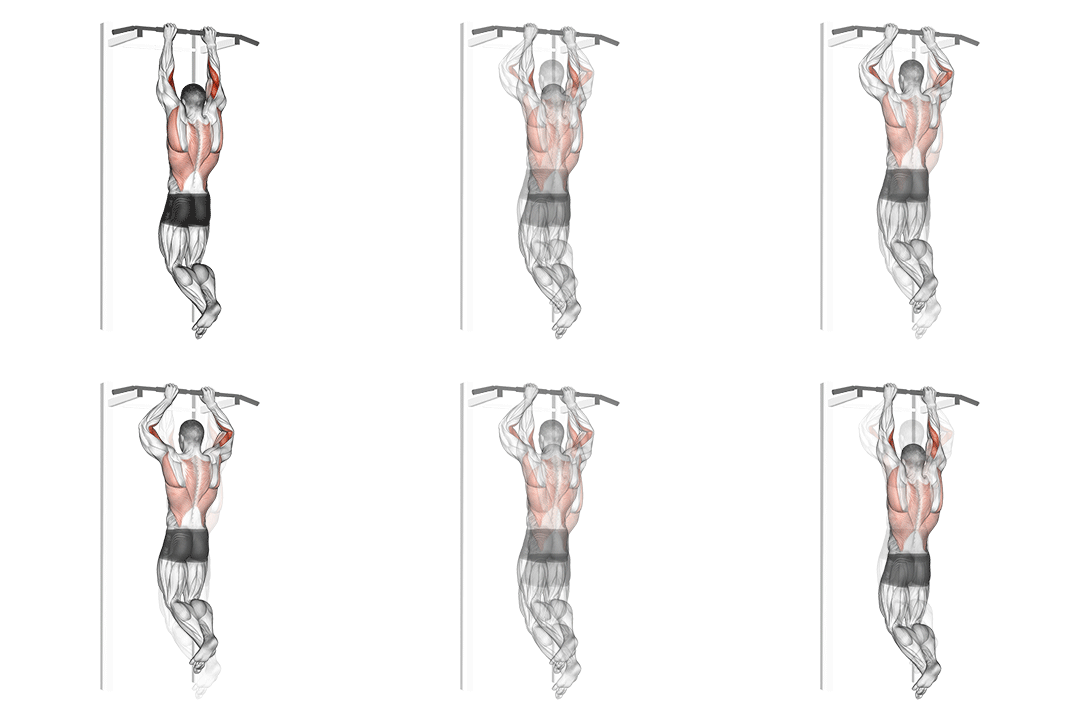
Chin-up
The strongest bodyweight biceps exercise in existence. Once you have the pulling strength, chin-ups load the biceps far more effectively than any curl variation.
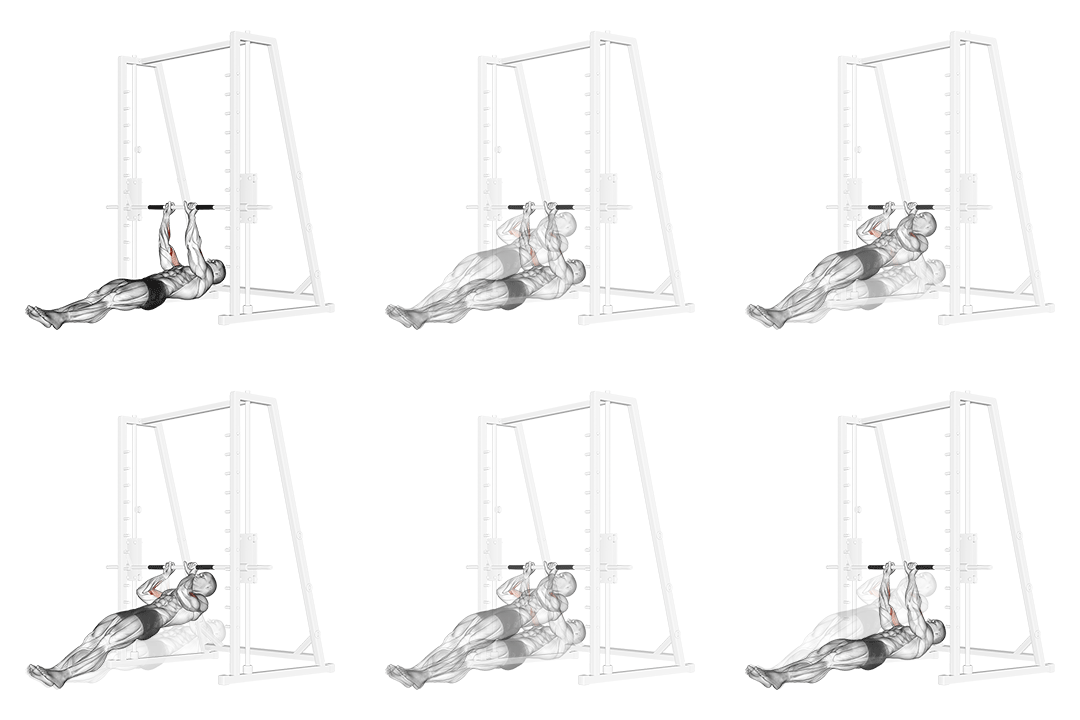
Inverted row with underhand grip
Bodyweight row variant that loads the biceps significantly. More balanced upper-body exercise that hits biceps as a major mover.
How to program the Biceps Leg Concentration Curl into your training
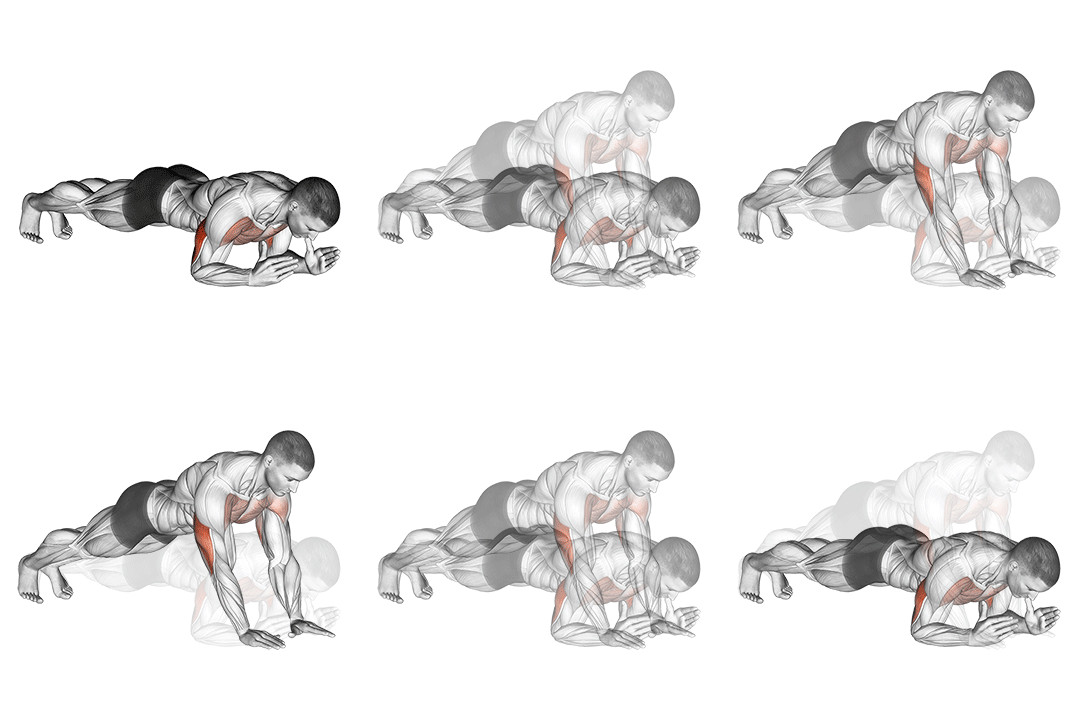
The biceps leg concentration curl works as accessory or finisher work in any arm-training session. It's not a main exercise; it's a precision tool used to add volume or build engagement skill. Sets and reps: 3 sets of 12-20 reps per arm with 30-60 seconds rest. The light load (or self-resisted load) requires moderate to high reps. The last few reps should feel like a genuine burn. Total weekly volume of 80-150 reps per arm is reasonable. Frequency: 2-3 times per week, more if it's your only biceps option during equipment-free weeks. The joint stress is low so frequent training is tolerated. As a finisher: 2 sets of 20-30 reps per arm at the end of upper-body or arm-specific sessions. The position's strict isolation makes it ideal for the final 'pump' work. As a learning drill: 3 sets of 12 reps per arm at slow tempo (3 seconds up, 1-second squeeze, 3 seconds down) with maximum mind-muscle focus. Done twice per week for 4-6 weeks, this teaches the biceps to engage properly — payoff appears in every other pulling exercise after. In an arm-focused session: pair with diamond push-ups (triceps) and band pull-aparts (rear delts) for a balanced 20-minute session: 4 sets of 15 leg concentration curls per arm, 4 sets of 12 diamond push-ups, 4 sets of 15 band pull-aparts. For pure biceps strength building: deprioritize this in favor of chin-ups and loaded curls when possible. Use the leg concentration curl for volume and mind-muscle work, not as the main strength stimulus.
Recovery and frequency
Recovery is fast — the biceps recover within 24-48 hours from light-load curl work. Daily training at moderate volume is tolerable for most people, though 2-3 times per week is the practical sweet spot. The most common limiting factor is mental rather than physical: the exercise can feel underwhelming when load is light, leading trainees to dismiss it. Resist that temptation. The biceps respond to volume and time under tension; with proper tempo and active contraction, even bodyweight reps create meaningful stimulus. Standard biceps soreness in the muscle belly fades within 48 hours. No special recovery protocols apply beyond sleep, hydration, and reasonable protein intake.
Frequently asked questions
How many reps of biceps leg concentration curls should I do?
3 sets of 12-20 reps per arm with 30-60 seconds rest. With light load, the high-rep range drives the stimulus. The last few reps should feel like a real burn — if they don't, slow tempo or add resistance.
How often should I do this exercise?
2-3 times per week is ideal. Daily is fine in equipment-free weeks where it's your only biceps work. Joint stress is low so frequent training is tolerated.
Is this a good biceps exercise?
Yes for isolation and mind-muscle work, less so for pure strength. The position is exceptional at preventing cheating, which makes it valuable for trainees who struggle to feel their biceps. For raw strength, chin-ups and loaded curls outperform it.
Concentration curl vs standard curl: which is better?
Different goals. Concentration curls excel at isolation and peak contraction. Standard curls allow heavier loading because the body can stabilize naturally. Most well-rounded arm programs include both.
Can I make this exercise harder?
Yes — apply self-resistance with the opposite hand pressing down against the working forearm, or hold a household object (water jug, books in a bag) for gravity-loaded resistance. Eventually, a dumbbell makes it a true loaded concentration curl.
Why don't I feel my biceps during this exercise?
Two likely causes. First, the elbow is drifting off the thigh — pin it firmly in place. Second, you're not consciously contracting the biceps. Slow tempo, peak squeeze at the top, controlled lowering. Within 12-15 reps the burn should be obvious.
Useful tools for this exercise
Build a workout with the Biceps Leg Concentration Curl
Puna gives you guided bodyweight workouts you can do anywhere — no equipment, no gym, just structured progressions that build real strength.