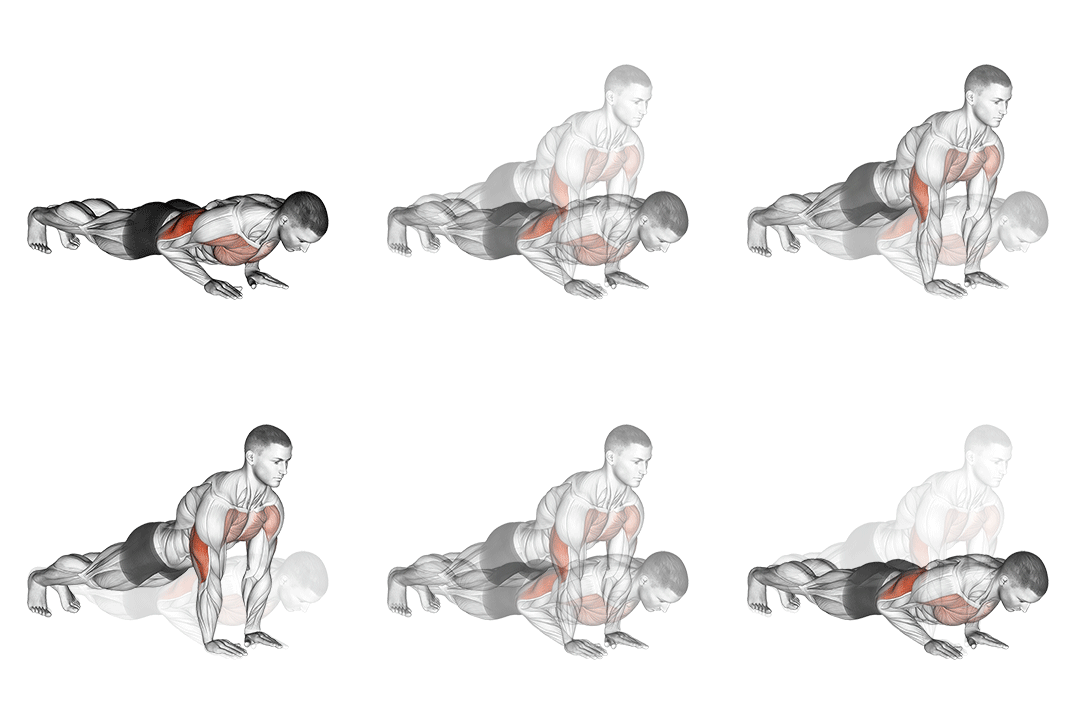
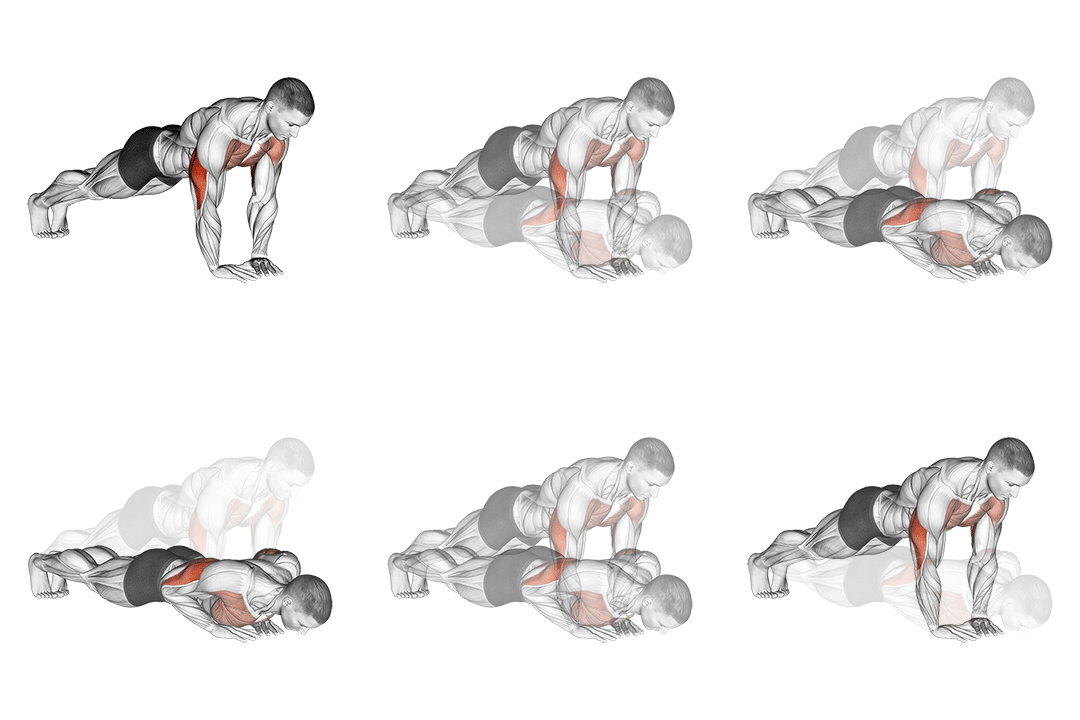
Bench Dip On Floor
beginner strength exercise · body weight · targets triceps
- Body part
- upper arms
- Primary target
- triceps
- Equipment
- body weight
- Difficulty
- beginner
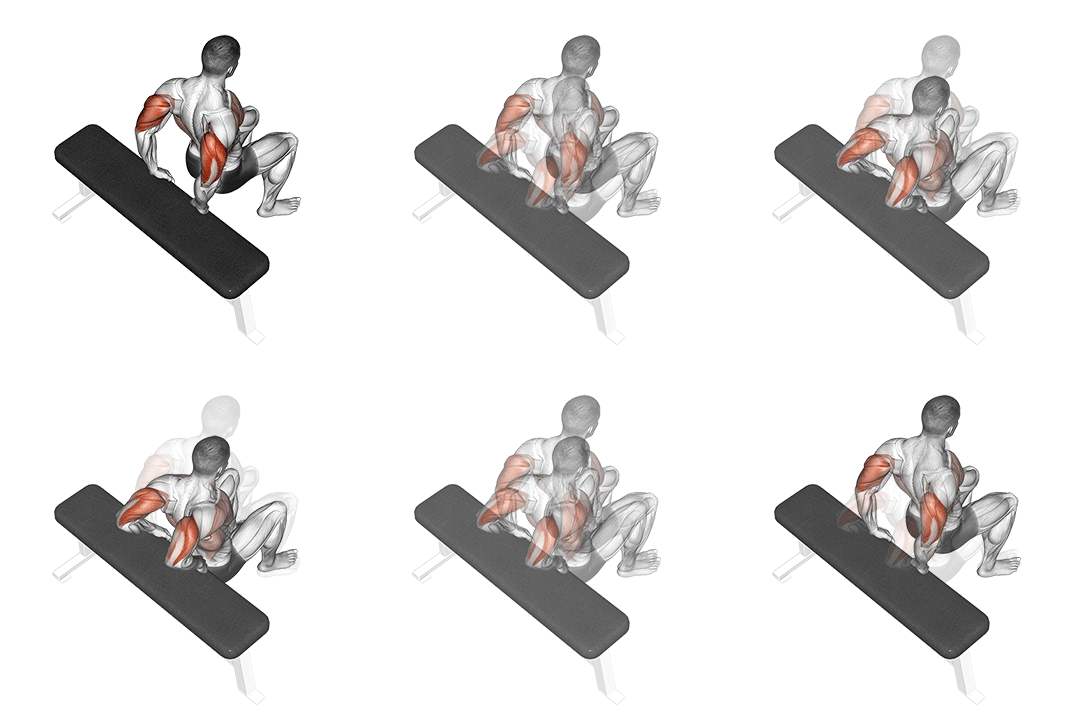
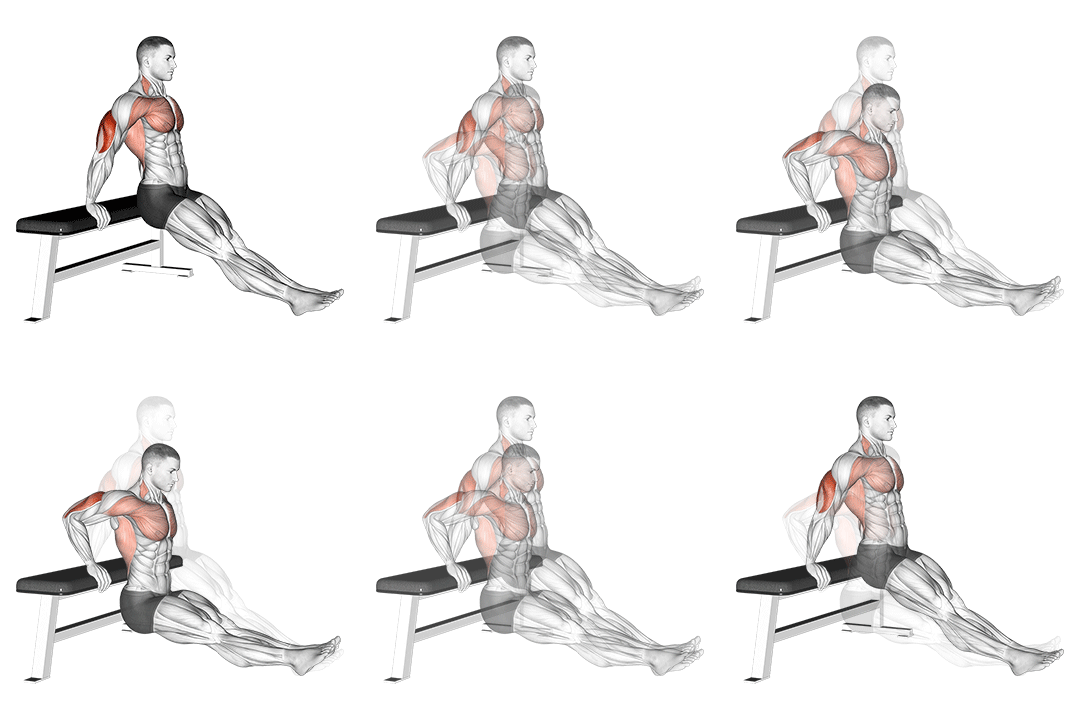
The bench dip on floor is a hybrid of the bench dip and floor triceps dip — performed with hands on a low bench or step behind you and the body lowered between the bench and the floor. The setup creates an exercise that's slightly more demanding than floor dips (because the bench provides a fixed grip point) but easier than standard bench dips (because the body doesn't have to descend as far). It's particularly useful in settings where you have a low surface (a step, low coffee table, or the edge of a couch) but not a proper bench. The fixed grip on the elevated surface lets you focus on the dip mechanics with confidence — no balance demand from a freely-supported floor position. The reduced range compared to standard bench dips makes the exercise accessible to beginners while still providing a reasonable tricep stimulus. The form fundamentals match the standard bench dip family — elbows tracking back rather than flaring wide, shoulders packed down rather than shrugged, controlled tempo rather than bouncing. Master the position with these fundamentals in 2-4 weeks before progressing to standard bench dips, where the same form errors carry more risk because of the increased load and range.
Why train the Bench Dip On Floor?
- More accessible than standard bench dips with reduced range and load.
- Useful when a low surface is available but a proper bench isn't.
- Teaches dip pattern fundamentals at lower difficulty.
- Higher rep counts possible than full-range bench dips — useful for endurance work.
- Friendlier on the shoulders than full-range dips due to the reduced descent.
- Bridges the gap between floor triceps dips and standard bench dips.
How to do the Bench Dip On Floor: step by step
- 1Sit on the edge of a bench or chair with your hands gripping the edge, fingers pointing forward.
- 2Slide your butt off the bench, supporting your weight with your hands.
- 3Lower your body by bending your elbows until your upper arms are parallel to the floor.
- 4Push yourself back up to the starting position by straightening your arms.
- 5Repeat for the desired number of repetitions.
Muscles worked
Primary
triceps
Secondary
chest, shoulders
Common mistakes to avoid
Letting the elbows flare to the sides
Wide elbows shift load away from the triceps. Keep elbows tracking straight back over the wrists, not flaring outward — narrow tracking is what makes it a tricep exercise.
Choosing too low a surface
If the bench is lower than mid-shin height, the dip becomes more like a partial bench dip with awkward arm positioning. Use a surface at least at hip height for proper mechanics.
Drifting the hips forward
Some people let the hips drift forward as they descend, which shifts load to the front delts. Keep the hips close to the bench throughout — almost grazing it on the way down.
Using an unstable surface
If the bench shifts or wobbles, the exercise becomes about stability rather than triceps. Use solid surfaces; push chairs against walls if necessary.
Going too fast for control
Speed kills tricep work. Move with control: 1-2 seconds down, brief pause, 1-2 seconds up. Quality of contraction matters more than rep count.
Easier and harder variations
Easier
Floor triceps dips (no bench, sitting with hands behind hips). Or bent-knee bench dips with knees more sharply bent.
Harder
Straighten the legs out in front of you for more body weight on the arms. Standard bench dips with the bench at hip height. Add weight by placing a plate on the lap.
Alternative exercises
Bench dip (knees bent)
Standard bench dip variation that's similar in difficulty. Use either depending on the bench height available.
Floor triceps dips
Easier regression with no bench needed. Good warm-up before bench-dip work.
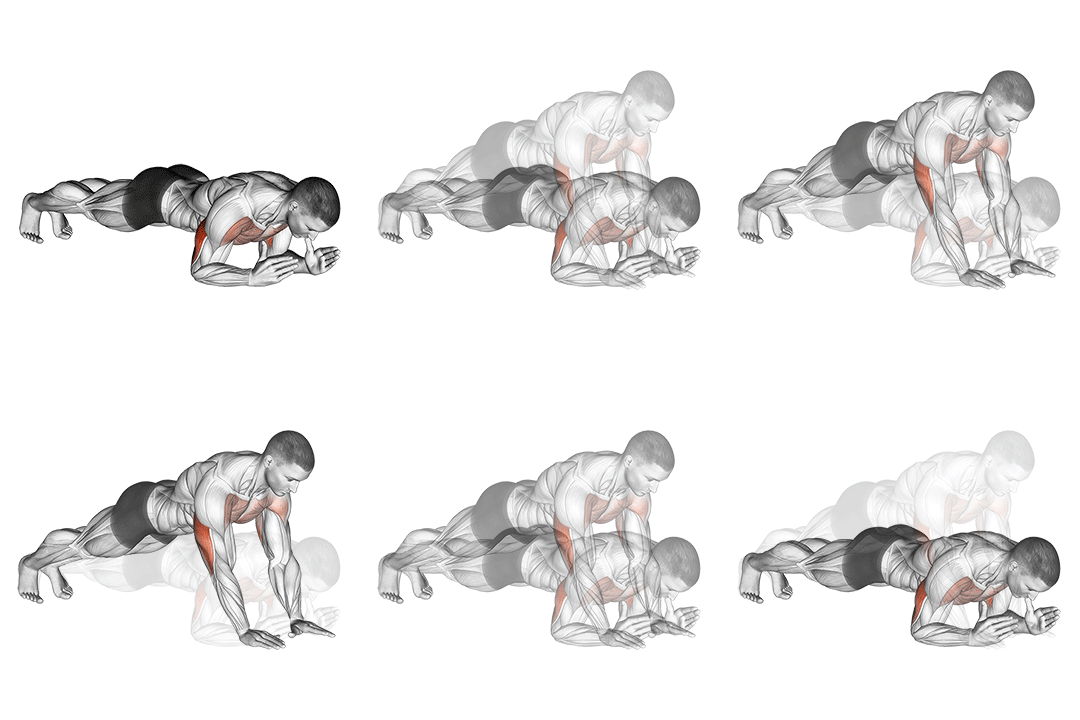
Diamond push-up
Different position (horizontal pressing) but similar tricep focus. Useful pairing for complete tricep development.
How to program the Bench Dip On Floor into your training
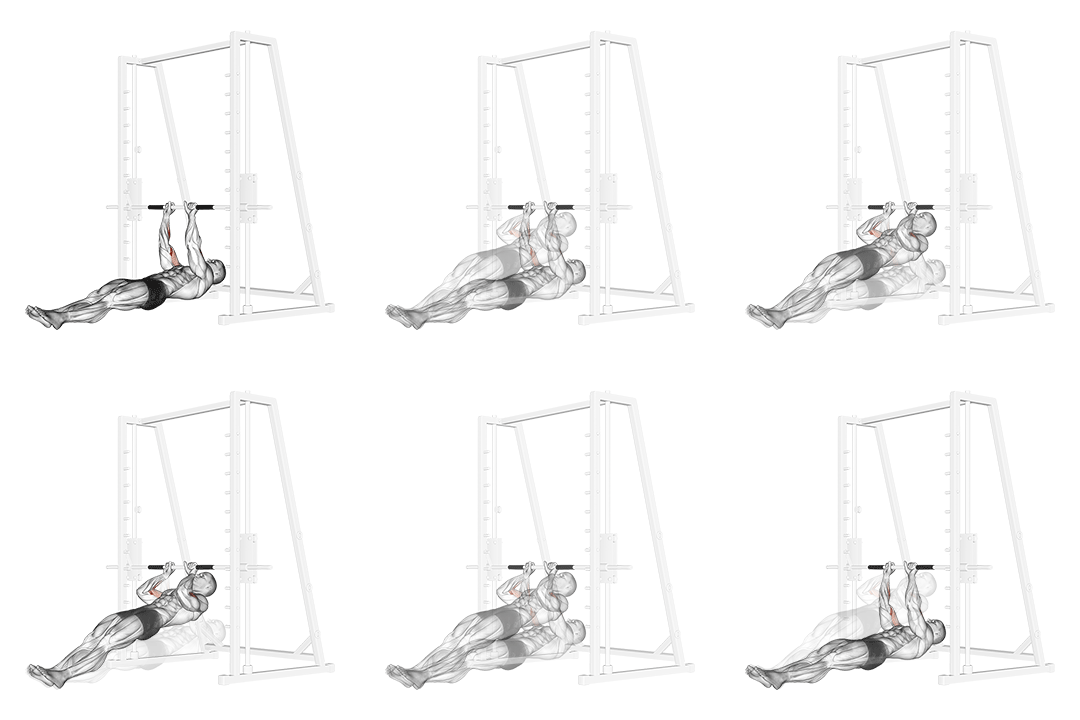
Bench dips on floor work as either a primary tricep exercise for beginners or as warm-up/finisher for trained athletes. For beginners (working toward standard bench dips): 3-4 sets of 8-15 reps with 60-90 seconds rest. Programmed twice per week. Progress to standard bench dips when 3 sets of 15 reps feel easy. As warm-up for trained athletes: 1-2 sets of 10-15 reps before heavier tricep work. As a finisher: 2-3 sets of 15-20 reps at the end of an upper body session. Adds tricep volume without specialized equipment. In a beginner full-body session: 3 sets of 10 bench dips on floor, 3 sets of 8-10 push-ups, 3 sets of 8-10 inverted rows, 3 sets of 12 squats. Done 2-3 times per week. Do not pair with heavier tricep work in the same session for beginners.
Recovery and frequency
Bench dips on floor have moderate recovery cost — 48 hours between sessions is plenty. The reduced load compared to harder variations means soreness is moderate even in the first weeks of training. Wrist tightness from the bench-supported position is common. Wrist circles before sessions help. Standard recovery practices cover the rest.
Frequently asked questions
How many sets and reps of bench dips on floor should I do?
3-4 sets of 8-15 reps with 60-90 seconds rest. Build to 3 sets of 15 reps before progressing to standard bench dips.
How often should I train bench dips on floor?
2-3 times per week. The reduced load allows higher session frequency.
Bench dip on floor vs standard bench dip: what's the difference?
Bench dip on floor uses a lower surface, reducing both the range of motion and the load. Standard bench dips use a hip-height bench with feet flat on the floor, providing more challenge.
Are bench dips on floor effective?
For beginners, yes. For trained athletes, the load is too low for hypertrophy. Use them as warm-up or volume work.
What if I don't have a bench?
Use any sturdy elevated surface — a step, low coffee table, or sturdy chair. The surface needs to be solid (won't shift) and at least at mid-shin height.
Can I do bench dips on floor daily?
Spread out, yes — daily low-volume work (5-10 reps multiple times per day) builds tendon tolerance gradually. For high-volume training, every other day with rest is better.
Useful tools for this exercise
Build a workout with the Bench Dip On Floor
Puna gives you guided bodyweight workouts you can do anywhere — no equipment, no gym, just structured progressions that build real strength.