Archer Push Up
advanced strength exercise · body weight · targets pectorals
- Body part
- chest
- Primary target
- pectorals
- Equipment
- body weight
- Difficulty
- advanced
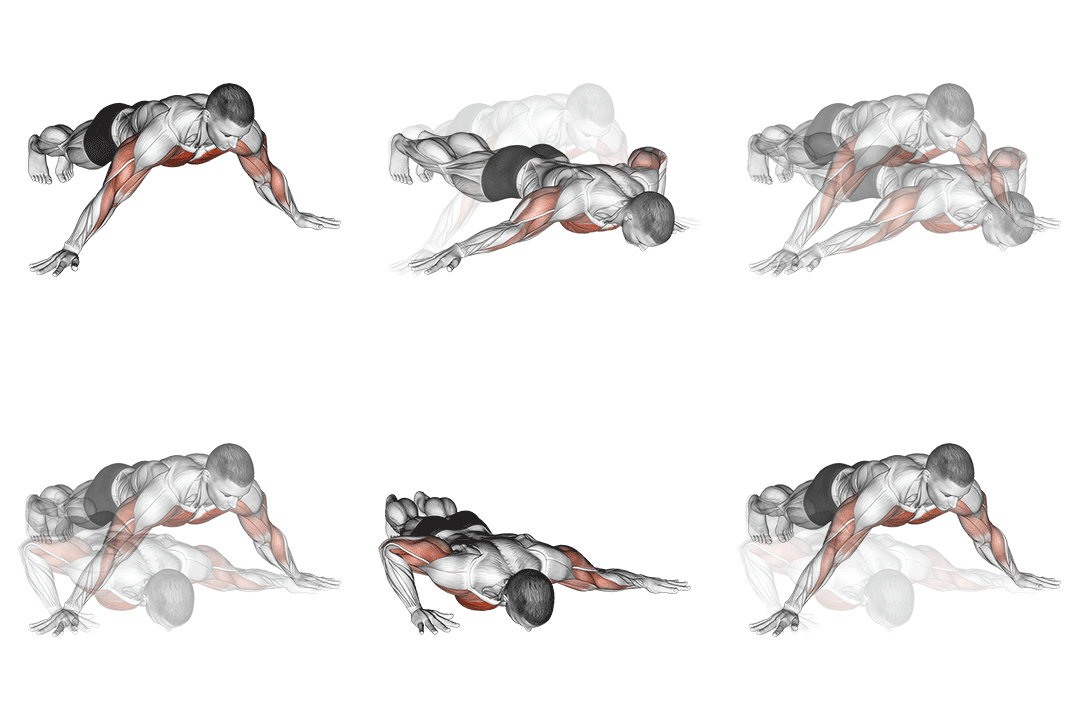
The archer push-up is a single-arm-emphasis push-up variation that loads one side of the body at a time, with the working arm performing most of the press while the extended arm provides minimal stabilizing support. By extending one arm out to the side parallel to the floor, you shift up to 80% of your body weight onto the bent (working) arm. The result is a push-up variation that bridges the gap between standard push-ups and the legendary one-arm push-up. This is one of the most effective ways to build single-arm pressing strength using only bodyweight. The one-arm push-up is the gold standard, but it requires exceptional strength that most trainees don't have and may never develop. The archer push-up offers most of the strength benefit at significantly less skill demand. Trainees who can do 25-30 strict push-ups can usually start working with archer push-ups within a session or two; reaching 5-10 clean reps per side typically takes 3-6 months of dedicated practice. What makes archer push-ups particularly valuable is the unilateral loading — most pressing exercises (push-ups, bench press, dips) load both arms equally, which masks left-right strength imbalances. Archer push-ups expose those imbalances immediately. Trainees often discover that one side is significantly weaker, and addressing the imbalance through dedicated unilateral work improves overall pressing strength and reduces injury risk. As a strength milestone, the archer push-up signals genuinely advanced bodyweight pressing capability and earns its place as a serious progression goal.
Why train the Archer Push Up?
- Builds single-arm pressing strength as a stepping stone toward one-arm push-ups.
- Exposes and corrects left-right strength imbalances that bilateral pressing exercises mask.
- Loads the chest, triceps, and shoulders with significantly more weight per arm than standard push-ups.
- Trains the core stability needed to maintain alignment under asymmetric loading.
- Develops the shoulder mobility and control needed for the extreme positions of one-arm work.
- Carries over to combat sports, climbing, and any context requiring unilateral upper-body strength.
How to do the Archer Push Up: step by step
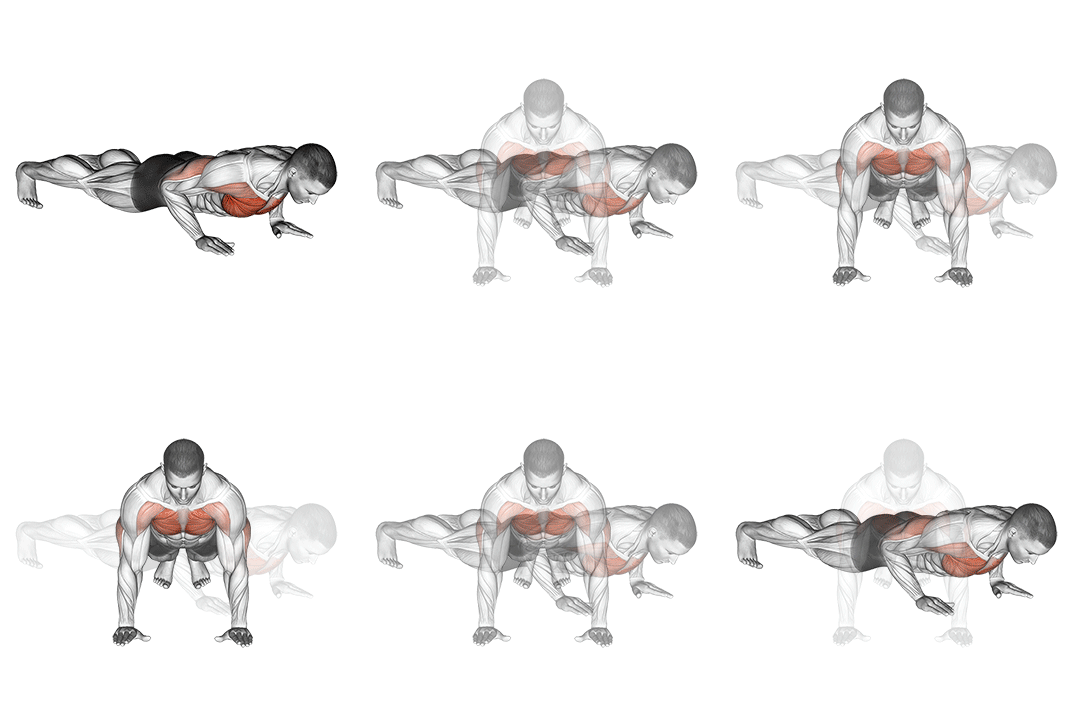
- 1Start in a push-up position with your hands slightly wider than shoulder-width apart.
- 2Extend one arm straight out to the side, parallel to the ground.
- 3Lower your body by bending your elbows, keeping your back straight and core engaged.
- 4Push back up to the starting position.
- 5Repeat on the other side, extending the opposite arm out to the side.
- 6Continue alternating sides for the desired number of repetitions.
Muscles worked
Primary
pectorals
Secondary
triceps, shoulders, core
Common mistakes to avoid
Hips rotating to compensate for the asymmetric load
The single-arm loading wants to twist the hips toward the working side. This rotation cheats the rep and shifts load away from the chest into the obliques. Brace the abs and glutes; keep the hips square to the ground throughout.
Letting the extended arm bend
The extended arm should stay locked out and parallel to the floor throughout the rep. If it bends, it starts taking some of the load and the working arm gets less work. Keep the extended arm straight; treat it as a balance support rather than a press contributor.
Putting weight on the extended arm
Beyond just bending, some trainees actively press through both arms — turning the archer push-up into a slightly off-center regular push-up. Visualize the extended arm as just along for the ride. The working arm should bear nearly all of the load.
Going too low and losing form
The working arm is under significantly more load than during standard push-ups, and form breaks down faster. Stop the descent when the chest is roughly level with the working hand or slightly below. Pushing for full chest-to-floor depth often produces shoulder strain and sloppy reps.
Attempting before having strength prerequisites
Archer push-ups demand significant single-arm pressing strength. Without 25-30 strict push-ups as a baseline, you don't have the strength to maintain form. Build the foundation first; archer push-ups become productive when the prerequisites are met.
Easier and harder variations
Easier
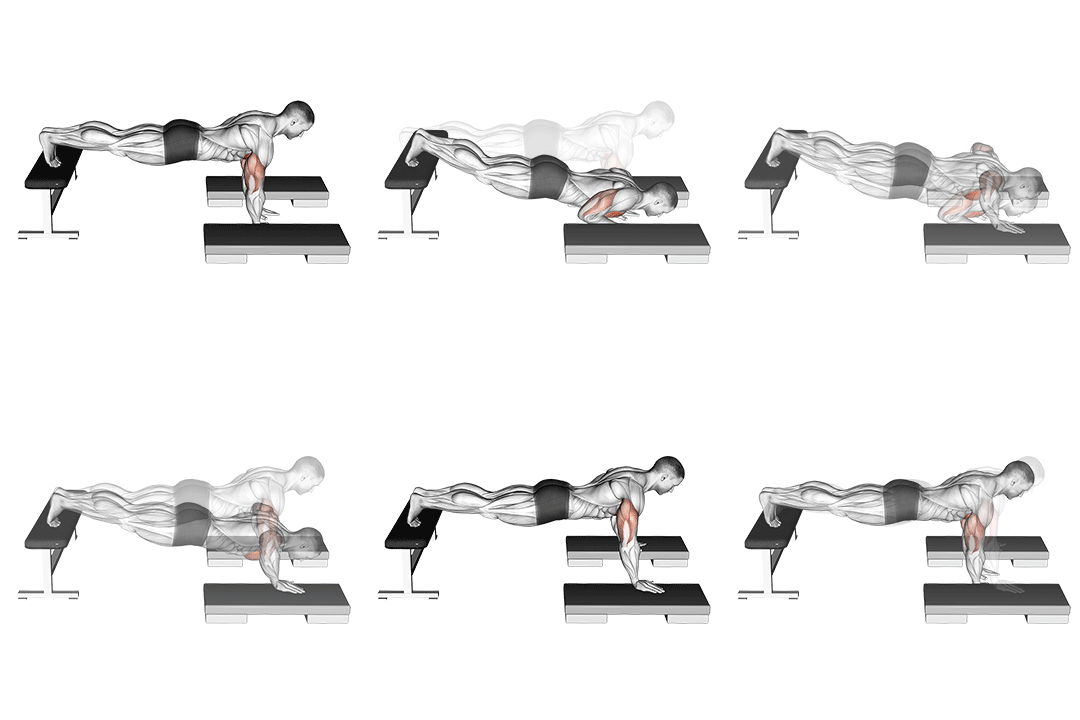
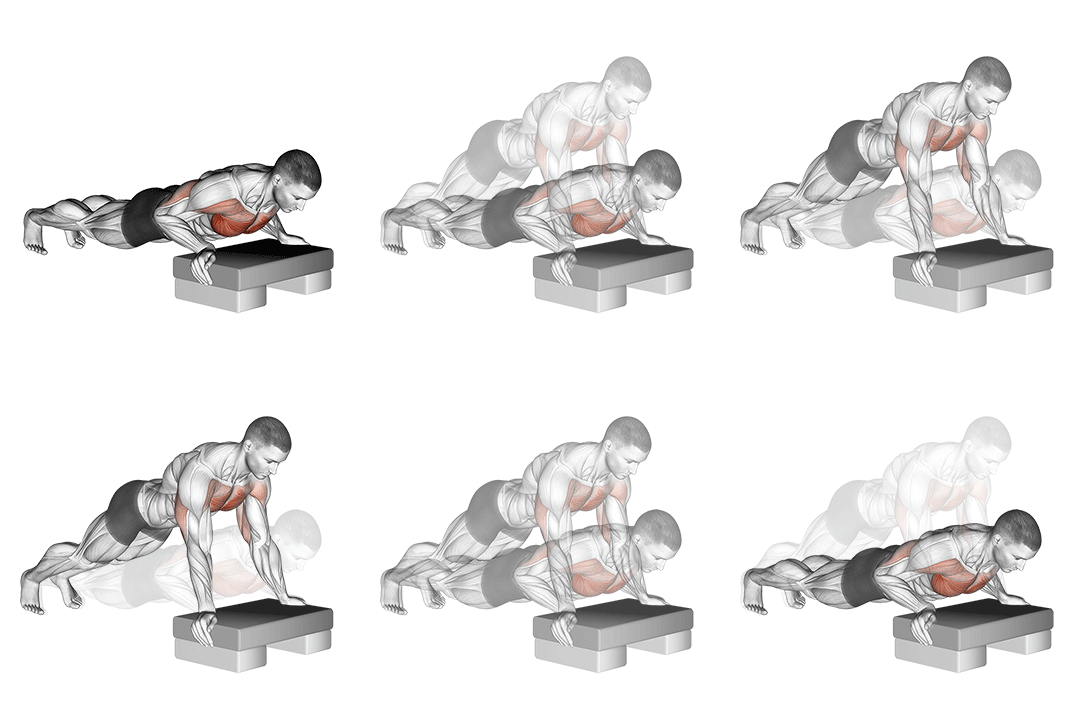
Place the extended arm on a slightly raised surface (block, book, ball) for partial assistance — the elevated support allows the extended arm to provide more stabilization. Or perform with knees down (kneeling archer push-up) to reduce overall body weight.
Harder
Reduce the support of the extended arm progressively until it's barely contacting the floor. Then transition to typewriter push-ups (sliding from one side to the other at the bottom of each rep). Eventually, work toward one-arm push-ups using the archer position as the strength foundation.
Alternative exercises
One-arm push-up
The full progression goal. Trains absolute single-arm pressing strength. Use archer push-ups as the bridge to this exercise; one-arm push-ups demand exceptional strength.
Pseudo planche push-up
Different unilateral-style emphasis on shoulder and core strength. Complementary to archer push-ups; both target advanced bodyweight strength.
Strict push-up
Foundation that archer push-ups build on. If standard push-ups aren't strong yet, build that base first.
How to program the Archer Push Up into your training
Archer push-ups belong as advanced strength work, not as a beginner introduction. They demand prerequisites and they punish trainees who skip them. Prerequisites: 25-30 strict push-ups in a single set. If you can't do that, build the foundation first — archer push-ups will be more productive once the strength is there. Sets and reps: 3-4 sets of 4-8 reps per side with 90-120 seconds rest. The high load means low reps drive the stimulus. Total weekly volume of 30-60 reps per side is appropriate. Frequency: 2 times per week is the sweet spot. The shoulders and elbows take significant load and need 48-72 hours between sessions to recover. In an upper-body session: place archer push-ups early when freshness matters most. Sample order: warm-up, 4 sets of 5 archer push-ups per side, 3 sets of 8 standard push-ups for volume, 4 sets of 6 pull-ups, 3 sets of 30-second hollow holds. For trainees building toward one-arm push-ups: progress from regular archer push-ups (extended arm fully extended) to assisted one-arm variations (extended hand barely touching), and finally to one-arm push-ups. The progression typically takes 6-12 months of consistent training. Don't program archer push-ups daily — the elbow and shoulder load is significant and accumulates faster than you might expect. Two sessions per week with adequate volume produces faster gains than four sessions of incomplete recovery.
Recovery and frequency
Archer push-ups are demanding on the working arm's chest, shoulders, triceps, and elbow. 48-72 hours between sessions is the minimum; 72-96 hours is wiser when first introducing the exercise. The main warning signs are anterior shoulder pain on the working arm side, elbow tendinopathy (inner or outer), and wrist soreness from the asymmetric load. Any of these warrant reducing volume by 50% and adding rotator cuff prehab and forearm work. The elbow is particularly susceptible because the working arm absorbs nearly full bodyweight; gradual volume building protects against tendon issues. Standard chest and triceps soreness on the working side is normal and fades within 48-72 hours. Asymmetric soreness (one side significantly more sore than the other) often indicates strength imbalance — train the weaker side first or with slightly more volume to address the imbalance over weeks.
Frequently asked questions
How many sets and reps of archer push-ups should I do?
3-4 sets of 4-8 reps per side with 90-120 seconds rest. Total weekly volume of 30-60 reps per side is appropriate. The high load means low reps drive the stimulus.
How often should I do archer push-ups?
2 times per week. The shoulders and elbows need 48-72 hours between sessions due to the high single-arm load.
How long does it take to progress from archer push-ups to one-arm push-ups?
6-12 months of consistent training, often longer. The path runs through full archer push-ups, then partial-assist variations (extended hand barely touching), then one-arm push-ups. Patience is the main predictor of success.
Will archer push-ups build muscle?
Yes — the increased load per arm drives meaningful chest and triceps growth, especially compared to high-rep standard push-ups. Combined with adequate nutrition, archer push-ups produce visible muscle development.
Why is one side weaker than the other?
Common — most trainees have a notably stronger dominant side. The asymmetry usually comes from years of bilateral training (push-ups, bench press) where the dominant side carries more load. Archer push-ups expose and address the imbalance over weeks of dedicated unilateral work.
Is this safe for beginners?
No — beginners should master strict push-ups (25-30 in a single set) before introducing archer variations. The high single-arm load demands base strength and joint preparedness. Build the foundation first, introduce archer push-ups 6-12 months in.
Useful tools for this exercise
Build a workout with the Archer Push Up
Puna gives you guided bodyweight workouts you can do anywhere — no equipment, no gym, just structured progressions that build real strength.