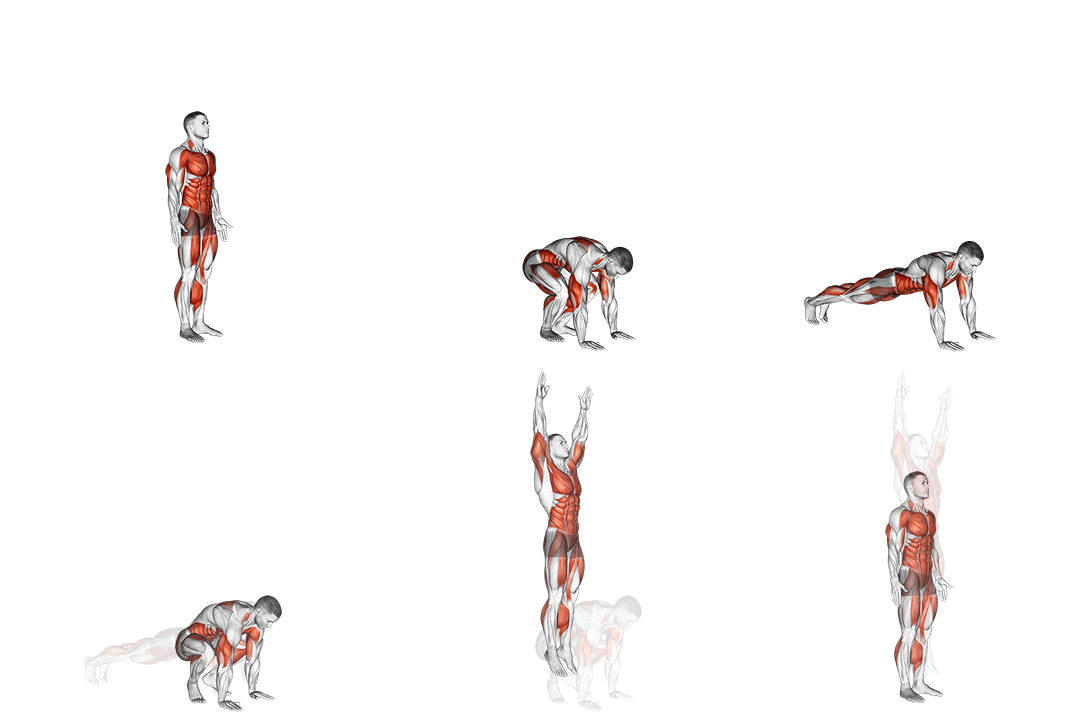
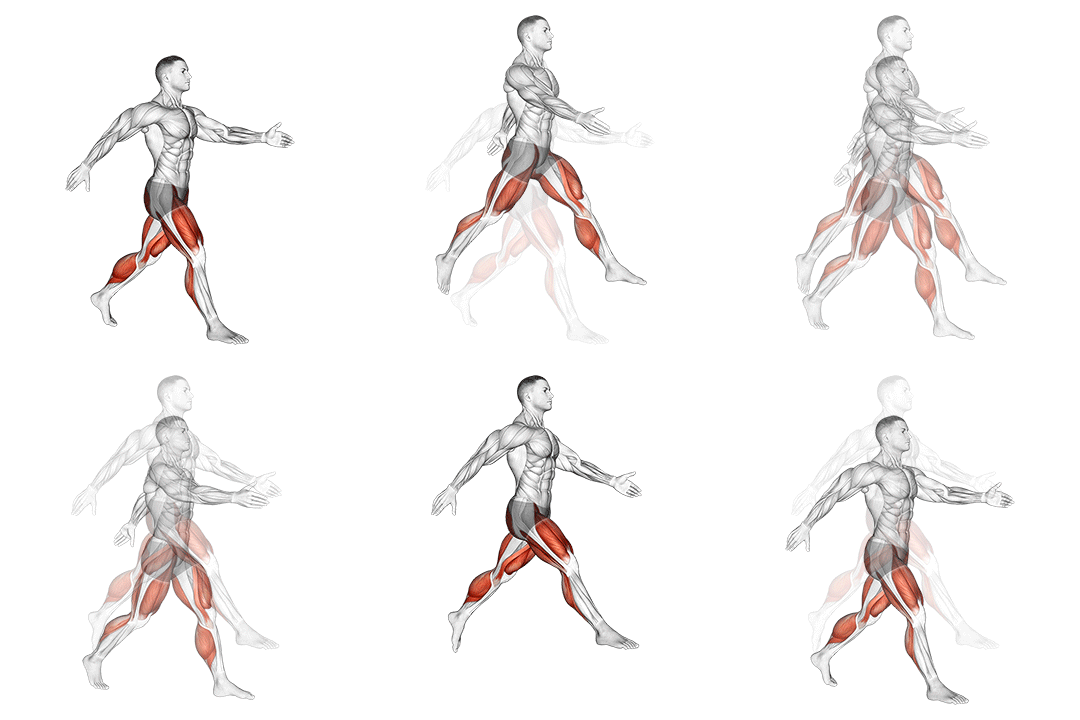
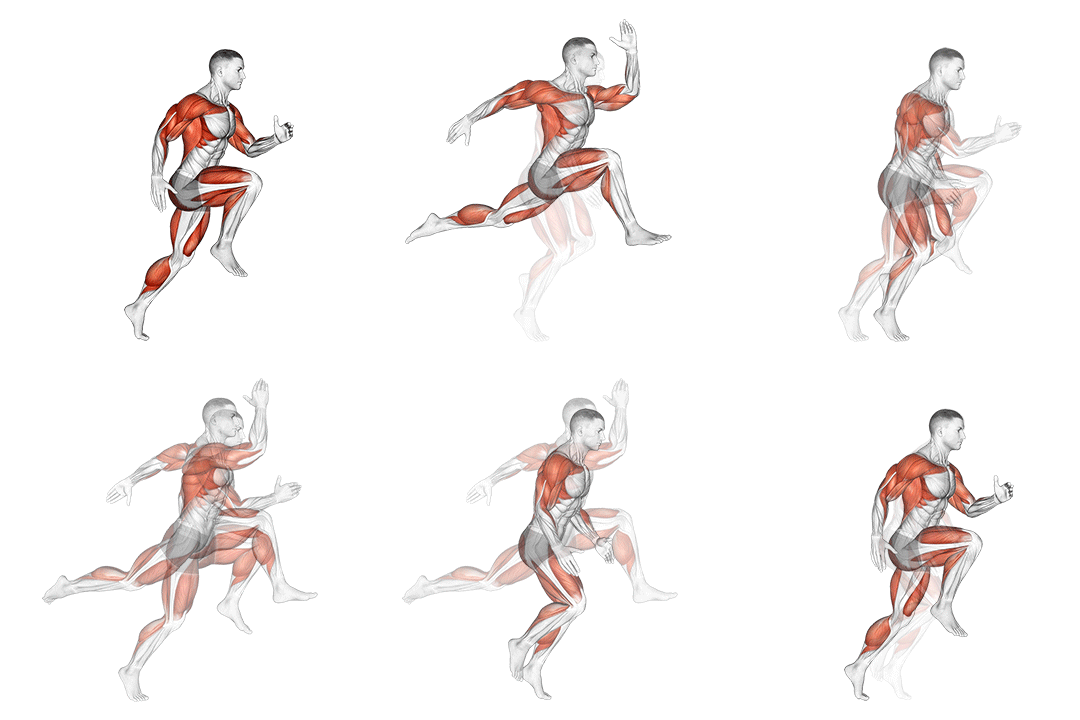
Wheel Run
advanced cardio exercise · body weight · targets cardiovascular system
- Body part
- cardio
- Primary target
- cardiovascular system
- Equipment
- body weight
- Difficulty
- advanced
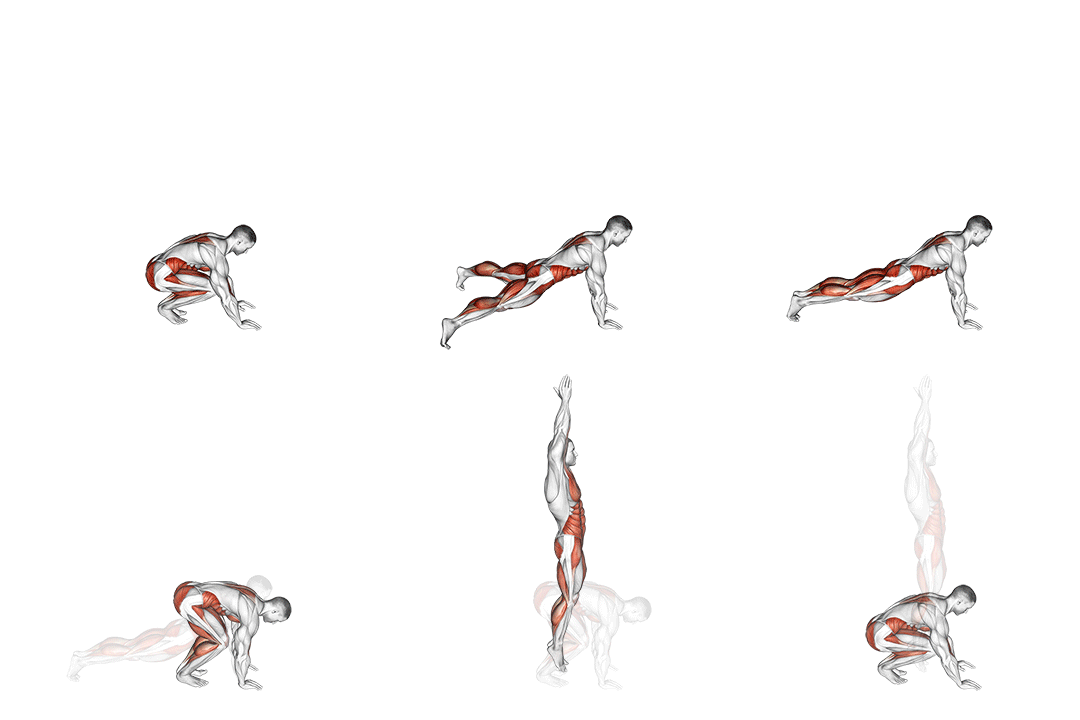
The wheel run is an advanced bodyweight cardio drill that combines an ab wheel rollout with cardiovascular intent. From a plank position with hands on the wheel, you roll the wheel forward by extending the arms and body until fully extended, then pull back to the start position. Performed continuously at moderate-to-fast pace, it produces a strange hybrid of cardio conditioning and severe core training in one motion. It's positioned here as cardio because the high-rep continuous nature elevates heart rate substantially; it could equally be classified as advanced core work. This is one of the more demanding bodyweight conditioning drills. The ab wheel itself is a notoriously brutal core exercise even for single reps; performing the rollout-and-return motion continuously transforms it into something most trainees can't sustain for more than 30-60 seconds. The shoulders work hard to stabilize the moving wheel, the lats engage to pull the wheel back, the core works overtime to prevent the lower back from sagging. Few cardio exercises produce as much full-body work per minute, but the demands also exclude beginners and most general fitness trainees. Where this drill earns its place is in advanced training contexts — gymnastic strength programs, severe athletic conditioning, or extreme HIIT protocols. The prerequisites are real: trainees should be able to perform 10-15 strict ab wheel rollouts before introducing the continuous wheel run. Without that core foundation, the lower back collapses repeatedly during sets, which produces injury rather than training. For trainees with the prerequisites, programmed at low frequency (1-2 sessions per week), this is a unique stimulus that few alternatives match.
Why train the Wheel Run?
- Combines severe core training with cardiovascular conditioning in a single drill.
- Builds shoulder stability under continuous moving load — rare for bodyweight cardio.
- Engages the lats and shoulders alongside the core, producing full-body conditioning.
- Provides a unique training stimulus not replicable with standard cardio exercises.
- Time-efficient: 30-60 second sets produce serious work in minimal time.
- Useful for advanced gymnastic strength programs and athletic conditioning.
How to do the Wheel Run: step by step
- 1Start in a plank position with your hands on the wheel and your body straight.
- 2Engage your core and start rolling the wheel forward by extending your arms.
- 3Continue rolling until your body is fully extended and your arms are overhead.
- 4Reverse the movement by pulling the wheel back towards your body, using your core and arms.
- 5Repeat for the desired number of repetitions.
Muscles worked
Primary
cardiovascular system
Secondary
quadriceps, hamstrings, calves
Common mistakes to avoid
Insufficient core strength prerequisites
Most wheel run injuries come from trainees with inadequate core strength attempting the drill. Build to 10-15 strict ab wheel rollouts before introducing the continuous version. Without that base, the lower back sags repeatedly, which produces injury rather than training.
Letting the lower back arch
When the wheel rolls forward, the lower back wants to extend and the hips want to drop. This places severe shear stress on the lumbar spine. Brace the abs and glutes throughout — the body should travel as a unified unit, not in segments. If the back arches, the set is done.
Going too fast at the start
The exercise is deceptively demanding. The first sets should be moderate-paced, focused on form quality. Speed can come after the pattern is grooved at sustainable pace, but the form is non-negotiable. Sloppy fast reps produce injury.
Going too far on the rollout
Full extension (arms overhead, body parallel to floor) is the maximum range. Going beyond that strips control from the core and stresses the lower back. Stop the rollout where you can still control the return; for most trainees this is short of full extension.
Programming too frequently
The cumulative demand on shoulders, lats, and core is significant. More than 1-2 sessions per week produces accumulating fatigue and increases injury risk. Once weekly is often the right frequency for most trainees.
Easier and harder variations
Easier
Drop to your knees rather than starting from a full plank — the kneeling version reduces the lever arm and core demand significantly. This is the right starting point for trainees building toward the full version. Or perform standing ab wheel rollouts with reduced range (only rolling out to 45-degree angle).
Harder
Increase the rollout range gradually until you reach full extension. Or perform single-arm wheel runs (one hand on the wheel, the other behind the back) for asymmetric loading. For maximum challenge, perform from a decline position (feet elevated) — the increased load on the shoulders multiplies the demand.
Alternative exercises
Standard ab wheel rollout
Same exercise without the continuous cardio component. Use this to build the core strength prerequisite before progressing to wheel runs.
Plank to elbow plank
Static core endurance work. Different stimulus but trains similar core control. Use as accessory work.
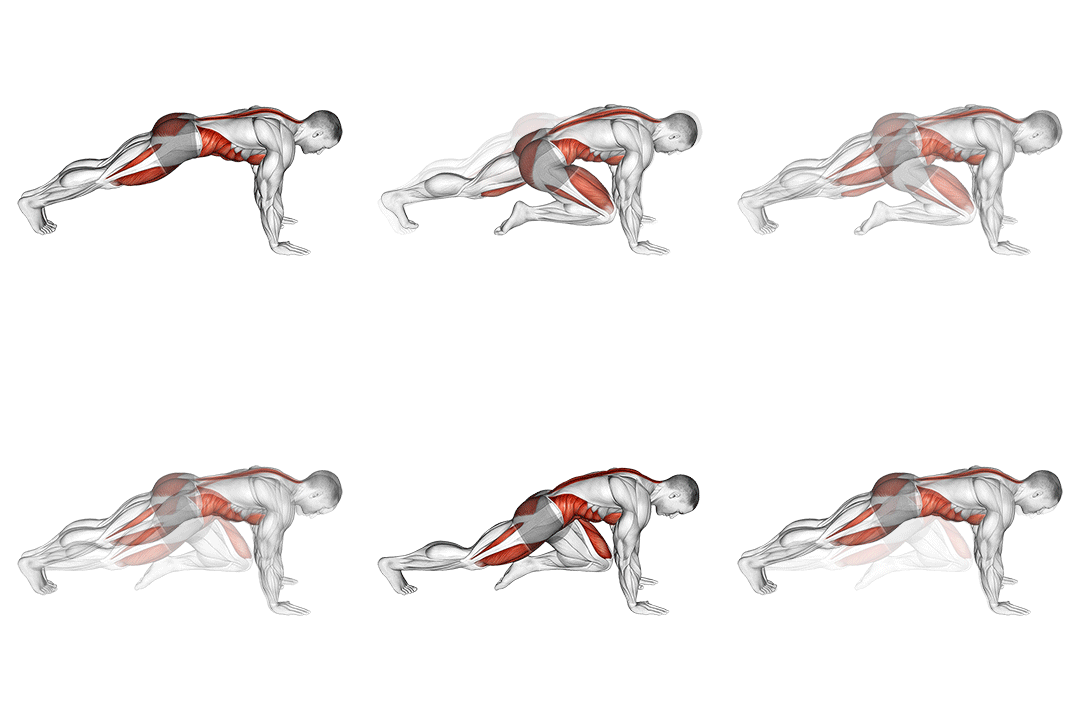
Bear crawl
Less demanding alternative with similar full-body cardio and core stimulus. More accessible to trainees who can't yet handle wheel runs.
How to program the Wheel Run into your training
Wheel runs belong as specialty work for trainees with adequate strength prerequisites. They earn their place in advanced gymnastic or athletic programs, not in general fitness routines. Prerequisites: 10-15 strict ab wheel rollouts in a single set, healthy lower back and shoulders, 6+ months of consistent ab wheel training. Without these, the exercise produces injury rather than training. Sets and reps: 3-4 sets of 30-45 seconds with 90-120 seconds rest. Stop when form breaks down. Total weekly volume of 90-180 seconds of work is appropriate. Frequency: 1-2 times per week is the cap. The shoulders, core, and lower back need 72 hours between sessions to recover from the cumulative load. In an advanced conditioning circuit: 30 seconds wheel run, 30 seconds rest, alternated with other advanced bodyweight work like muscle-ups and pistol squats. The wheel run provides one specific stimulus alongside other elite-level exercises. For athletes: integrate into sport-specific conditioning days where the unique full-body cardio-and-core stimulus has highest carryover. For advanced gymnastic strength training: pair with planches, levers, and l-sits as part of integrated core strength work. The continuous loaded core demand of wheel runs complements static gymnastic holds. For general fitness: this exercise is largely inappropriate. Standard cardio (running, jumping rope) and core work (planks, hanging leg raises) cover most needs without the prerequisites and risks of wheel runs. Don't program wheel runs during deload weeks or when fatigued — the demand on the core is exactly what should be reduced during recovery.
Recovery and frequency
Wheel runs have a steep recovery cost. The shoulders, core, lats, and lower back all absorb significant load, and the cumulative effect is greater than the sum of the individual demands. 72 hours between sessions is the minimum; 96 hours is wiser when first introducing the exercise. The lower back is usually the limiting recovery factor — soreness or stiffness in the lumbar spine warrants reducing volume and adding back-friendly accessory work. The shoulders are second; persistent shoulder fatigue or pain warrants attention. Long-term, regular wheel run training requires monthly deload weeks where you skip the exercise entirely. Pair the work with daily core mobility (cat-cow, child's pose) and shoulder mobility to maintain joint health. Sleep, hydration, and protein intake all support the high recovery demand.
Frequently asked questions
How many sets and reps of wheel runs should I do?
3-4 sets of 30-45 seconds with 90-120 seconds rest. Stop when form breaks down. Total weekly volume of 90-180 seconds is appropriate for advanced trainees.
How often should I do wheel runs?
1-2 times per week maximum. The cumulative demand on shoulders, core, and lower back needs 72-96 hours between sessions for recovery.
Is this safe for beginners?
No — this is an advanced exercise requiring prerequisites that most general fitness trainees don't have. Build to 10-15 strict ab wheel rollouts first, which itself takes months of dedicated training. Then introduce wheel runs cautiously.
What's the difference between wheel run and standard ab wheel rollout?
Standard rollouts are slower and treated as a strength exercise. Wheel runs perform rollouts continuously at faster pace for cardio effect alongside the core demand. The wheel run requires significantly more endurance from the supporting musculature.
Will this hurt my back?
It can if you skip prerequisites or push form too hard. With proper preparation (10-15 strict rollouts as base, gradual introduction, conservative volume), most trainees develop the lower back tolerance for the exercise. Sharp lower back pain warrants stopping immediately.
Can I do this without an ab wheel?
Not really — the wheel is integral to the exercise. Substitutes (using a barbell on the floor, sliding discs) can replicate some of the motion but lose the rolling stability challenge. If you want similar training without the wheel, bear crawls and plank variations cover much of the same territory.
Useful tools for this exercise
Build a workout with the Wheel Run
Puna gives you guided bodyweight workouts you can do anywhere — no equipment, no gym, just structured progressions that build real strength.