Walking High Knees Lunge
beginner cardio exercise · body weight · targets cardiovascular system
- Body part
- cardio
- Primary target
- cardiovascular system
- Equipment
- body weight
- Difficulty
- beginner
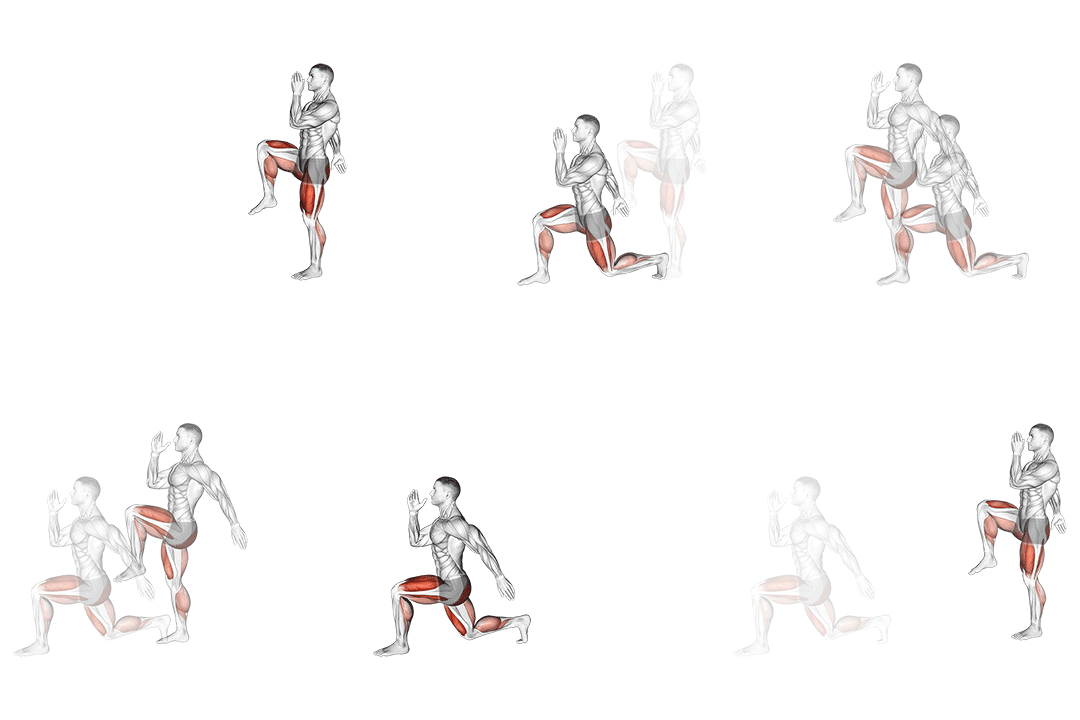
The walking high knees lunge combines two foundational movements — high-knee marching and walking lunges — into a single dynamic exercise. As you step forward into a lunge, you lift the back knee toward the chest at the top of each stride before stepping into the next lunge. The result is a full-body cardio and lower-body strength exercise that builds work capacity, hip mobility, and unilateral leg strength simultaneously. It's particularly useful as a warm-up before sport practice or athletic training. The combination of forward progression, deep lunge depth, and high knee drive prepares the hips, knees, ankles, and core for the kind of dynamic athletic movements that follow. Many sport coaches include 1-2 lengths of walking high knees lunges in their team warm-ups for exactly this reason — the exercise wakes up the entire lower body in 60-90 seconds. For general fitness training, walking high knees lunges work as a moderate-intensity cardio exercise that doesn't require any equipment beyond an open space. They're significantly more demanding than walking lunges alone (the high knee drive adds heart rate elevation and hip flexor work) and more accessible than running for beginners or trainees with joint sensitivity.
Why train the Walking High Knees Lunge?
- Combines lower-body strength, cardio, and mobility in one efficient movement.
- Trains the hip flexors and unilateral leg strength simultaneously.
- Excellent dynamic warm-up before sport practice or athletic training.
- More accessible than running for beginners or those with joint sensitivity.
- Requires only an open space — works anywhere.
- Adds variety to lower-body programming when standard lunges have become routine.
How to do the Walking High Knees Lunge: step by step
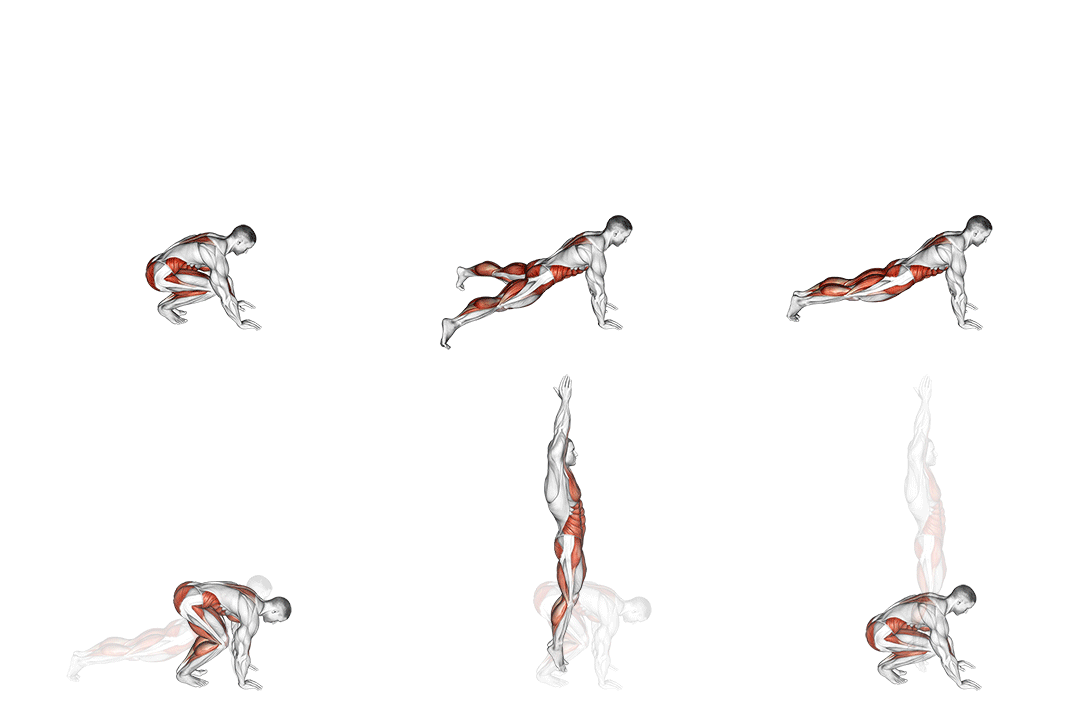
- 1Stand with your feet hip-width apart.
- 2Lift your right knee up towards your chest as high as you can while balancing on your left leg.
- 3Step forward with your right foot and lower your body into a lunge position, bending both knees to a 90-degree angle.
- 4Push off with your right foot and bring your left knee up towards your chest.
- 5Step forward with your left foot and lower your body into a lunge position.
- 6Continue alternating legs and lunging forward, keeping your core engaged and maintaining a steady pace.
- 7Repeat for the desired number of repetitions.
Muscles worked
Primary
cardiovascular system
Secondary
quadriceps, hamstrings, glutes, calves
Common mistakes to avoid
Cutting depth on the lunge to manage the high knee
Adding the high knee makes the exercise harder, so the temptation is to lunge less deeply. Maintain full lunge depth (back knee close to floor) on every step — the high knee should add to the work, not replace part of it.
Letting the back knee crash into the floor
Slamming the back knee down stresses the joint and uses momentum. Lower the back knee with control until it's an inch or two from the floor, then drive forward into the next step with the high knee.
Not lifting the knee high enough
The 'high knee' part matters — the knee should come to at least hip height at the top of each stride. Half-hearted knee lifts skip the hip flexor and cardio benefits the exercise should provide.
Letting the torso lean forward
Pitching the chest forward shifts load onto the lower back and reduces glute engagement during the lunge. Keep the torso upright throughout — chest tall, eyes on the horizon.
Going too fast for control
Walking high knees lunges done too quickly lose form on both the lunge and the knee drive. Take a measured pace — 2-3 seconds per stride feels right for most trainees.
Easier and harder variations
Easier
Drop the high knee and just do walking lunges. Or do high-knee marching in place (no lunges). Or reduce lunge depth.
Harder
Add weight (dumbbells held at the sides). Add upper body movement (arms swinging in coordination with the legs). Or progress to walking high knees with each rep ending in a jump.
Alternative exercises
Walking lunge
Same forward progression without the high knee. Lower cardio demand, more focus on lunge strength.
Standing high knees
High knee drive without the lunge component. Simpler cardio drill, less lower-body strength demand.
High knee against wall
Lower-impact regression for beginners. Same knee drive pattern with wall support and no walking.
How to program the Walking High Knees Lunge into your training
Walking high knees lunges work as warm-up, conditioning, or part of athletic training programs. The combined demand makes them efficient when training time is limited. As warm-up: 2 lengths of 20-30 yards before sport practice or athletic training. Wakes up the lower body and elevates heart rate. For cardio conditioning: 4-6 rounds of 30-45 seconds work with 30-60 seconds rest. Total work time of 4-5 minutes builds cardio in shorter sessions. In a lower body session: 4 sets of 8 squats (bilateral strength), 3 lengths of 20 yards walking high knees lunges (unilateral + cardio), 3 sets of 12 single-leg glute bridges per leg (accessory), 3 sets of 30-second front planks (core). For athletic teams, include walking high knees lunges as part of a 5-10 minute dynamic warm-up that progresses through walking, walking lunges, walking high knees lunges, and finally jogging or sprinting. Do not program walking high knees lunges in the same session as heavy bilateral squats — both load the lower body and recovery suffers when stacked.
Recovery and frequency
Walking high knees lunges in moderate volume have moderate recovery cost. The combined unilateral lunge work and hip flexor work usually leaves both the glutes and hip flexors notably sore for 1-2 days, especially in the first weeks of training. 48 hours between dedicated sessions is generally enough. Hip flexor tightness is the most common cumulative issue. Daily hip flexor stretches between sessions help. Knee discomfort during the exercise points to form errors (front knee tracking past toes, weak glutes). Address form first.
Frequently asked questions
How many sets and reps of walking high knees lunges should I do?
For warm-up: 2 lengths of 20-30 yards. For conditioning: 4-6 rounds of 30-45 seconds work with 30-60 seconds rest.
How often should I train walking high knees lunges?
2-3 times per week as part of a structured program. As warm-up, can be done before every workout.
Walking high knees lunges vs walking lunges: which is better?
Different tools. Walking high knees lunges add cardio and hip flexor work. Walking lunges alone focus more on pure unilateral strength. Use walking high knees lunges for warm-up or combined work; use walking lunges for primary unilateral strength training.
Are walking high knees lunges good for fat loss?
They contribute to cardio work that supports fat loss, but no single exercise drives fat loss. Total weekly training volume and nutrition do the heavy lifting.
Can I do walking high knees lunges if I have knee issues?
Depends on the source. The high knee drive adds dynamic hip flexion that some knee issues tolerate well, others don't. Try the exercise cautiously and back off if knee pain develops. Standard walking lunges may be a better choice for many knee conditions.
Should I count one rep as both legs or each leg separately?
For walking lunge counting, each step typically counts as one rep. Track total steps or distance covered for clearer progression.
Useful tools for this exercise
Build a workout with the Walking High Knees Lunge
Puna gives you guided bodyweight workouts you can do anywhere — no equipment, no gym, just structured progressions that build real strength.