Upward Facing Dog
beginner mobility exercise · body weight · targets spine
- Body part
- back
- Primary target
- spine
- Equipment
- body weight
- Difficulty
- beginner
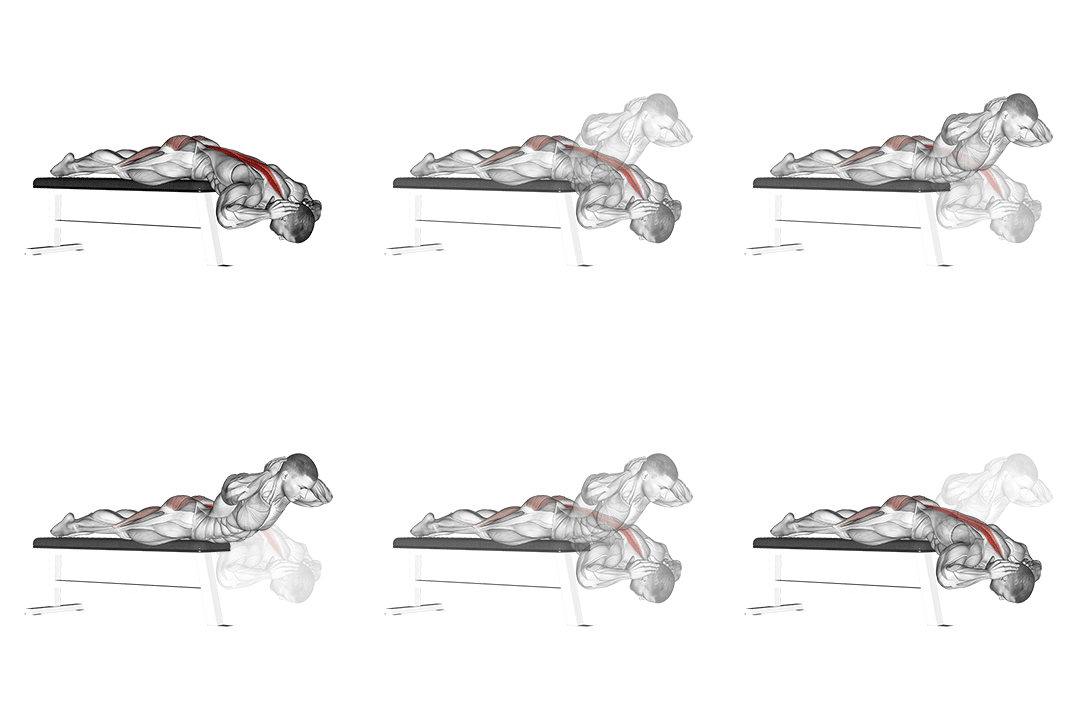
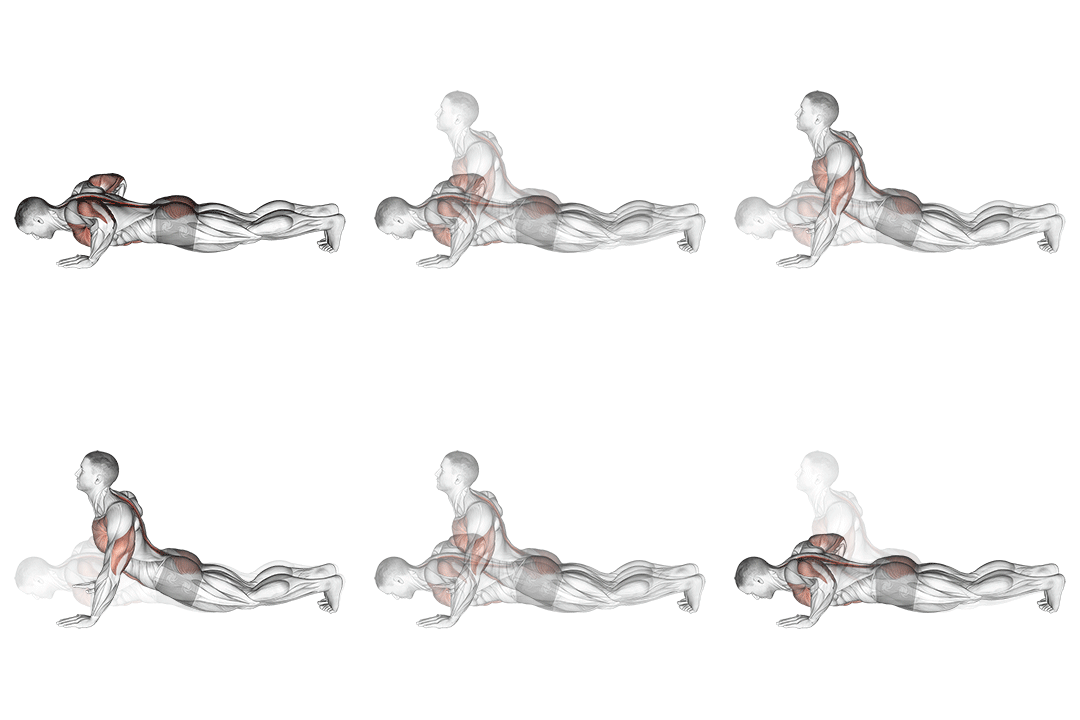
The upward facing dog is a foundational yoga pose and one of the most effective bodyweight backbends available. Lying face-down with hands placed beside the lower ribs, you press into the floor and straighten the arms, lifting the torso and thighs off the ground while the tops of the feet remain on the floor. The full pose creates a deep extension through the entire spine, opens the chest, and engages the back and shoulders simultaneously. This is the deeper progression of the sphinx pose. Where sphinx limits extension by keeping the forearms on the floor, upward dog allows the spine to extend more fully through the straightened arms. The increased range produces more thoracic mobility benefit and adds chest opening that sphinx doesn't reach. For trainees serious about overhead reach, posture, or spinal mobility, daily upward dog practice produces meaningful change over 4-6 weeks. The trade-off versus the gentler sphinx is the demand on the lower back, wrists, and shoulders. Upward dog requires functioning shoulder mobility, healthy wrists for the supporting position, and adequate core control to prevent the lower back from over-arching. Trainees with chronic lower-back issues, wrist problems, or shoulder restrictions should approach upward dog cautiously — sphinx provides the same general benefits with reduced demands. For healthy trainees, programmed daily as part of a yoga or mobility flow, upward dog is one of the most useful spinal mobility tools available without equipment.
Why train the Upward Facing Dog?
- Provides deep thoracic extension that addresses chronic kyphotic posture from sitting.
- Opens the chest and front of the shoulders, countering rounded-shoulder patterns.
- Engages the back muscles isometrically through the press-up phase.
- Improves overall spinal mobility through the extension range.
- Pairs naturally with downward dog and other yoga poses for comprehensive mobility flow.
- Costs nothing, requires only floor space, and integrates easily into morning or evening routines.
How to do the Upward Facing Dog: step by step
- 1Lie face down on the floor with your legs extended behind you.
- 2Place your hands on the floor next to your lower ribs, fingers pointing forward.
- 3Press your hands firmly into the floor and straighten your arms, lifting your torso and thighs off the ground.
- 4Roll your shoulders back and down, opening your chest and lifting your gaze towards the ceiling.
- 5Hold this position for a few breaths, then slowly lower your body back down to the starting position.
- 6Repeat for the desired number of repetitions.
Muscles worked
Primary
spine
Secondary
shoulders, chest
Common mistakes to avoid
Letting the lower back collapse into excessive arch
If the lower back arches dramatically while the upper back stays flat, the extension shifts entirely to the lumbar spine. Brace the abs to prevent excessive lumbar arch; the goal is distributed spinal extension, not lumbar-only loading.
Shrugging the shoulders
When pressing up, the shoulders often lift toward the ears. Pack the shoulders down and away from the ears throughout. Active shoulder positioning protects the rotator cuff and shifts work to the appropriate muscles.
Letting the thighs touch the floor
In full upward dog, only the tops of the feet and hands should touch the floor — the thighs and torso lift entirely off the ground. If the thighs rest on the floor, you're in a different (easier) pose. Press through the hands to lift the body fully.
Looking too far up
Excessive head extension compresses the cervical spine. Keep the head in line with the spine — gaze forward and slightly up, not directly at the ceiling.
Pushing into wrist pain
The wrist position in upward dog stresses the joints significantly. If wrists hurt, modify with sphinx pose (forearms down) or stop. Daily wrist mobility work helps build tolerance over time.
Easier and harder variations
Easier
Drop to sphinx pose (forearms on floor) — same general direction with significantly reduced wrist and lower-back demand. Or perform cobra pose (chest lifts but thighs stay on floor) for an intermediate intensity between sphinx and upward dog.
Harder
Hold upward dog longer (30-60 seconds) for sustained extension. Or progress to wheel pose (full backbend with hands and feet on floor) for deeper spinal extension. For dynamic mobility, integrate upward dog into sun salutation flows with downward dog transitions.
Alternative exercises
Sphinx pose
Gentler version with reduced demands. Use for trainees with wrist or lower-back issues.
Cobra pose
Intermediate intensity between sphinx and upward dog. Useful as progression.
Wheel pose
Full backbend progression for advanced trainees. Significantly more demanding than upward dog.
How to program the Upward Facing Dog into your training
Upward facing dog works best as part of a daily yoga or mobility flow rather than as a standalone exercise. Daily routine: 1-2 sets of 30-60 seconds, performed once or twice per day as part of a yoga or mobility sequence. In yoga sequences: integrated into sun salutations alternating with downward dog. Each transition lasts 5-10 breaths. Morning routine: 30-60 seconds as part of a 5-minute morning mobility flow with cat-cow, child's pose, and downward dog. Post-workout: 30 seconds as part of a cooldown, especially after pulling-heavy or core-focused sessions. For those with restricted thoracic extension or rounded posture: 2-3 sessions per day at 30-45 seconds. Combined with chest stretches and rear shoulder work, produces noticeable postural improvement over 4-6 weeks. For general fitness: 2-3 times per week as part of broader mobility work. Daily is better but not critical without specific posture concerns. Don't force the pose if wrists or lower back protest. Use sphinx pose as the safer alternative.
Recovery and frequency
Upward facing dog has minimal recovery cost when performed within current mobility range. Sharp lower-back pain or wrist discomfort warrants modifying or stopping. Standard practice produces no recovery concerns beyond reasonable daily nutrition and sleep.
Frequently asked questions
How long should I hold upward dog?
30-60 seconds per hold, 1-2 holds per session. Brief holds barely access the deeper benefits; longer holds drive more change.
How often should I do upward dog?
Daily as part of a yoga or mobility flow. The pose adapts well to frequent practice; benefits compound over weeks.
Upward dog vs cobra: what's the difference?
In cobra, the thighs rest on the floor and the chest lifts. In upward dog, the entire body lifts off except hands and tops of feet. Upward dog is the deeper progression.
Will this hurt my back?
Not when performed correctly with abdominal bracing. Letting the lower back collapse into excessive arch can produce discomfort. If pain appears, modify with sphinx pose.
Why do my wrists hurt?
The wrist position in upward dog stresses the joints. Daily wrist mobility (circles, prayer stretches) builds tolerance over weeks. If wrists remain problematic, switch to sphinx pose for the same general spinal benefit.
Can I do this with lower-back pain?
Cautiously, if at all. The extension pattern can aggravate certain back issues. Sphinx pose is the safer alternative; consult a physiotherapist for current issues.
Useful tools for this exercise
Build a workout with the Upward Facing Dog
Puna gives you guided bodyweight workouts you can do anywhere — no equipment, no gym, just structured progressions that build real strength.