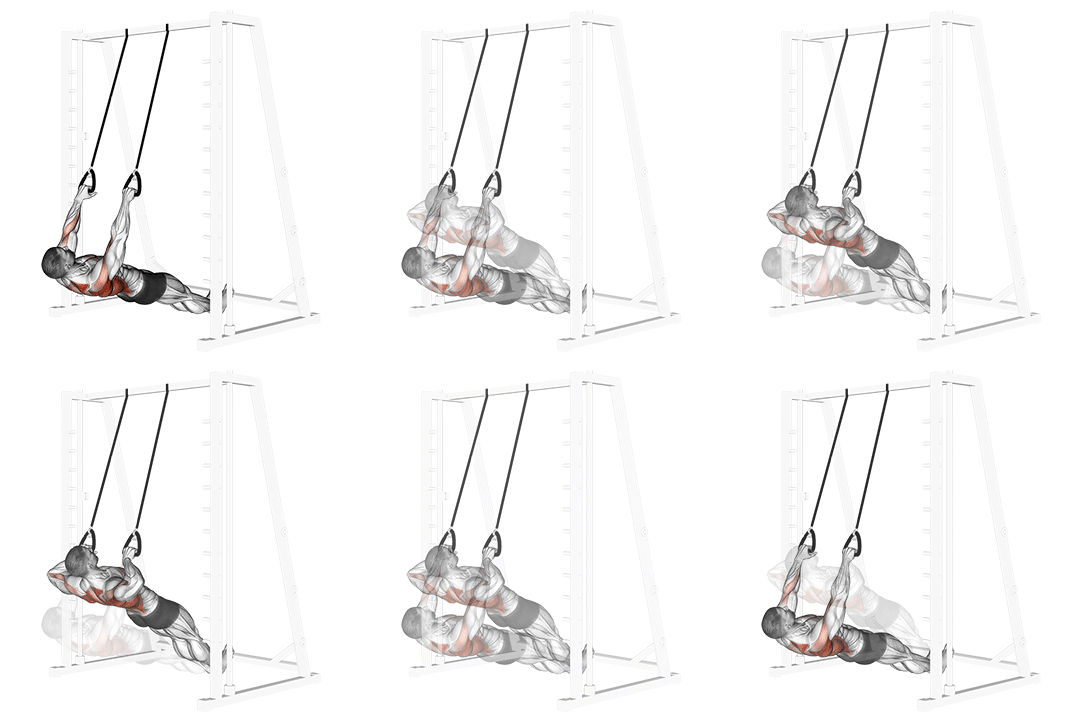
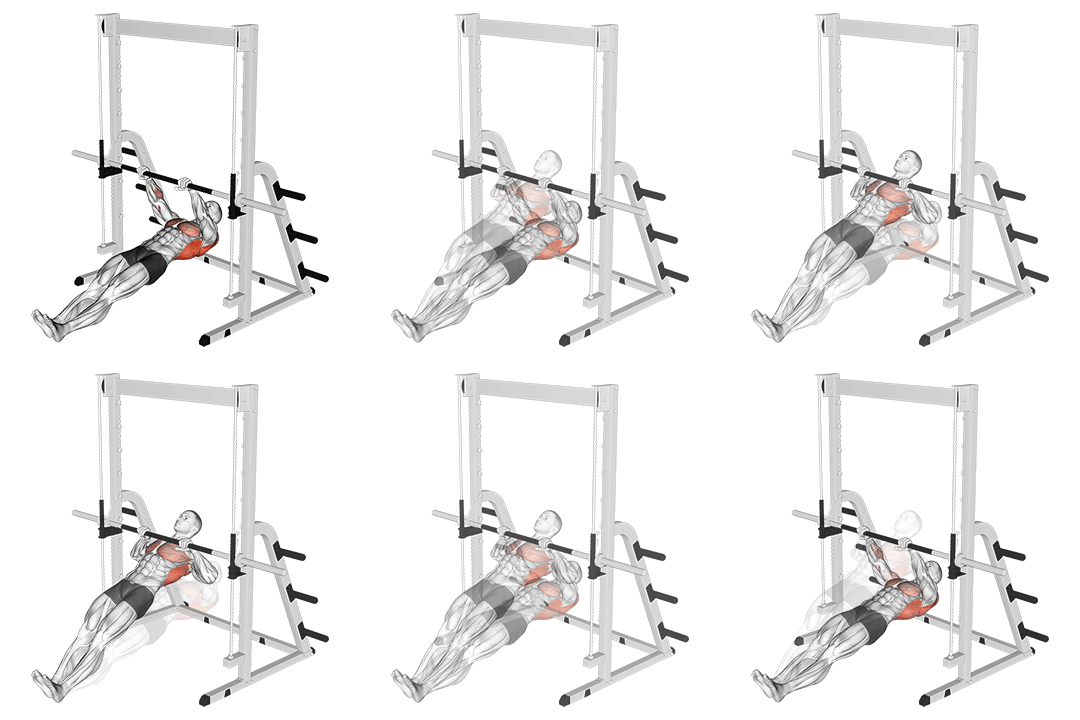
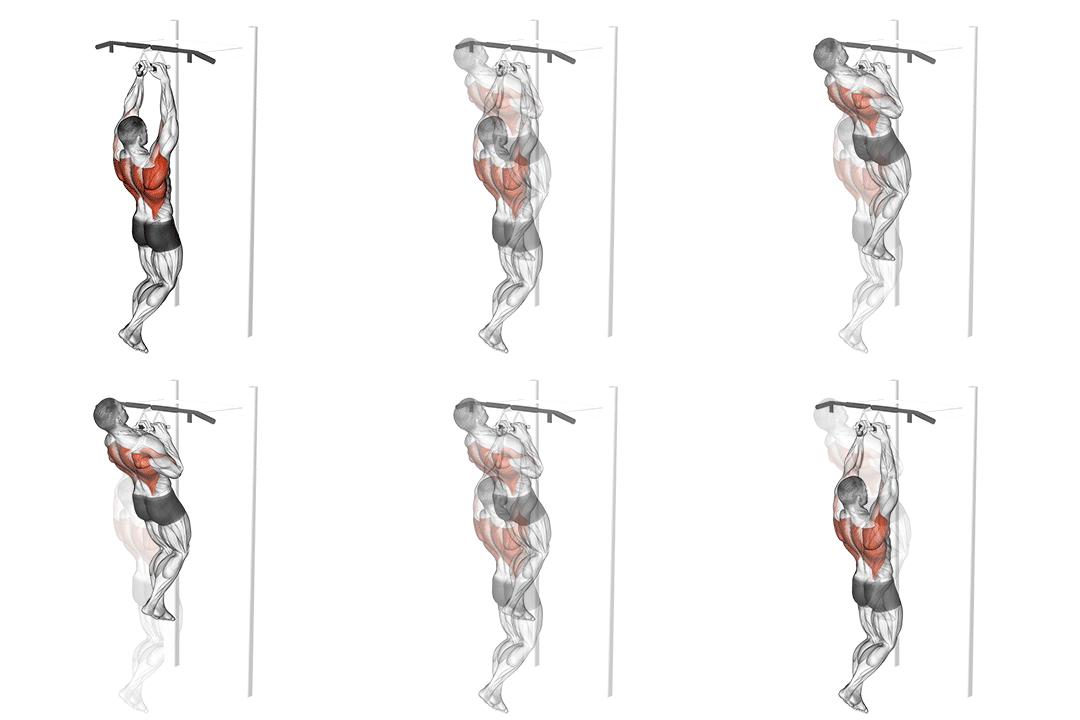
Chin-ups (narrow Parallel Grip)
intermediate strength exercise · body weight · targets upper back
- Body part
- back
- Primary target
- upper back
- Equipment
- body weight
- Difficulty
- intermediate
The chin-up with a narrow parallel grip — palms facing each other on a neutral-grip bar — sits between the standard pull-up (palms away) and the underhand chin-up (palms facing you) in terms of muscle emphasis. The neutral grip is generally the most shoulder-friendly variation, particularly for trainees with anterior shoulder issues that flare up during pull-ups or chin-ups. The biomechanics shift load slightly toward the upper back and biceps while reducing the rotational stress on the shoulder joint. This is one of the more underrated bodyweight pulling exercises. Many trainees default to standard pull-ups (palms away) or chin-ups (palms toward) because they're more visible in fitness media. Neutral-grip variations get less attention but produce arguably better results for most people — particularly those with shoulder mobility limitations or anyone managing chronic shoulder issues. The narrow grip variation specifically emphasizes the inner upper back and biceps even more than wider neutral grips. For home trainees, the limitation is equipment access. Standard pull-up bars typically don't have neutral handles. A doorway bar with parallel handles, a power tower with parallel grips, or gymnastic rings (which allow any grip orientation) provide access. For those without specialized equipment, hanging from a sturdy bar at standard grip width with palms facing each other isn't possible without parallel handles. The exercise earns its place when you have access to the right equipment; for general bodyweight training without specialized gear, standard pull-ups and chin-ups are more accessible.
Why train the Chin-ups (narrow Parallel Grip)?
- Most shoulder-friendly pull-up variation, useful for trainees with anterior shoulder issues.
- Builds the upper back and biceps with a grip orientation that reduces rotational shoulder stress.
- Provides variety in pulling mechanics that complements standard pull-ups and chin-ups.
- Useful for trainees rehabbing pulling-related shoulder issues who can't yet handle wider grips.
- The narrow grip emphasizes the inner upper back, lats, and biceps over outer width.
- Pairs naturally with rotational shoulder mobility work for compound shoulder health programming.
How to do the Chin-ups (narrow Parallel Grip): step by step
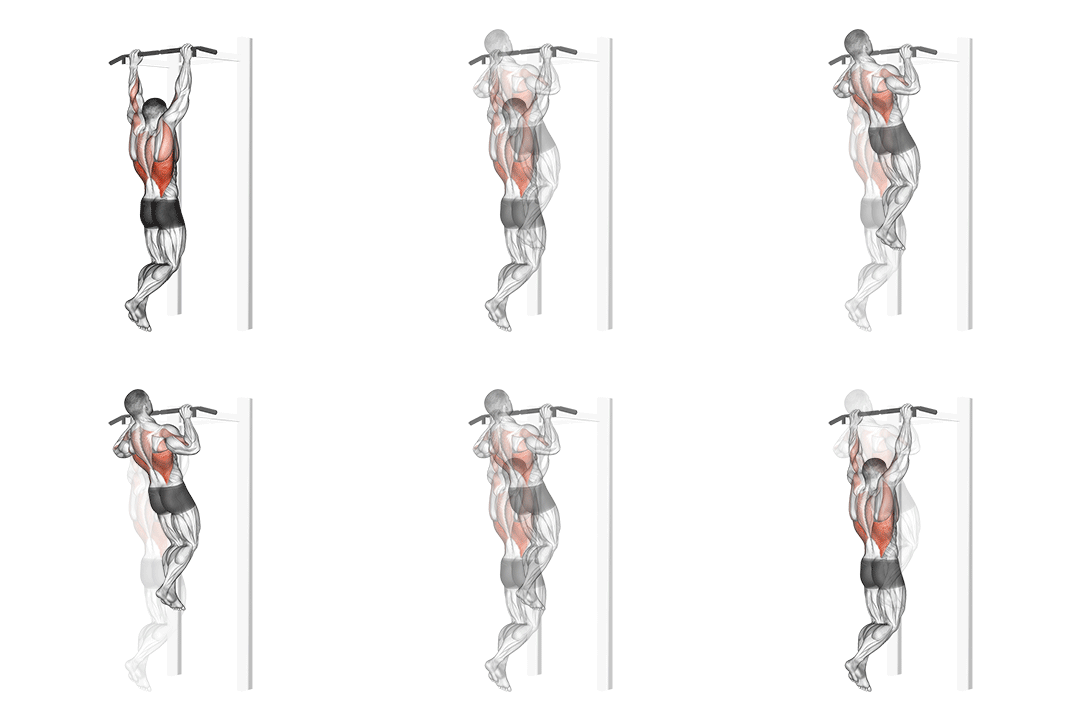
- 1Hang from a pull-up bar with a narrow parallel grip, palms facing towards you.
- 2Engage your back muscles and pull your body up towards the bar, keeping your elbows close to your body.
- 3Continue pulling until your chin is above the bar.
- 4Pause for a moment at the top, then slowly lower your body back down to the starting position.
- 5Repeat for the desired number of repetitions.
Muscles worked
Primary
upper back
Secondary
biceps, forearms
Common mistakes to avoid
Kipping or swinging to get the chin up
Using momentum to swing the body up isn't a real chin-up — it's a momentum drill. Strict form means the body stays still during the pull, with the back and arms doing all the work. If you can't pull strictly, regress to negatives or assisted variations.
Cutting depth at the bottom or top
Full range matters: arms fully extended at the bottom, chin clearing the bar at the top. Trainees who cut range to inflate rep counts build a partial pattern and miss the strength that full range develops.
Letting the shoulders shrug toward the ears
Active shoulders matter. Before each rep, pack the shoulders down (drive them away from the ears) — this engages the lats and protects the rotator cuff. Shrugged shoulders shift load to the upper traps and away from the back.
Going too narrow on the grip
Hands closer than 6 inches apart can stress the wrists awkwardly. Aim for hands roughly 8-12 inches apart on parallel handles — close enough for the narrow emphasis, wide enough to keep the wrists comfortable.
Skipping the prerequisite work
Most failed pull-up progressions come from people who couldn't yet hold a 60-second dead hang or do a slow negative. These prerequisites build the grip and shoulder tolerance the full movement demands. Don't skip them.
Easier and harder variations
Easier
Negative chin-ups (jump or step to the top, then lower slowly for 5-10 seconds) build pulling strength faster than any assisted variation. Or use a resistance band looped around the bar with a foot in it for assistance. Bench rows and inverted rows work well as preparation for full chin-ups.
Harder
Add weight (a vest or weight belt with a plate). Try archer chin-ups (one arm doing more work per rep), commando chin-ups, or progress toward the one-arm chin-up — a multi-year goal that few achieve.
Alternative exercises
Standard chin-up (underhand)
Palms facing you. Loads the biceps even more than neutral grip. Use as alternative or in rotation for varied stimulus.
Pull-up (overhand)
Palms facing away. Emphasizes lats and middle back more than neutral grip. Different muscle emphasis; use both for complete back development.
Inverted row (parallel grip)
Horizontal pulling at lower load. Bodyweight prerequisite for chin-up training. Use as accessory work or for trainees building toward first chin-up.
How to program the Chin-ups (narrow Parallel Grip) into your training
Narrow parallel grip chin-up training looks different at different stages. For people working toward their first rep: 3-4 sessions per week, focusing on negatives (3-5 sets of 3-5 slow eccentrics), assisted pulls (3 sets of 5-8), and dead hangs (3 sets of 30-60 seconds). Total weekly volume should accumulate without grinding to failure. For those who can do 1-5 reps: 3 sessions per week, 4-5 sets of 1-3 reps with 2-3 minutes rest. Add negatives at the end of each session for additional volume. Test max once every 2-3 weeks. For 5-15 reps: 2-3 sessions per week, 4 sets of 4-8 reps with 90-120 seconds rest. Total weekly volume of 30-60 reps. Once you hit 3 sets of 8-10, start adding weight rather than pushing reps higher. For 15+ reps: 2 sessions per week is enough. Focus on weighted progression or skill work (archer chin-ups, L-chin-ups, or muscle-up training). A balanced upper body session: 4 sets of 5-8 narrow parallel grip chin-ups, 4 sets of 8-10 push-ups, 3 sets of 10 inverted rows, 3 sets of 30-second hollow holds. Done 2-3 times per week. Pair narrow parallel chin-up training with horizontal pulling (rows) to balance the back development. Vertical pulling alone leaves gaps in mid-back strength.
Recovery and frequency
Chin-ups are demanding on the lats, biceps, forearms, and grip. 48 hours between sessions is the minimum; 72 hours is safer in the early weeks of dedicated training. The grip and forearms are usually the limiting recovery factor. Elbow and wrist tendinopathy are the main risks to watch. Symptoms include sharp pain on the inner elbow or wrist during or after sets. Reduce volume immediately if you notice these, and add forearm and wrist mobility work. Foam roll the lats weekly to maintain the thoracic mobility this exercise demands. Sleep is the biggest recovery lever; protein intake matters because of the total muscle mass involved.
Frequently asked questions
How many sets and reps of narrow parallel grip chin-ups should I do?
For strength: 4 sets of 4-8 reps with 90-120 seconds rest, 2-3 times per week. For building toward your first rep: 3 sessions per week of negatives, dead hangs, and assisted variations.
How often should I train chin-ups?
2-3 times per week with 48-72 hours between sessions. The forearms and grip recover slower than the back; if those are still sore, push the next session back.
Why neutral grip instead of standard pull-up?
More shoulder-friendly position. The neutral grip reduces rotational stress on the shoulder joint, making it useful for trainees with anterior shoulder issues. It also emphasizes the inner upper back and biceps slightly more than wider grips.
Do I need special equipment for this exercise?
Yes — most standard pull-up bars don't have neutral grip handles. A doorway bar with parallel handles, a power tower with parallel grips, or gymnastic rings (which allow any grip orientation) work.
Will this build my lats?
Yes, though the narrow grip emphasizes the inner upper back and biceps slightly more than the lats. For maximum lat width, wider grips (standard pull-ups) are more directly effective. For complete back development, include both.
Why can't I do a chin-up?
Almost always a strength gap relative to body weight, not a technique issue. The path is: build a 60-second dead hang, then 5-10 second negatives, then assisted pulls, then your first strict rep. Be patient — it's a months-long process for most people.
Useful tools for this exercise
Build a workout with the Chin-ups (narrow Parallel Grip)
Puna gives you guided bodyweight workouts you can do anywhere — no equipment, no gym, just structured progressions that build real strength.