Hyperextension
beginner strength exercise · body weight · targets spine
- Body part
- back
- Primary target
- spine
- Equipment
- body weight
- Difficulty
- beginner
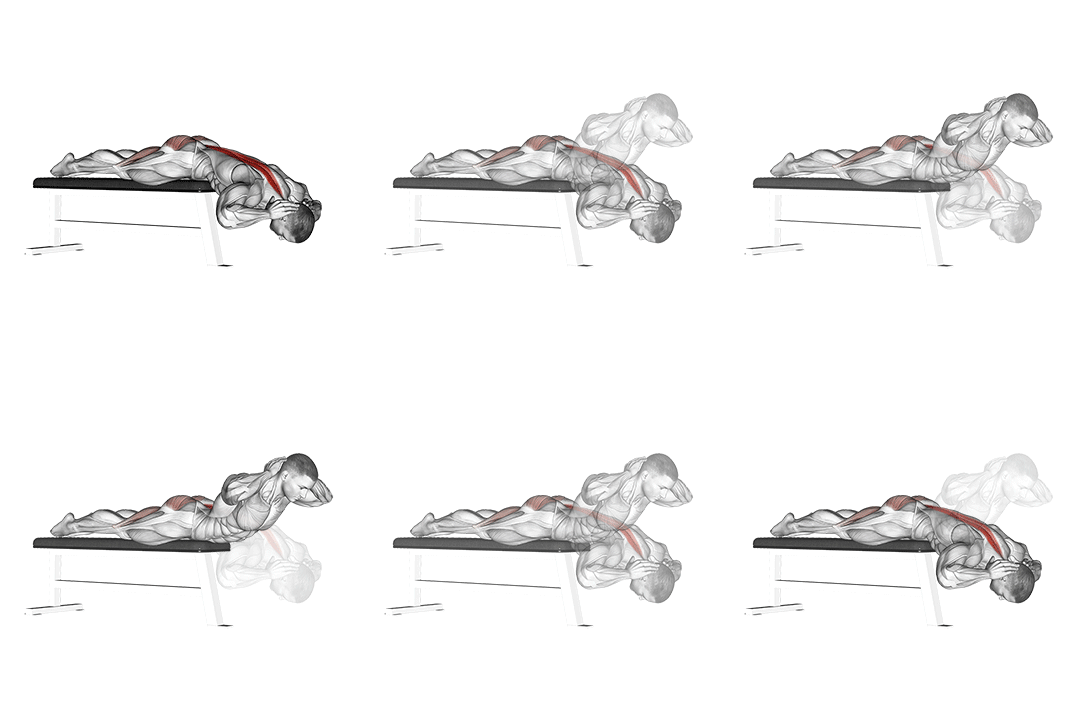
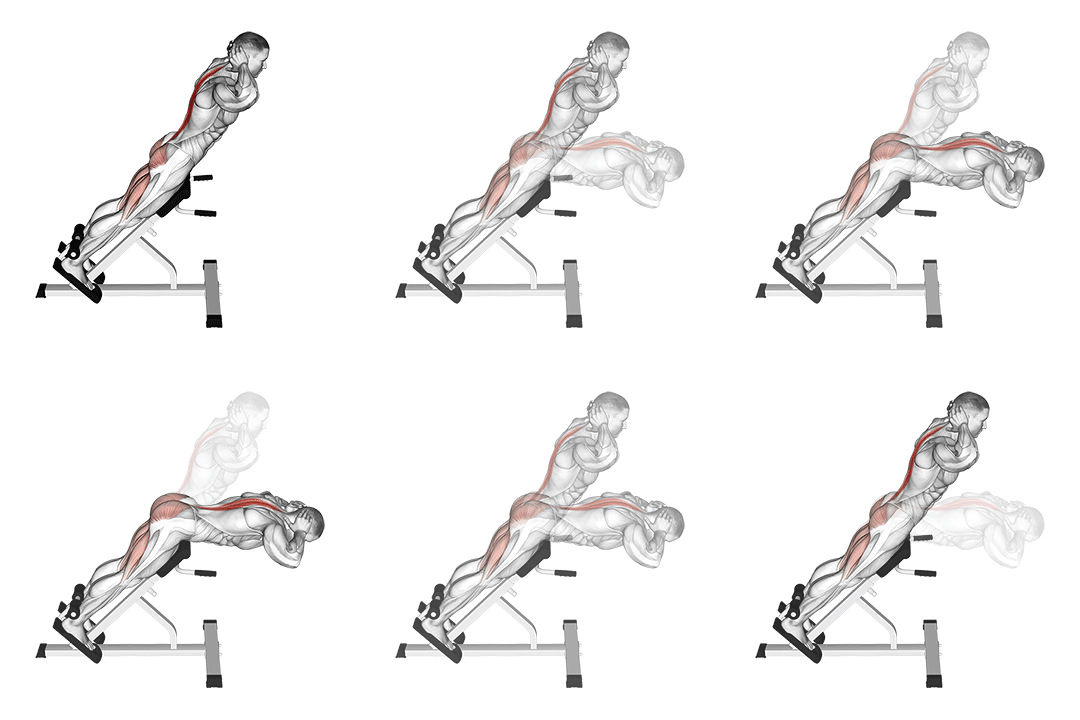
The standard hyperextension is performed on a hyperextension bench (or Roman chair) where the upper thighs rest on the pad while the upper body extends out, allowing controlled flexion and extension of the lower back through full range. The thigh-on-pad position (versus hip-on-pad) shifts emphasis toward the spinal erectors — the long muscles running along the spine that maintain upright posture and absorb load during squats, deadlifts, and daily standing activities. This is one of the most direct lower-back strengthening exercises in any training program. While compound lifts like squats and deadlifts engage the lower back, they don't isolate the spinal erectors the way targeted hyperextensions do. For trainees with weak lower backs or those whose deadlifts plateau due to lower-back fatigue, dedicated hyperextension work often unlocks meaningful progress. The exercise also serves as preparation for athletes whose sport demands sustained lumbar stability — golf, tennis, throwing sports. The trade-off versus the hip-on-pad version is the load distribution. Thigh-on-pad places more demand on the spinal erectors and less on the glutes and hamstrings; hip-on-pad inverts that emphasis. Both have value depending on training goal. For pure lower-back strengthening, this version (thigh-on-pad) is the better choice. For posterior chain emphasis with glutes and hamstrings, the hip-on-pad version works better. Most well-rounded programs include both variations rotated across training cycles.
Why train the Hyperextension?
- Strengthens the spinal erectors directly, which most compound lifts under-train.
- Builds lower-back resilience that supports heavy squats, deadlifts, and standing endurance.
- Improves spinal range of motion through controlled flexion-extension cycles.
- Useful for athletes whose sport demands sustained lumbar stability.
- Can be loaded by holding a weight plate against the chest for progressive resistance.
- Pairs well with deadlift variations and reverse hyperextensions for complete lower-back training.
How to do the Hyperextension: step by step
- 1Adjust the hyperextension bench so that your upper thighs are resting on the pad and your feet are secured.
- 2Cross your arms over your chest or place your hands behind your head.
- 3Lower your upper body towards the ground while keeping your back straight.
- 4Pause for a moment at the bottom, then raise your upper body back up until it is in line with your legs.
- 5Repeat for the desired number of repetitions.
Muscles worked
Primary
spine
Secondary
glutes, hamstrings
Common mistakes to avoid
Hyperextending the spine at the top
Despite the name, the rep should stop at neutral spine alignment (body in line with legs) — not extend past that. Active hyperextension stresses the facet joints and discs unnecessarily. Stop the upward motion when the body forms a straight line with the legs.
Bouncing at the bottom
Speed defeats the purpose. The descent should take 2-3 seconds, with a brief pause at the bottom before driving up. Bouncing through the bottom creates impact load on the spine and trains nothing useful.
Rounding the upper back
Some trainees round the upper back at the top of the rep to add 'range.' This actually shifts loading patterns and can stress the cervical and thoracic spine. Keep the back straight throughout — descent and ascent should both maintain neutral alignment.
Adding weight too soon
Bodyweight is enough for most trainees in the first 2-3 months. Adding weight before mastering bodyweight form usually produces lower-back issues. Build to 4 sets of 15-20 strict bodyweight reps before introducing weight.
Confusing this with the hyperextension on bench (hip-on-pad)
The thigh-on-pad position emphasizes spinal erectors; hip-on-pad emphasizes glutes and hamstrings. They're different exercises with different muscle emphasis. Choose deliberately based on training goal.
Easier and harder variations
Easier
Reduce range of motion — start with smaller flexion-extension range and build up over weeks. Or perform with arms crossed at chest rather than hands behind head, which reduces the lever arm and load on the lower back.
Harder
Hold a weight plate against the chest for added load. Or hold the weight behind the head for increased lever and demand. For maximum challenge, perform with isometric pause holds at the top (3-5 seconds) to amplify time under tension.
Alternative exercises
Hyperextension on bench (hip-on-pad)
Same exercise with different lever — emphasizes glutes and hamstrings. Use for posterior chain emphasis rather than pure lower-back work.
Romanian deadlift
Standing version targeting similar posterior chain. More functional and free-weight loaded; better for athletic transfer.
Reverse hyperextension
Lower-back specific isolation that complements this exercise. Pair both for complete posterior chain training.
How to program the Hyperextension into your training
Hyperextensions work as accessory lower-back work in any lower-body program. They complement main compound lifts without redundancy. Sets and reps: 3-4 sets of 12-20 reps with 60-90 seconds rest. The bodyweight load supports moderate-to-high rep ranges. Once 20 reps feel easy, add weight rather than chasing higher rep counts. Frequency: 2-3 times per week is appropriate. The lower back recovers within 48 hours from this exercise's moderate load. In a lower-body session: place hyperextensions after primary compound lifts (squats, deadlifts) as accessory work. Sample order: 4 sets of 8 squats, 3 sets of 10 lunges, 3 sets of 15 hyperextensions, 3 sets of 10 reverse crunches. For lower-back emphasis: 4 sets of 15-20 reps, 2-3 times per week, paired with reverse hyperextensions and Romanian deadlifts. The combined approach builds lower-back resilience effectively. For lower-back rehabilitation: 2-3 sets of 10-12 reps at bodyweight, 3 times per week. The controlled extension pattern is often part of lower-back rehab programs once acute pain has subsided. Consult a physiotherapist for current issues. For athletes with sport-specific lower-back demands (golf, throwing): 3 sets of 12-15 reps, 2 times per week, as supplementary work alongside sport-specific training. Don't program hyperextensions on the same day as heavy deadlifts — the cumulative lower-back load can exceed what the joint tolerates. Schedule deadlift days and hyperextension days separately.
Recovery and frequency
Hyperextensions recover within 48 hours when programmed at moderate volume. Daily training produces accumulating lower-back load that's worth avoiding. The main warning signs are sharp lower-back pain (rather than muscle soreness), persistent stiffness in the lumbar region, and difficulty rising from a seated position the next day. Sharp lower-back pain warrants stopping the exercise entirely until the issue resolves; consult a physiotherapist if pain persists. Standard muscle soreness in the lower-back muscles fades within 48 hours and indicates appropriate stimulus. Long-term, regular hyperextension training pairs well with daily hip flexor mobility (couch stretch, lunge stretch) to balance the posterior chain training. The hip flexors often tighten as lower-back strength improves; addressing this prevents the imbalance from causing issues. Sleep, hydration, and protein intake support the recovery demand.
Frequently asked questions
How many sets and reps of hyperextensions should I do?
3-4 sets of 12-20 reps with 60-90 seconds rest. The bodyweight load supports moderate-to-high rep ranges. Add weight rather than chase higher reps once 20 feel easy.
How often should I do hyperextensions?
2-3 times per week. The lower back recovers within 48 hours from this exercise's moderate load.
Is this safe for my lower back?
Generally yes when form is clean. The exercise is often part of lower-back rehabilitation programs. Sharp lower-back pain during or after sessions warrants stopping immediately.
Will this help my deadlift?
Yes — direct lower-back strengthening carries over to deadlift performance. Many lifters whose deadlifts plateau due to lower-back fatigue see meaningful progress after introducing dedicated hyperextension work.
Standard hyperextension vs hip-on-pad version: which is better?
Different muscle emphasis. Standard (thigh-on-pad) emphasizes spinal erectors. Hip-on-pad emphasizes glutes and hamstrings. Choose based on training goal — most well-rounded programs include both.
Should I add weight?
Eventually, yes. Build to 4 sets of 15-20 strict bodyweight reps first. Then hold a weight plate against the chest for added load. Avoid loading too quickly; lower-back issues often follow premature weight progression.
Useful tools for this exercise
Build a workout with the Hyperextension
Puna gives you guided bodyweight workouts you can do anywhere — no equipment, no gym, just structured progressions that build real strength.