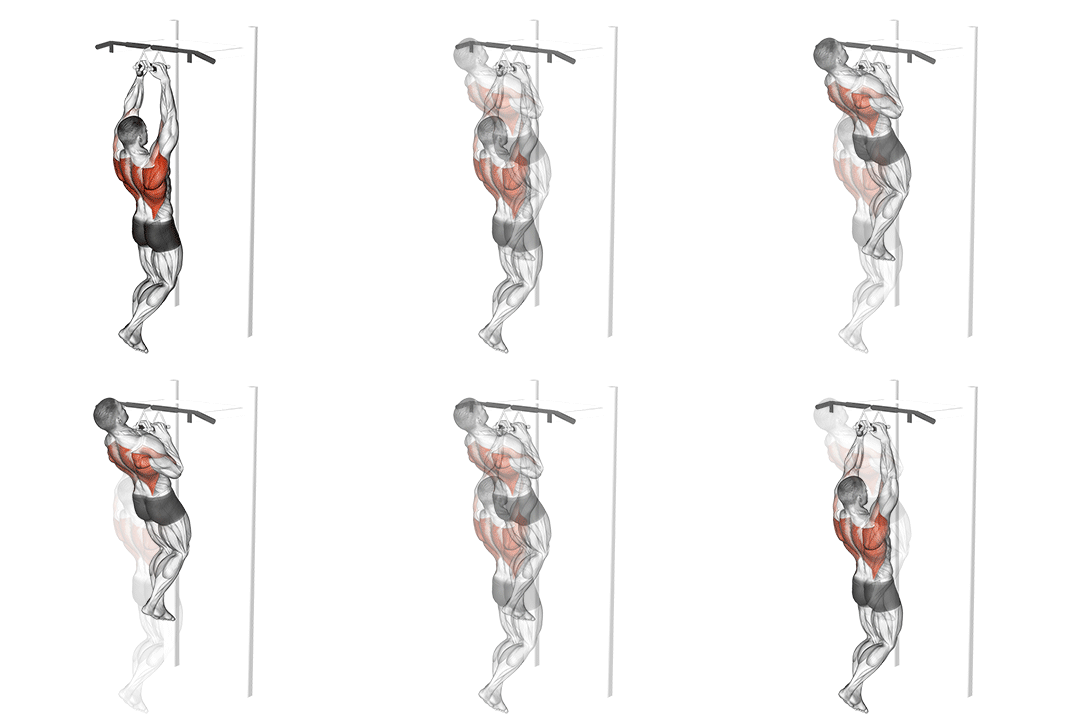
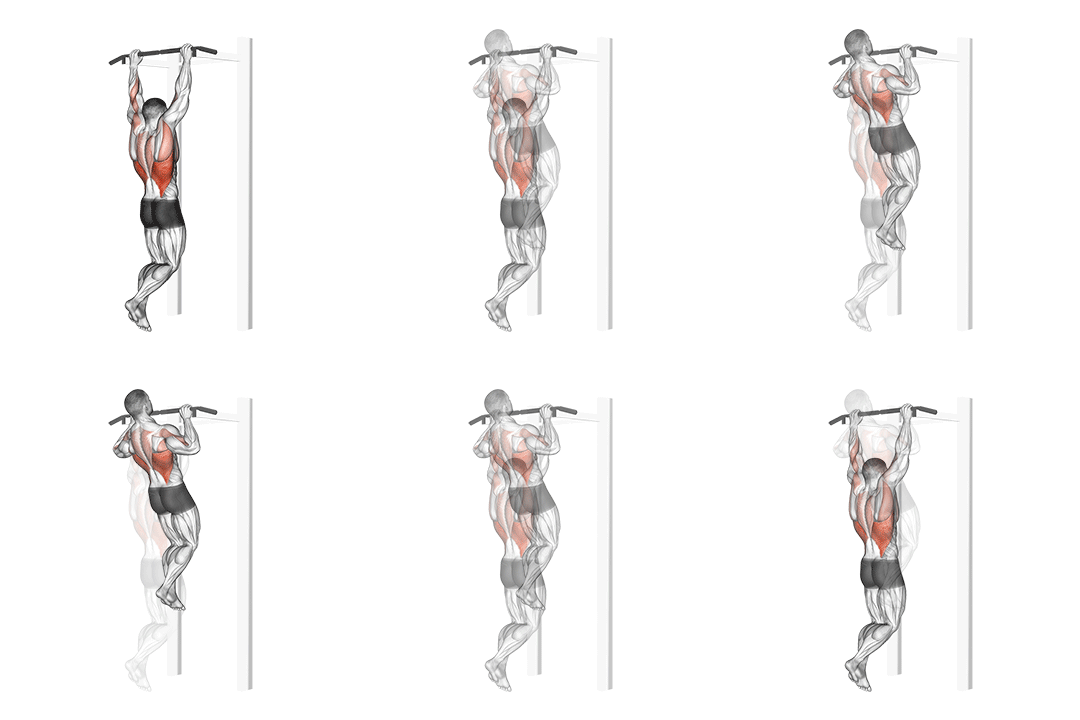
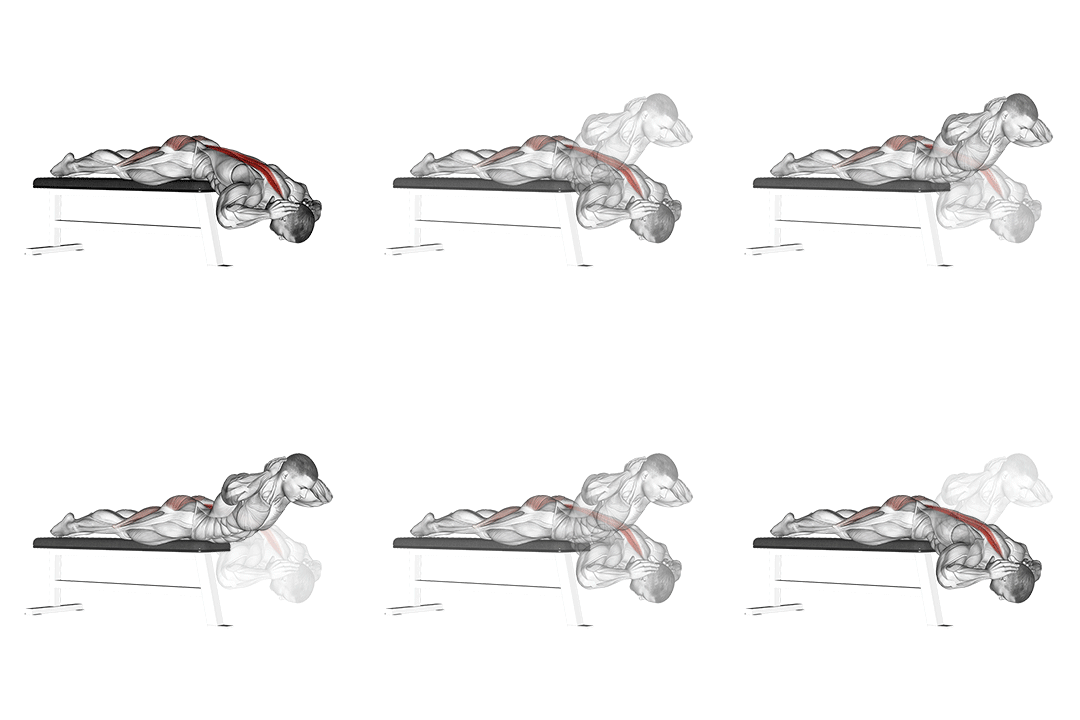
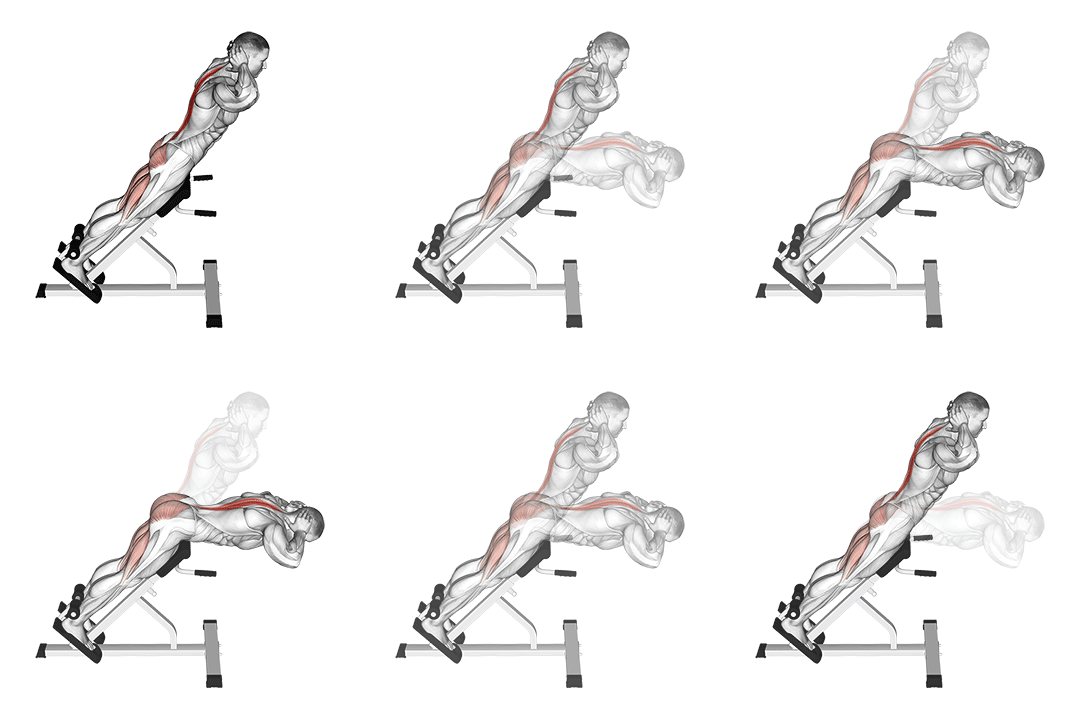
Inverted Row With Straps
intermediate strength exercise · body weight · targets upper back
- Body part
- back
- Primary target
- upper back
- Equipment
- body weight
- Difficulty
- intermediate
The inverted row with straps — performed on a suspension trainer like TRX, gymnastic rings, or fabric straps — adds instability to the standard inverted row pattern. The handles move freely rather than being fixed in place, which forces the shoulders, core, and stabilizing musculature to work much harder than during a standard inverted row from a fixed bar. The result is the same horizontal pulling pattern with significantly increased difficulty and additional shoulder stability training. For home trainees, suspension training systems are one of the most versatile bodyweight tools available. A single suspension trainer (TRX or similar) anchored to a doorframe, beam, or sturdy hook provides the equipment for inverted rows, push-ups, single-leg squats, and dozens of other exercises. The cost is modest, the storage is minimal, and the training options are vast. For people with limited space and budget, suspension trainers represent excellent value compared to home gym equipment. What makes the strap variation specifically useful is the carryover to gymnastic strength training. Working on rings or straps trains the same kind of unstable support that gymnasts use, which builds shoulder stability, scapular control, and core integration that fixed-bar work doesn't develop. For trainees aiming at advanced gymnastic skills (muscle-ups, planches, ring dips), regular ring or strap work is essential preparation. The trade-off versus standard inverted rows is the additional shoulder stability demand, which can be too much for some trainees with current shoulder issues. For healthy shoulders, the strap version is generally the more valuable choice when equipment is available.
Why train the Inverted Row With Straps?
- Adds instability and shoulder stability training to the standard inverted row.
- Builds the unstable-support strength that prepares trainees for gymnastic skills (rings, muscle-ups).
- Engages the core more aggressively than fixed-bar inverted rows due to the moving handles.
- Improves shoulder blade control through the unstable support context.
- Accessible to home trainees with a single suspension trainer and an anchor point.
- Pairs naturally with ring push-ups for complete unstable-support upper-body training.
How to do the Inverted Row With Straps: step by step
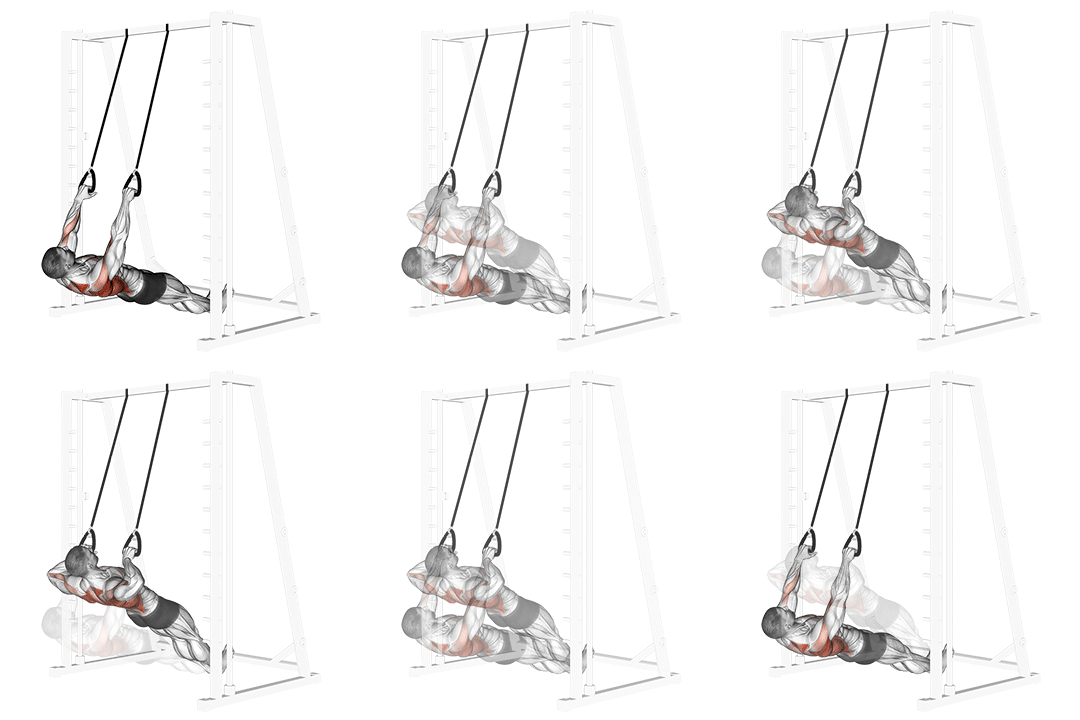
- 1Set up a suspension trainer or straps at chest height.
- 2Stand facing the anchor point and grab the handles with an overhand grip.
- 3Walk your feet forward, leaning back until your body is at an angle.
- 4Keep your body straight and engage your core.
- 5Pull your chest towards the handles, squeezing your shoulder blades together.
- 6Pause for a moment at the top, then slowly lower yourself back to the starting position.
- 7Repeat for the desired number of repetitions.
Muscles worked
Primary
upper back
Secondary
biceps, forearms
Common mistakes to avoid
Hips sagging during reps
When pulling on unstable straps, the body wants to break alignment more than during fixed-bar work. The hips often drop as fatigue builds. Brace the abs and glutes throughout — the body should travel as one unit, not in segments.
Letting the handles drift apart
On suspension straps, the handles can drift outward as you pull. This shifts loading away from the back and into the shoulders. Keep the handles parallel to each other throughout the rep — like fixed-bar training but with effort.
Pulling with the arms instead of the back
The unstable support amplifies any arm-dominance tendency. Initiate by retracting the shoulder blades, drive the chest toward the handles, let the arms follow. The back drives the rep; the arms transmit force.
Going too horizontal too soon
The instability of straps makes a given body angle harder than the same angle on a fixed bar. Start with a more upright body position than you would on a fixed bar, and progress to horizontal as the stabilizers strengthen. Beginners on straps often feel weaker than expected; this is normal and reflects the new shoulder stability demand.
Not adjusting strap length properly
Strap length determines body angle. Most suspension trainers have adjustable straps; set them so the handles are at the right height for your current strength level. Too low = too horizontal = too hard; too high = too easy. Adjust until 8-12 reps challenge you.
Easier and harder variations
Easier
Make the body more upright — stand more vertical relative to the straps. The more vertical, the less load through the back. Or use shorter straps that position the handles higher, reducing the body angle.
Harder
Make the body more horizontal — walk feet further forward until the body is parallel to the floor. Or elevate the feet on a bench for an inverted body angle. For maximum challenge, perform single-arm rows on the strap (one handle only), which adds severe stability demand.
Alternative exercises
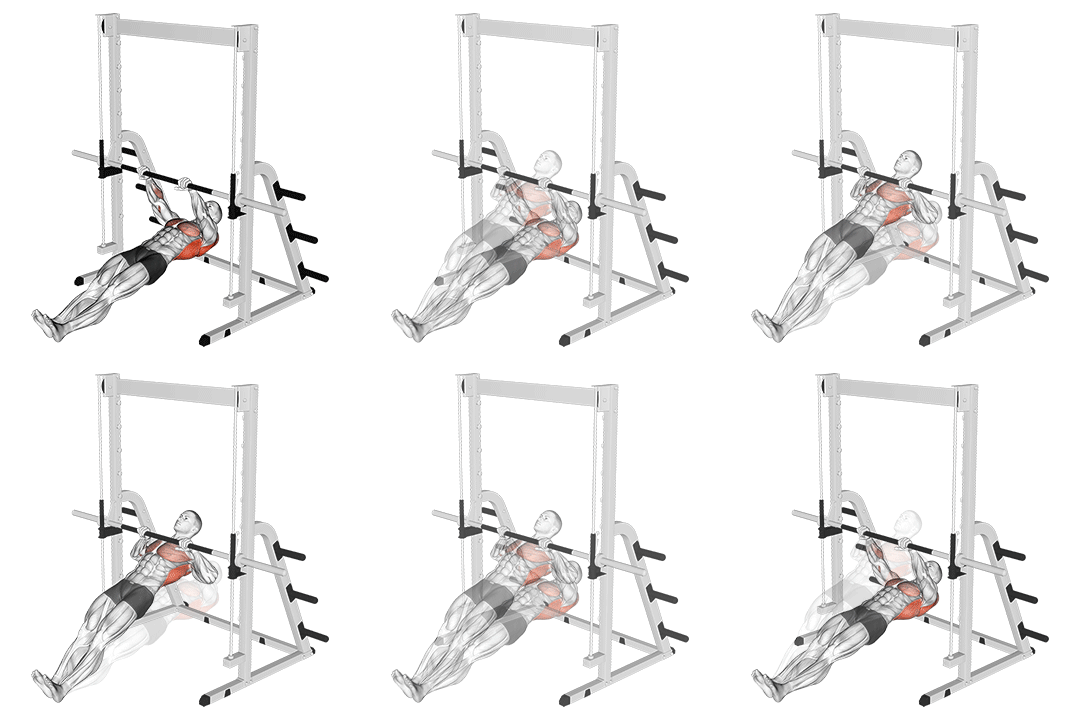
Standard inverted row (fixed bar)
Same horizontal pulling pattern without the instability. Easier on shoulders; useful when straps aren't available or for trainees with shoulder issues.
Pull-up
Vertical pulling alternative. Pair with strap inverted rows for complete back development.
Ring rows
Same exercise on gymnastic rings. Slightly different feel but equivalent stimulus. Use whichever equipment is available.
How to program the Inverted Row With Straps into your training
Inverted rows with straps work as primary horizontal pulling work in any bodyweight or hybrid program with suspension trainer access. Sets and reps: 3-4 sets of 8-12 reps with 60-90 seconds rest. The instability typically reduces rep counts compared to fixed-bar versions; adjust body angle to keep reps in this range. Total weekly volume of 50-80 reps is appropriate. Frequency: 2-3 times per week is the sweet spot. The back and shoulders recover within 48 hours from this exercise's volume. In a suspension-trainer session: pair with strap push-ups for balanced training. Sample order: 4 sets of 10 strap inverted rows, 4 sets of 8 strap push-ups, 3 sets of 6 pull-ups (separate bar), 3 sets of 30-second hollow holds. For those building toward gymnastic skills: 4 sets of 8-10 strap inverted rows, 3 times per week, alongside ring push-ups and tucked planche holds. The combined unstable-support training builds the foundation for muscle-ups and other ring skills. For general fitness with suspension trainer: 3 sets of 8-12 reps, 2 times per week, as part of balanced upper-body work. Sufficient for maintaining horizontal pulling strength and adding the stability training benefit. For postural improvement: 4 sets of 10-12 reps, 3 times per week, paired with band pull-aparts. The combined approach addresses the rounded-shoulder posture most adults develop. Don't program strap inverted rows on the same day as heavy overhead pressing — the cumulative shoulder stability demand can exceed what the joint tolerates without irritation.
Recovery and frequency
Strap inverted rows recover within 24-48 hours from moderate volume work. Higher volumes need 48-72 hours due to the increased shoulder stability demand. The main warning signs are anterior shoulder soreness or pinching, biceps tendinopathy near the elbow, and wrist soreness from sustained gripping. Anterior shoulder issues warrant reducing volume and adding rotator cuff prehab. Biceps issues benefit from reduced volume and eccentric forearm work. Standard upper back and lat soreness fades within 48 hours. The instability training does increase the demand on small stabilizing muscles, which can stay sore longer than the prime movers in early sessions. This is normal and improves with practice.
Frequently asked questions
How many sets and reps of strap inverted rows should I do?
3-4 sets of 8-12 reps with 60-90 seconds rest. The instability typically reduces rep counts compared to fixed-bar versions; adjust body angle to keep reps challenging in this range.
How often should I do this exercise?
2-3 times per week. The back and shoulders recover within 48 hours from moderate volume work.
Strap vs fixed bar inverted row: which is better?
Different goals. Fixed-bar is more accessible and easier on the shoulders. Strap version adds instability and shoulder stability training that prepares for gymnastic skills. For pure back work, fixed bar; for ring/gymnastic preparation, strap.
Do I need expensive equipment for this?
No — basic suspension trainers cost $30-50 and last for years. A single trainer enables dozens of exercises. For home trainees, this represents excellent value.
Will this build my back?
Yes — the same horizontal pulling pattern as fixed-bar inverted rows, with added shoulder stability training. The back development is similar; the secondary benefits (stability, gymnastic preparation) are different.
Can I do this with shoulder issues?
Depends on the specific issue. The instability demands more from the shoulders than fixed-bar work. Consult a physiotherapist for current issues. For mild shoulder restrictions, the fixed-bar version is usually safer.
Useful tools for this exercise
Build a workout with the Inverted Row With Straps
Puna gives you guided bodyweight workouts you can do anywhere — no equipment, no gym, just structured progressions that build real strength.