Upper Back Stretch
beginner stretching exercise · body weight · targets upper back
- Body part
- back
- Primary target
- upper back
- Equipment
- body weight
- Difficulty
- beginner
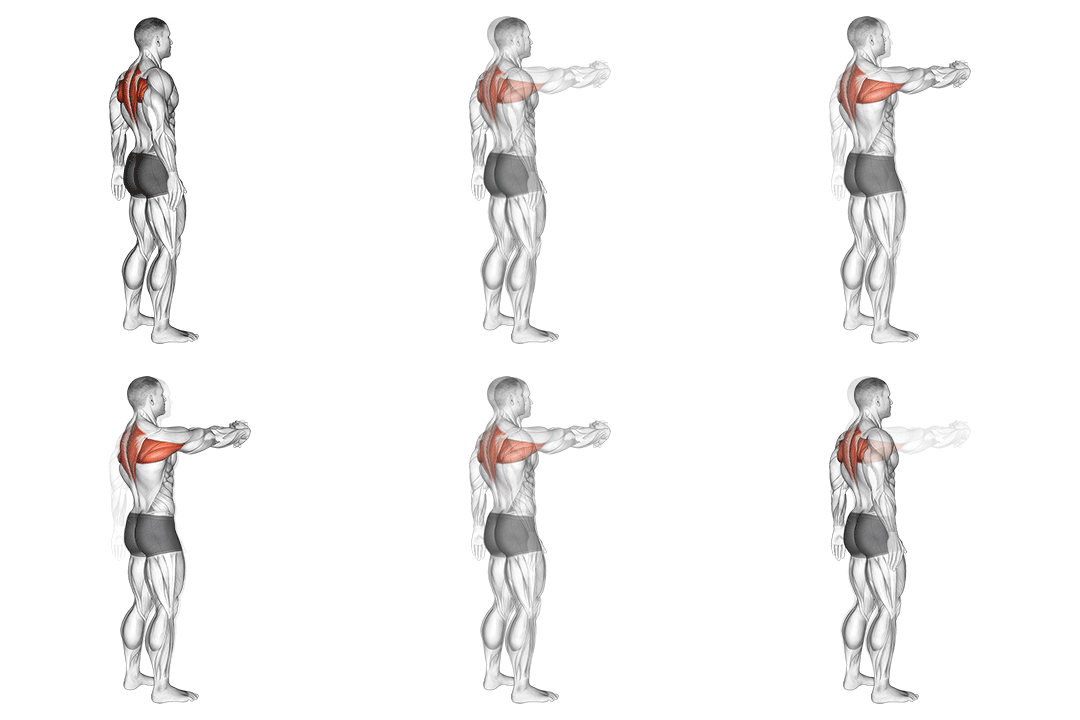
The upper back stretch is a deceptively simple mobility drill performed standing with arms extended overhead, fingers interlaced, and palms rotated to face the ceiling. The combination produces a stretch through the upper back, lats, shoulders, and triceps simultaneously — addressing several chronically tight areas at once. The 30-second cost is laughable; the carryover to overhead reach and posture is meaningful when practiced consistently. Most adults accumulate chronic upper back tightness from a lifetime of forward-facing activities. Looking at screens, working at desks, driving, reading — all happen with arms in front and shoulders rolled forward. Without dedicated stretching, the upper back tissue (rhomboids, mid-traps, lats) shortens over years. The result is restricted overhead reach, the rounded-shoulder posture most adults carry, and a chronic background tightness across the upper back that no amount of foam rolling fully addresses. The upper back stretch addresses this in 30-60 seconds. Combined with related drills (cross-body shoulder stretch, doorway pec stretch), it forms a complete upper-back mobility routine that takes 3-4 minutes total per day. For trainees with overhead-related restrictions, daily practice over 4-6 weeks produces noticeable improvement in posture, overhead reach, and shoulder comfort. The accessibility (no equipment, minimal space) makes it usable in any setting from desk to airport gate.
Why train the Upper Back Stretch?
- Lengthens the upper back, lats, shoulders, and triceps in one efficient stretch.
- Counters the rounded-shoulder posture from desk work and forward-facing activities.
- Improves overhead reach by addressing common restrictions in the upper back and lats.
- Reduces chronic upper-back tightness common in trained adults and desk workers.
- Costs nothing, requires no equipment, and integrates easily into any routine.
- Pairs naturally with chest and shoulder stretches for compound posture training.
How to do the Upper Back Stretch: step by step
- 1Stand up straight with your feet shoulder-width apart.
- 2Extend your arms straight in front of you, parallel to the ground.
- 3Interlace your fingers and rotate your palms away from your body.
- 4Slowly raise your arms overhead, keeping them straight and parallel to each other.
- 5As you raise your arms, squeeze your shoulder blades together.
- 6Hold the stretch for 15-30 seconds, then release and repeat.
Muscles worked
Primary
upper back
Secondary
shoulders
Common mistakes to avoid
Arching the lower back to fake overhead reach
If your shoulders can't reach truly overhead, the lower back will compensate by extending. This shifts the stretch away from the target tissue and stresses the lumbar spine. Brace the abs and reach only as far as honest shoulder mobility allows.
Letting the head poke forward
When reaching overhead, the chin tends to drift forward. Keep the chin slightly tucked, head in line with the spine. The head position matters for protecting the cervical spine during overhead work.
Holding too short
Brief holds barely cue the tissue to release. Aim for 30-45 seconds, breathing slowly. The deeper release happens about halfway through the hold.
Forcing the palms-up rotation
If shoulder mobility limits the palms-up overhead position, don't force it. The benefit of the rotation is real, but stressing the shoulders to achieve it produces injury. Reach overhead with whatever rotation feels comfortable.
Skipping daily practice
Upper back tightness rebuilds quickly with daily forward-facing activity. Once-weekly stretching doesn't keep up with the daily shortening pattern. Daily practice is what produces lasting change.
Easier and harder variations
Easier
Skip the palms-up rotation — interlace fingers with palms facing whatever direction feels natural. The reduced shoulder demand makes the stretch accessible to those with shoulder restrictions.
Harder
Add a slight side bend to one side, then the other, while in the overhead position. The lateral component adds lat emphasis to the upper back stretch. Or perform with the arms held slightly behind the head rather than directly overhead, which deepens the upper back stretch.
Alternative exercises
Doorway pec stretch
Targets the chest specifically. Pair with the upper back stretch for compound posture training.
Kneeling lat stretch
Deeper lat-focused stretch. Use when overhead reach restrictions specifically need addressing.
Cross-body shoulder stretch
Addresses the rear shoulder specifically. Different angle; useful complement to overhead stretching.
How to program the Upper Back Stretch into your training
The upper back stretch works best as a daily habit rather than a periodic effort. Daily routine: 2 sets of 30-45 seconds, performed once or twice per day. Tying the practice to existing transitions makes it automatic. Desk-break protocol: 1 set of 30 seconds every 90 minutes during long sitting sessions. The frequency prevents tightness from accumulating. Morning routine: 1-2 sets as part of a 5-minute morning mobility flow with side bends and chest opening stretches. For those with rounded-shoulder posture: 4-5 sessions per day at 30 seconds each, paired with chest stretches and band pull-aparts. Combined approach over 4-6 weeks produces noticeable postural improvement. For general fitness: daily practice is worth the brief time investment for trainees who do regular pulling work or have desk jobs. The cumulative effect across years matters. For athletes: 1-2 sets pre-workout as warm-up, plus 1-2 sets post-workout for cooldown. Both windows provide value at different points in the training session.
Recovery and frequency
The upper back stretch has zero recovery cost. Daily practice is safe and ideal. Sharp shoulder pain warrants reducing intensity or skipping; gentle stretch sensation is appropriate.
Frequently asked questions
How long should I hold the upper back stretch?
30-45 seconds per set, 1-2 sets per session. Holds shorter than 20 seconds don't drive meaningful tissue change.
How often should I do this?
Daily, especially for desk workers and trainees doing regular pulling work.
Will this help my posture?
Partially. Upper back stretching is one piece of postural improvement. Pair with chest stretches and rear shoulder strengthening for meaningful change over 4-6 weeks.
Why don't I feel a deep stretch?
Either your upper back is already mobile or you're not reaching truly overhead. Check shoulder mobility — if you can't get the arms vertical without arching the lower back, address shoulder mobility first.
Can I do this with shoulder issues?
Often yes, with reduced range. If full overhead reach bothers shoulders, perform with arms at a comfortable angle. The reduced range still provides benefit.
Should I do this before or after lifting?
Both serve different goals. Before: brief stretches as part of dynamic warm-up. After: longer holds when tissue is warm. Post-workout drives most lasting tissue change.
Useful tools for this exercise
Build a workout with the Upper Back Stretch
Puna gives you guided bodyweight workouts you can do anywhere — no equipment, no gym, just structured progressions that build real strength.