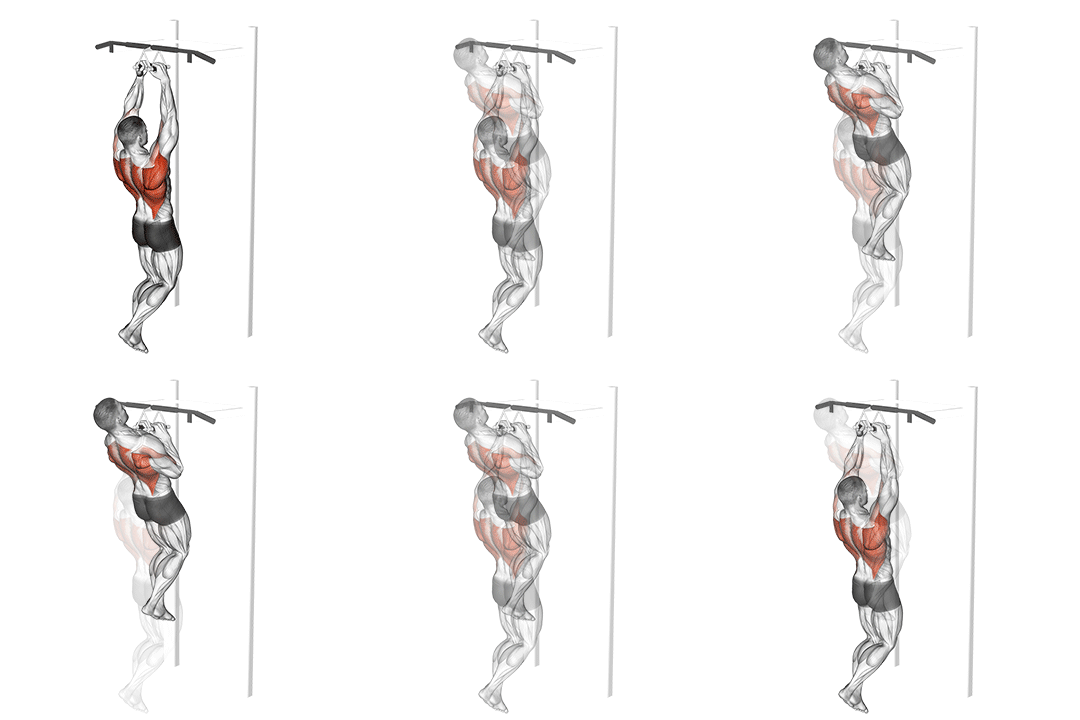
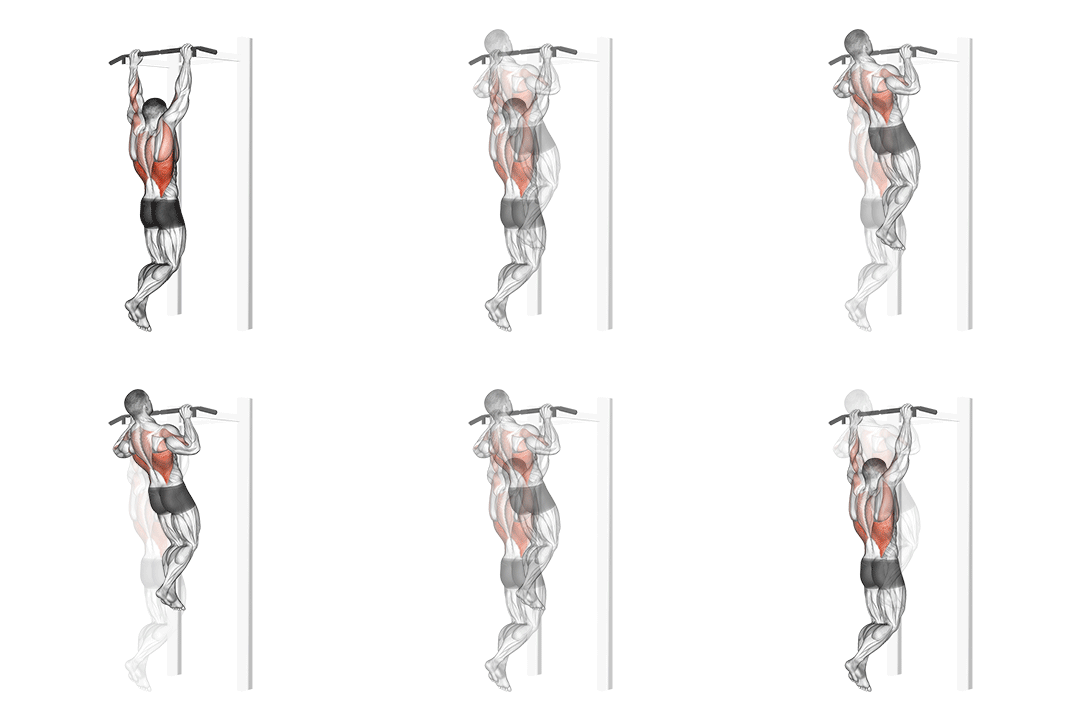
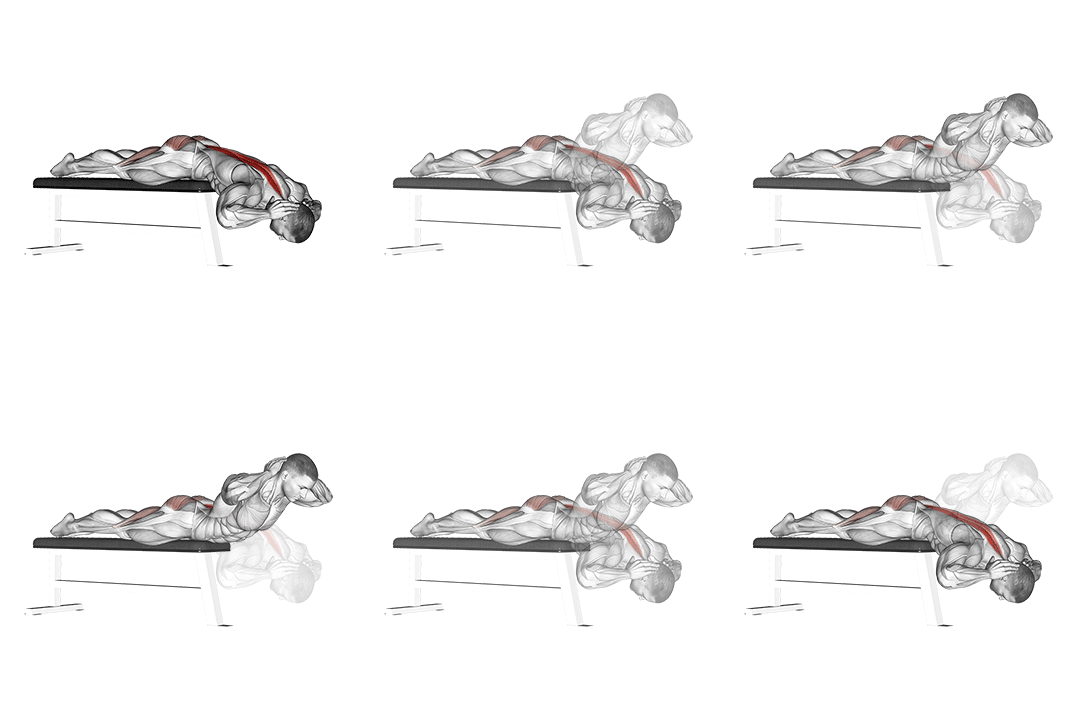
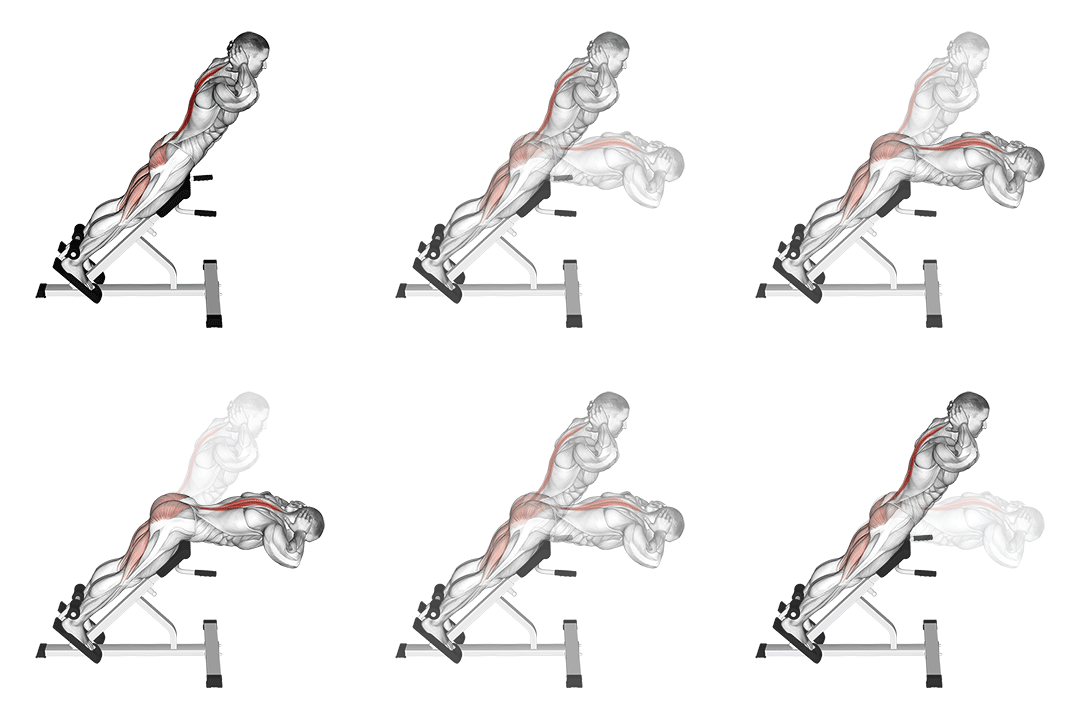
Two Toe Touch (male)
beginner mobility exercise · body weight · targets spine
- Body part
- back
- Primary target
- spine
- Equipment
- body weight
- Difficulty
- beginner
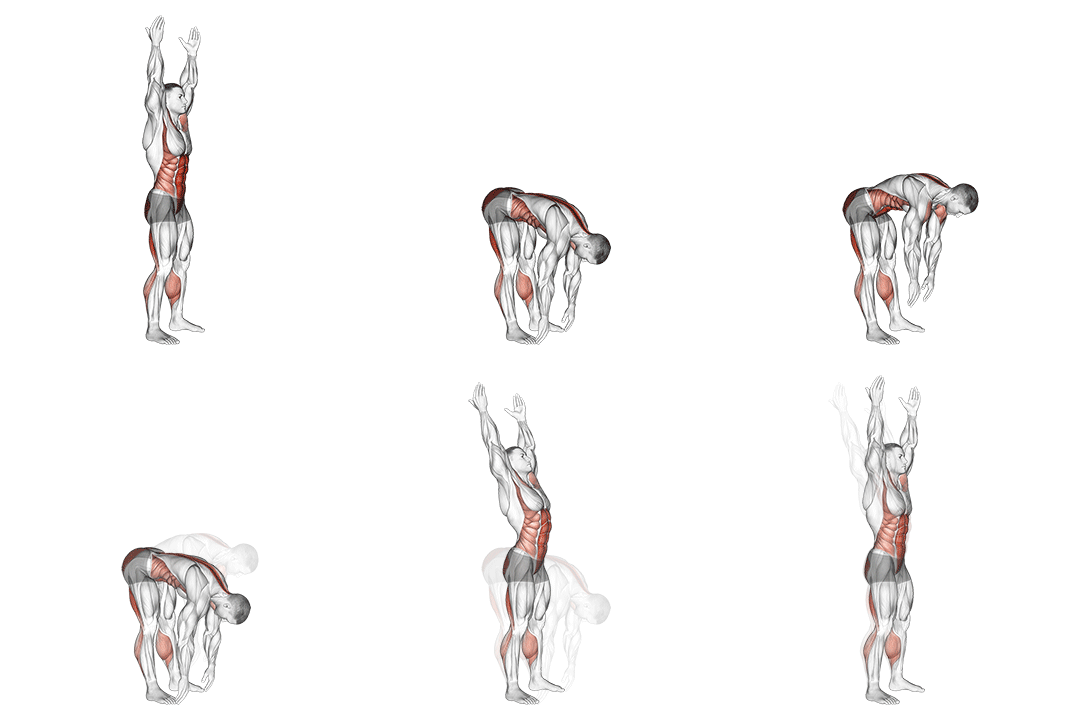
The two toe touch is a dynamic mobility drill where you stand with feet shoulder-width apart, then bend forward at the hips and reach the hands toward both feet. The motion targets the spinal flexors, hamstrings, and lower back simultaneously, providing a brief but useful mobility stimulus. Despite the seeming simplicity, the two toe touch addresses several connected tightness patterns common in adults — particularly in the posterior chain (hamstrings, lower back) and through the spinal flexion range. Most adults lose meaningful spinal flexion range and hamstring length over years of sedentary patterns. The combination of sitting (which keeps hamstrings shortened), forward-flexed working posture, and lack of dedicated mobility work produces the chronic tightness that two toe touches address. The dynamic version — bending forward and returning upright continuously — provides slightly different stimulus from static toe-touch holds, particularly useful for warm-up applications. Where this earns its place is as a brief warm-up drill before lower-body work or as a quick mobility reset during long desk-bound days. The 30-60 second time investment makes it accessible to almost anyone. The trade-off is that pure dynamic toe touches won't drive serious mobility change for advanced trainees who already have decent hamstring and back flexibility — for those trainees, deeper static stretches produce more change. For general fitness and as part of warm-up routines, the two toe touch provides quick value.
Why train the Two Toe Touch (male)?
- Provides quick warm-up mobility for the posterior chain and spinal flexion.
- Counters chronic hamstring shortening from sitting and sedentary patterns.
- Improves spinal flexibility through repeated controlled flexion-extension cycles.
- Useful as a desk-break drill to reset accumulated stiffness during long sitting.
- Costs nothing, requires minimal space, and integrates easily into any routine.
- Pairs naturally with hip flexor stretches for compound posterior chain mobility.
How to do the Two Toe Touch (male): step by step
- 1Stand with your feet shoulder-width apart and your arms extended out to the sides.
- 2Bend forward at the waist, keeping your back straight and your knees slightly bent.
- 3Reach down towards your toes with both hands, keeping your legs straight.
- 4Pause for a moment at the bottom, then slowly return to the starting position.
- 5Repeat for the desired number of repetitions.
Muscles worked
Primary
spine
Secondary
hamstrings, glutes
Common mistakes to avoid
Bouncing aggressively
While dynamic stretching involves motion, aggressive bouncing can strain the hamstrings or lower back. Move smoothly through the range; avoid forceful bouncing at the bottom.
Rounding the lower back excessively
When reaching for the toes, the lower back rounds — that's normal and unavoidable to some extent. But excessive rounding stresses the lumbar discs. Hinge from the hips first, then add the spinal flexion.
Forcing toe contact
If your hamstrings or back limit how far you can reach, don't force the touch. Reach as far as comfortable, return upright, and over weeks the range will improve.
Holding the breath
Many trainees hold their breath through the bend. Breathe rhythmically — exhale on the bend, inhale on the rise.
Treating it as a strength exercise
The two toe touch is mobility work, not core or hamstring strengthening. Don't try to add load or make it harder; the gentle nature is the value.
Easier and harder variations
Easier
Bend your knees slightly during the bend to reduce hamstring tension. Or only reach to mid-shin or knees rather than forcing toe contact. Build range gradually.
Harder
Add a hold at the bottom of each bend (3-5 seconds) for combined dynamic and static stretching. Or progress to deeper forward folds in yoga (uttanasana) for more thorough hamstring lengthening.
Alternative exercises
Standing hamstring stretch
Static version with longer holds. More effective for serious hamstring lengthening.
Forward fold (yoga)
Deeper static version. Use when more thorough hamstring stretching is the goal.
Cat-cow
Different spinal mobility on hands and knees. Pairs well with toe touches for complete spinal mobility.
How to program the Two Toe Touch (male) into your training
The two toe touch works best as a warm-up drill or quick mobility reset. As a warm-up: 1-2 sets of 10-15 reps before lower-body or core sessions. Desk-break protocol: 1 set of 10 reps every 90-120 minutes during long sitting sessions. Morning routine: 1 set of 10-15 reps as part of a 5-minute morning mobility flow. For those with chronic hamstring or lower-back tightness: combine with longer static stretches for more thorough tissue work. The two toe touch alone is usually too brief for serious change; pair with deeper stretches. Frequency: daily is fine due to the low intensity. Use as supplementary work rather than primary mobility programming.
Recovery and frequency
The two toe touch has zero recovery cost. Daily practice is safe. Sharp lower-back pain warrants stopping; gentle stretch sensation is appropriate.
Frequently asked questions
How many reps should I do?
10-15 reps per set, 1-2 sets per session. The brief duration is intentional — this is warm-up and mobility, not strength work.
How often?
Daily as warm-up or desk-break work. Multiple times per day during long sitting sessions.
Why can't I touch my toes?
Tight hamstrings and/or limited spinal flexion. Daily practice over 4-6 weeks usually improves the range. Don't force it; let the range develop gradually.
Will this help my hamstring flexibility?
Partially. Dynamic toe touches provide some hamstring stretching but not as effectively as static stretches with longer holds. Combine both for compound benefit.
Can I do this with back pain?
Often yes with bent knees and reduced range. The bent-knee version reduces lumbar load. Stop if pain appears; consult a physiotherapist for current issues.
Should I bend my knees?
If your hamstrings are tight or your back is sensitive, yes. Slight knee bend reduces strain while still training the spinal flexion. As flexibility improves, gradually straighten the legs.
Useful tools for this exercise
Build a workout with the Two Toe Touch (male)
Puna gives you guided bodyweight workouts you can do anywhere — no equipment, no gym, just structured progressions that build real strength.