Swing 360
beginner cardio exercise · body weight · targets cardiovascular system
- Body part
- cardio
- Primary target
- cardiovascular system
- Equipment
- body weight
- Difficulty
- beginner
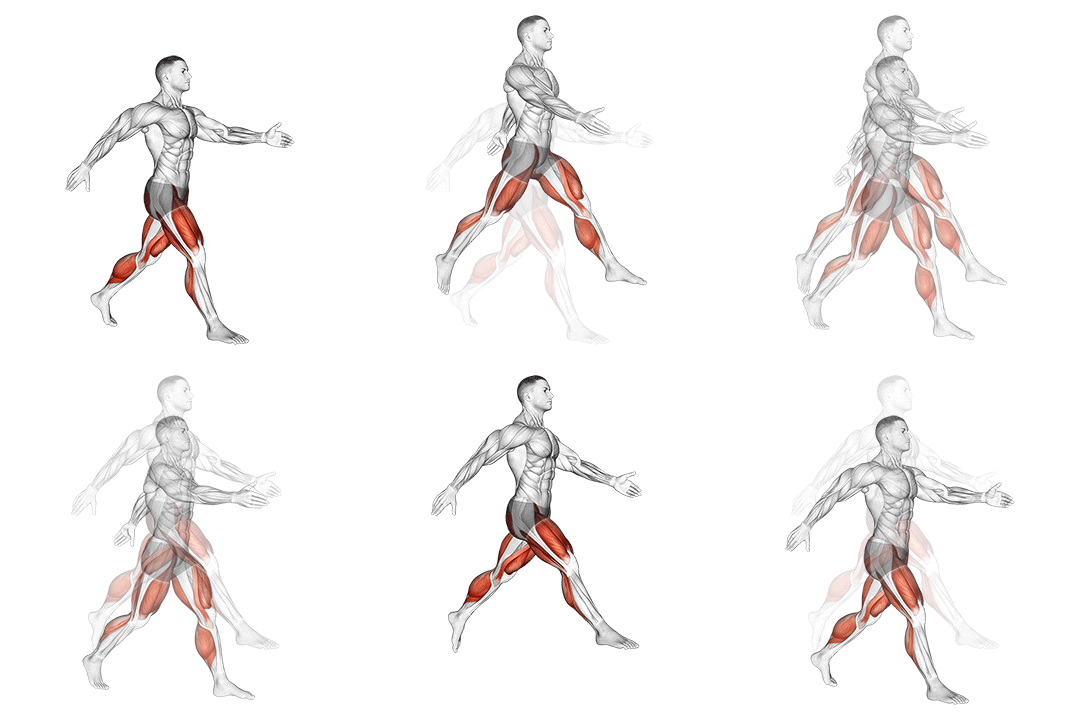
The swing 360 is a low-impact rotational cardio drill where you stand with feet planted shoulder-width apart, knees slightly bent, and swing your arms in continuous circles while rotating the torso to follow them. Despite the name suggesting full-body rotation, the feet stay planted — only the upper body rotates as the arms swing. The continuous motion produces moderate cardiovascular elevation alongside meaningful spinal rotation work, making it an unusual hybrid drill that earns a niche between cardio and mobility training. This exercise sits in a useful spot for low-impact training. Most cardio drills (running, jumping jacks, mountain climbers) involve significant joint impact that excludes some populations — older adults, people recovering from lower-body injuries, anyone with knee or ankle issues. The swing 360 produces cardio benefit without any of that impact load. The arms-and-torso movement engages enough muscle mass to elevate heart rate, particularly when performed at moderate-to-fast pace, while the spinal rotation component provides meaningful mobility work for areas that most exercise neglects. Where it earns its place is as either an active recovery drill on rest days from impact training, or as a warm-up that pairs cardio with mobility. For older adults or beginners, the gentle nature makes it accessible at almost any fitness level. The trade-off is that the cardiovascular intensity is modest — this won't replace serious cardio for trainees who can handle higher-impact work. But for the right context, it provides a gentle and useful tool that combines mobility benefit with cardio stimulus in a way few drills match.
Why train the Swing 360?
- Provides cardio stimulus without joint impact, suitable for low-impact training contexts.
- Trains thoracic spine rotation, which deteriorates with sedentary life and is rarely addressed by other cardio.
- Engages the shoulders and upper back through the continuous arm swinging motion.
- Improves circulation in the upper body, useful as a desk-break or warm-up for upper-body work.
- Suitable for older adults, beginners, or those recovering from lower-body injuries.
- Costs nothing, requires minimal floor space, and can be done while watching TV or during phone calls.
How to do the Swing 360: step by step
- 1Stand with your feet shoulder-width apart and knees slightly bent.
- 2Hold your arms straight out in front of you, parallel to the ground.
- 3Engage your core and swing your arms in a circular motion, rotating your torso as you do so.
- 4Continue the circular motion, swinging your arms and rotating your torso for the desired number of repetitions.
- 5Remember to breathe throughout the exercise.
Muscles worked
Primary
cardiovascular system
Secondary
shoulders, core
Common mistakes to avoid
Letting the lower body move
The whole point of the swing 360 is the rotational training of the upper body relative to a stable lower body. If the feet pivot or the knees rotate to follow the arms, the spinal rotation is lost. Plant the feet firmly and let only the torso rotate.
Letting the arms collapse during swings
As the arms tire, they tend to bend and shorten the swing radius. Keep the arms extended (slight elbow bend is fine) throughout. The longer arm path is what creates the rotational stimulus.
Going too slowly
At slow pace, the swing 360 becomes a mobility drill with minimal cardio benefit. Pace should be moderate to fast — fast enough to elevate heart rate noticeably. If your heart rate isn't rising, increase the speed.
Holding the breath during rotation
Many trainees hold their breath through rotational movement. Breath-holding limits cardio capacity and reduces the exercise's training value. Breathe rhythmically — exhale on one rotation direction, inhale on the next.
Rotating only one direction
The body needs balanced rotational training. Many people unconsciously favor their dominant rotation direction. Always alternate or split sets evenly between clockwise and counterclockwise rotations.
Easier and harder variations
Easier
Reduce the pace and arm extension to make the drill purely mobility-focused with no cardio component. This is appropriate for absolute beginners or older adults building toward more dynamic versions. Or perform seated, focused on rotation rather than arm swinging.
Harder
Increase pace dramatically for sustained sets of 60-90 seconds, raising heart rate substantially. Or add light dumbbells in each hand for additional shoulder demand and resistance. For combined cardio and strength, perform with continuous rotation while holding a slight squat position (more leg demand).
Alternative exercises
Wood chops (rotational)
Adds load through banded or weighted resistance. More strength-focused rotational training; less cardio-focused. Pair with the swing 360 for compound rotational training.
Standing thoracic rotation
Pure mobility version without cardio component. Useful for trainees focused on spinal mobility specifically.
Bear crawl
Higher-intensity cardio with similar coordination demand. Use when low-impact cardio isn't required.
How to program the Swing 360 into your training
The swing 360 works as low-impact cardio or as a warm-up drill rather than as primary training. As low-impact cardio: 3-5 minutes of continuous moderate-pace swinging, 3-4 times per week. The sustained moderate intensity produces meaningful cardiovascular benefit without joint impact. As a warm-up: 60-90 seconds of moderate-pace swinging at the start of any session to elevate heart rate and prepare the upper body. The thoracic rotation component primes the spine for rotational sports or upper-body training. Desk-break protocol: 60 seconds every 90-120 minutes during long sitting sessions. The combined cardio and rotation benefit counters the spinal stiffness of prolonged sitting. For older adults focused on mobility and circulation: 3-5 minutes daily at moderate pace. Combined with walking, this forms an accessible cardiovascular base that doesn't strain joints. For those recovering from lower-body injuries: this becomes a primary cardio option. 5-10 minutes of continuous swinging maintains cardiovascular fitness while the lower body heals. For general fitness: rarely the primary cardio choice when higher-intensity options are available. Use as a warm-up or active recovery rather than a main session. Frequency: daily is fine due to the low intensity and joint-friendly nature. Don't program this as a substitute for higher-intensity cardio for trainees who can handle running or HIIT. The cardiovascular benefit caps out at moderate-intensity levels.
Recovery and frequency
The swing 360 has minimal recovery cost. The low intensity and lack of joint impact mean it produces almost no muscle damage or fatigue. Daily training is tolerable for most people without issue. The main warning signs are sharp pain during rotation (rather than dull stretch sensation) and persistent shoulder fatigue. Sharp pain during rotation can indicate spinal issues that warrant assessment from a physiotherapist. Shoulder fatigue from extended arm swinging is normal in early sessions and improves with practice. No special recovery protocols apply beyond reasonable nutrition and sleep. The exercise is gentle enough to fit into any training context without recovery concerns.
Frequently asked questions
How long should I do the swing 360?
3-5 minutes of continuous practice for cardio benefit, or 60-90 seconds as a warm-up. The low intensity makes longer durations tolerable and useful.
How often should I do this exercise?
Daily is fine due to the low impact and joint-friendly nature. Frequency over duration produces better mobility benefit.
Is this real cardio?
Yes, but at moderate intensity. The exercise produces meaningful heart rate elevation when performed at fast pace, but it won't replace high-intensity cardio for trainees who can handle running or HIIT. Best used as low-impact alternative or supplementary work.
Will this help my back pain?
Often yes — chronic spinal stiffness contributes to many back issues, and gentle rotational mobility helps maintain range. Pair with proper hip mobility and core strengthening for compound benefit. Persistent back pain warrants medical assessment.
Can I do this with shoulder issues?
Often yes, with reduced range. Limit arm extension and pace if shoulders feel restricted. Stop if sharp shoulder pain appears. Mild stiffness usually responds well to gentle rotational movement.
When should I use the swing 360 instead of running?
When higher-impact cardio isn't appropriate — recovery days, lower-body injury rehab, older adults focused on joint protection, or as a warm-up before main training. For prime cardiovascular training, running and HIIT are more time-efficient.
Useful tools for this exercise
Build a workout with the Swing 360
Puna gives you guided bodyweight workouts you can do anywhere — no equipment, no gym, just structured progressions that build real strength.