Star Jump (male)
beginner cardio exercise · body weight · targets cardiovascular system
- Body part
- cardio
- Primary target
- cardiovascular system
- Equipment
- body weight
- Difficulty
- beginner
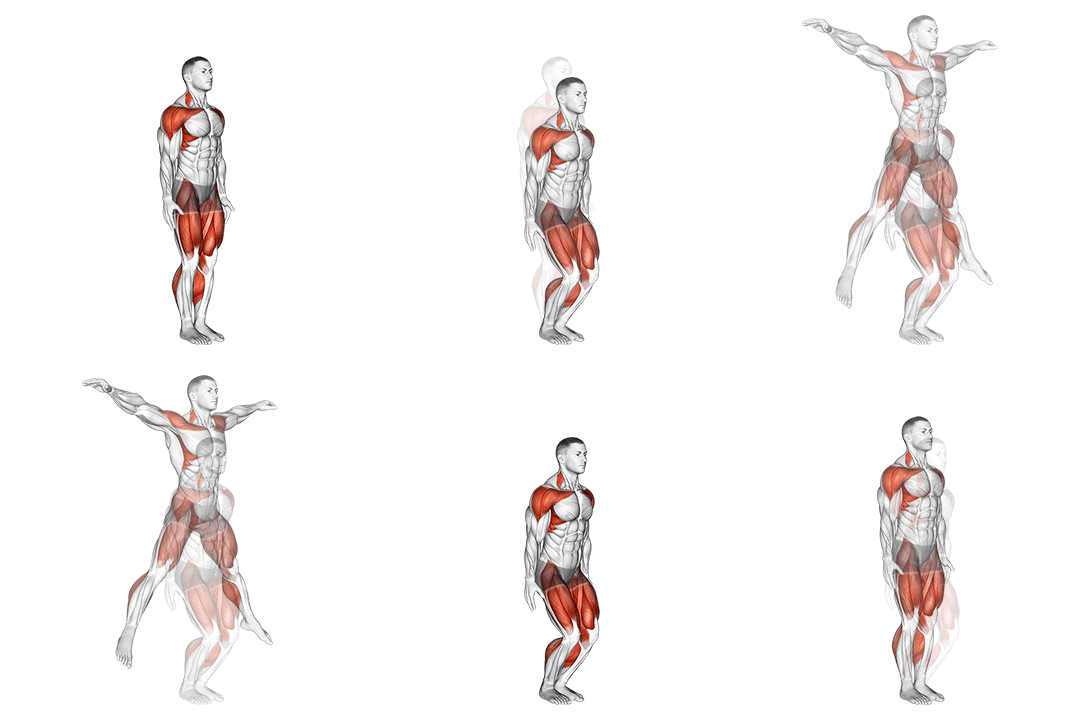
The star jump is one of the most recognizable plyometric drills in bodyweight training — and one of the most effective. From a slight squat with arms by the sides, you jump explosively upward, simultaneously spreading the legs wide and extending the arms out to form a star shape mid-air. The body becomes briefly star-shaped, then returns to the start position for the next rep. The drill spikes heart rate fast, engages full-body coordination, and develops explosive power across both upper and lower body. This is the prototypical full-body plyometric — the cardio equivalent of asking the body to be everywhere at once. The simultaneous extension of legs and arms requires synchronized coordination, the explosive jump trains lower-body power, and the dynamic arm extension engages the shoulders and upper back. Few bodyweight exercises produce as much full-body activation per rep. For trainees seeking maximum metabolic effect from short-duration cardio, star jumps are hard to beat. Where they earn their place in any fitness program is the time efficiency. 30-60 second intervals produce substantial cardiovascular and muscular work in minimal time. For adults with limited training windows, star jumps fit into morning routines, lunch breaks, or end-of-day sessions when full workouts aren't possible. The trade-off, as with all jumping work, is the joint demand — knees, ankles, and shoulders all absorb impact and explosive load. Programmed thoughtfully with adequate recovery, this is a non-issue; programmed daily or to exhaustion, joint issues accumulate within weeks.
Why train the Star Jump (male)?
- Spikes heart rate quickly for efficient cardiovascular conditioning in short time frames.
- Engages full-body coordination through simultaneous arm and leg extension.
- Develops explosive lower-body power through the vertical jump component.
- Burns substantial calories: 12-15 per minute during high-intensity work.
- Improves body awareness and proprioception through the airborne star shape.
- Requires no equipment and minimal floor space — usable anywhere with vertical clearance.
How to do the Star Jump (male): step by step
- 1Stand with your feet shoulder-width apart and your arms by your sides.
- 2Bend your knees slightly and jump up explosively.
- 3As you jump, spread your legs and extend your arms out to the sides, forming a star shape with your body.
- 4Land softly on the balls of your feet with your knees slightly bent.
- 5Repeat for the desired number of repetitions.
Muscles worked
Primary
cardiovascular system
Secondary
quadriceps, hamstrings, calves
Common mistakes to avoid
Crashing into landings
Each landing should be soft, with knees bending immediately to absorb impact. Hard, stiff landings spike the knees and ankles with each rep and lead to joint issues quickly. Aim to land lightly on the balls of the feet with significant knee bend on every rep.
Letting the knees cave inward on landing
When landing from a jump with legs spread, the knees can twist toward the midline as the body rebalances. This is the loading pattern most associated with knee injuries. Drive the knees out in line with the toes throughout each landing. If the knees keep caving, regress to lower-impact alternatives until alignment improves.
Going too fast at the start
The temptation is to chain reps as fast as possible. The first sets should be moderate-paced, focused on the full-body coordination pattern. Speed comes after the form is grooved; rushing the early sets produces messy form that increases injury risk.
Reduced range of motion as fatigue builds
As the set progresses, the legs spread less wide and the arms extend less fully. This collapses the exercise into a basic vertical jump and reduces the training stimulus. Maintain the full star shape throughout the set; if you can't, the set is done — even if you're at rep 8 instead of 15.
Holding the breath
Many trainees hold their breath through the explosive jump phase. Breath-holding spikes blood pressure and reduces sustained-effort capacity. Exhale on the jump, inhale on the descent. Synchronized breathing supports the cardiovascular benefit.
Easier and harder variations
Easier
Reduce the airborne phase — perform a partial squat, then stand up while spreading the legs and extending arms, without leaving the ground. The non-jumping version still trains the coordination pattern with significantly reduced impact load. Or perform with a slower tempo, focusing on full range of motion rather than speed.
Harder
Increase pace to maximum sustainable speed. Or add a rotational component — jumping with a 90-degree turn each rep. For maximum challenge, perform with light dumbbells or wrist weights, though this dramatically increases shoulder demand and should be approached carefully.
Alternative exercises
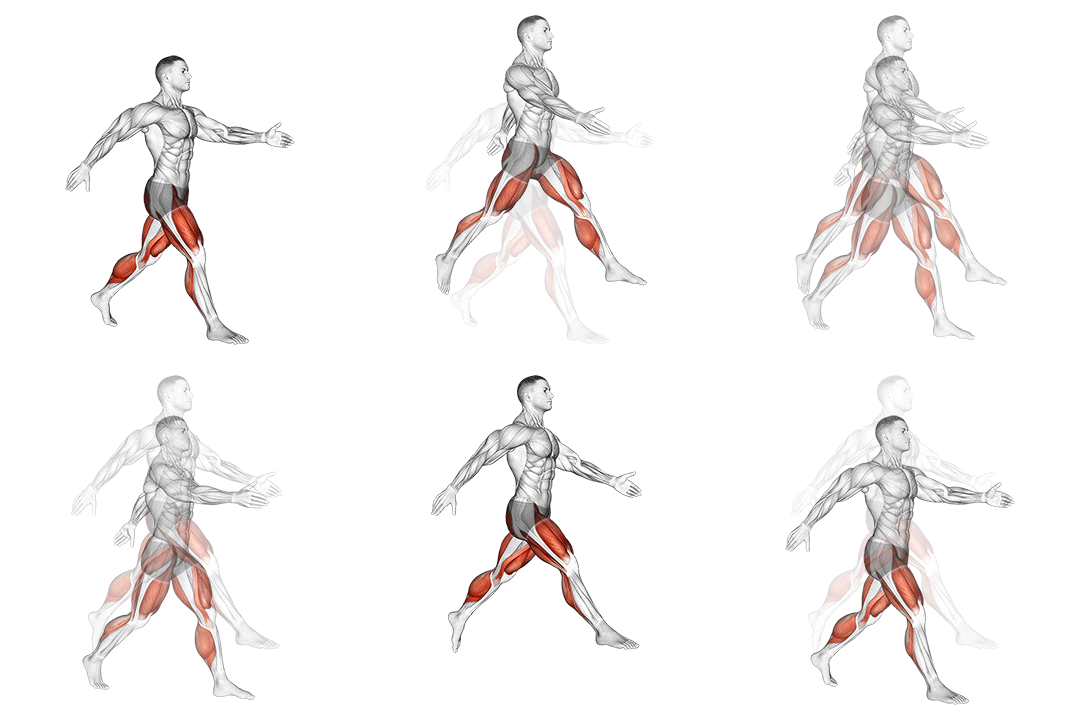
Jumping jacks
Lower-impact cardio alternative with similar coordination pattern. Use when star jumps feel too demanding on the joints.
Astride jumps
Similar full-body cardio with slightly different mechanics. Both work; preference often comes down to which feels more natural.
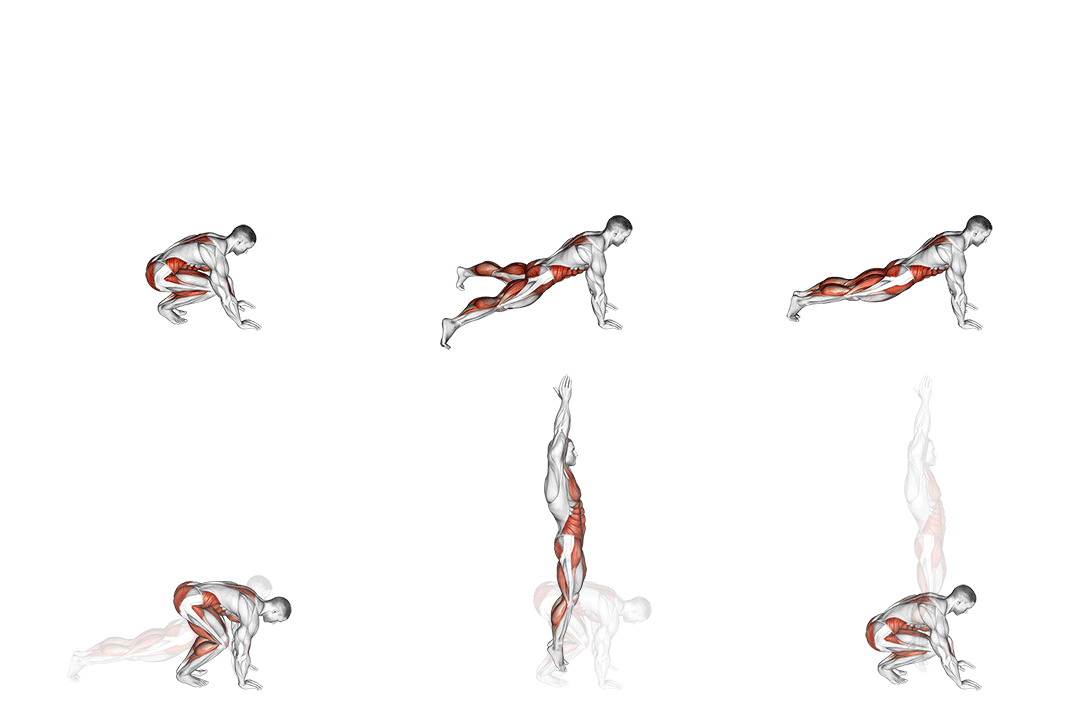
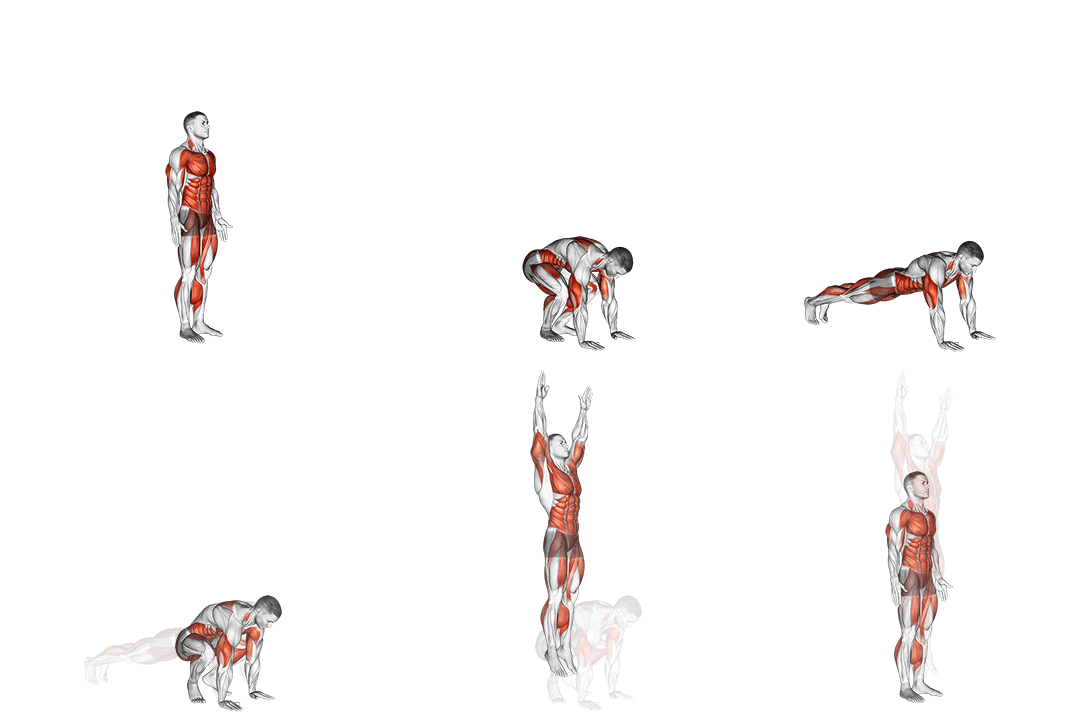
Burpee
Higher-intensity full-body cardio that adds a push-up component. More demanding than star jumps; useful as progression.
How to program the Star Jump (male) into your training
Star jumps work as interval training rather than steady-state exercise. The intensity makes long continuous sets impractical and counterproductive. Interval format: 30-45 seconds of star jumps, 30 seconds of rest, 6-10 rounds. Total session: 8-15 minutes. This produces excellent cardiovascular conditioning with bodyweight only. In a circuit: 30 seconds of star jumps, 30 seconds of push-ups, 30 seconds of bodyweight squats, 30 seconds rest. Repeat 4-6 times for a 12-18 minute full-body session. As a warm-up: 60-90 seconds of moderate-pace star jumps to elevate heart rate before strength training. The dynamic full-body nature warms most major muscle groups simultaneously and prepares the nervous system for explosive work. Frequency: 2-3 times per week is appropriate for high-intensity sessions. The joint demand needs 48-72 hours between hard sessions for full recovery. For general fitness: 3 sets of 45 seconds with 60 seconds rest, 2 times per week as part of a varied cardio rotation that includes running, jumping rope, and other interval work. For weight loss: star jumps fit well into HIIT protocols. 6-8 rounds of 30 seconds work with 30 seconds rest, 2-3 times per week, alongside strength training and dietary management. For athletes: useful as warm-up activation work before sports practice or strength training. The full-body explosive component primes the nervous system for athletic movement. Don't program star jumps daily — joint stress accumulates faster than expected. 2-3 sessions per week with adequate recovery produces better results than daily volume.
Recovery and frequency
Star jumps recover within 24-48 hours when programmed at moderate volume. Higher-intensity HIIT sessions need 48-72 hours. The main warning signs are knee discomfort during or after sessions, ankle soreness from repeated impact, and shoulder fatigue from the dynamic arm extension. Knee discomfort warrants reviewing landing form (especially knee alignment); ankle soreness suggests too much volume too soon; shoulder fatigue is usually from poor scapular control during the arm extension. Long-term, regular high-intensity star jump training requires monthly easier weeks where you reduce volume by 30-40%. Pair the work with daily ankle and shoulder mobility work. Sleep, hydration, and protein intake all support the recovery demand.
Frequently asked questions
How long should I do star jumps for?
30-60 seconds per interval, 6-10 intervals per session. Total session length of 8-15 minutes provides excellent cardiovascular benefit. Longer continuous sets are impractical due to the intensity.
How often should I do star jumps?
2-3 times per week. The plyometric joint demand needs 48-72 hours between hard sessions. More frequent training tends to produce ankle, knee, or shoulder issues.
Are star jumps safe for beginners?
With careful progression, yes. Start with the non-jumping version (partial squat with arm spread) for 1-2 weeks to learn coordination, build to moderate-pace jumping over 2-3 weeks, only progress to high-intensity intervals once basic form is grooved.
Will this burn fat?
When programmed in HIIT format, yes — star jumps consume notable calories and elevate metabolism for hours after sessions. But fat loss requires consistent calorie deficit through diet alongside exercise. Star jumps help; they don't replace dietary management.
Star jumps vs jumping jacks: which is better?
Different intensities. Jumping jacks are lower-impact and more sustainable for longer sessions. Star jumps add a vertical jump component for more cardio intensity and lower-body power. For pure cardio sustainability, jumping jacks; for time-efficient HIIT, star jumps.
Can I do star jumps with knee issues?
Depends on the specific issue. The repeated impact and split-leg landings can aggravate existing knee problems. Consult a physiotherapist for current issues. For mild stiffness, start with the non-jumping version and stop if discomfort appears.
Useful tools for this exercise
Build a workout with the Star Jump (male)
Puna gives you guided bodyweight workouts you can do anywhere — no equipment, no gym, just structured progressions that build real strength.