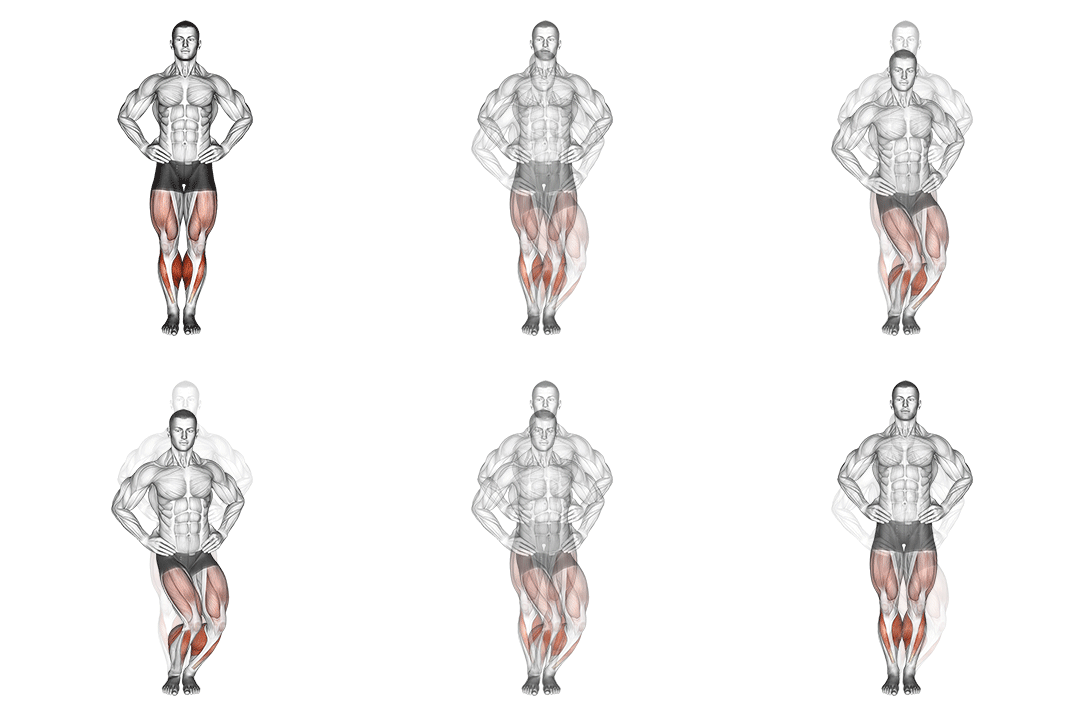
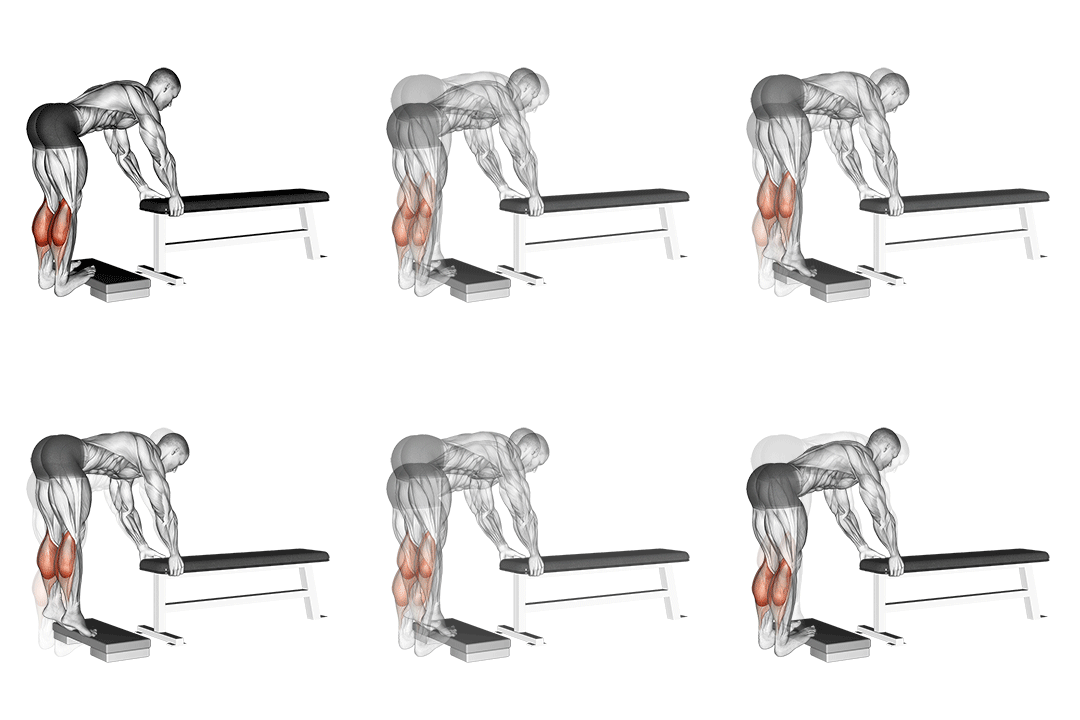
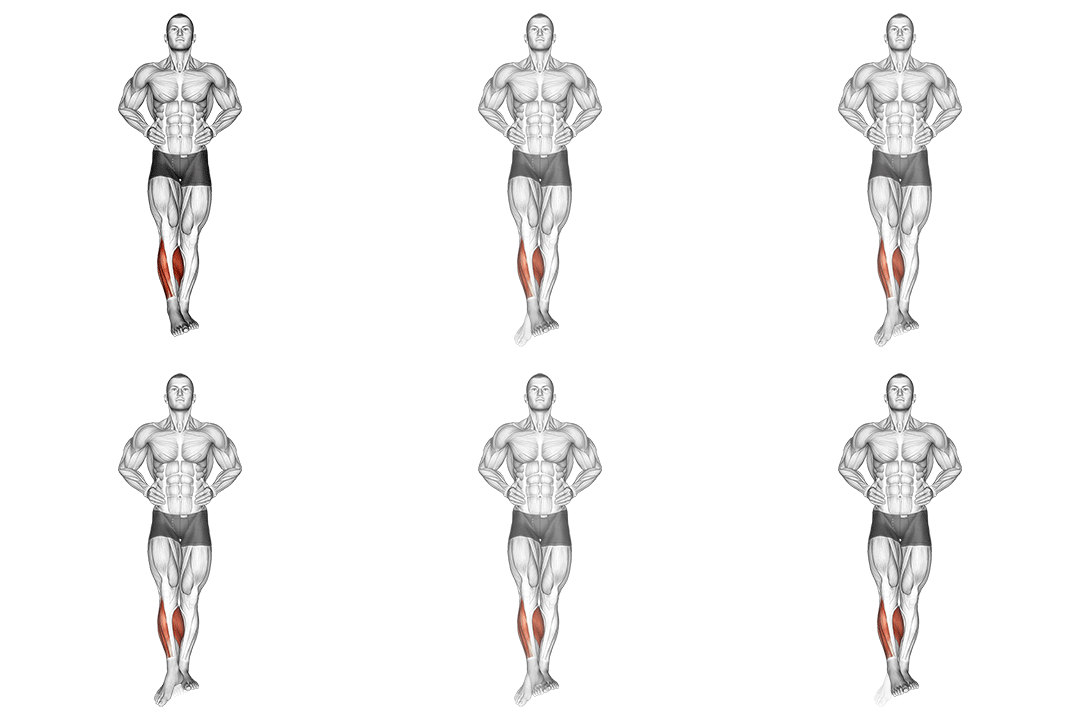
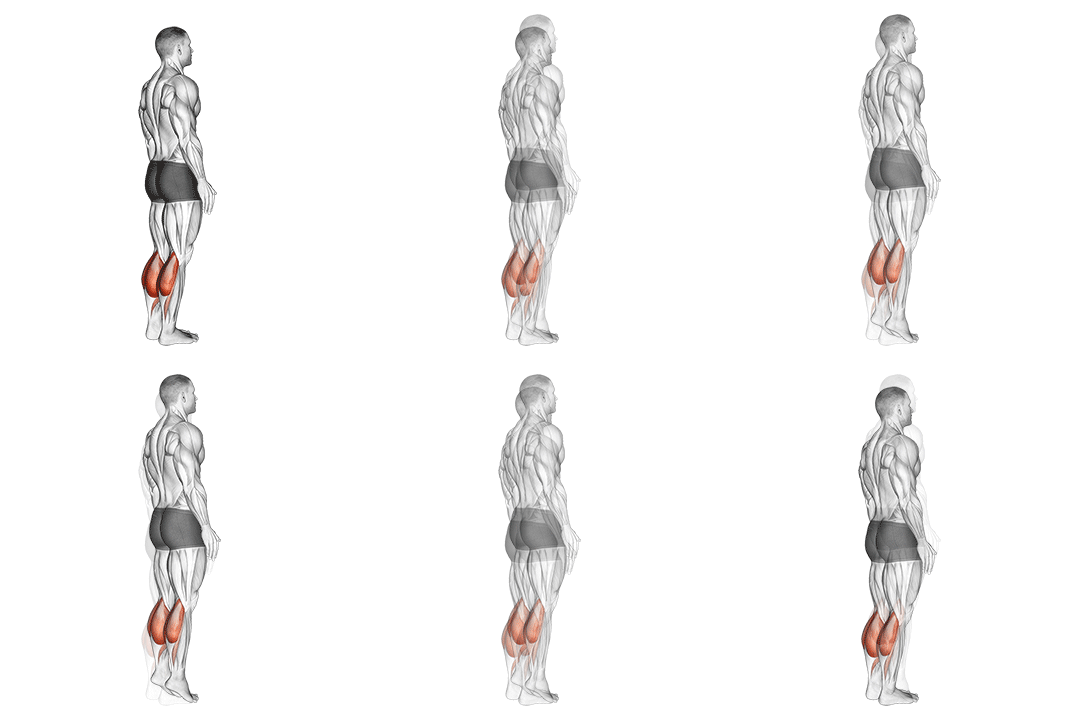
Standing Calves Calf Stretch
beginner stretching exercise · body weight · targets calves
- Body part
- lower legs
- Primary target
- calves
- Equipment
- body weight
- Difficulty
- beginner
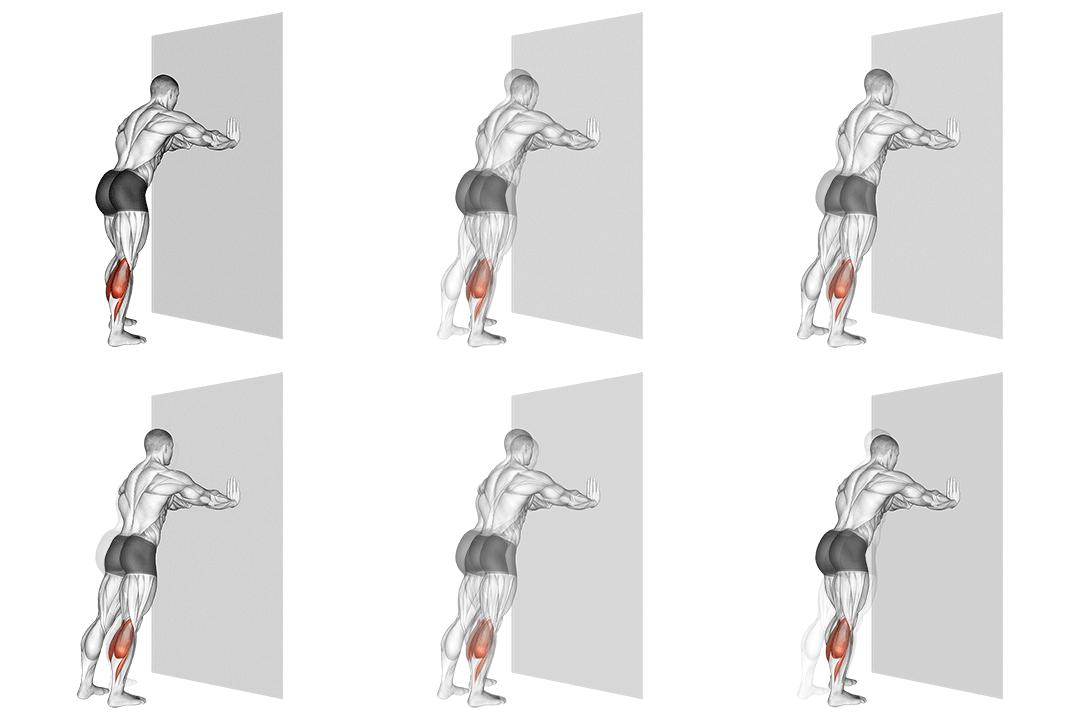
The standing calves calf stretch is the maintenance-focused calf stretch — a simple wall stretch performed standing, with one leg extended back and the heel pressed firmly into the floor. It's the calf-stretching workhorse for trainees who care less about pushing range and more about preventing the chronic shortening that comes from sitting, shoes, and modern life. Used as a daily 90-second drill, it keeps the calves long enough to support healthy walking gait, squat depth, and freedom from the small chronic tightness that desk-bound adults accumulate. What makes this version stand out from other calf wall stretches is the framing rather than the mechanics. The calf push stretch emphasizes deeper forward lean for tissue lengthening; the basic calf stretch emphasizes accessibility for beginners. This version emphasizes consistency — the goal isn't to push range or build new mobility, but to maintain what you have against the entropy of daily sedentary patterns. For trainees who already have decent calf mobility but want to keep it, this is the right tool. The biggest threat to calf length isn't overtraining or genetics — it's lifestyle. Hours of sitting per day shortens the calves into a permanently flexed position. Footwear with even mild heel elevation reinforces the shortening. Walking only on smooth surfaces (floors, sidewalks) removes the natural ankle range that walking on uneven ground would provide. The cumulative effect over years is calves that have lost meaningful length, even in active adults. A 60-second daily stretch counters this attrition and is genuinely valuable as preventive maintenance — even when nothing feels obviously tight.
Why train the Standing Calves Calf Stretch?
- Provides daily calf maintenance that prevents the chronic shortening from desk-bound lifestyles.
- Counters the calf-shortening effects of footwear with elevated heels (yes, even sneakers).
- Maintains ankle dorsiflexion that supports squat depth, walking gait, and athletic movement.
- Helps prevent calf cramping that often follows long flights, drives, or sedentary days.
- Supports better posture by addressing lower-leg tightness that can pull the kinetic chain out of alignment.
- Costs nothing, requires only a wall, and integrates easily into any morning or evening routine.
How to do the Standing Calves Calf Stretch: step by step
- 1Stand facing a wall or sturdy object, about an arm's length away.
- 2Place your hands on the wall or object at shoulder height.
- 3Step back with one foot, keeping your heel flat on the ground.
- 4Bend your front knee slightly and lean forward, keeping your back leg straight.
- 5You should feel a stretch in your calf muscle.
- 6Hold the stretch for 20-30 seconds.
- 7Repeat on the other leg.
Muscles worked
Primary
calves
Secondary
hamstrings, glutes
Common mistakes to avoid
Treating it as one-time-per-week effort
The framing of this stretch is daily maintenance. One session per week is too infrequent to counter the daily shortening pattern. Daily practice — even briefly — outperforms occasional long sessions for postural tissue maintenance. Show up every day.
Lifting the back heel during the stretch
If the back heel comes off the floor, you're no longer stretching the calf — you're just leaning into the wall. Press the heel down firmly throughout. If you can't keep it down, step the foot closer to the wall until you can.
Bending the back knee
A bent back knee shifts the stretch from the gastrocnemius to the soleus (deeper calf muscle). Both stretches are valuable but distinct. For the gastrocnemius emphasis of this version, the back knee must stay locked. To target the soleus, bend the back knee deliberately as a separate variation.
Skipping the second side
Most people have asymmetric calf tightness — usually the dominant leg is tighter. Stretching only one side or doing fewer reps on the tighter side reinforces the imbalance. Always do both sides equally.
Bouncing during the hold
Static stretching means staying still. Bouncing triggers the muscle's protective stretch reflex and shortens it. Hold the position without movement, breathe slowly, and let the tissue gradually release.
Easier and harder variations
Easier
Step the back foot closer to the wall to reduce the stretch intensity. The shorter stride lets you hold the position correctly without struggling to keep the heel down. Build distance over weeks as the calf adapts.
Harder
Add a deliberate forward push with the back heel pressing into the ground while the front knee bends — this becomes the calf push stretch variation, deeper and more aggressive. Or perform on a step with the heel hanging off the back; gravity adds load to the stretch.
Alternative exercises
Calf push stretch (active forward lean)
Deeper version with active push-through. Use this when daily maintenance has plateaued and you want to actually increase calf range.
Seated calf stretch
Desk-friendly version usable in office environments. Pair the standing version (post-workout, evening) with the seated version (during work) for compound calf maintenance.
Downward dog
Yoga pose that stretches both calves simultaneously. Different mechanism but equivalent benefit for the calves alone.
How to program the Standing Calves Calf Stretch into your training
The standing calves calf stretch works best as a daily maintenance habit rather than a periodic effort. Postural tissue adaptation requires repeated exposure — daily practice outperforms occasional long sessions. Daily routine: 1-2 sets of 30-45 seconds per leg, performed once or twice a day. Anchor it to existing transitions — start of the work day, end of the work day, before bed. The structure makes adherence easier than 'I'll find time.' Morning routine: 30 seconds per leg right after waking. The calves are stiffest first thing in the morning, and brief stretching makes the rest of the day's standing, walking, and lifting feel noticeably looser. Post-workout protocol: 1 set of 45 seconds per leg after lower-body sessions. The combination of warm tissue and post-exercise activation makes the stretch particularly effective for tissue length maintenance. For those who sit most of the day: increase to 3-4 sessions per day at 30 seconds per leg. The high frequency counters the constant shortening pattern of desk work. Combined with seated calf stretches during work hours, most desk workers see noticeable improvement in calf comfort within 4-6 weeks. For athletes (especially runners): add 60 seconds per leg post-run, in addition to the daily routine. The post-run window is particularly valuable for tissue length adaptation. Don't program this as a separate 'mobility day' — daily small doses far outperform infrequent long sessions for postural tissue maintenance.
Recovery and frequency
The standing calf stretch has zero recovery cost. Daily practice is safe and ideal — calf tissue adapts to consistent low-volume input far better than to occasional intense sessions. The main signal to monitor is sharp pain at the back of the heel (Achilles area) during or after the stretch. This can indicate Achilles tendinopathy, which requires loaded eccentric calf raises rather than stretching. If the back of the heel hurts rather than the calf belly, see a physiotherapist before continuing. For typical calf tightness, daily practice is safe, recovery is immediate, and benefits compound over weeks of consistency.
Frequently asked questions
How long should I hold the standing calf stretch?
30-45 seconds per leg, 1-2 sets per leg, once or twice daily. Holds shorter than 20 seconds don't drive meaningful tissue maintenance.
How often should I stretch my calves?
Daily is ideal. The point is preventing chronic shortening from sitting and footwear; daily practice counters daily insults better than occasional sessions can.
Standing vs seated calf stretch: which is better?
Different contexts. Standing version provides stronger stretch (body weight loading); seated version is more accessible during work hours. Use both — standing for workout-time stretching, seated during long sitting sessions.
Will this stretch help me even if I don't feel tight?
Often yes — calf tightness develops gradually and many people don't notice it until it's already restricting movement. Daily maintenance prevents the gradual loss of range that desk-bound adults accumulate over years, even when nothing feels obviously tight.
Should I stretch before or after running?
Both. Before: brief stretches (15-30 seconds per leg) as part of a dynamic warm-up. After: longer stretches (45-60 seconds per leg) when tissue is warm. Post-run stretching drives most adaptation.
What if I feel the stretch in my hamstrings instead?
Your back knee is bent — straighten it. The calf stretch requires a locked-out back leg. If the back leg is straight and you still feel hamstrings, your front knee isn't bent enough; bend it more to isolate the back-leg calf.
Useful tools for this exercise
Build a workout with the Standing Calves Calf Stretch
Puna gives you guided bodyweight workouts you can do anywhere — no equipment, no gym, just structured progressions that build real strength.