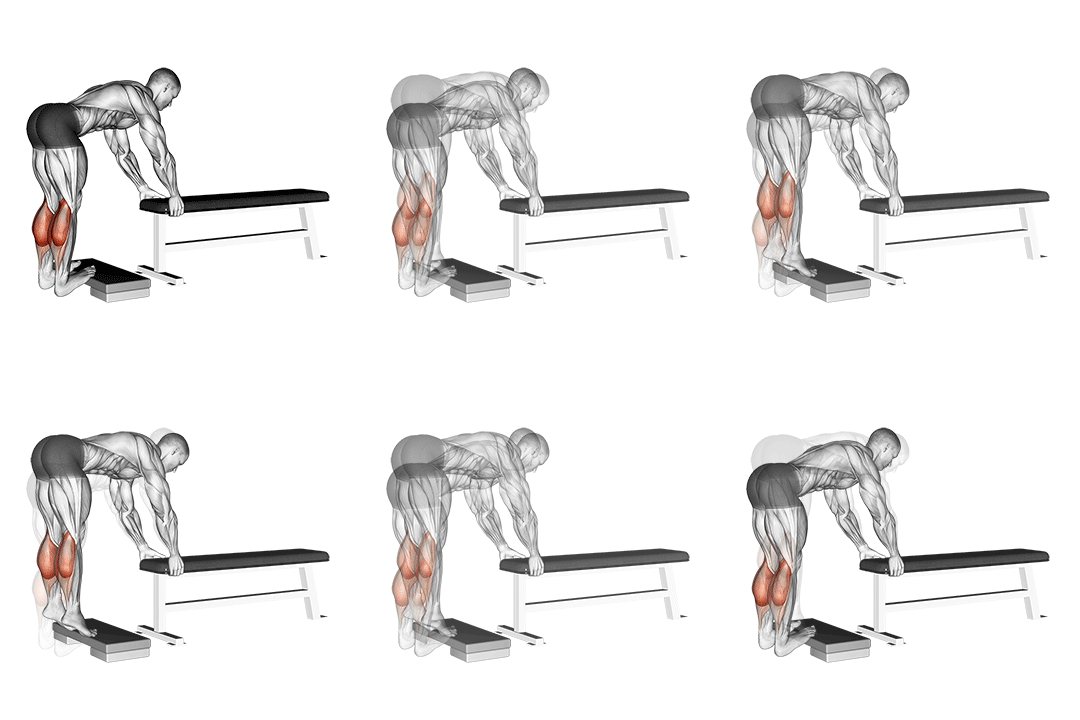
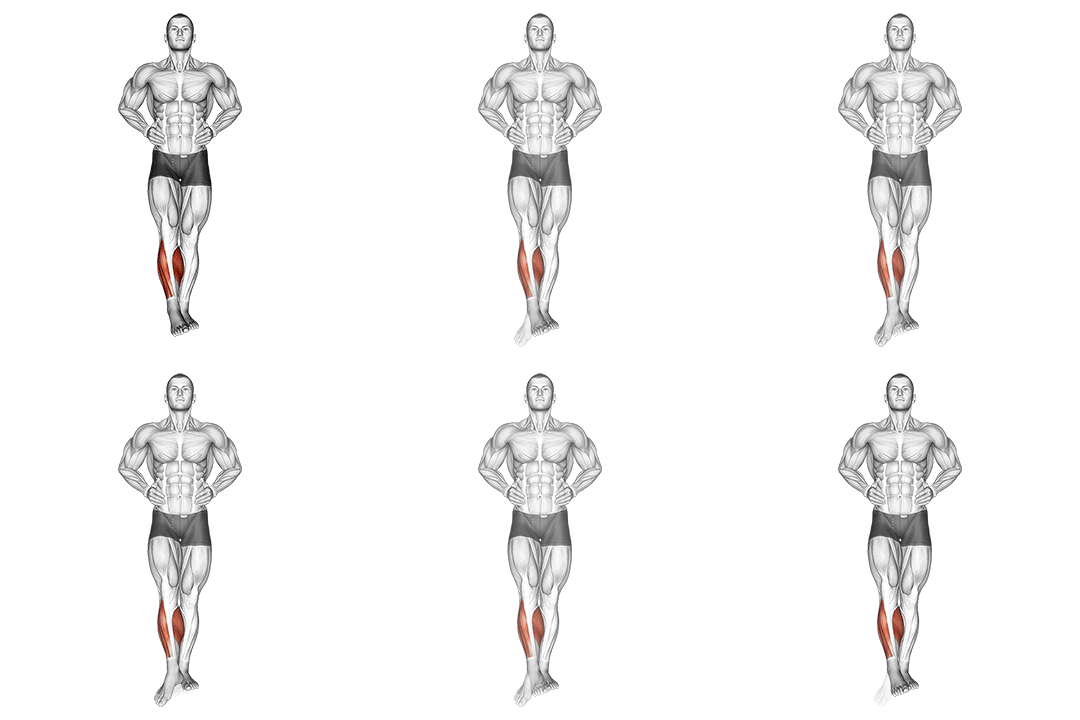
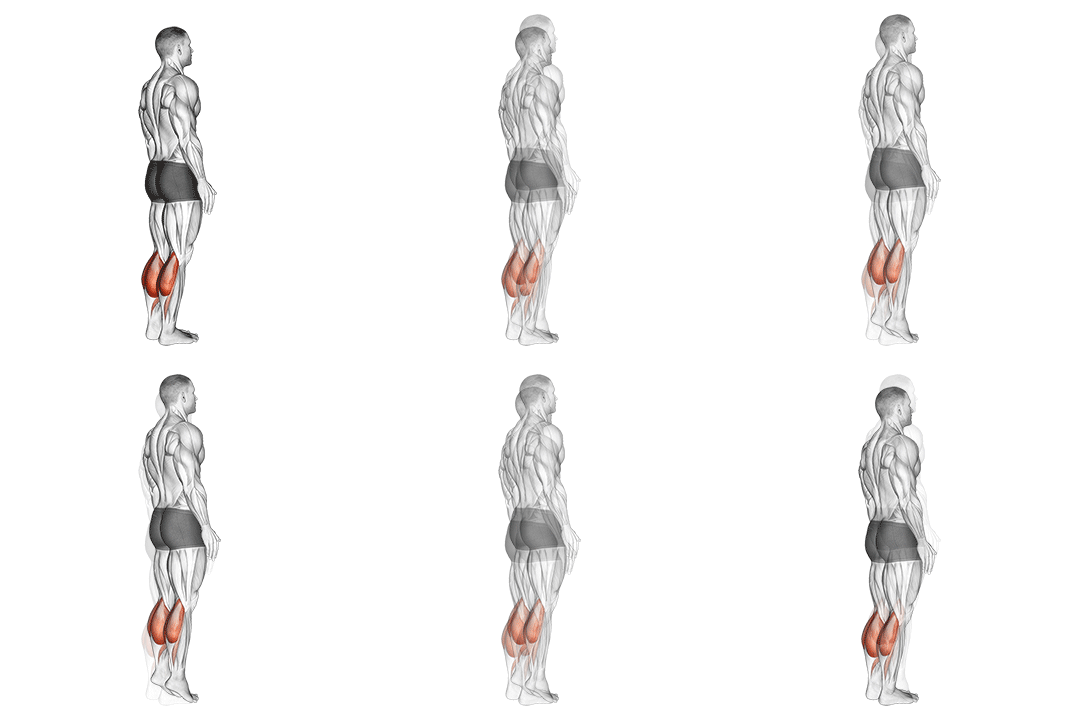
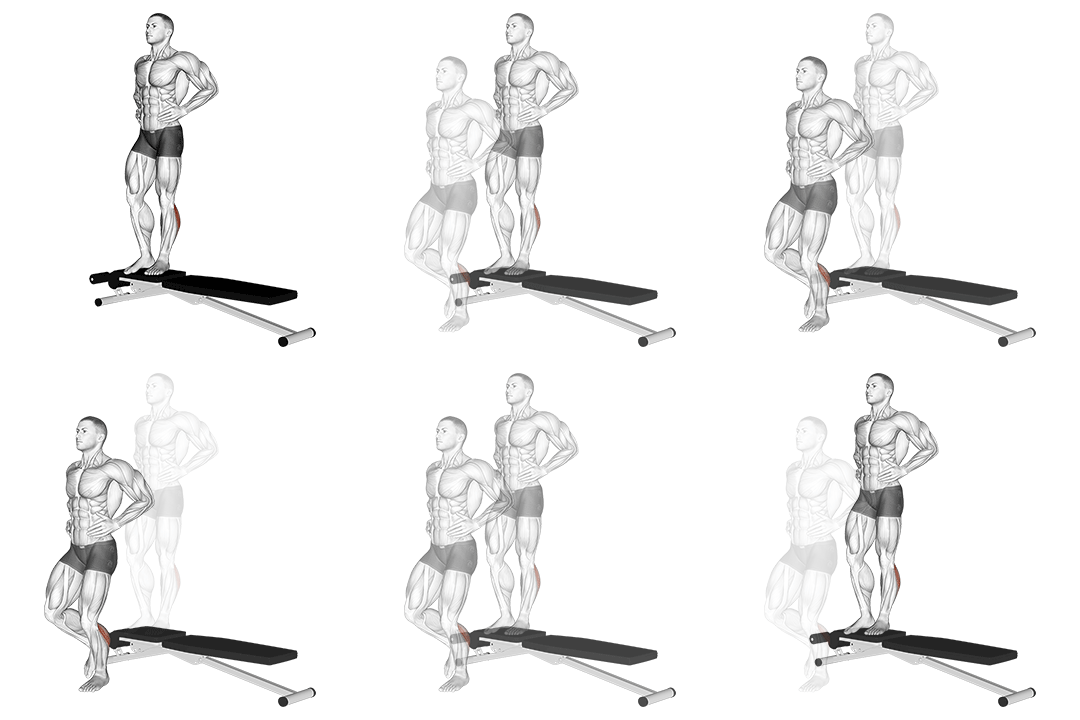
Circles Knee Stretch
beginner mobility exercise · body weight · targets calves
- Body part
- lower legs
- Primary target
- calves
- Equipment
- body weight
- Difficulty
- beginner
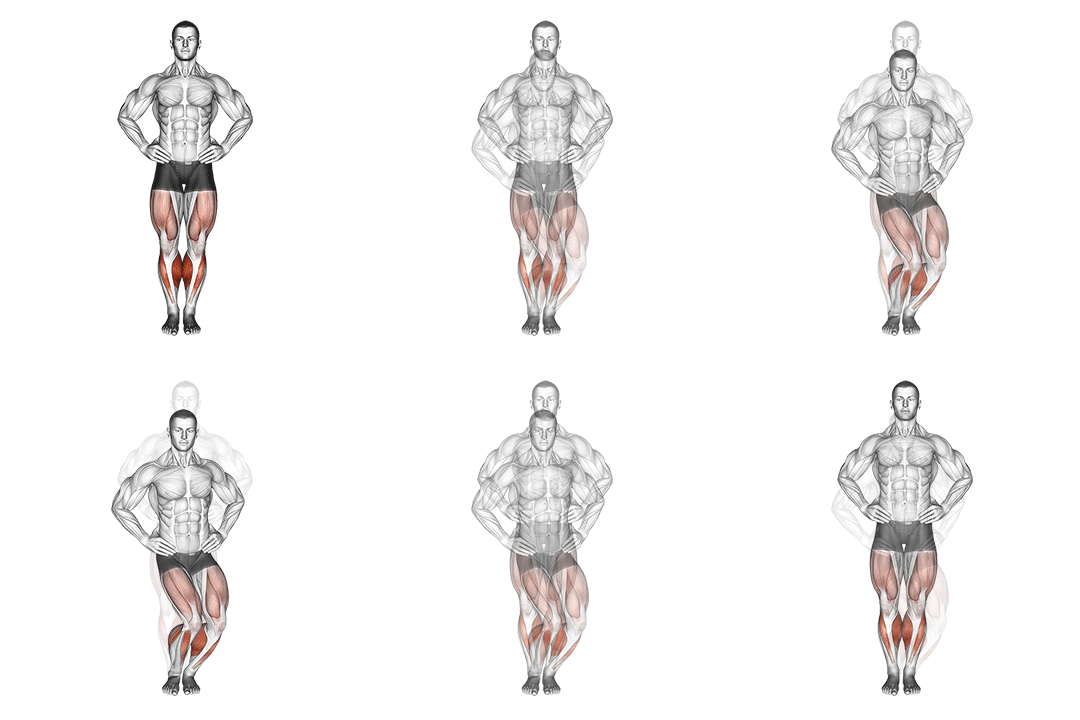
The circles knee stretch is a small-range mobility drill where you bend slightly at the knees, lift the heels off the ground, and rotate the knees in circular motions while keeping the upper body stable. Despite the name, it's not really a stretch in the traditional sense — it's an active mobility drill that targets the ankle, knee, and surrounding tissue through gentle rotational movement. The combination of partial weight-bearing on the balls of the feet and the rotational motion reaches range that static stretching can't access. This drill earns its place in any warm-up routine, especially before lower-body sessions. The knees and ankles spend most of the day in restricted positions — sitting flexes the knees and immobilizes the ankles for hours, walking and running uses only sagittal plane motion, and most strength training reinforces the same patterns. The rotational range of the knees and ankles deteriorates accordingly, often without notice. By the time most trainees realize their knee mobility is restricted, they've already developed compensations elsewhere — usually at the hips or lower back. Circles knee stretch is also useful as a desk-break drill or pre-bed routine. Sitting all day shortens the calves and stiffens the ankles; 60 seconds of knee circles before standing up after a long work session restores enough range to walk normally without the limp most desk workers develop in the afternoon. The total time investment is laughable; the carryover to squat depth, walking gait, and lower-body comfort is meaningful when practiced consistently.
Why train the Circles Knee Stretch?
- Restores rotational range of motion in the knees and ankles, which deteriorates fastest with sedentary life.
- Improves circulation in the lower legs after long periods of sitting or before lower-body workouts.
- Provides a brief warm-up drill that prepares the ankles, knees, and calves for squatting or running.
- Relieves the calf and ankle stiffness that accumulates from desk work and shoe-bound walking.
- Helps maintain the ankle dorsiflexion needed for proper squat depth.
- Costs nothing and takes 60 seconds — usable as a daily desk-break or pre-bed routine.
How to do the Circles Knee Stretch: step by step
- 1Stand with your feet shoulder-width apart and your hands on your hips.
- 2Bend your knees slightly and lift your heels off the ground, balancing on the balls of your feet.
- 3Keeping your knees bent, rotate your knees in a circular motion, first clockwise and then counterclockwise.
- 4Perform the movement for the desired number of repetitions.
Muscles worked
Primary
calves
Secondary
hamstrings, quadriceps
Common mistakes to avoid
Making the circles too large
Despite the name suggesting big motion, the circles should be small and controlled — large rotations stress the knee ligaments and add wobble that defeats the purpose. Aim for circles roughly the diameter of a coffee mug. Quality of motion matters more than range.
Locking out the upper body
Some trainees brace the entire body rigidly, which transfers tension into the knee and ankle joints. Keep the upper body relaxed — hands on hips, shoulders down. The motion should isolate the knees and ankles.
Putting too much weight on the balls of the feet
The drill is about active rotational mobility, not loaded calf work. If you press hard onto the balls of the feet, the calves engage statically and the rotational motion gets restricted. Keep the weight light on the balls of the feet — just enough to clear the heels.
Skipping the reverse direction
Many trainees rotate one way (typically the more comfortable direction) and skip the other. The knees need symmetrical work in both directions. Always do equal reps clockwise and counterclockwise.
Rushing through the reps
Speed reduces the range of each circle — momentum carries the knees through the easy middle without reaching the extremes. Slow each rotation to 1-2 seconds, and you'll feel the joints actually working through full range.
Easier and harder variations
Easier
Hold onto a stable surface (wall, counter, sturdy chair) for balance. The added support lets you focus on the knee rotation without worrying about wobbling. Or reduce the heel lift — keep the heels just barely off the ground rather than fully on the balls of the feet.
Harder
Increase the squat depth slightly during the rotation — bring the knees lower while continuing the circular motion. The deeper position adds load through the quads and ankles. Or progress to single-leg knee circles, balancing on one foot while rotating the lifted knee in circles.
Alternative exercises
Ankle circles
Isolated ankle rotation that targets the joint specifically. Often more useful for ankle mobility specifically than knee circles. Pair both for complete lower-leg mobility.
Hip circles (standing)
Different joint focus but similar mobility-warm-up principle. Useful as part of a complete lower-body warm-up routine.
Slow bodyweight squats
Sagittal plane mobility through the knees and ankles. Different motion than circles but trains complementary range.
How to program the Circles Knee Stretch into your training
The circles knee stretch works best as a brief, frequent practice rather than a workout component. Like most mobility drills, it adapts to frequency more than to duration. Daily routine: 1-2 sets of 30-45 seconds (20-30 circles in each direction), once or twice per day. Tying the practice to existing triggers (post-shower, desk break, before bed) makes it automatic. Pre-workout warm-up: 30-45 seconds of knee circles before any lower-body session, especially before squats, lunges, or running. The combined effect of warmth, blood flow, and rotational mobility prepares the joints for weight-bearing work. Desk-break protocol: 30 seconds every 90-120 minutes during long sitting sessions. The frequency prevents stiffness from accumulating rather than addressing it after the fact. Tied to natural transitions (between meetings, before each coffee), the routine builds without willpower cost. For those with chronic ankle or knee stiffness: 4-5 mini-sessions per day at 30 seconds each. The increased frequency drives faster mobility adaptation. Combined with deliberate calf and hamstring stretching, this addresses most lower-leg mobility restrictions within 4-6 weeks. Don't program this as a separate 'mobility day' — daily small doses far outperform infrequent long sessions for joint mobility. For athletes after lower-body training: 30 seconds as part of a cooldown to flush blood through the lower legs and reduce post-workout stiffness.
Recovery and frequency
The circles knee stretch has no recovery cost. The motion is light and the joint stress is low. Daily practice is safe and even ideal — joint mobility adapts to frequency far better than to occasional long sessions. The main warning signs are sharp pain in the knee or ankle (rather than dull stretch sensation) and clicking with discomfort. Painless clicking is normal and harmless; painful clicking suggests a different issue and warrants assessment. For ordinary knee or ankle stiffness, the drill is safe, recovery is immediate, and benefits compound with regular practice.
Frequently asked questions
How long should I do circles knee stretch?
30-45 seconds per session, 1-2 sessions per day. Total daily volume of 1-2 minutes is enough for most people. Higher volumes don't add much benefit.
How often should I do this exercise?
Daily, distributed into multiple short sessions when possible. Frequency matters more than duration for joint mobility.
Will this help my squat depth?
Indirectly. Better ankle mobility (one of the things circles knee stretch trains) often improves squat depth by allowing the heels to stay down. Combined with deeper ankle dorsiflexion stretches and calf work, most trainees see noticeable squat improvement within 4-6 weeks.
Can I do this with knee pain?
Often yes, but reduce range to whatever feels painless. Stop if pain intensifies during reps. Mild knee stiffness often responds well to gentle rotational mobility work. Persistent pain warrants assessment from a physiotherapist.
Why do my knees pop during circles?
Painless popping or clicking is common and usually harmless — it indicates fluid or tendons moving past joint surfaces. If popping is accompanied by pain or swelling, see a healthcare provider. For typical clicking without pain, ignore it and continue.
Should I do this before running?
Yes — 30-60 seconds of knee circles before running prepares the ankles and knees for the repetitive impact loading. Combine with brief calf stretches and ankle mobility work for a complete pre-run warm-up.
Useful tools for this exercise
Build a workout with the Circles Knee Stretch
Puna gives you guided bodyweight workouts you can do anywhere — no equipment, no gym, just structured progressions that build real strength.