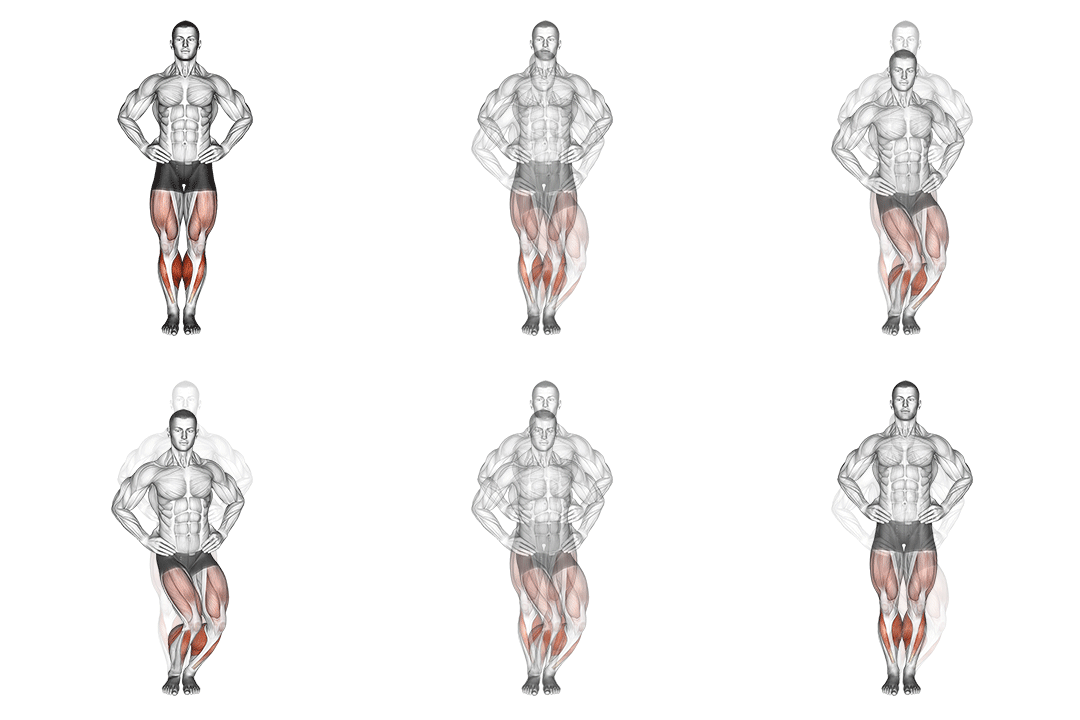
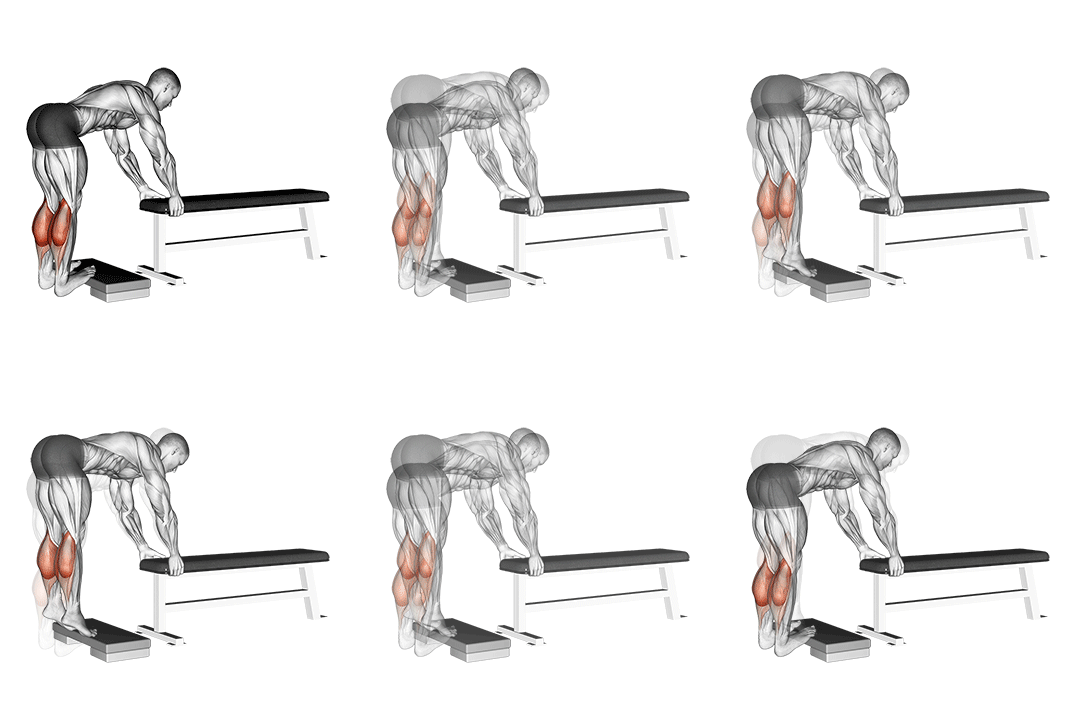
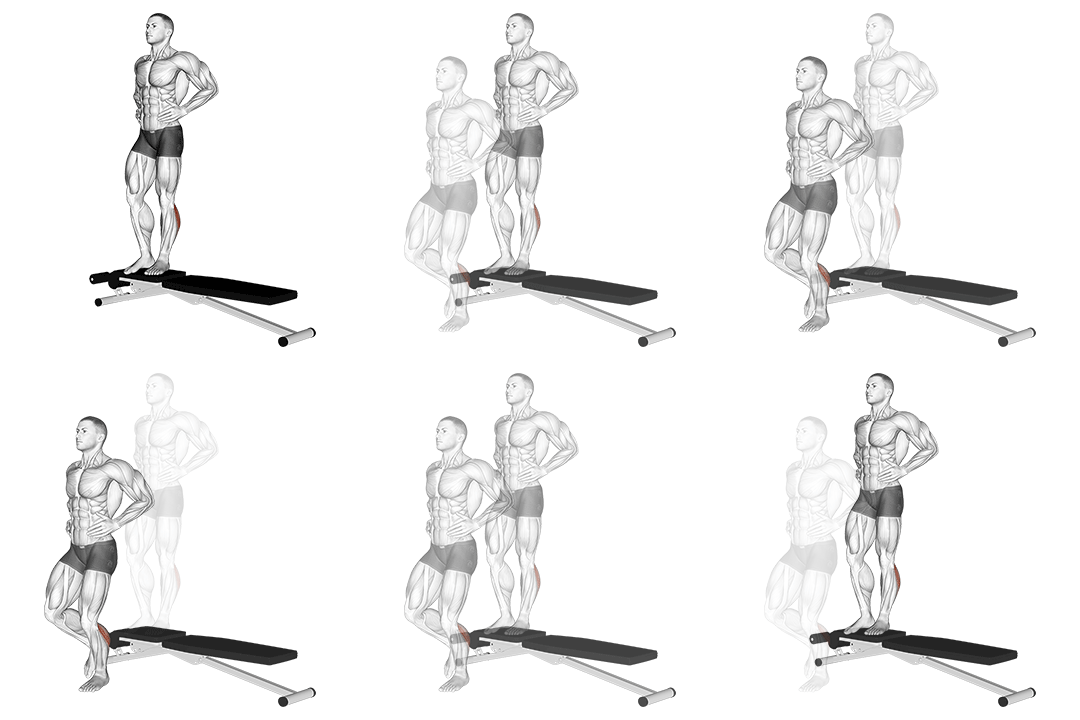
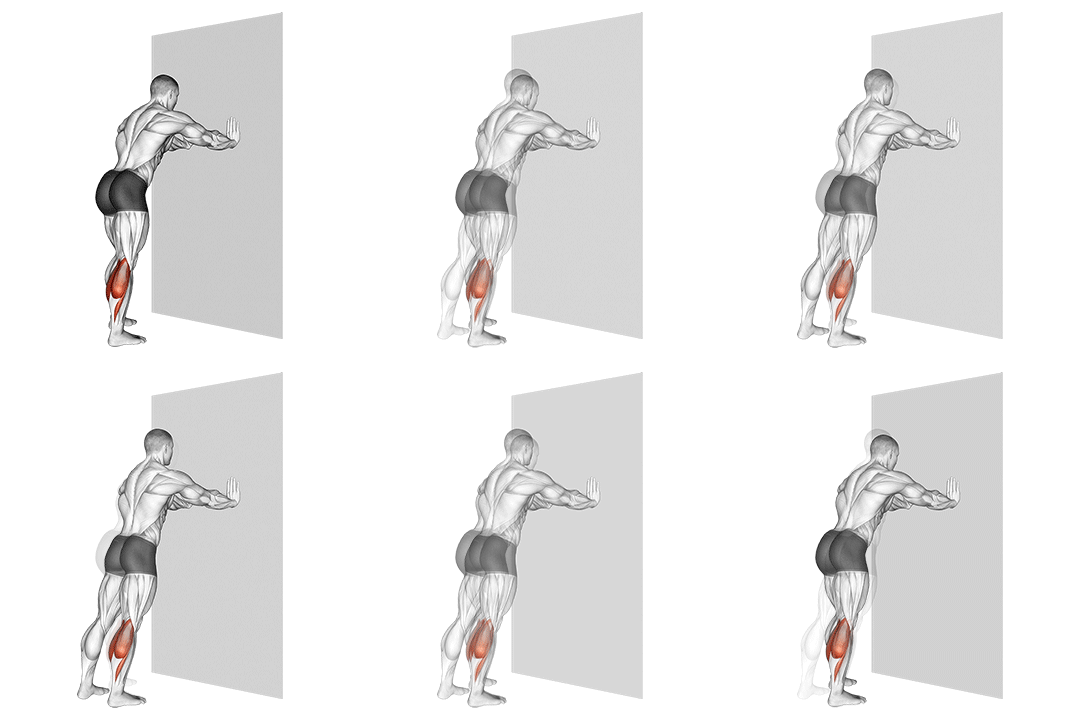
One Leg Donkey Calf Raise
intermediate strength exercise · body weight · targets calves
- Body part
- lower legs
- Primary target
- calves
- Equipment
- body weight
- Difficulty
- intermediate
The one-leg donkey calf raise is the natural progression from two-legged donkey raises — the same elevated-toe position that allows full range of motion, but with all the body weight loaded onto a single calf. The doubled load per leg makes this version one of the most effective bodyweight calf builders for trainees who have outgrown two-legged variations. For most adults, two-legged donkey raises hit a strength ceiling within a few months; the single-leg version unlocks years of additional progression without any equipment. This is where calf training becomes genuinely productive for size and strength gains. The bilateral version is enough to maintain calf health and provide a baseline of stimulus, but the doubled load of single-leg work drives meaningful hypertrophy. Trainees who can rep out 25-30 two-legged donkey raises typically need to drop to 8-12 reps when transitioning to single-leg variations, which is exactly the rep range that produces the best calf growth response. The trade-off versus weighted machine calf work is more about volume than load. Single-leg bodyweight donkey raises load the calf significantly but require high rep counts (15-25 per leg per set) to drive the volume calves need for growth. Weighted calf machines allow heavier loads with lower reps, which is more time-efficient. For home trainees without machines, however, the single-leg donkey raise is the gold-standard calf exercise. Done with the volume calves require — multiple sets, multiple sessions per week — it produces real change over a few months of consistent training.
Why train the One Leg Donkey Calf Raise?
- Doubles the calf load per leg compared to two-legged donkey raises with no equipment.
- Builds calf size and strength more effectively than two-legged variations through the increased load.
- Trains balance and stabilization on a single leg alongside the calf strengthening.
- Exposes left-right strength imbalances that two-legged work masks.
- Provides clear progression without requiring weights or machines — appropriate for home trainees.
- Improves single-leg calf endurance, which carries over to running gait and athletic movement.
How to do the One Leg Donkey Calf Raise: step by step
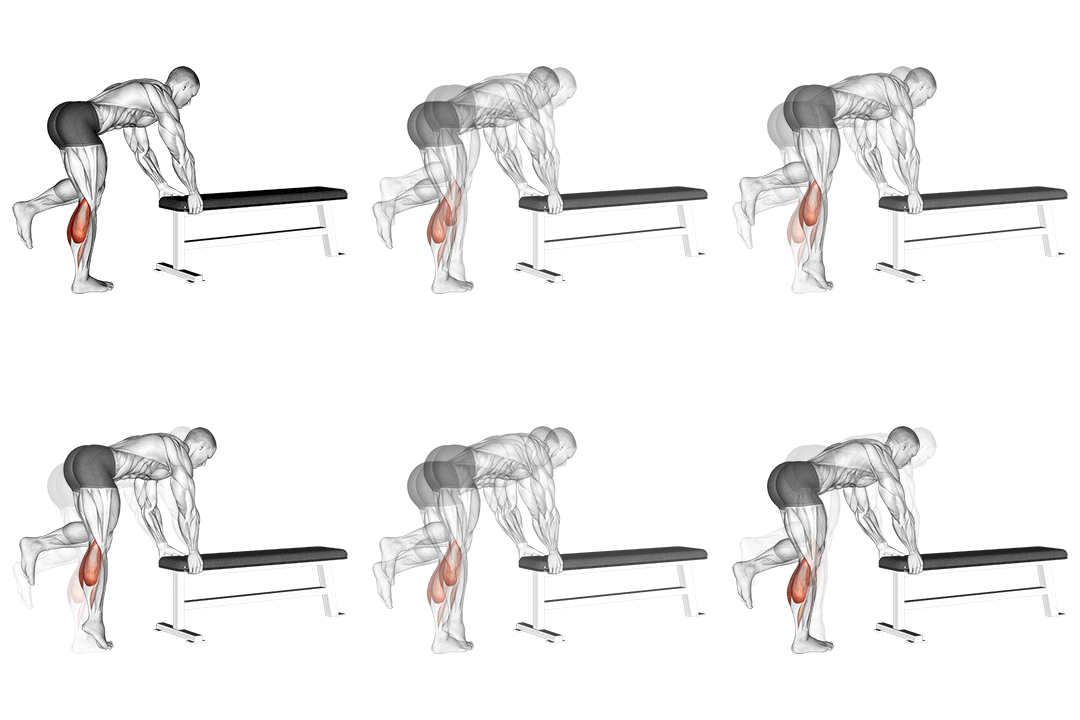
- 1Stand with your feet shoulder-width apart, toes pointing forward.
- 2Place your hands on a stable surface for support, such as a wall or a bar.
- 3Lift one leg off the ground, keeping your knee slightly bent.
- 4Raise your heel as high as possible, using your calf muscles.
- 5Pause for a moment at the top, then slowly lower your heel back down.
- 6Repeat for the desired number of repetitions, then switch legs.
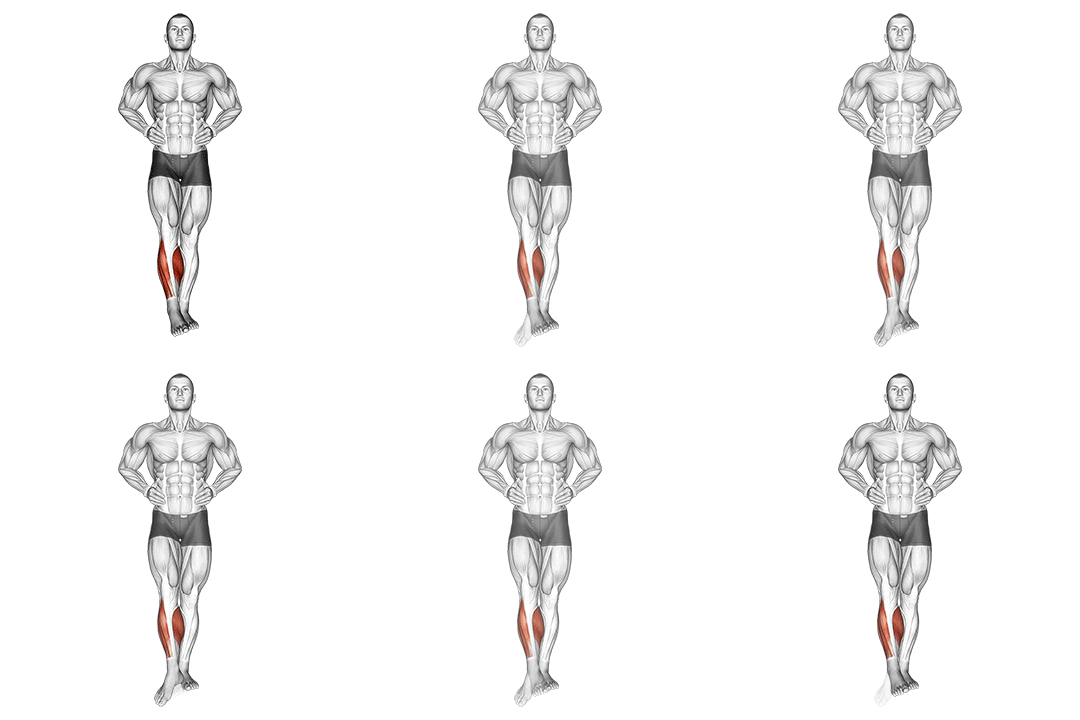
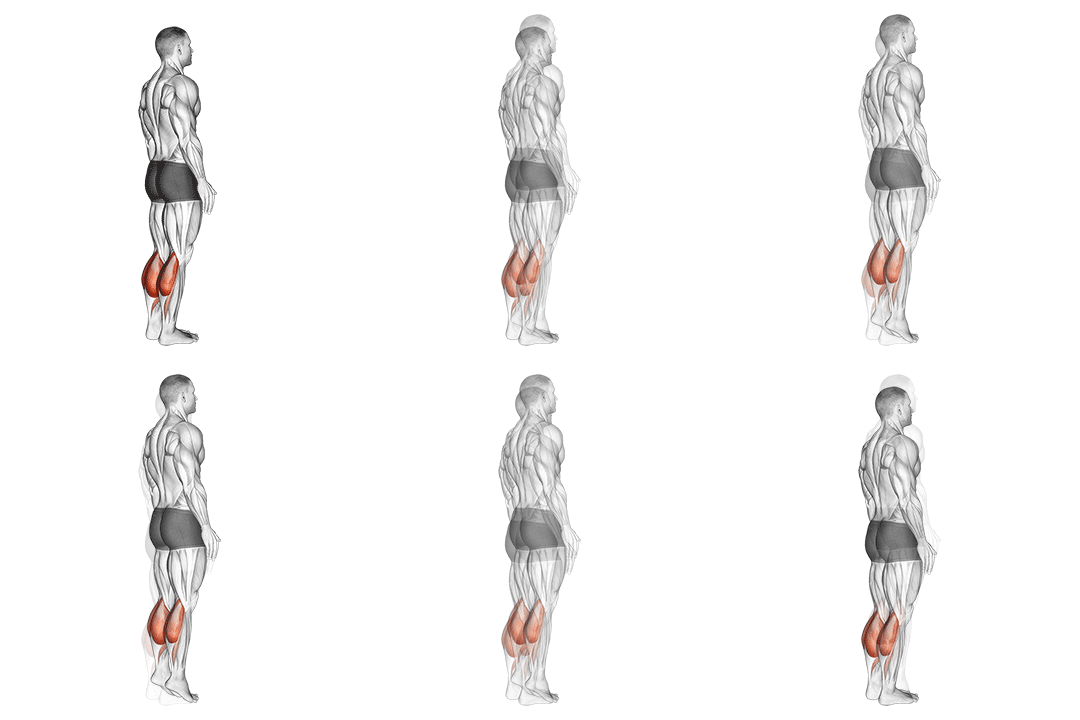
Muscles worked
Primary
calves
Secondary
hamstrings, glutes
Common mistakes to avoid
Cutting range at the bottom
The whole point of the donkey raise is the deep stretch at the bottom. If you don't drop the heel below the level of the toes, you've turned it back into a flat-floor calf raise. Let the heel sink as low as comfortable, ideally with a slight stretch sensation in the calf belly.
Bouncing instead of contracting
Calves are full of fast-twitch fibers that respond well to bouncing — but only after foundational strength is built. Slow, deliberate reps with a controlled lower (2-3 seconds) and a pause at the top develop the muscle far better than quick reps.
Leaning heavily on the support
Resting body weight on the support (wall, railing) takes load off the working calf and turns the exercise into a balance drill. The hands should be on the support for steadiness only, not weight-bearing. If you're depending on the wall to hold yourself up, regress to two-legged variations until the calf is strong enough.
Going too fast on the lowering phase
The eccentric (lowering) phase of a calf raise is where most growth happens. Rushing through the descent cuts the rep in half and limits the training stimulus. Take 2-3 seconds to lower deliberately, then drive up explosively for the full range.
Treating calf training as throwaway work
One set at the end of leg day will not build calves. The calves require high volume and frequency to grow — multiple sets, multiple sessions per week. If your calves haven't grown, the answer is almost always 'more volume,' not 'a different exercise.'
Easier and harder variations
Easier
Use the non-working leg for assistance — keep its toe lightly touching the elevation surface to provide partial support during the rep. Or perform two-legged donkey raises until you can do 25+ reps comfortably before transitioning to single-leg work.
Harder
Add weight by holding a dumbbell, kettlebell, or backpack with books in the same-side hand. The added load drives serious calf development for advanced trainees. Or progress to single-leg jumping calf raises (small hops on one foot) for plyometric calf work.
Alternative exercises
Two-legged donkey calf raise
Easier version of the same movement. Use as a regression when single-leg work is too demanding, or as a finisher after primary single-leg sets.
Single-leg jump rope
Trains the calves dynamically with the stretch-shortening cycle on one leg at a time. Different stimulus (reactive strength) but excellent complement for athletic carryover.
Weighted calf raise
More time-efficient for heavy load when weights are available. Use when serious size goals require loading beyond bodyweight.
How to program the One Leg Donkey Calf Raise into your training
Single-leg donkey calf raises work as primary calf training for home trainees. The high load per leg drives meaningful adaptation when programmed at appropriate volume and frequency. Sets and reps: 4 sets of 12-20 reps per leg with 30-45 seconds rest. Total weekly volume of 100-200 reps per leg drives most growth. Once 20 reps feel easy, progress to weighted single-leg variations rather than chasing higher reps. Frequency: 3-4 times per week for size goals. The calves recover fast and tolerate high frequency. A simple split: 2 dedicated calf sessions per week (4 sets of 15 single-leg donkey raises plus 3 sets of two-legged donkey raises as finishers), plus 2 'add-on' sessions (3 sets of 12 single-leg donkey raises after lower-body work). For general fitness: 3 sets of 12-15 reps per leg, 2-3 times per week, is enough to build noticeable strength and size. Combine with running or jumping rope for added athletic carryover. For those targeting maximum calf development: 4-5 sets of 15-25 reps per leg, 4 times per week, for 8-12 weeks. The high frequency and volume drive serious development. Add weighted variations once 25 reps per leg feel manageable. For runners: add 4 sets of 15 reps per leg after each easy run, 3 days per week. The increased calf strength reduces shin splint risk and improves running economy. Don't program single-leg donkey raises only at the end of lower-body sessions; the calves are usually already fatigued, and the resulting volume is too low to drive growth. Program them as primary calf work or in dedicated calf sessions.
Recovery and frequency
Calves recover faster than almost any other muscle group. 24-48 hours between single-leg sessions is enough for most people, and many tolerate daily training without issue. The main soreness signal to watch is in the Achilles tendon area, not the calf belly itself. Tendon soreness or stiffness suggests the volume jumped too fast — back off slightly and let the tendon adapt over 1-2 weeks. Standard muscle soreness in the calf belly is normal and fades within 48 hours. Walking on sore calves usually feels better, not worse, and helps recovery. No special protocols needed beyond sleep, hydration, and reasonable hamstring mobility to keep the posterior chain happy. Daily ankle and calf mobility work supports recovery between hard training sessions.
Frequently asked questions
How many sets and reps of single-leg donkey calf raises should I do?
4 sets of 12-20 reps per leg with 30-45 seconds rest, 3-4 times per week. Calves need more volume than most muscle groups; weekly totals of 100-200 reps per leg drive growth.
How often should I train single-leg donkey calf raises?
3-4 times per week is the sweet spot for growth. Calves recover fast and tolerate frequent training. Daily is fine if total daily volume is moderate (3-4 sets).
When should I progress from two-legged to single-leg donkey raises?
When you can do 25+ clean reps with two legs comfortably. The transition to single-leg work typically drops the rep count to 12-15, which is exactly the range that drives the best calf growth response.
Will single-leg donkey raises build bigger calves than two-legged?
Yes — the doubled load per leg drives more meaningful hypertrophy. Most trainees see noticeable calf development within 8-12 weeks of switching to single-leg variations and maintaining adequate volume.
Should I do single-leg or two-legged donkey raises?
Both have value at different stages. Beginners should start two-legged. Once 25+ reps are easy, transition to single-leg as the primary movement, with two-legged as finisher volume. Both contribute to a complete calf program.
How can I make this even harder once 20 reps per leg is easy?
Add weight (dumbbell, kettlebell, or backpack). Increase tempo (3-second lowering, paused contraction at the top). Or progress to single-leg jumping calf raises for plyometric stimulus. Calf training has plenty of room to scale.
Useful tools for this exercise
Build a workout with the One Leg Donkey Calf Raise
Puna gives you guided bodyweight workouts you can do anywhere — no equipment, no gym, just structured progressions that build real strength.