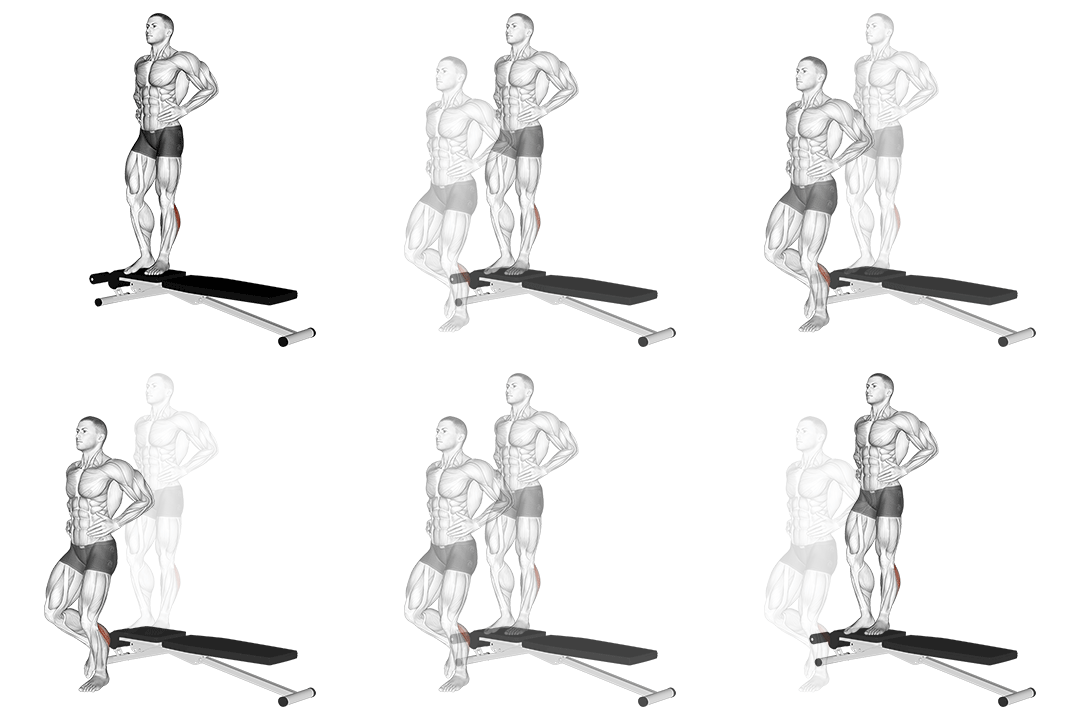
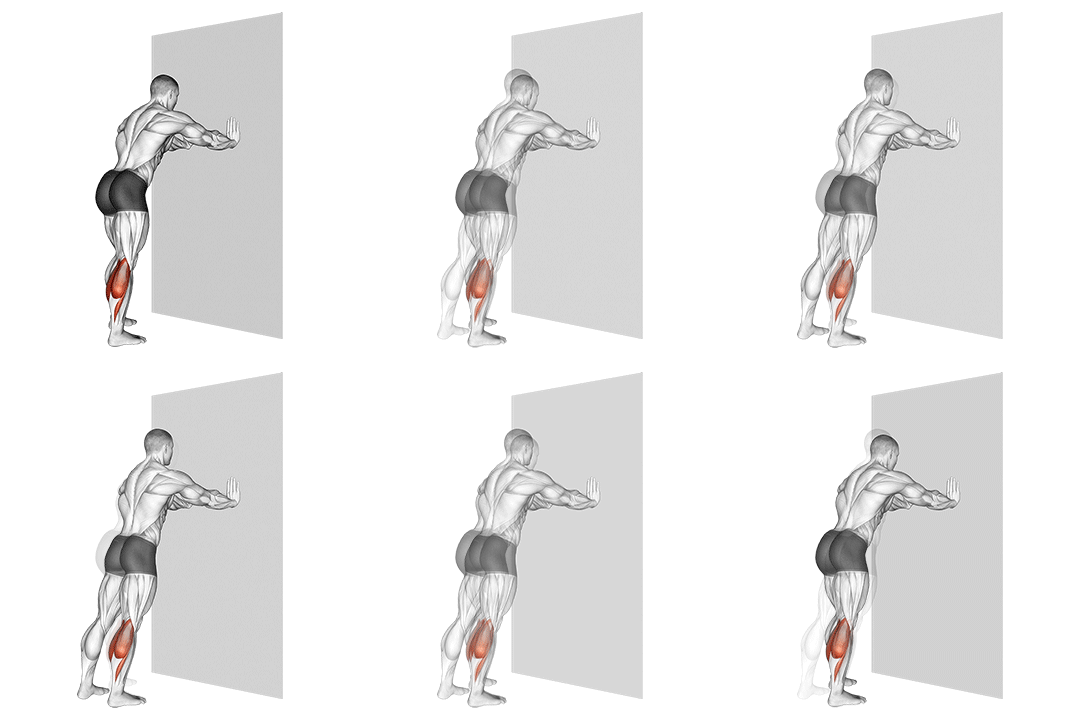
Standing Calves
beginner strength exercise · body weight · targets calves
- Body part
- lower legs
- Primary target
- calves
- Equipment
- body weight
- Difficulty
- beginner
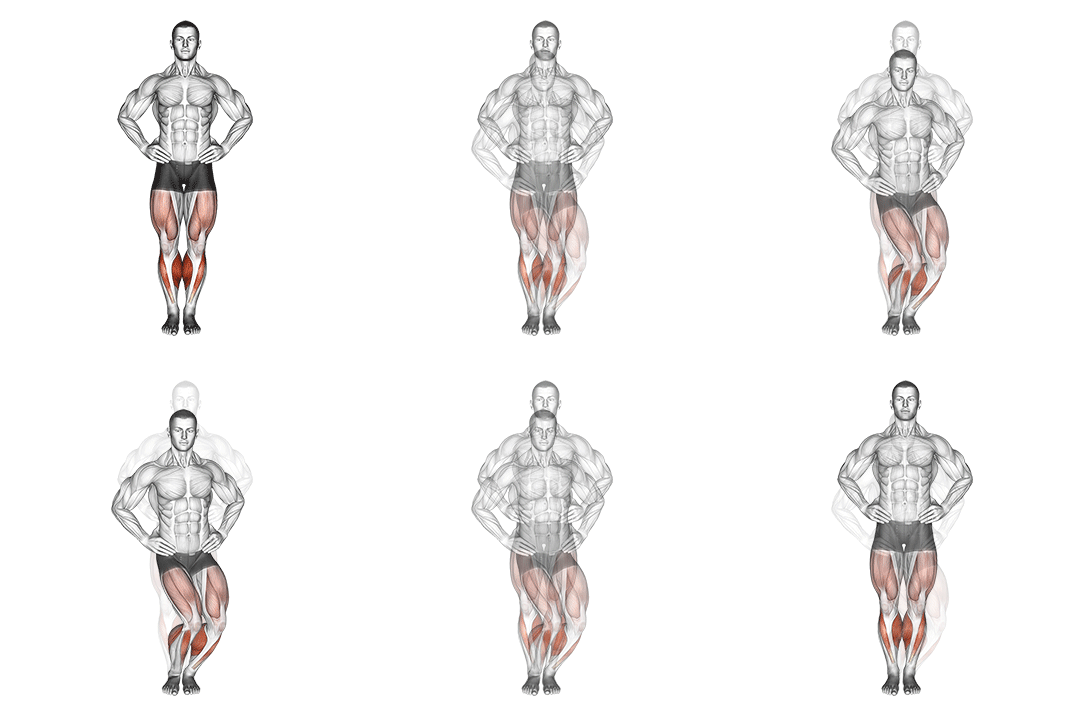
Standing calves — also known as standing calf raises on flat ground — is the simplest, most universally accessible calf training exercise. From a standing position with feet shoulder-width apart, you raise both heels as high as possible while balancing on the balls of the feet, then lower under control. No equipment, no elevation, no setup. The exercise has been a calf-training staple for as long as people have trained calves, and for good reason: it works. The trade-off versus elevated variations like donkey calf raises is the limited range of motion. On flat ground, you only train the upper portion of the calf's working range — the bottom (stretched) portion is impossible because the heel can't drop below toe level. This matters for size and strength gains; stretched-position loading drives more growth than top-only contraction. So why does this exercise still earn its place? Two reasons: accessibility (no elevation needed) and functional carryover (every step you take in daily life mimics this exact pattern). For general fitness, joint health, and walking gait improvement, flat-floor standing calves are entirely sufficient. The exercise builds basic calf strength, supports ankle resilience, and reduces shin splint risk in runners. It's the right choice for older adults focused on fall prevention, beginners building basic calf strength, and anyone in a setting where elevation isn't available. For trainees specifically targeting calf growth and visible development, donkey calf raises with elevated toes are more effective — but for the broader health and function goals, this version has been quietly doing its job for generations.
Why train the Standing Calves?
- Provides accessible calf training with no equipment beyond what your body already has.
- Improves ankle stability and resilience for walking, running, and athletic movement.
- Helps prevent shin splints in runners by balancing the strength of the front and back of the lower leg.
- Maintains calf size and strength as you age, supporting balance and protecting against falls.
- Pairs well with cardio sessions as a finisher, adding lower-leg volume without taxing recovery.
- Doubles as a useful 'fidget' during long meetings, accumulating volume without setting aside dedicated training time.
How to do the Standing Calves: step by step
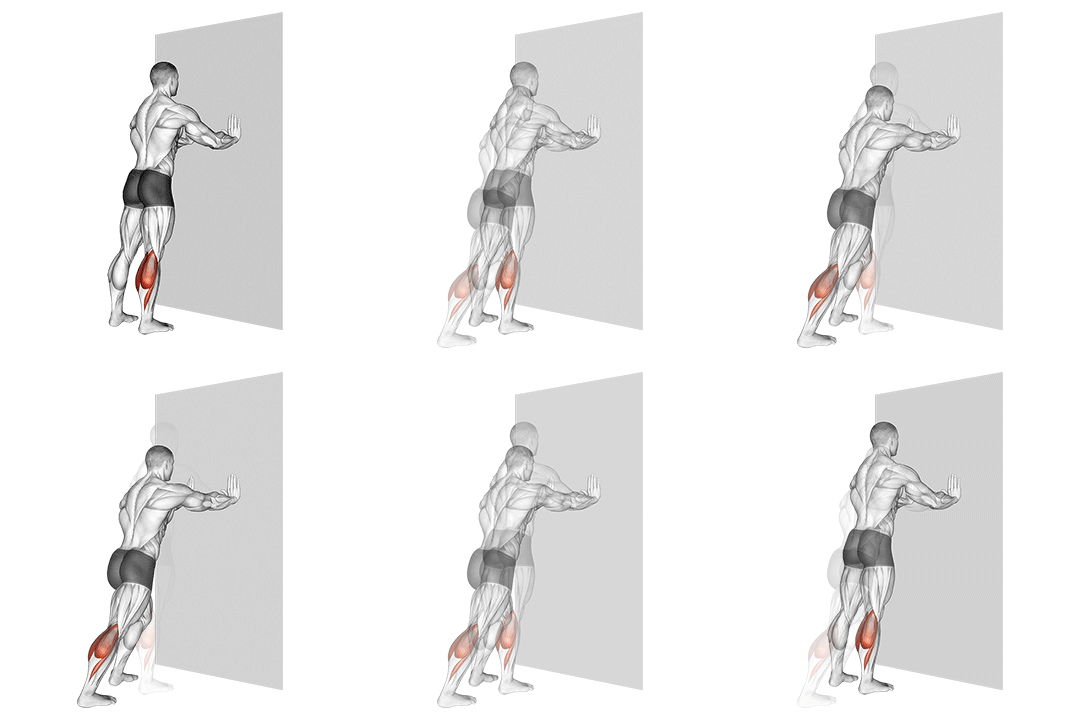
- 1Stand with your feet shoulder-width apart, toes pointing forward.
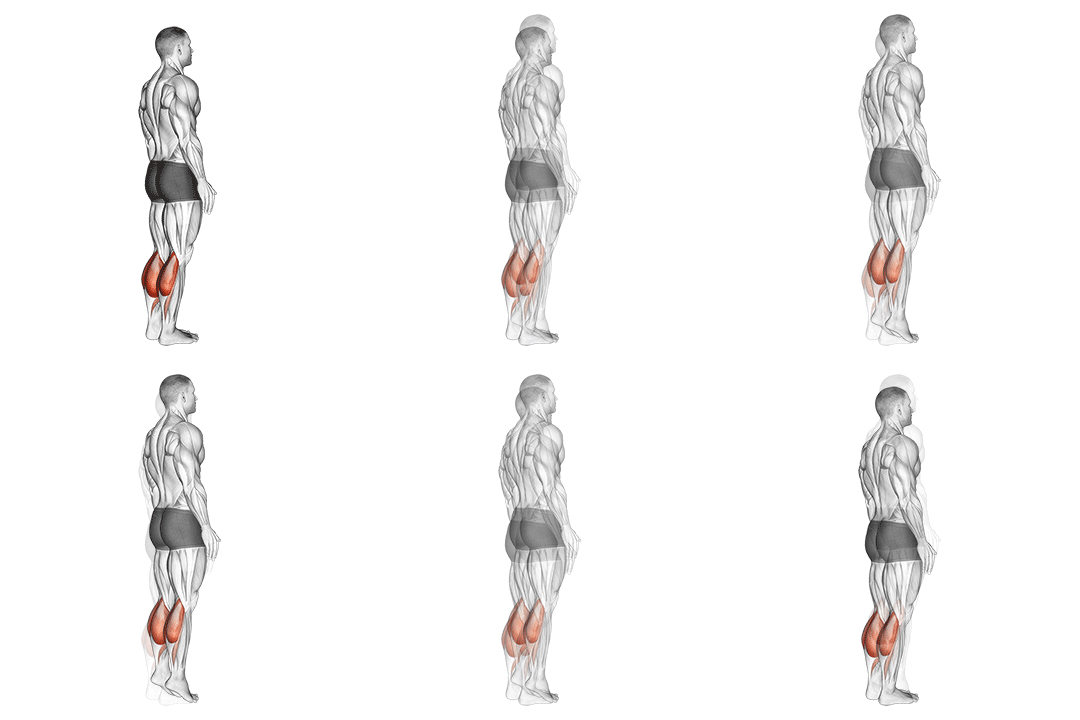
- 2Raise your heels off the ground as high as possible, standing on your toes.
- 3Hold the position for a moment, then slowly lower your heels back down to the starting position.
- 4Repeat for the desired number of repetitions.
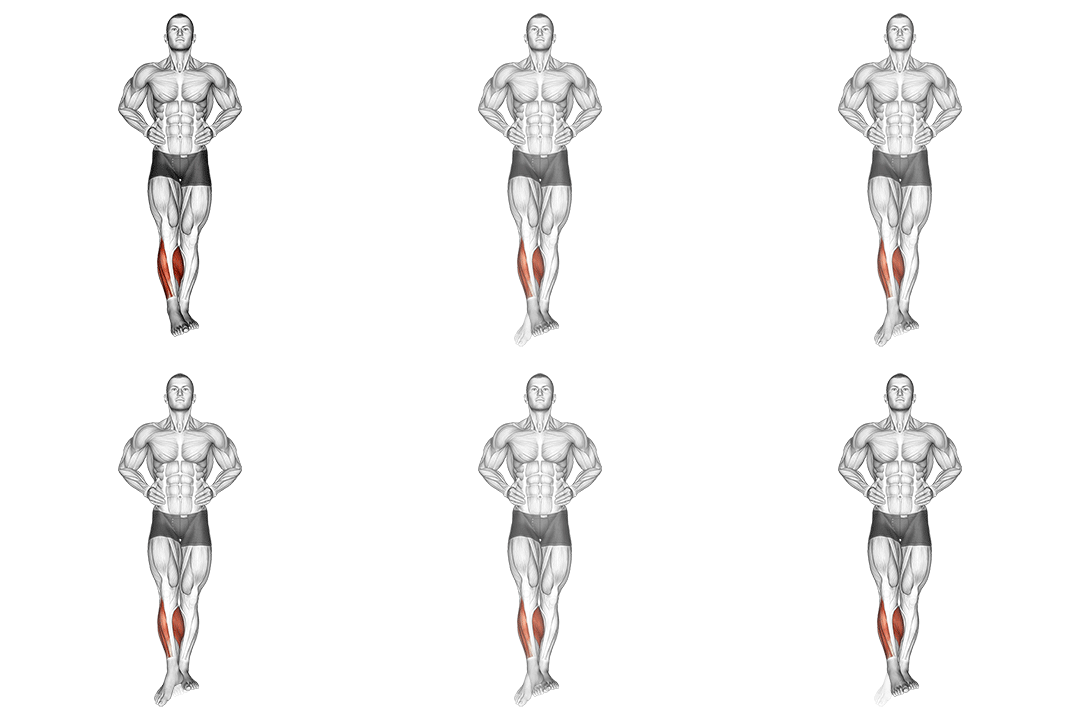
Muscles worked
Primary
calves
Secondary
hamstrings, glutes
Common mistakes to avoid
Bouncing instead of contracting
Calves are full of fast-twitch fibers that respond well to bouncing — but only after foundational strength is built. Slow, deliberate reps with a controlled lower (2-3 seconds) and a pause at the top develop the muscle far better than quick reps.
Cutting the top range
Going halfway up on each rep trains half the muscle. Get the heels as high as they'll go, then hold the peak position for a full second before lowering. The peak contraction is where the calves work hardest.
Treating it as throwaway work
One set of 15 at the end of leg day will not build calves. The calves require high volume and frequency to grow — multiple sets, multiple sessions per week. If your calves haven't grown, the answer is almost always 'more volume,' not 'a different exercise.'
Stopping at fatigue too early
Calves can take many more reps than you'd expect. Pushing sets to 20-30 reps before form breaks down is appropriate — stopping at 10 because they 'feel worked' under-stimulates the muscle and slows progress.
Skipping when an elevation surface is available
If a step, sturdy block, or staircase is nearby, donkey calf raises are simply a better exercise — they train the full calf range rather than just the upper portion. Use this exercise when no elevation is available, not when one is at hand.
Easier and harder variations
Easier
Hold both hands on a wall or counter for balance support — most beginners need this initially. Or perform with feet wider than shoulder-width for more stability. Or just do fewer reps per set (5-8) until the calves can handle higher volume.
Harder
Progress to single-leg standing calf raises — the load doubles per leg with no equipment change. Then add range by performing on a step (heels hanging off the back) for greater stretch at the bottom. Eventually, hold a dumbbell, kettlebell, or backpack with books for added resistance.
Alternative exercises
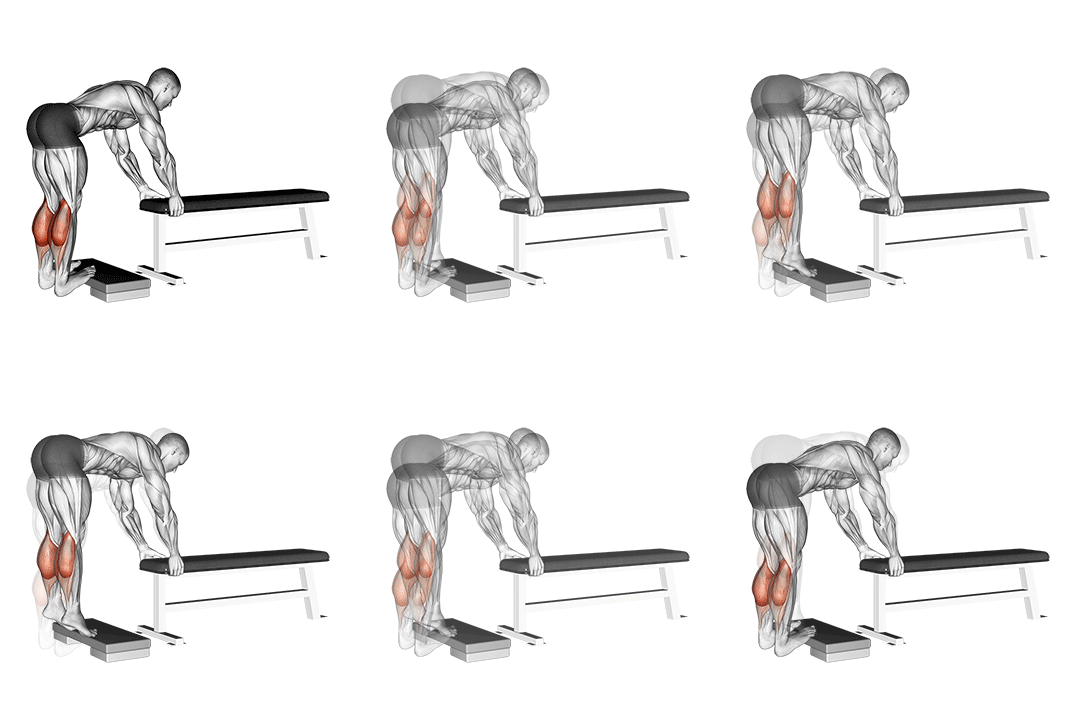
Donkey calf raise (toes elevated)
Significantly better for calf growth due to the deeper range of motion. Use whenever a step or block is available.
Single-leg calf raise
Doubles the load per leg with no equipment. The most important progression once two-legged calf raises feel easy.
Jump rope
Trains the calves dynamically with the stretch-shortening cycle. Different stimulus (reactive strength) than slow controlled raises, but a strong complement for athletic carryover.
How to program the Standing Calves into your training
Calves respond to volume and frequency more than any other muscle group. Programming should reflect this: more sets, more reps, and more sessions per week than you'd give to other body parts. Sets and reps: 4-5 sets of 15-25 reps with 30-45 seconds rest. Total weekly volume of 200-400 reps drives most growth. Once 25 reps feel easy, progress to single-leg variations rather than chasing higher reps with both legs. Frequency: 3-4 times per week for size goals. The calves recover fast and tolerate high frequency well. A simple split: 3 sets of 25 standing calf raises after each lower-body session, plus 2 dedicated calf sessions of 5 sets of 20-30 reps. For general fitness or joint health: 3 sets of 15-20 reps, 2-3 times per week, is enough to maintain strength and size. Combine with running or jumping rope for added athletic carryover. For older adults focused on balance and fall prevention: 3 sets of 12-15 reps, 2-3 times per week. The combination of standing calf raises with single-leg balance work addresses the most common contributors to falls. For runners: add 4 sets of 20 reps after each easy run, 3 days per week. The increased calf strength reduces shin splint risk and improves running economy over a few months. If elevation is available, prioritize donkey raises. Use this exercise when nothing better is at hand or as accessory volume.
Recovery and frequency
Calves recover faster than almost any other muscle group. 24-48 hours between sessions is enough for most people, and many tolerate daily training without issue. The main soreness signal to watch is in the Achilles tendon area, not the calf belly itself. Tendon soreness or stiffness suggests the volume jumped too fast — back off slightly and let the tendon adapt over 1-2 weeks. Standard muscle soreness in the calf belly is normal and fades within 48 hours. No special protocols needed beyond sleep, hydration, and reasonable hamstring mobility. Daily ankle and calf mobility work supports recovery between hard training sessions.
Frequently asked questions
How many sets and reps of standing calf raises should I do?
4-5 sets of 15-25 reps with 30-45 seconds rest, 3-4 times per week. Calves need more volume than most muscle groups; weekly totals of 200-400 reps drive growth for most people.
How often should I train standing calf raises?
3-4 times per week is the sweet spot for growth. Calves recover fast and tolerate frequent training. Daily is fine if total daily volume is moderate (3-4 sets).
Standing calves vs donkey calf raises: which is better?
Donkey raises (toes elevated) are significantly better for calf growth due to the deeper range of motion. Use standing calves when no elevation is available; otherwise prioritize donkey variations.
Why aren't my calves growing?
Almost always insufficient volume. The calves are stubborn because they're already worked by daily walking — to drive growth above baseline you need significantly more total reps per week than other muscles. If you're doing 6 sets per week and seeing no progress, try 16.
Will standing calf raises help my running?
Yes — direct calf strengthening reduces shin splint risk, improves running economy slightly, and protects the Achilles from tendinopathy. The carryover is most noticeable for new runners and those returning from injury.
Can I do calf raises every day?
Yes for most people. The calves recover quickly and tolerate daily training. Keep volume per session moderate (3-4 sets) if you train daily, rather than ramping each session into a max-volume burnout.
Useful tools for this exercise
Build a workout with the Standing Calves
Puna gives you guided bodyweight workouts you can do anywhere — no equipment, no gym, just structured progressions that build real strength.