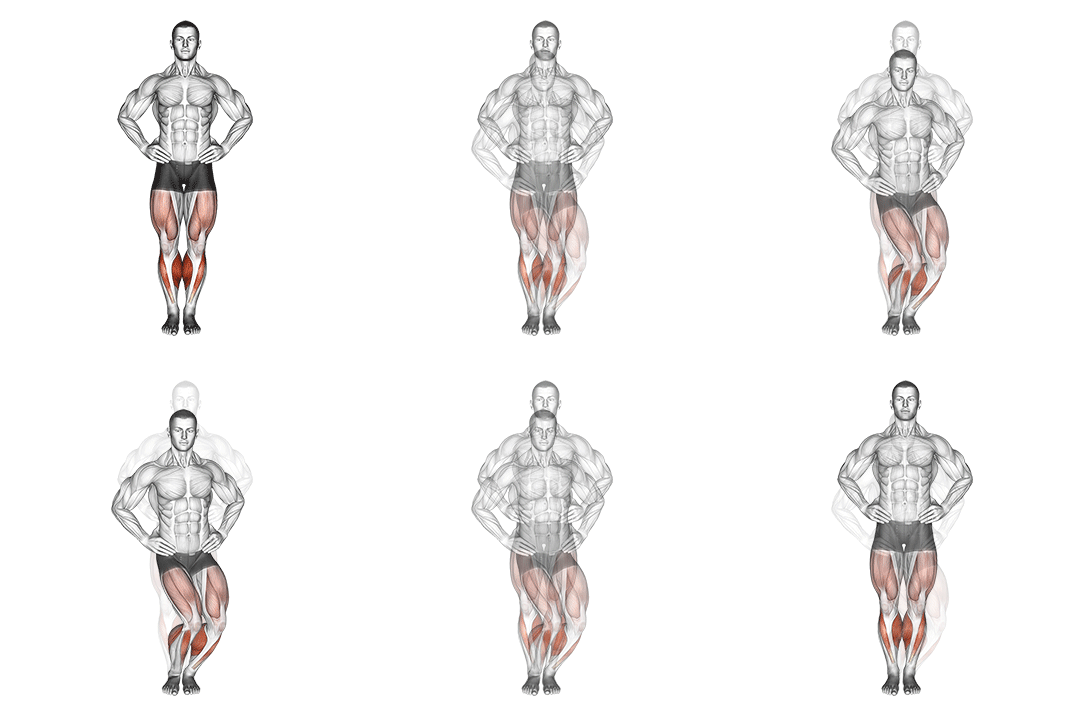
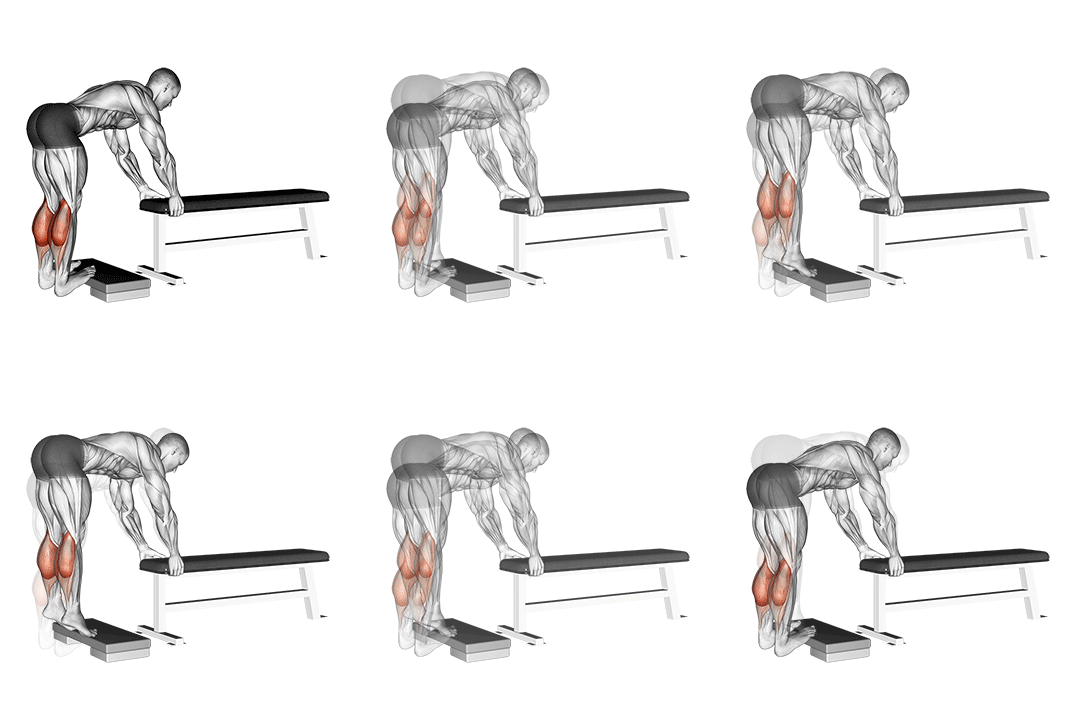
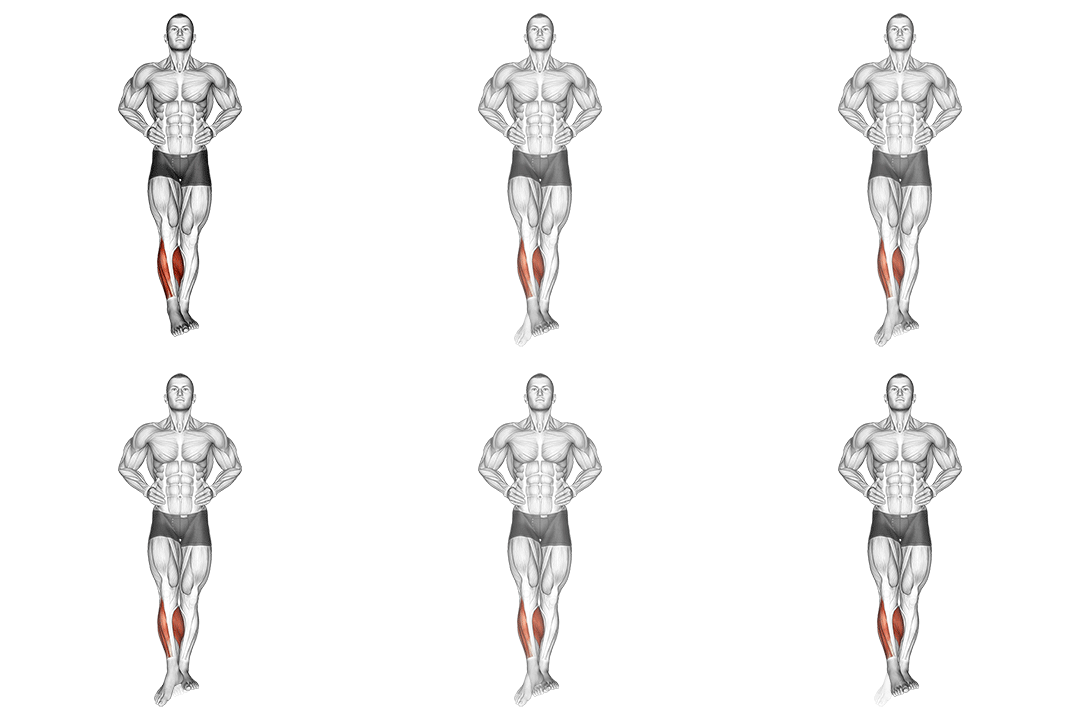
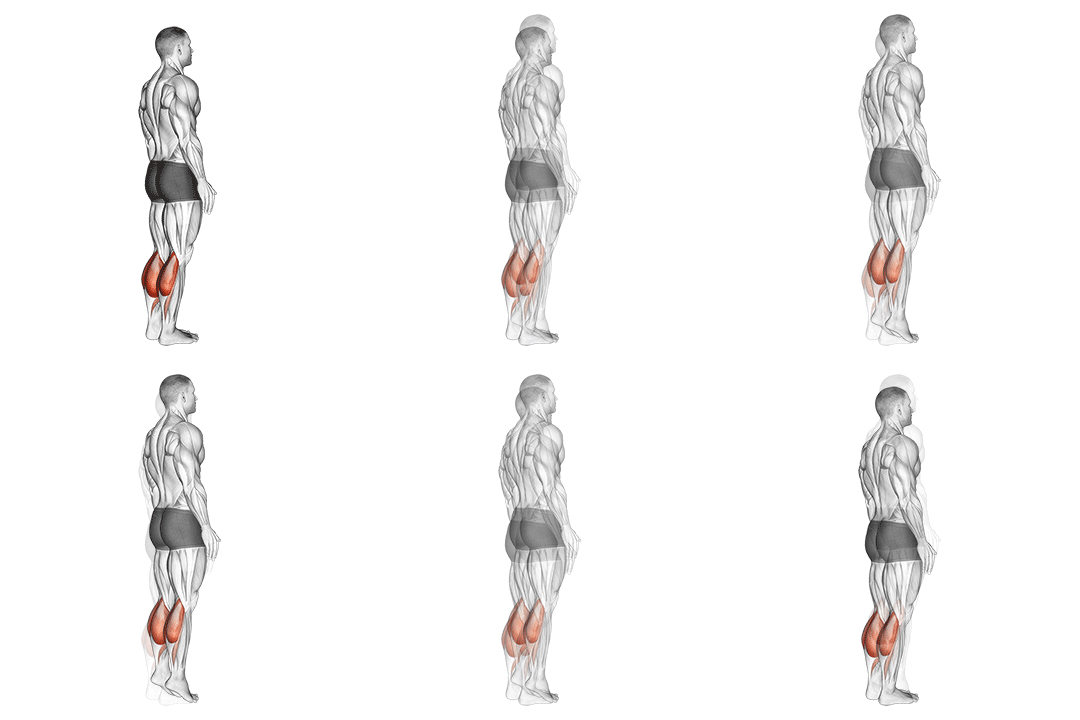
Standing Calf Raise (on A Staircase)
beginner strength exercise · body weight · targets calves
- Body part
- lower legs
- Primary target
- calves
- Equipment
- body weight
- Difficulty
- beginner
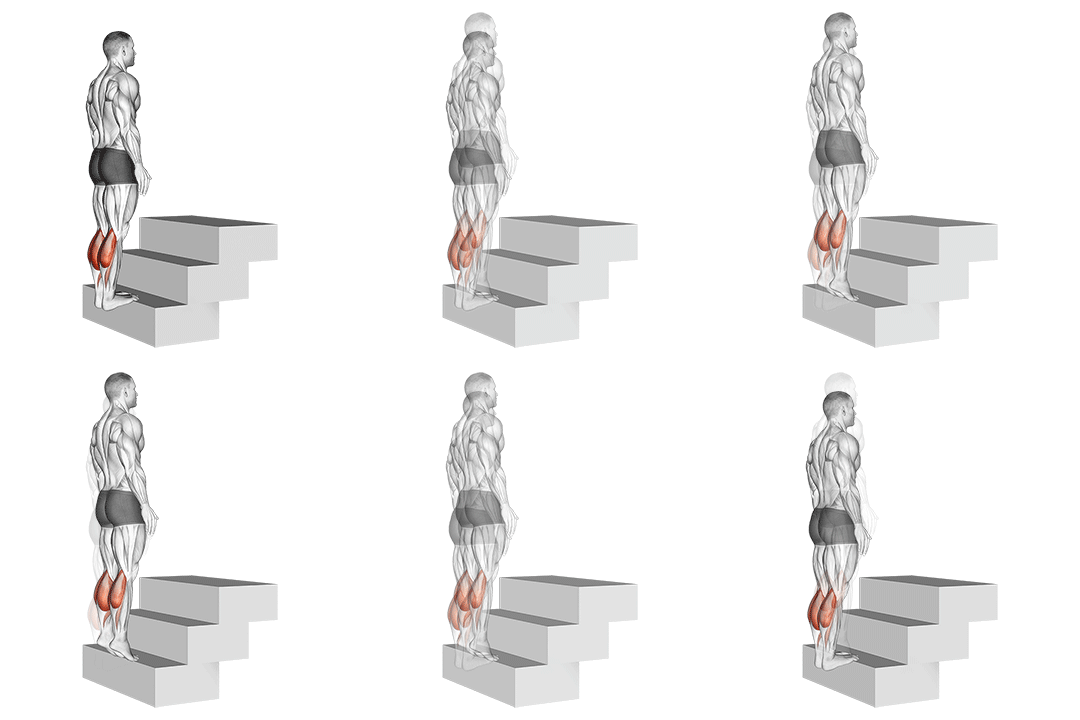
The standing calf raise on a staircase is the most accessible elevated calf raise variation — using the edge of any staircase as the elevation surface. With the balls of the feet on the step and the heels hanging off the back, you can drop the heels below the level of the toes for a deep stretch at the bottom of each rep, then drive up onto full plantarflexion. The result is a full-range calf training option using equipment that exists in literally millions of homes. This is essentially the same exercise as the donkey calf raise, just performed on a staircase rather than a dedicated platform. The biomechanics are identical, the loading is identical, and the training stimulus is the same. What earns it a separate listing is the accessibility — for trainees without dedicated step platforms or blocks, a staircase becomes the universal calf training tool. Apartments, office buildings, hotels, public spaces all have stairs. The benefit over flat-floor calf raises is significant. Flat-floor variations only train the upper portion of the calf's working range; staircase calf raises train the full range, including the deep stretched position that drives most growth. For trainees serious about calf development, the difference shows up over weeks and months as more visible muscle growth and better strength gains. For general fitness and joint health, even the elevated position with its full range produces meaningfully better results than flat-floor work. Used twice per week with adequate volume (4-5 sets of 15-25 reps), this exercise alone covers most calf training needs for home trainees.
Why train the Standing Calf Raise (on A Staircase)?
- Trains the calves through their full working range using only a staircase as equipment.
- Builds calf size and strength more effectively than flat-floor raises through the increased range.
- Maintains and improves ankle mobility through repeated full-range loading.
- Helps prevent shin splints in runners by strengthening the back of the lower leg.
- Accessible in any home, office, or hotel that has a staircase — universal availability.
- Provides a clear progression path: bodyweight, single-leg, then weighted variations.
How to do the Standing Calf Raise (on A Staircase): step by step
- 1Stand on the edge of a step or a sturdy platform with your heels hanging off and your toes on the step.
- 2Hold onto a railing or wall for balance if needed.
- 3Slowly raise your heels as high as possible, lifting your body weight onto the balls of your feet.
- 4Pause for a moment at the top, then slowly lower your heels back down to the starting position.
- 5Repeat for the desired number of repetitions.
Muscles worked
Primary
calves
Secondary
ankles, feet
Common mistakes to avoid
Cutting range at the bottom
The whole point of using a staircase is the deep stretch at the bottom. If you don't drop the heels below the level of the toes, you've turned it back into a flat-floor calf raise. Let the heels sink as low as comfortable, ideally with a slight stretch sensation in the calf belly.
Bouncing instead of contracting
Calves are full of fast-twitch fibers that respond well to bouncing — but only after foundational strength is built. Slow, deliberate reps with a controlled lower (2-3 seconds) and a pause at the top develop the muscle far better than quick reps.
Standing on too small a portion of the step
Only the balls of the feet should be on the step — the heels hang off the back. If too much of the foot is on the step, the heel drop is restricted and the bottom range disappears. Place only the front third of each foot on the edge.
Skipping the railing for safety
Staircase calf raises put you in a slightly precarious position with heels hanging off a step. Hold the railing or wall for balance support — pure pride doesn't help you train calves harder. Use the support to focus on calf work, not balance work.
Treating it as throwaway work
One set at the end of leg day will not build calves. The calves require high volume and frequency to grow — multiple sets, multiple sessions per week. If your calves haven't grown, the answer is almost always 'more volume,' not 'a different exercise.'
Easier and harder variations
Easier
Reduce the heel drop — start with the heels just slightly below the step edge rather than dropping all the way. The shorter range is appropriate for trainees with very tight calves or returning from ankle issues. Or hold the railing for two-handed support during the exercise.
Harder
Progress to single-leg staircase calf raises — the load doubles per leg with no equipment change. Then add weight by holding a dumbbell, kettlebell, or backpack with books. Eventually, weighted single-leg staircase raises produce serious calf development for advanced trainees.
Alternative exercises
Donkey calf raise (toes on a block)
Identical exercise on a different elevation surface. Use whichever is more convenient — staircase if available, dedicated block if you train at home regularly.
Single-leg staircase calf raise
Doubles the load per leg with no equipment change. The most important progression once two-legged staircase raises feel easy.
Jump rope
Trains the calves dynamically with the stretch-shortening cycle. Different stimulus (reactive strength) but excellent complement for athletic carryover.
How to program the Standing Calf Raise (on A Staircase) into your training
Calves respond to volume and frequency more than any other muscle group. Programming should reflect this: more sets, more reps, and more sessions per week than you'd give to other body parts. Sets and reps: 4-5 sets of 15-25 reps with 30-45 seconds rest. Total weekly volume of 200-400 reps drives most growth. Once 25 reps feel easy, progress to single-leg variations rather than chasing higher reps with both legs. Frequency: 3-4 times per week for size goals. The calves recover fast and tolerate high frequency. A simple split: 3 sets of 25 staircase calf raises after each lower-body session, plus 2 dedicated calf sessions of 5 sets of 20-30 reps. For home trainees with no dedicated equipment: staircase calf raises become the primary calf exercise. 4 sets of 20 reps, 3 times per week, on whatever staircase is available. Total time: 8-10 minutes per session. For general fitness or joint health: 3 sets of 15-20 reps, 2-3 times per week, is enough to maintain strength and size. For those targeting maximum calf development: 4-5 sets of 20-30 reps, 4 times per week, for 8-12 weeks. The high frequency and high volume drive serious development. For runners: add 4 sets of 20 reps after each easy run, 3 days per week. The increased calf strength reduces shin splint risk and improves running economy. Don't program staircase calf raises only at the end of lower-body sessions; the calves are usually already fatigued, and the resulting volume is too low to drive growth. Program them as primary calf work or in dedicated calf sessions.
Recovery and frequency
Calves recover faster than almost any other muscle group. 24-48 hours between sessions is enough for most people, and many tolerate daily training without issue. The main soreness signal to watch is in the Achilles tendon area, not the calf belly itself. Tendon soreness or stiffness suggests the volume jumped too fast — back off slightly and let the tendon adapt over 1-2 weeks. Standard muscle soreness in the calf belly is normal and fades within 48 hours. No special protocols needed beyond sleep, hydration, and reasonable hamstring mobility. Daily ankle and calf mobility work supports recovery between hard training sessions.
Frequently asked questions
How many sets and reps of staircase calf raises should I do?
4-5 sets of 15-25 reps with 30-45 seconds rest, 3-4 times per week. Calves need more volume than most muscle groups; weekly totals of 200-400 reps drive growth.
How often should I do staircase calf raises?
3-4 times per week is the sweet spot for growth. Calves recover fast and tolerate frequent training. Daily is fine if total daily volume is moderate (3-4 sets).
Staircase calf raise vs flat-floor calf raise: which is better?
Staircase calf raises are significantly better due to the deeper range of motion. The stretched-position loading drives more muscle growth than the upper portion alone. Use staircase variations whenever a step is available.
Is this safe for older adults?
Yes when proper railing support is used. The staircase position requires balance, but holding the railing for support eliminates the risk. For older adults focused on fall prevention, this exercise is excellent — it builds calf strength alongside the balance demand.
Will staircase calf raises help my running?
Yes — direct calf strengthening reduces shin splint risk, improves running economy slightly, and protects the Achilles from tendinopathy. The full range training of staircase variations transfers particularly well to the calf demands of running.
Can I do this on any staircase?
Yes, as long as the step has a clear edge where the heel can drop below toe level. Staircases with very narrow steps or rounded edges may not work; standard residential or commercial staircases are usually fine.
Useful tools for this exercise
Build a workout with the Standing Calf Raise (on A Staircase)
Puna gives you guided bodyweight workouts you can do anywhere — no equipment, no gym, just structured progressions that build real strength.