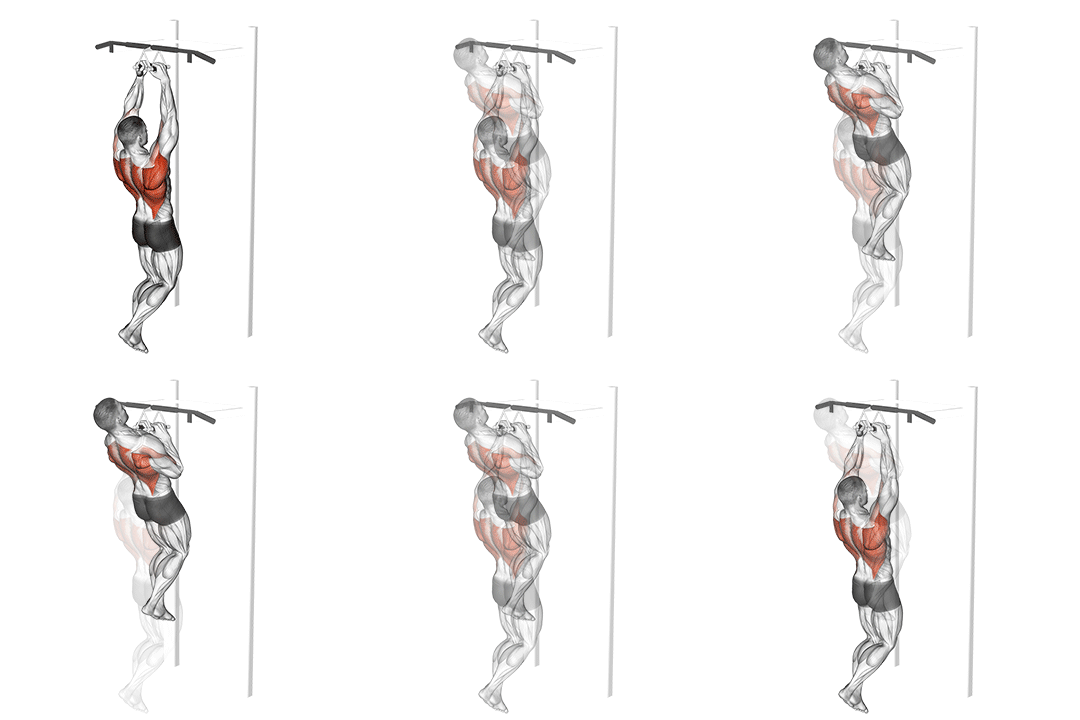
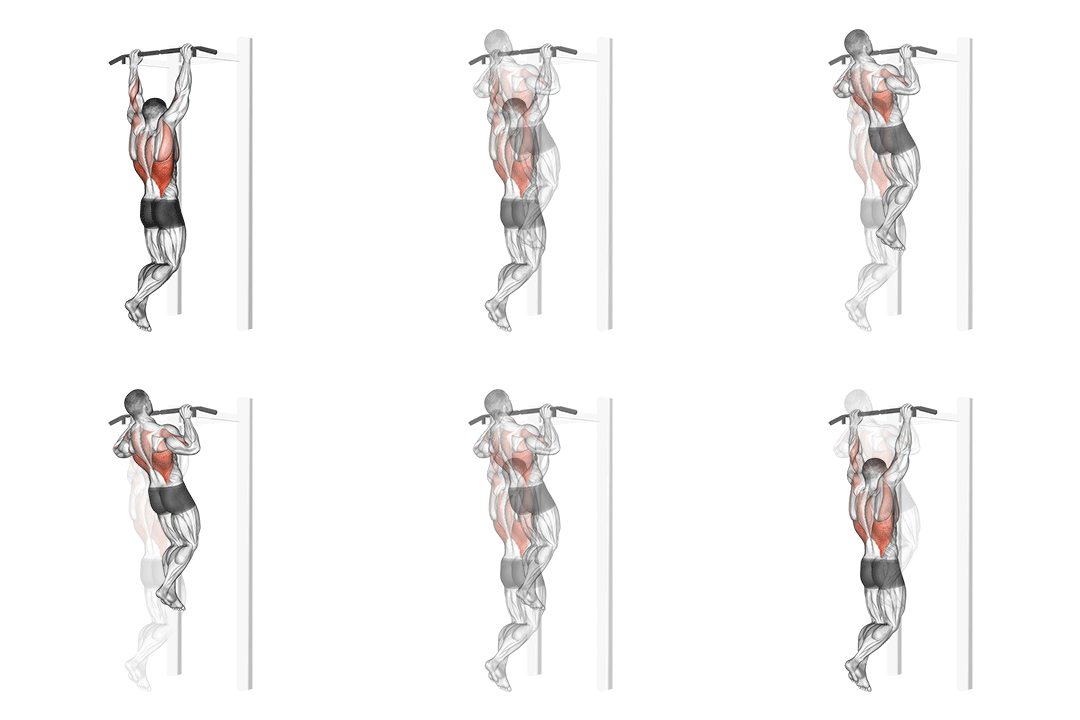
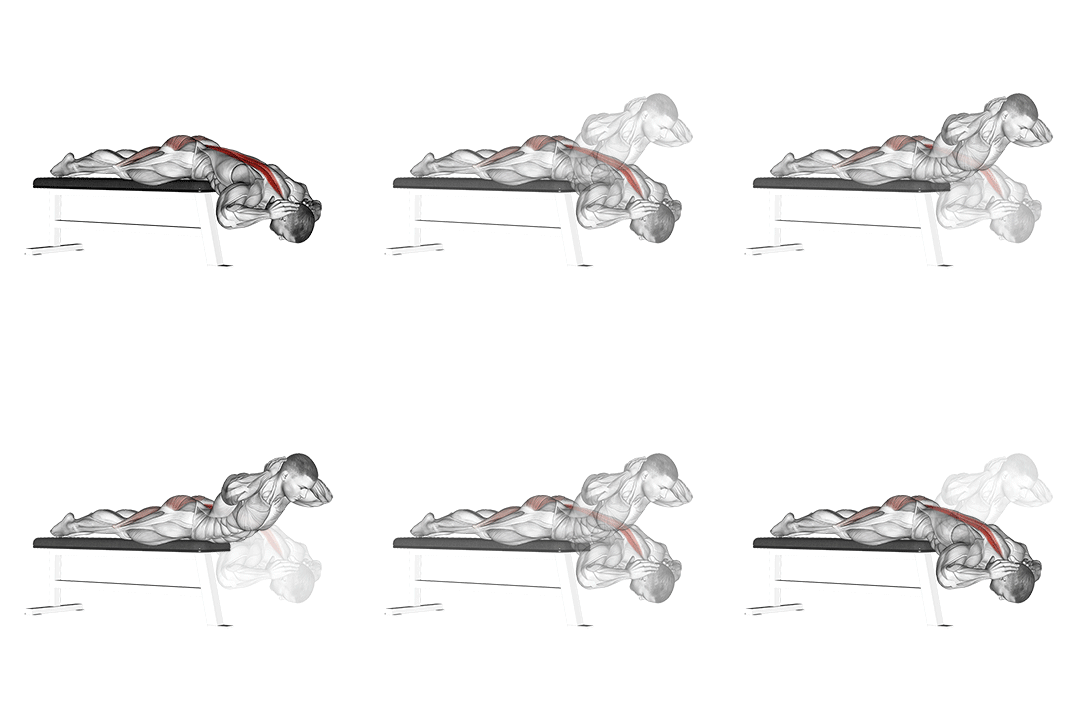
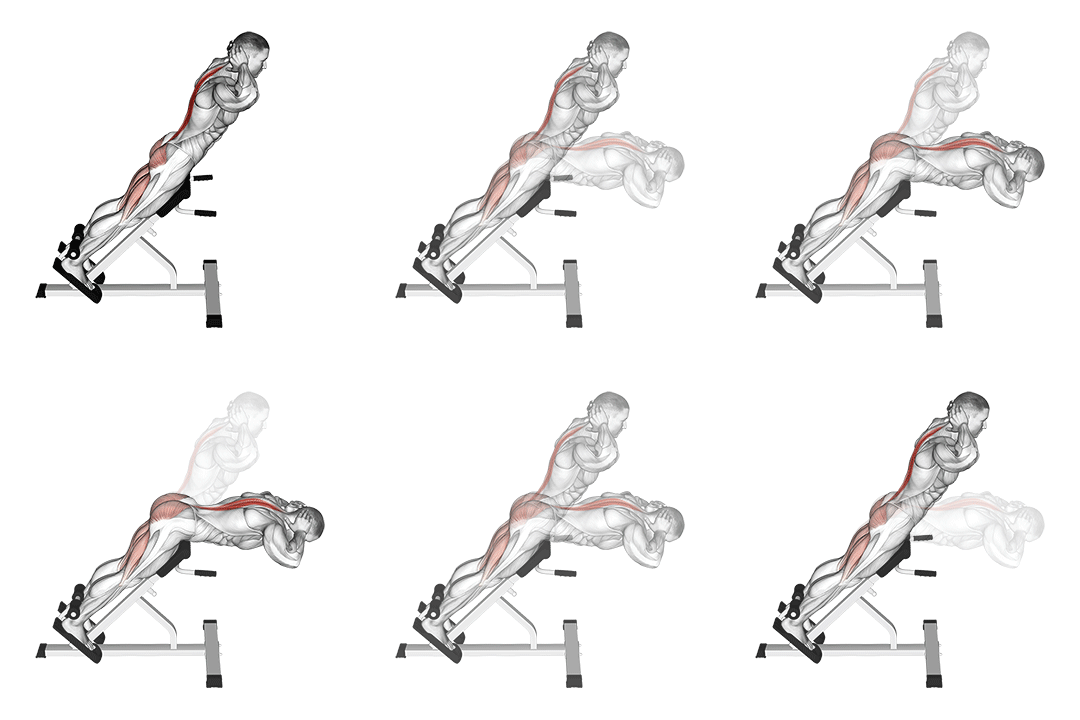
Standing Archer
beginner mobility exercise · body weight · targets upper back
- Body part
- back
- Primary target
- upper back
- Equipment
- body weight
- Difficulty
- beginner
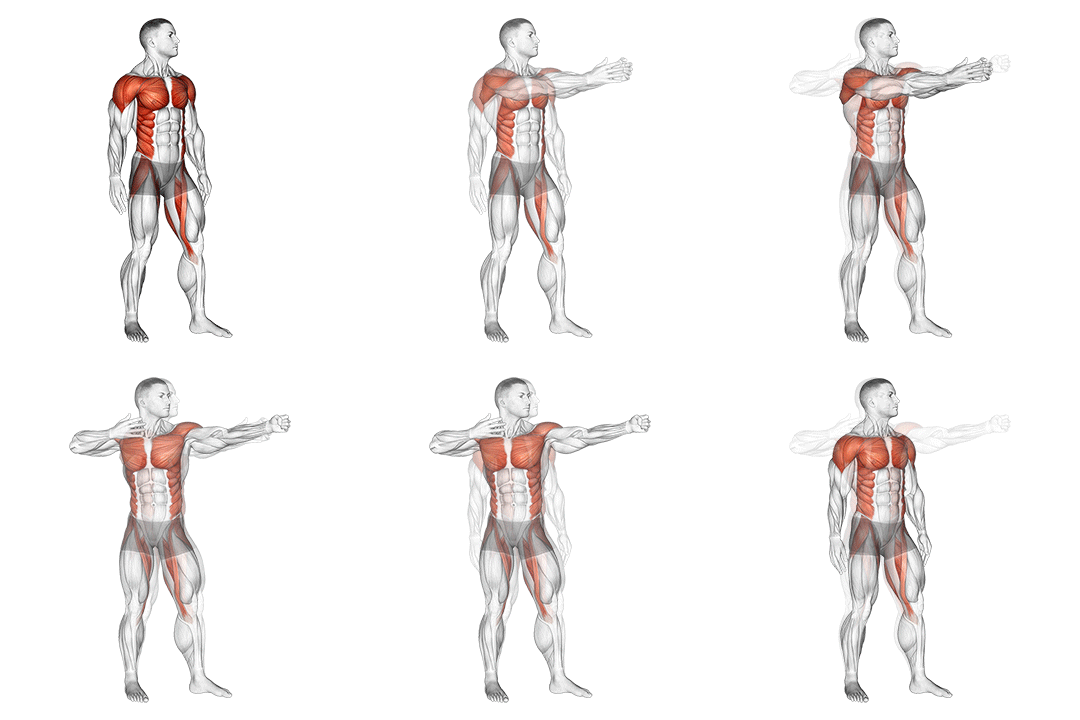
The standing archer is a beginner-friendly mobility drill where you stand with feet shoulder-width apart, extend one arm out to the side at shoulder height, and stretch the opposite arm across the body in a 'drawing back the bow' motion. The combined position produces a stretch through the upper back, shoulders, and chest of the extended-arm side, while engaging the rear deltoid of the across-body side. Despite the gymnastic-sounding name, this is a gentle accessible drill rather than an advanced strength skill. The exercise targets the upper back and shoulders simultaneously through the asymmetric arm position. The extended arm side stretches through the chest and front shoulder; the across-body side activates the rear delts and rhomboids. The combination addresses both halves of common upper-body postural issues — chest tightness from forward-leaning patterns, and rear shoulder weakness from sedentary postures. Where this earns its place is as a brief mobility activation drill before upper-body work or as a desk-break reset. The 60-second time investment is laughable; the carryover to better shoulder positioning during workouts is meaningful when practiced consistently. For trainees with rounded-shoulder posture, the standing archer combined with chest stretches and rear delt strengthening produces visible postural improvement over 4-6 weeks. The accessibility (no equipment, minimal space) makes it usable in any setting.
Why train the Standing Archer?
- Combines chest stretching with rear delt activation in one efficient drill.
- Addresses both halves of common rounded-shoulder posture patterns.
- Provides quick warm-up activation before upper-body workouts.
- Useful as a desk-break drill to reset accumulated upper-body stiffness.
- Costs nothing, requires no equipment, and integrates easily into any routine.
- Pairs naturally with chest stretches and rear delt strengthening for compound posture work.
How to do the Standing Archer: step by step
- 1Stand with your feet shoulder-width apart and your knees slightly bent.
- 2Extend your arms straight out in front of you at shoulder height, parallel to the ground.
- 3Rotate your torso to the right, keeping your arms extended and your back straight.
- 4As you rotate, extend your right arm forward and your left arm back, mimicking the motion of drawing a bowstring.
- 5Hold the position for a moment, then return to the starting position.
- 6Repeat the motion, this time rotating your torso to the left and extending your left arm forward and your right arm back.
- 7Continue alternating sides for the desired number of repetitions.
Muscles worked
Primary
upper back
Secondary
shoulders, biceps, forearms
Common mistakes to avoid
Letting the body twist excessively
The asymmetric arm position wants to rotate the torso. Some rotation is natural and useful; excessive rotation reduces the stretch quality. Keep the chest mostly forward-facing throughout.
Hunching the upper back
When the arms move into position, the upper back wants to round. Keep the chest open and the upper back tall — the position is meant to open the chest, not collapse it.
Holding too short
Brief positions barely cue the muscles to release. Hold each side for 15-30 seconds, alternating between sides.
Skipping side alternation
Always alternate sides equally. The asymmetric position trains different muscles on each side; balanced practice prevents reinforcing existing imbalances.
Forcing the position
If shoulder mobility limits the across-body reach, modify with whatever range feels comfortable. Force isn't required; gentle persistent practice produces the change.
Easier and harder variations
Easier
Reduce arm extension — perform with arms at lower height or with smaller motion range. The reduced demand is appropriate for trainees with shoulder restrictions or those returning from injury.
Harder
Add a slight backward arch through the upper back during the position to deepen chest opening. Or progress to deeper backbends or dynamic shoulder mobility flows.
Alternative exercises
Doorway pec stretch
Targets the chest more directly. Pair with the standing archer for compound posture work.
Cross-body shoulder stretch
Targets the rear shoulder more directly. Use alongside or as alternative.
Band pull-apart
Active rear shoulder strengthening. Combine with the standing archer for compound posture training (mobility + strength).
How to program the Standing Archer into your training
The standing archer works as warm-up activation or daily mobility drill. Daily routine: 1-2 sets of 15-30 seconds per side, performed once or twice a day. Desk-break protocol: 1 set of 15 seconds per side every 90-120 minutes during long sitting sessions. Pre-workout warm-up: 1 set of 20 seconds per side before upper-body or pulling work. For those with rounded-shoulder posture: 3-4 sessions per day, paired with chest stretches and rear shoulder strengthening for combined effect. For general fitness: 1-2 sessions per day is sufficient maintenance. Daily practice is appropriate due to the low intensity.
Recovery and frequency
The standing archer has zero recovery cost. Daily practice is safe. Sharp shoulder pain warrants reducing intensity; gentle stretch sensation is appropriate.
Frequently asked questions
How long should I hold each position?
15-30 seconds per side, alternating. The brief duration is appropriate for the warm-up and activation purpose.
How often?
Daily, multiple times per day on long desk-bound days.
Will this help my posture?
Partially. The standing archer is one piece of postural improvement. Combined with chest stretches and rear delt strengthening, daily practice produces noticeable change over 4-6 weeks.
Is this related to archer pull-ups?
No — different exercises despite the similar name. Standing archer is a gentle mobility drill; archer pull-up is an advanced strength skill.
Can I do this with shoulder issues?
Often yes, with reduced range. Modify the across-body reach to whatever feels comfortable. Stop if sharp pain appears.
Should I do this before or after workouts?
Before is most useful — the warm-up activation primes the upper body for pulling and pressing work. Post-workout use also fine for cooldown.
Useful tools for this exercise
Build a workout with the Standing Archer
Puna gives you guided bodyweight workouts you can do anywhere — no equipment, no gym, just structured progressions that build real strength.