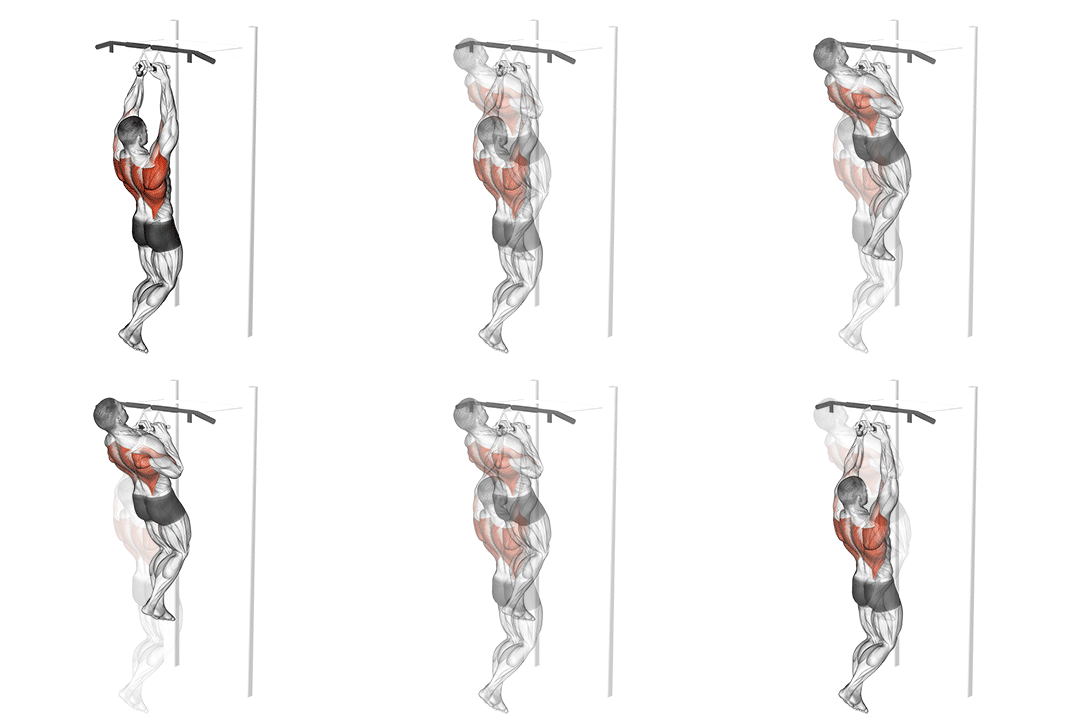
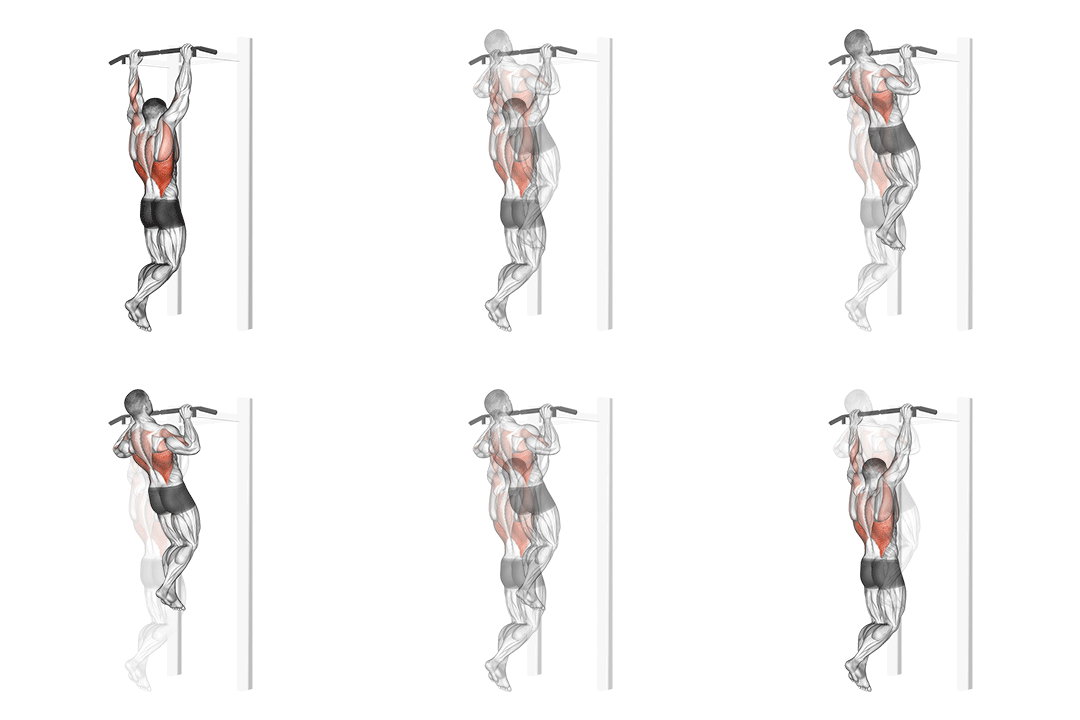
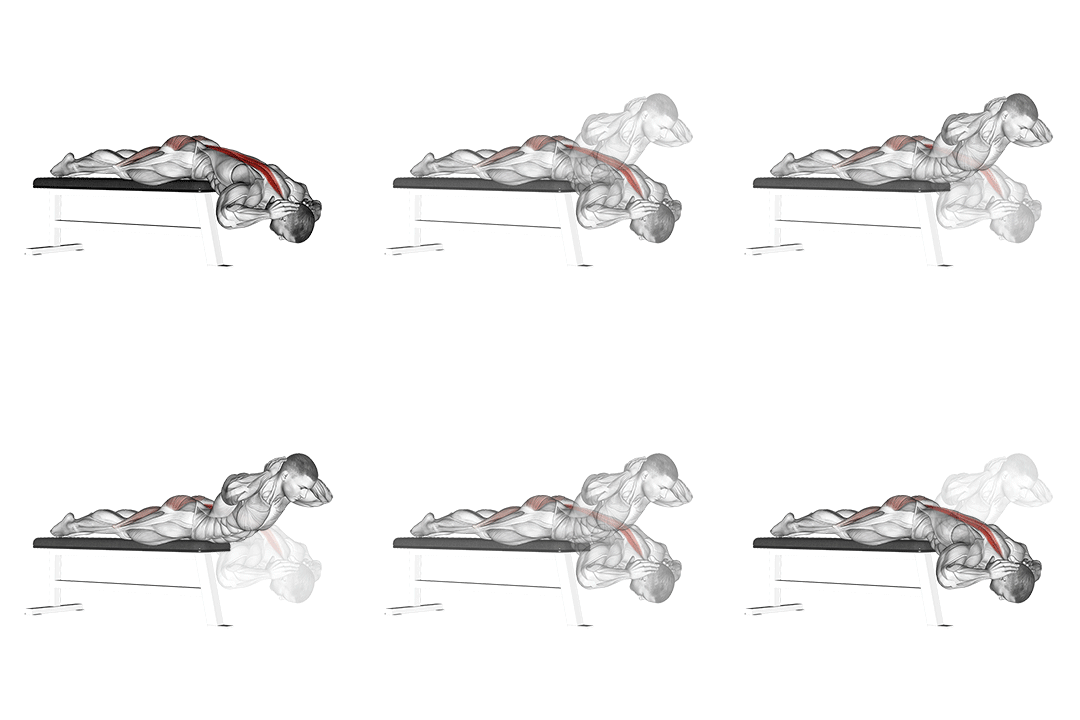
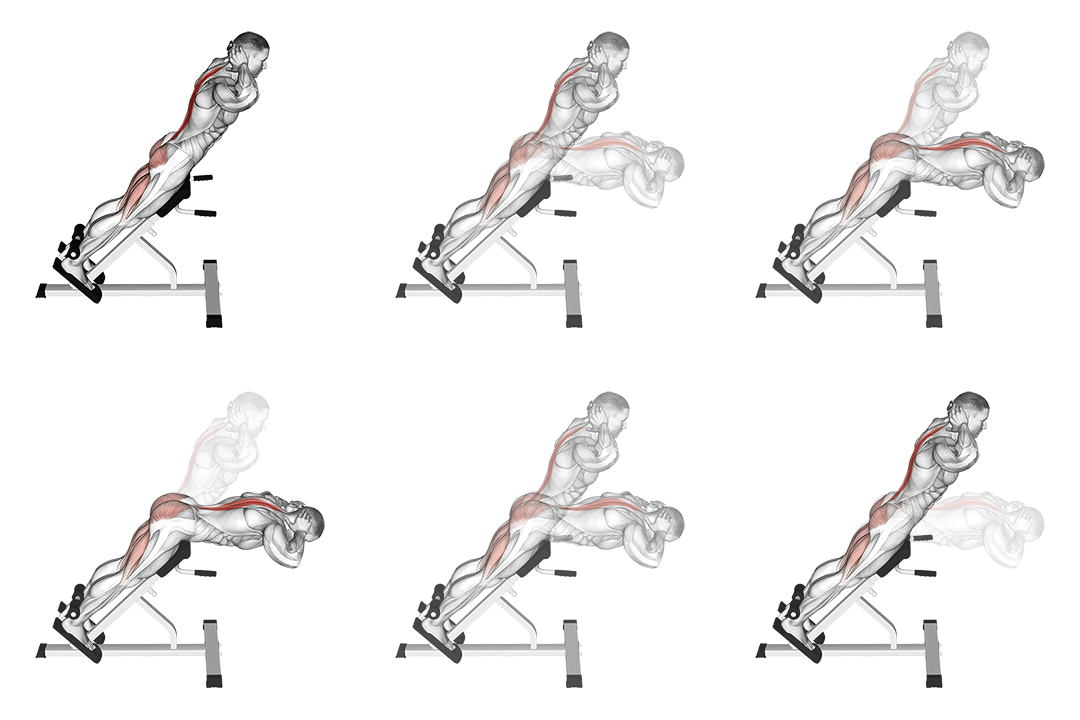
Spine Stretch
beginner mobility exercise · body weight · targets spine
- Body part
- back
- Primary target
- spine
- Equipment
- body weight
- Difficulty
- beginner
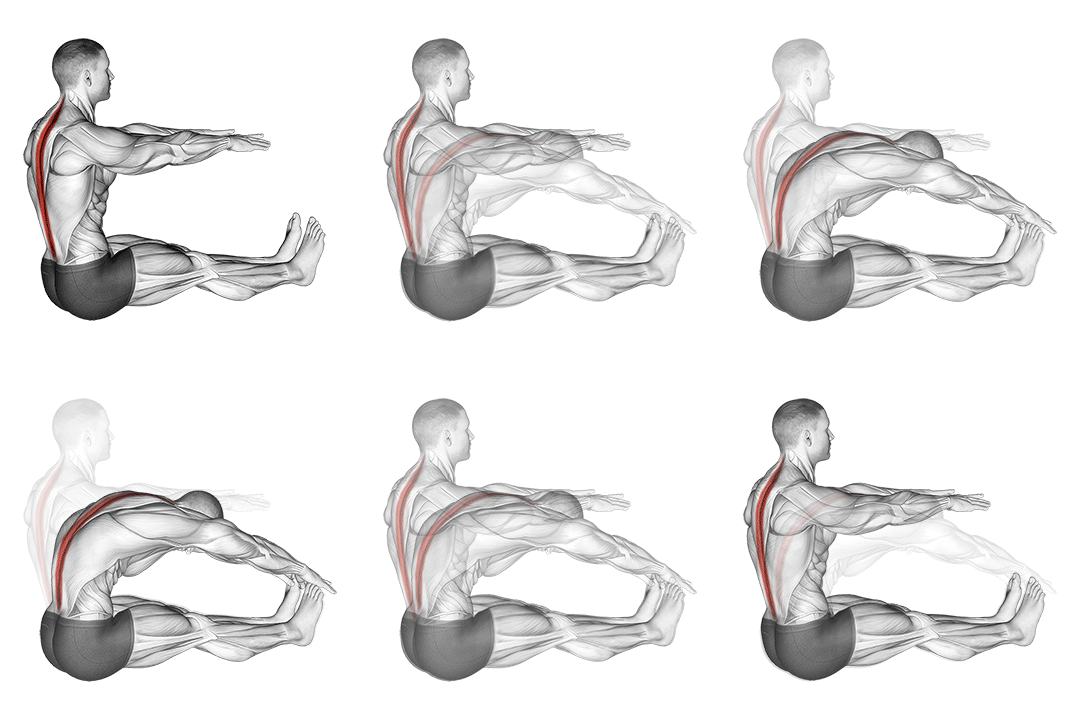
The spine stretch is a seated mobility drill performed sitting on the floor with legs extended and hands placed behind the body. By engaging the core and slowly leaning back, you create a controlled stretch through the spine, particularly the thoracic and lumbar regions. The exercise sits in the gentle-mobility category — accessible to almost anyone, scalable through depth of lean, and useful as either a warm-up or a daily maintenance drill. This stretch addresses one of the most underrated mobility patterns in trained adults. Most spinal mobility work focuses on flexion (forward folds, child's pose) or pure extension (backbends like sphinx). The seated lean-back works the spine in a slightly different orientation — the hands behind support the body weight while the spine extends through a controlled range. The result is a more nuanced spinal mobility stimulus than pure flexion or extension provides. Where this earns its place is in comprehensive mobility programming for desk workers, older adults, and trainees managing spinal stiffness. The gentle nature makes it accessible regardless of fitness level. The accessibility comes with a trade-off: the exercise won't drive serious mobility changes for advanced trainees who already have decent spinal mobility. For those trainees, deeper backbends and yoga-based mobility work produce more change. For everyone else, the spine stretch provides a useful daily practice that compounds over weeks.
Why train the Spine Stretch?
- Improves spinal mobility through controlled extension in a seated position.
- Counters the chronic spinal flexion patterns from sitting and forward-leaning work.
- Provides accessible mobility work for older adults or those with limited floor flexibility.
- Engages the core through the bracing required to control the lean-back motion.
- Pairs naturally with seated lower back stretches for compound spinal mobility.
- Costs nothing, requires only floor space, and integrates easily into daily routines.
How to do the Spine Stretch: step by step
- 1Sit on the ground with your legs extended in front of you.
- 2Place your hands on the ground behind you, fingers pointing towards your body.
- 3Engage your core and slowly lean back, keeping your back straight.
- 4Continue leaning back until you feel a stretch in your spine.
- 5Hold the stretch for a few seconds, then slowly return to the starting position.
- 6Repeat for the desired number of repetitions.
Muscles worked
Primary
spine
Secondary
hamstrings, glutes
Common mistakes to avoid
Hyperextending the spine
The lean back should be gentle — not pushing into maximum spinal extension. Excessive extension can compress facet joints. Stop the lean when you feel a clean stretch, not when you reach maximum range.
Letting the head fall back
As the body leans, the head wants to drop back, which compresses the cervical spine. Keep the chin slightly tucked, head in line with the spine throughout.
Bouncing through the lean
Static stretching means staying still. Hold the position without bouncing. Bouncing triggers the protective stretch reflex and shortens tissue.
Putting too much weight on the hands
The hands behind should provide support but not bear excessive weight. Engage the core to hold the lean position; let the hands stabilize rather than carry.
Holding too short
Spinal tissue releases slowly. Brief holds barely cue the spine to soften. Aim for at least 20-30 seconds per hold, ideally longer.
Easier and harder variations
Easier
Reduce the lean depth — barely lean back, just enough to engage the spinal extension pattern. Or perform sitting in a chair instead of on the floor for those with limited floor mobility.
Harder
Increase the lean depth (within painless range). Or progress to floor-based backbends like the sphinx or cobra pose for deeper spinal extension. For dynamic mobility, integrate the spine stretch into a yoga sequence with cat-cow and downward dog transitions.
Alternative exercises
Sphinx pose
Floor-based prone backbend that targets thoracic extension more directly.
Seated forward fold
Opposite direction stretch (flexion). Pair with the spine stretch for balanced spinal mobility.
Cat-cow
Dynamic spinal mobility on hands and knees. Different position; useful complement.
How to program the Spine Stretch into your training
The spine stretch works best as a daily mobility habit rather than a workout component. Daily routine: 2 sets of 20-30 seconds, performed once or twice per day. Tying it to existing transitions (post-shower, pre-bed, between work sessions) makes it automatic. Desk-break protocol: 1 set of 20 seconds every 90 minutes during long sitting sessions. The brief mobility reset prevents accumulated stiffness. Morning routine: 1-2 sets of 30 seconds as part of a 5-minute morning mobility flow with cat-cow, knees-to-chest, and gentle lateral stretches. For older adults focused on spinal mobility maintenance: 2-3 sessions per day at 20-30 seconds. The combined daily practice maintains spinal range that deteriorates rapidly without dedicated work. For general fitness: 2-3 times per week as part of broader mobility work. Daily is better but not critical without specific spinal stiffness concerns. Don't rely on this as primary mobility work — pair with deeper stretches and dynamic mobility for comprehensive spinal training.
Recovery and frequency
The spine stretch has zero recovery cost. Daily practice is safe and beneficial. Sharp pain warrants stopping; gentle stretch sensation is appropriate.
Frequently asked questions
How long should I hold the spine stretch?
20-30 seconds per set, 1-2 sets per session. Holds shorter than 15 seconds don't drive meaningful tissue change.
How often should I do this?
Daily is ideal. Multiple times per day during long sitting sessions. Spinal mobility adapts to frequency.
Will this help my back stiffness?
Often yes for chronic mild stiffness. For acute injury, consult a physiotherapist before introducing new stretches.
Is this safe with disc issues?
Cautiously, with reduced range. The extension pattern can aggravate certain disc issues. Consult a physiotherapist for current issues.
When should I progress to deeper stretches?
When the spine stretch feels easy and produces no further change. Progress to sphinx, cobra, or yoga-based backbends for deeper spinal extension.
Can I do this in a chair?
Yes, with modifications. Sit forward in the chair, place hands on the seat behind you, and lean back gently. Useful when floor isn't accessible.
Useful tools for this exercise
Build a workout with the Spine Stretch
Puna gives you guided bodyweight workouts you can do anywhere — no equipment, no gym, just structured progressions that build real strength.