Spider Crawl Push Up
advanced strength exercise · body weight · targets glutes
- Body part
- upper legs
- Primary target
- glutes
- Equipment
- body weight
- Difficulty
- advanced
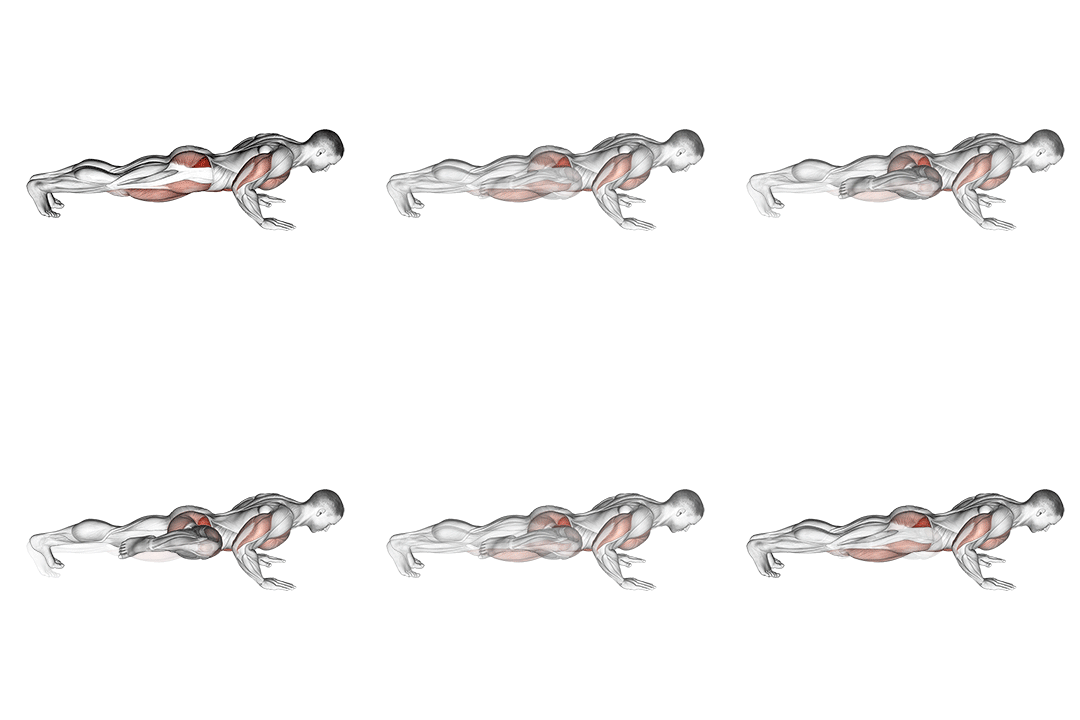
The spider crawl push-up is an advanced hybrid exercise combining a push-up with a leg drive that mimics the motion of climbing or crawling. From a standard push-up position, you bring one knee toward the same-side elbow during the descent, performing the push-up with the leg in this asymmetric position before alternating sides. The combined movement trains the chest, triceps, glutes, and obliques simultaneously while adding meaningful core demand from the hip mobility and balance challenge. This is one of the more complex push-up variations in any program. The leg drive component recruits the obliques and hip flexors heavily, creating cardiovascular work alongside the upper-body strength training. For trainees seeking time-efficient combined cardio-strength work, the spider crawl push-up is hard to beat — sets of 30-60 seconds produce serious heart rate elevation alongside meaningful pressing volume. The trade-off is the technical complexity and demand. Trainees who can't yet do clean standard push-ups will struggle with the additional coordination requirement. The exercise also stresses the wrists more than basic push-ups due to the body weight shifting during the leg drive. For trainees with prerequisites met (15+ strict push-ups, healthy wrists), spider crawl push-ups provide unique training stimulus that compound bilateral exercises don't replicate.
Why train the Spider Crawl Push Up?
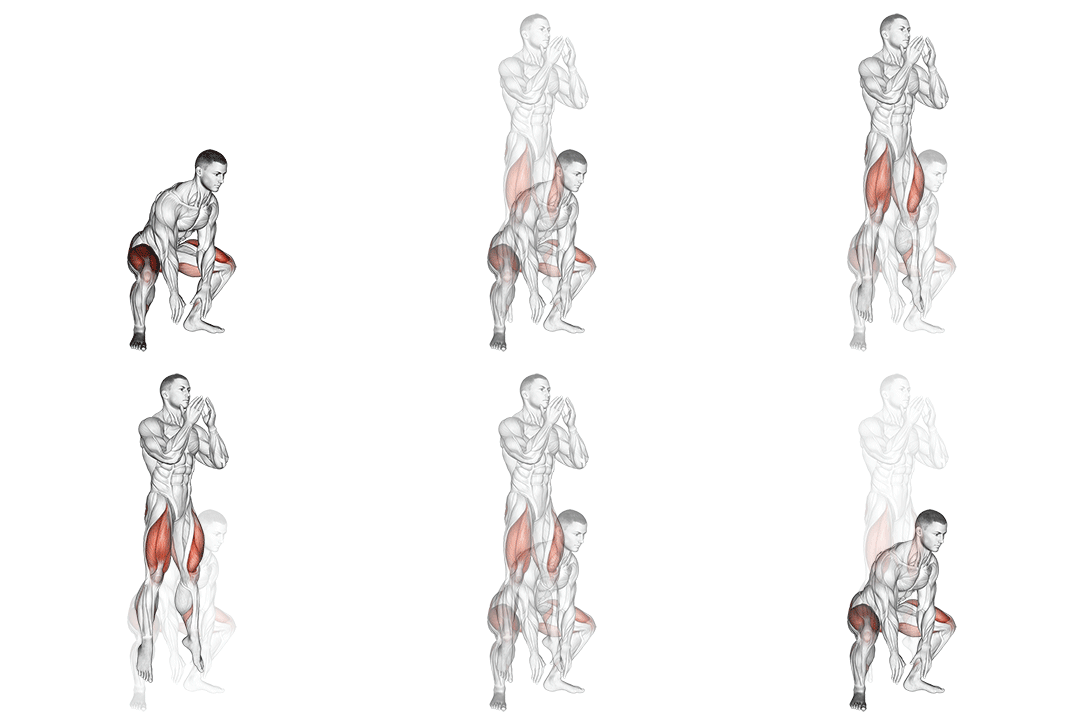
- Combines upper-body pressing with hip flexor and oblique training in one exercise.
- Time-efficient — produces strength and cardio benefit simultaneously.
- Trains coordination through the alternating leg drive pattern.
- Builds hip mobility through the dynamic knee-to-elbow movement.
- Engages the obliques heavily through the asymmetric loading.
- Useful as a finisher or HIIT circuit component.
How to do the Spider Crawl Push Up: step by step
- 1Start in a push-up position with your hands slightly wider than shoulder-width apart and your feet together.
- 2Bring your right knee towards your right elbow, keeping it off the ground.
- 3As you bring your right knee back, simultaneously lower your body towards the ground by bending your elbows.
- 4Push back up to the starting position and repeat with your left knee towards your left elbow.
- 5Continue alternating sides for the desired number of repetitions.
Muscles worked
Primary
glutes
Secondary
core, chest, shoulders
Common mistakes to avoid
Insufficient prerequisites
Without solid standard push-up form (15+ strict reps), the additional coordination demand produces messy reps.
Hips sagging during the rep
The body must maintain alignment despite the leg drive. Brace the abs and glutes throughout.
Cutting depth
Full push-up range matters even with the leg drive. Don't shortcut depth to manage the additional coordination demand.
Wrist stress from weight shift
The leg drive shifts body weight slightly, increasing wrist load. Build wrist tolerance with mobility work and gradual exposure.
Programming too frequently
2-3 times per week is appropriate. The combined demand benefits from recovery.
Easier and harder variations
Easier
Drop to your knees or perform on an incline (hands on bench) to reduce upper-body load. Or skip the leg drive entirely for standard push-ups while you build wrist and shoulder tolerance.
Harder
Increase pace for HIIT-style intervals. Or perform with feet elevated on a bench. For maximum challenge, plyometric spider crawl push-ups (airborne phase between knee drives).
Alternative exercises
Standard push-up
Foundation that spider crawls build on. Use until 15+ strict reps are comfortable.
Mountain climbers
Cardio-focused alternative without the push-up component. Useful when pressing isn't appropriate.
Push-up to running plank
Different combined exercise pattern. Pairs naturally with spider crawls in HIIT contexts.
How to program the Spider Crawl Push Up into your training
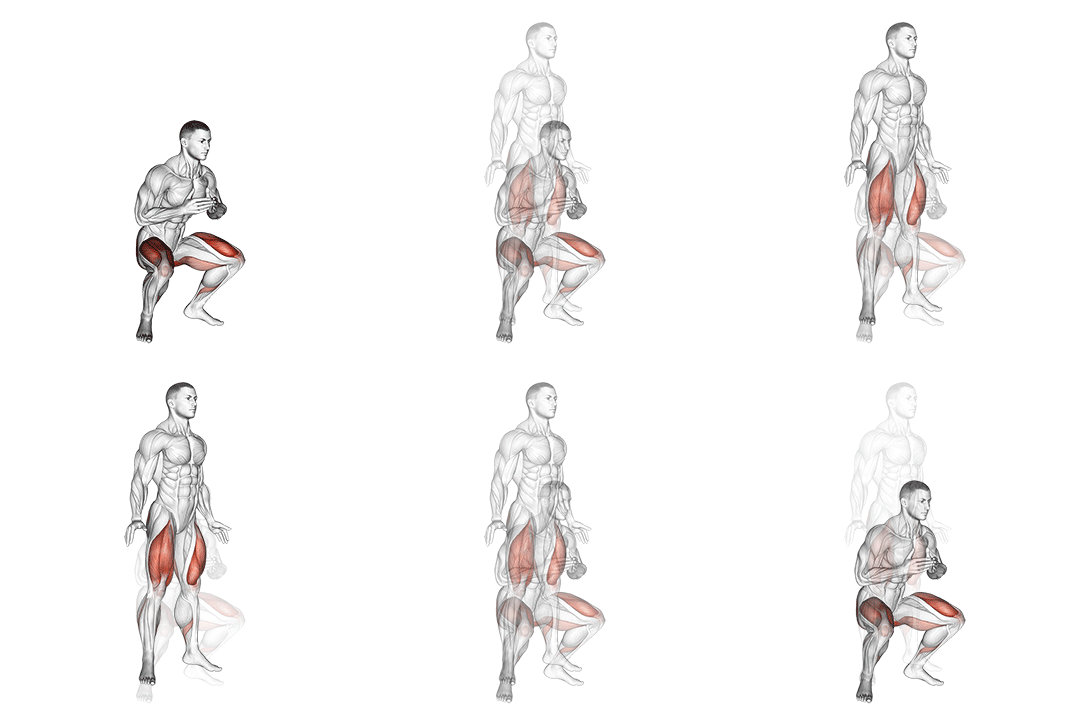
Spider crawl push-ups work as advanced strength-cardio combined exercise. Sets and reps: 3 sets of 30-45 seconds or 3 sets of 8-12 reps per side. Frequency: 2-3 times per week. The combined demand needs adequate recovery. In a HIIT circuit: 30 seconds spider crawls, 30 seconds squats, 30 seconds rest. Repeat 4-6 times. For general fitness: as finisher or alternative to standard push-up training. Don't program daily — combined upper-body and core demand needs recovery.
Recovery and frequency
Recovery within 24-48 hours. Watch for wrist soreness, shoulder fatigue, and hip flexor tightness.
Frequently asked questions
How many sets and reps?
3 sets of 30-45 seconds or 8-12 reps per side.
How often?
2-3 times per week.
Is this safe for beginners?
No — beginners should master standard push-ups first.
Will this build muscle?
Some chest and triceps growth from the pressing component. The cardio-coordination element adds non-muscle benefits.
Spider crawl vs burpee?
Different motion patterns; both combine cardio and strength. Spider crawl emphasizes upper body more; burpee emphasizes legs.
Why do my wrists hurt?
The weight shift during leg drives stresses the wrists. Build wrist mobility daily and reduce volume if soreness persists.
Useful tools for this exercise
Build a workout with the Spider Crawl Push Up
Puna gives you guided bodyweight workouts you can do anywhere — no equipment, no gym, just structured progressions that build real strength.