Sphinx
beginner mobility exercise · body weight · targets spine
- Body part
- back
- Primary target
- spine
- Equipment
- body weight
- Difficulty
- beginner
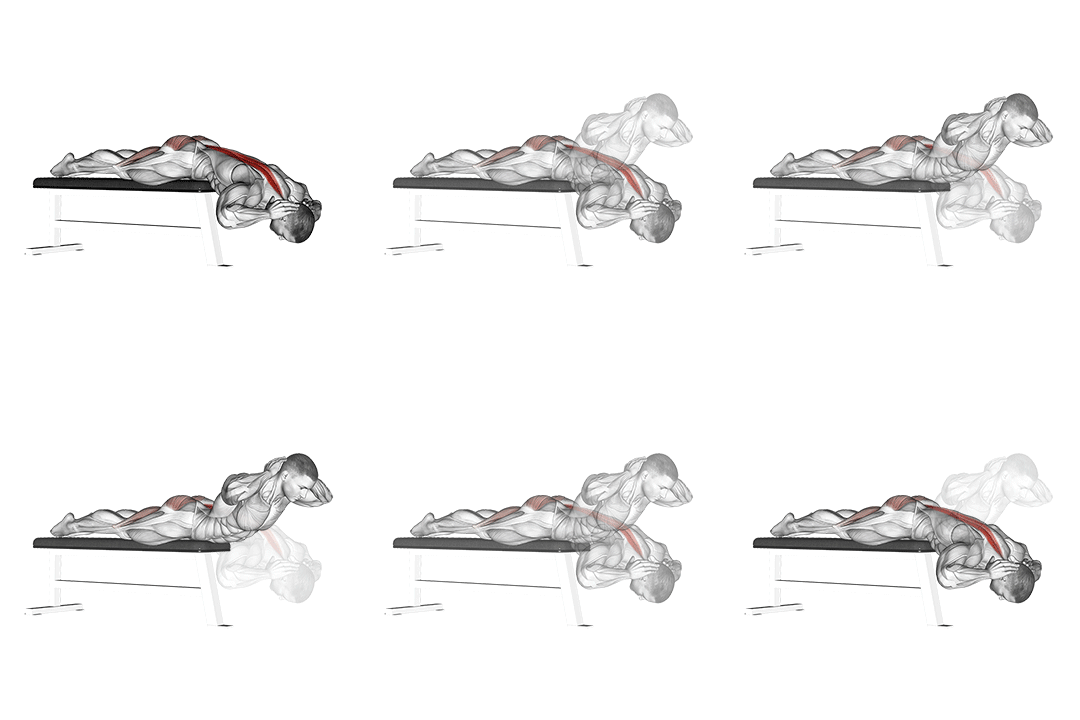
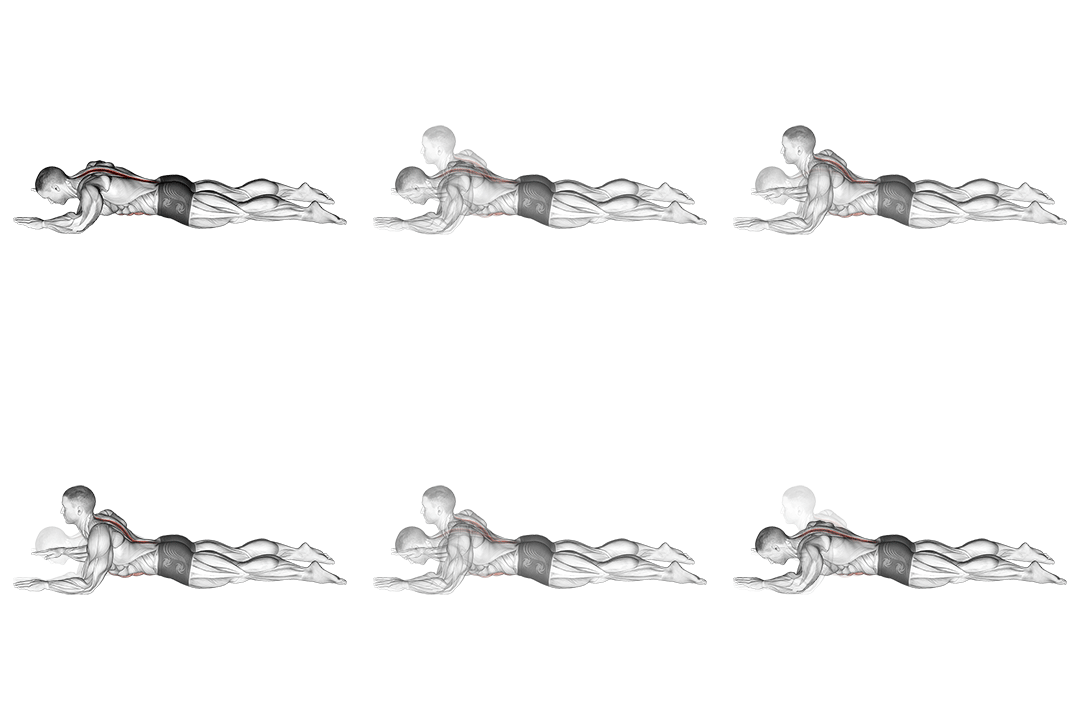
The sphinx is a foundational yoga pose and gentle thoracic mobility drill performed prone (face-down) with forearms resting on the floor and elbows positioned directly under the shoulders. The chest lifts off the ground while the lower body remains relaxed, producing a controlled extension of the upper and middle spine without significant lower-back loading. It's one of the most accessible thoracic mobility exercises in any program. Most adults have lost meaningful thoracic extension over years of sitting and forward-leaning postures. The thoracic spine — the middle portion of the back — naturally curves forward (kyphosis), and this curve deepens with desk work, phone use, and general sedentary patterns. Restricted thoracic extension shows up as the inability to reach overhead without arching the lower back, chronic upper-back tightness, and the rounded-shoulder posture most modern adults carry. The sphinx pose addresses this directly. What makes the sphinx particularly useful is the safety profile. Unlike more aggressive backbends (cobra, upward dog), the sphinx limits how far the spine can extend, which prevents the lower back from absorbing load it shouldn't. For trainees with chronic lower back issues, sensitive lumbar spines, or anyone new to backbending mobility work, the sphinx provides a gentle entry point. Daily practice over 4-6 weeks produces noticeable improvement in thoracic extension and a corresponding reduction in upper-back tightness.
Why train the Sphinx?
- Restores thoracic extension that deteriorates with sitting and phone use.
- Provides gentle backbend entry that's safe for trainees with sensitive lower backs.
- Counters the rounded-shoulder posture pattern common in desk-bound adults.
- Improves overhead reach by addressing thoracic stiffness restrictions.
- Pairs naturally with chest opening and shoulder mobility work for compound posture training.
- Costs nothing, requires only floor space, and integrates easily into daily routines.
How to do the Sphinx: step by step
- 1Lie face down on the ground with your forearms flat on the floor, elbows directly under your shoulders.
- 2Engage your core and lift your chest off the ground, keeping your forearms and toes on the floor.
- 3Hold this position for a few seconds, making sure to keep your neck in a neutral position.
- 4Slowly lower your chest back down to the starting position.
- 5Repeat for the desired number of repetitions.
Muscles worked
Primary
spine
Secondary
glutes, hamstrings
Common mistakes to avoid
Pushing through the lower back
If the lower back arches dramatically while the upper back stays flat, the extension shifts to the lumbar spine. The goal is upper and middle back extension; the lumbar should stay relatively flat. Brace the abs slightly to prevent excessive lumbar arch.
Shrugging the shoulders
When pressing the chest up, the shoulders often lift toward the ears. Pack the shoulders down and away from the ears throughout. Shrugging shifts work to the upper traps and away from thoracic extension.
Looking too far up
Excessive head extension can compress the cervical spine. Keep the head in line with the spine — gaze slightly forward and down, not up at the ceiling. The neck should stay in a neutral position relative to the rest of the spine.
Holding too short
Brief holds barely cue the spine to extend. Hold for 30-60 seconds, breathing slowly. The thoracic tissue releases gradually; longer holds drive more change.
Treating it as a workout instead of mobility
The sphinx isn't a strength exercise or core workout. It's mobility. Don't try to add load or make it harder; the gentle nature is the value. For strength work, do other exercises.
Easier and harder variations
Easier
Reduce the chest lift height — barely raising the upper body off the floor. The minimal lift still trains thoracic extension at gentler intensity. Or perform with elbows further from the body to reduce the depth of the position.
Harder
Progress to upward facing dog (cobra) where the arms straighten and the chest lifts higher. Or add active extension by pushing more firmly into the floor with the forearms while drawing the elbows toward the hips. For maximum challenge, integrate into a yoga flow with multiple backbend variations.
Alternative exercises
Cobra pose
Deeper backbend with arms partially extended. Use as progression once sphinx becomes easy.
Upward facing dog
Full backbend with arms straight. The advanced version of the same general pattern.
Cat-cow
Dynamic version on hands and knees. Different position; pairs well with sphinx for spinal mobility.
How to program the Sphinx into your training
The sphinx works best as a daily mobility practice rather than a workout component. Spinal tissue adapts to consistent low-volume input. Daily routine: 1-2 sets of 30-60 seconds, performed once or twice per day. Morning practice is particularly valuable — it counters the spinal flexion of overnight side-sleeping or fetal position. Desk-break protocol: 1 set of 30 seconds in the late afternoon, when posture has typically deteriorated from a full day of sitting. The brief reset helps maintain spinal mobility through the workday. Pre-workout warm-up: 1 set of 30 seconds before strength training, especially before overhead pressing or rowing work. The thoracic mobility supports better positioning during compound lifts. For those with restricted thoracic extension or rounded posture: 3-4 sessions per day at 30 seconds. Combined with chest stretches and rear shoulder work, most see noticeable postural improvement within 4-6 weeks. For general fitness or mobility maintenance: 2-3 sessions per week is sufficient. Daily is better but not critical for trainees without specific posture goals. Don't program this as the only mobility work — pair with cat-cow, child's pose, and chest opening stretches for comprehensive spinal mobility.
Recovery and frequency
The sphinx has zero recovery cost. Daily practice is safe and ideal — spinal mobility adapts to frequent gentle exposure. The main warning sign is sharp lower-back pain (rather than gentle stretch sensation), which warrants stopping the exercise. For typical thoracic stiffness, the practice is safe and recovery is immediate.
Frequently asked questions
How long should I hold the sphinx?
30-60 seconds per set, 1-2 sets total. Brief holds don't drive meaningful tissue change; longer than 90 seconds offers diminishing returns.
How often should I do this?
Daily, especially for desk-bound adults. Frequency matters more than duration for spinal mobility.
Will this fix my hunched posture?
Partially. Thoracic mobility addresses one piece of rounded posture. Combined with chest stretches and rear shoulder strengthening, daily sphinx practice produces meaningful postural improvement over 4-6 weeks.
Can I do this with lower back pain?
Often yes — the sphinx is gentler than other backbends. The forearms-on-floor position limits how far the spine extends, protecting the lower back. Stop if pain appears; consult a physiotherapist for current issues.
Sphinx vs cobra: which is better?
Different intensities. Sphinx (forearms down) is gentler; cobra (arms straight) is deeper. Use sphinx as the entry point and as ongoing maintenance; progress to cobra for deeper thoracic work once sphinx feels easy.
Why don't I feel anything?
Either your thoracic mobility is already good or the position isn't engaging the upper back enough. Try drawing the chest forward and up while the elbows stay anchored — visualize lengthening through the spine while extending.
Useful tools for this exercise
Build a workout with the Sphinx
Puna gives you guided bodyweight workouts you can do anywhere — no equipment, no gym, just structured progressions that build real strength.