Ski Step
beginner cardio exercise · body weight · targets cardiovascular system
- Body part
- cardio
- Primary target
- cardiovascular system
- Equipment
- body weight
- Difficulty
- beginner
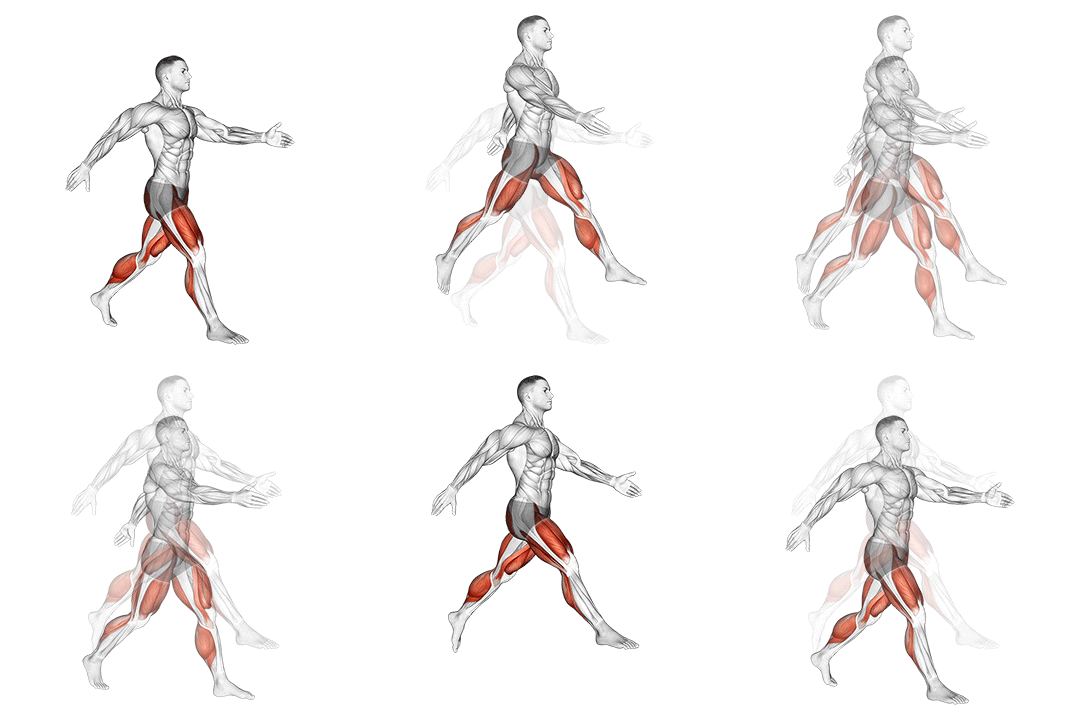
The ski step — sometimes called speed skater jump or lateral cross-jump — is a rhythmic side-to-side cardio drill that mimics the motion of cross-country skiing. From feet shoulder-width apart, you jump laterally to one side while swinging the opposite leg behind in a graceful crossover motion, then immediately mirror the action to the other side. The continuous flow produces meaningful cardiovascular work alongside lateral leg coordination training. While similar to skater hops in mechanics, the ski step emphasizes rhythm and flow rather than maximum athletic explosiveness. The skater hop is typically performed as a powerful single-leg landing for athletic conditioning; the ski step focuses on continuous rhythmic motion at moderate intensity. The distinction matters for programming purposes — ski steps suit longer continuous sessions (3-5 minutes), while skater hops are typically reserved for 30-60 second high-intensity intervals. Where ski steps earn their place is as accessible lateral cardio for trainees who want the lateral movement training without the maximum-intensity demand of skater hops. The reduced explosive component makes the drill more sustainable and lower-impact, suitable for a broader range of fitness levels including older adults building athletic capacity. The lateral training component still provides meaningful benefit for sports requiring direction changes (basketball, soccer, tennis), though less specifically than skater hops. Used as a moderate-intensity cardio option alongside running and other drills, it provides useful variety in the cardio rotation.
Why train the Ski Step?
- Trains lateral leg movement that straight-line cardio misses entirely.
- Provides moderate-intensity cardio sustainable for longer sessions than max-intensity drills.
- Improves lateral coordination and balance through the side-to-side rhythmic motion.
- Engages the glute medius (lateral glute) and adductors more directly than running.
- Lower-impact than skater hops while providing similar coordination benefits.
- Requires no equipment and minimal floor space — usable anywhere with side-to-side room.
How to do the Ski Step: step by step
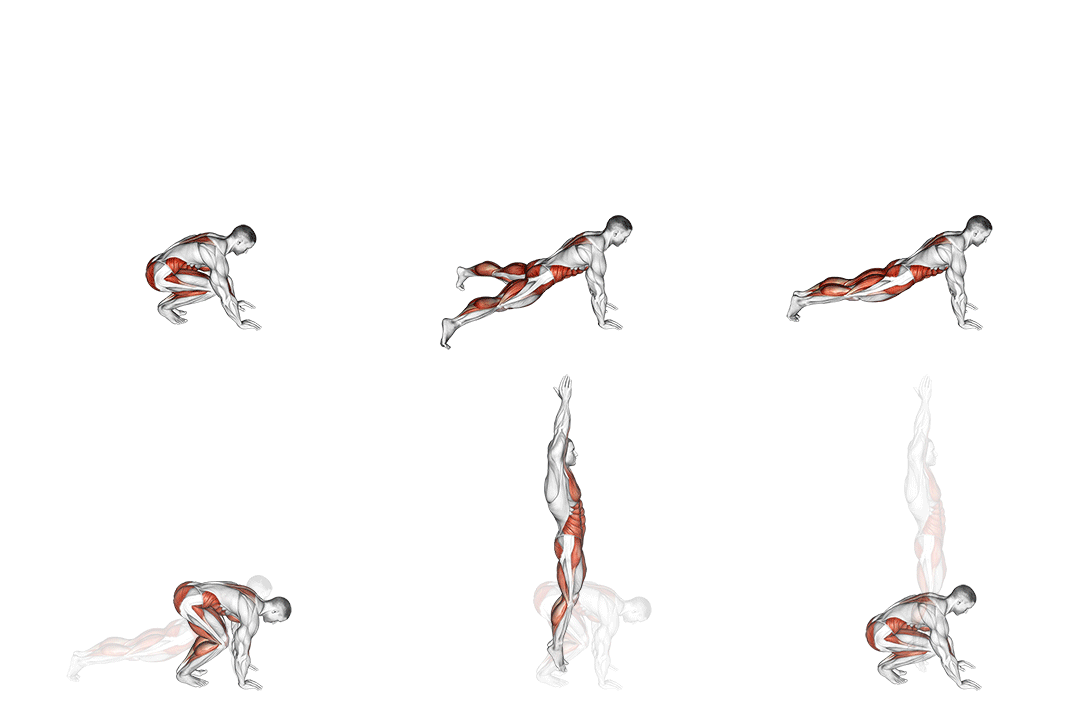
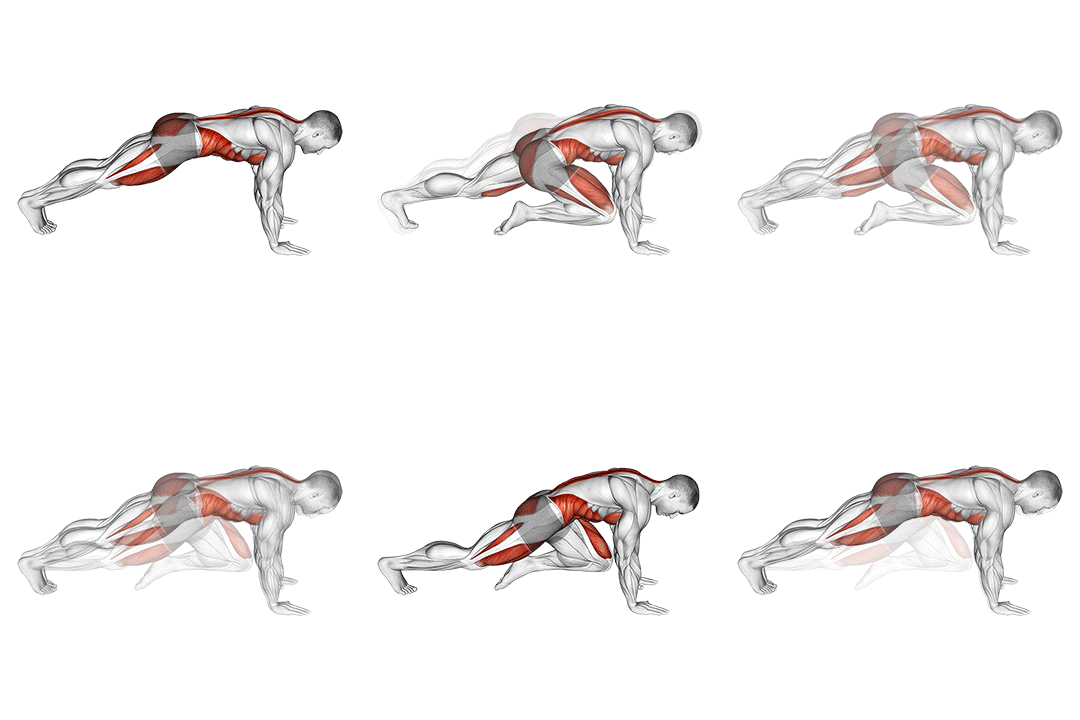
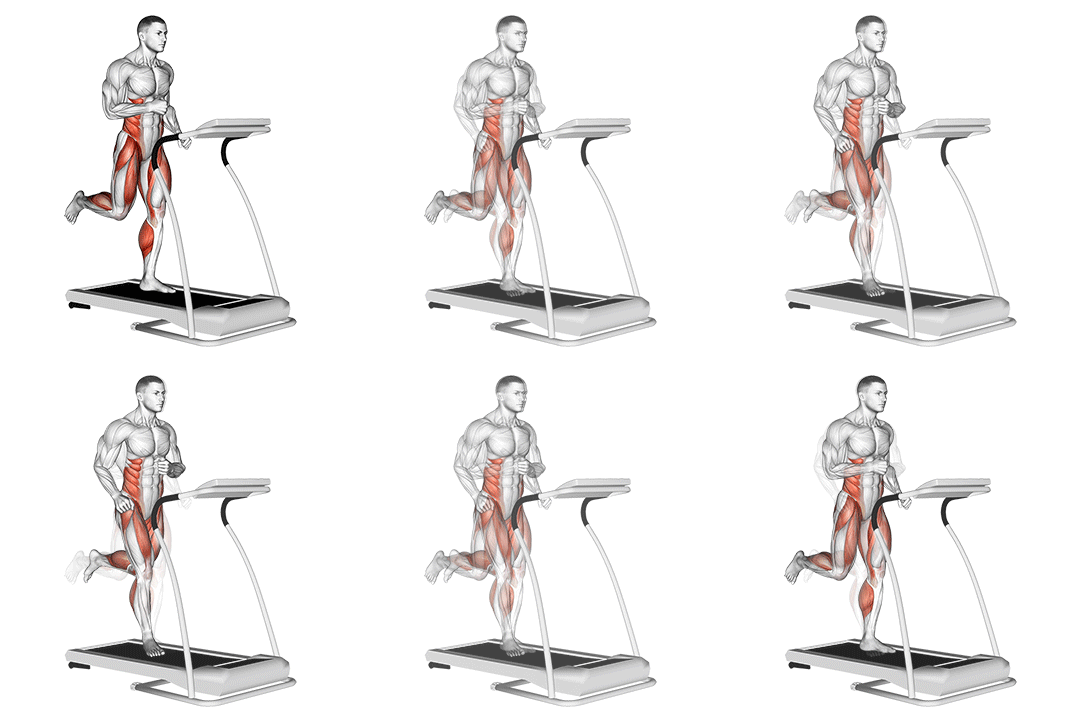
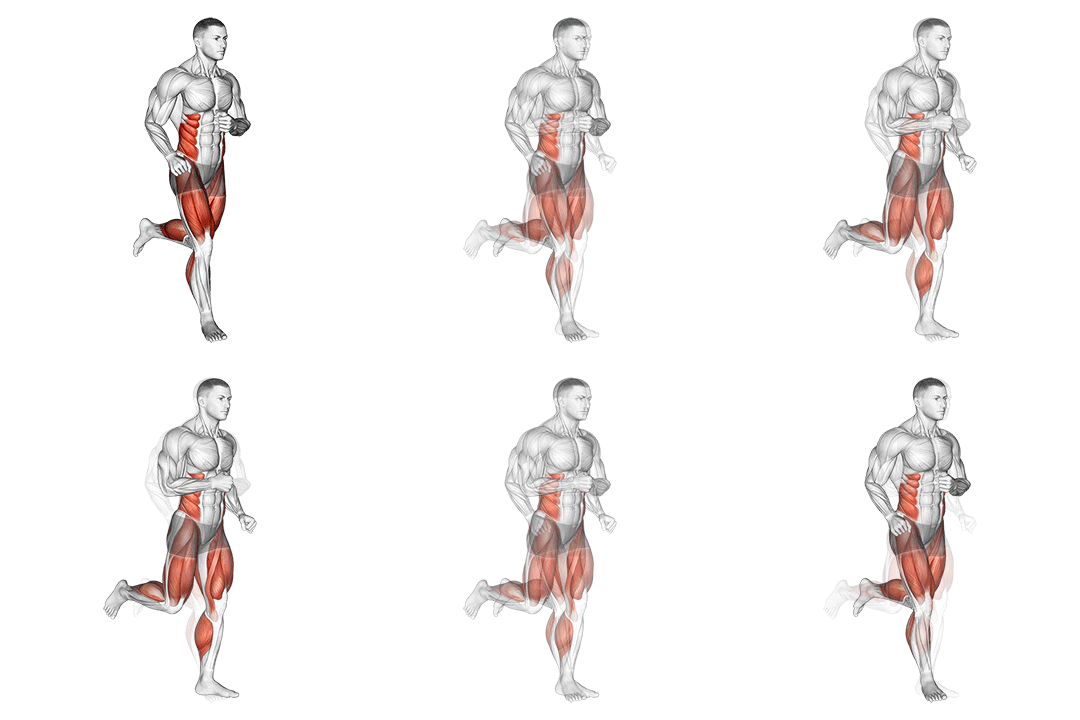
- 1Stand with your feet shoulder-width apart.
- 2Bend your knees slightly and keep your back straight.
- 3Jump to the right, landing on your right foot while swinging your left leg behind your right leg.
- 4Immediately jump to the left, landing on your left foot while swinging your right leg behind your left leg.
- 5Continue alternating jumps from side to side, mimicking a skiing motion.
- 6Repeat for the desired number of repetitions.
Muscles worked
Primary
cardiovascular system
Secondary
quadriceps, hamstrings, glutes, calves
Common mistakes to avoid
Crashing into landings
Each landing should be soft, with the working knee bending immediately to absorb impact. Hard, stiff landings spike the joints and produce knee or ankle issues over time. Aim to land lightly with significant knee bend on every step.
Letting the working knee cave inward
On lateral landings, the knee can twist toward the midline. This is the loading pattern most associated with knee injuries. Drive the working knee out in line with the toes throughout each landing.
Going too far to each side
Excessive lateral distance increases the deceleration demand on landing and stresses the knee more. Start with moderate hops (1-2 feet to each side) and build gradually. The rhythmic flow matters more than maximum distance.
Treating it like skater hops (max intensity)
Ski steps are about rhythm and flow, not maximum power. If you're treating each rep as an explosive plyometric jump, you're doing skater hops. Both have value; just be deliberate about which one you're choosing for the session.
Holding the breath
Many trainees hold their breath through rhythmic motion, especially under fatigue. Establish rhythmic breathing — exhale on one direction, inhale on the next. The continuous breathing supports the cardiovascular benefit.
Easier and harder variations
Easier
Reduce or eliminate the airborne phase — perform lateral steps with rear-leg crossover motion, stepping rather than jumping. The non-jumping version trains the lateral pattern with significantly less impact load. Or reduce the lateral distance to small steps (6-12 inches per side).
Harder
Increase the lateral distance per step and the cadence — cover more ground, faster. Or progress to skater hops with explicit power emphasis. For maximum challenge, perform with light dumbbells in each hand for additional load.
Alternative exercises
Skater hops
Higher-intensity version with explicit power emphasis. Use for HIIT or athletic conditioning when maximum intensity is the goal.
Side shuffle
Pure lateral movement without the rear-leg crossover. Useful for sport-specific lateral conditioning without the coordination demand.
Lateral lunge
Strength-focused lateral work without the cardio component. Lower-impact alternative for those who can't yet handle ski steps.
How to program the Ski Step into your training
Ski steps work as moderate-intensity cardio rather than HIIT. The reduced explosive component makes longer continuous sessions practical. Continuous cardio: 3-5 minutes of continuous moderate-pace ski steps, repeated 2-3 times with 60-90 seconds rest. Total session: 12-20 minutes. This produces good cardiovascular benefit with bodyweight only. In an active circuit: 60 seconds of ski steps, 30 seconds of squats, 30 seconds of push-ups, 30 seconds rest. Repeat 5-7 times for a 15-20 minute full-body session. As a warm-up: 60-90 seconds of moderate-pace ski steps to elevate heart rate and activate lateral leg muscles before strength training or sport practice. The lateral training is good preparation for any lower-body work. Frequency: 3-4 times per week is appropriate. The moderate intensity supports higher frequency than skater hops, which require more recovery. For general fitness: 3-4 times per week of 5-10 minute sessions as part of a cardio rotation that includes running, jumping rope, and other variety. For athletes: useful as warm-up activation work before practice or as moderate-intensity cardio on recovery days from harder training. For older adults: 3 sessions per week of 3-5 minutes at moderate pace. The lateral training improves balance alongside the cardiovascular benefit, particularly relevant for fall prevention. For weight loss: ski steps fit as moderate-intensity cardio in any fat-loss program. Pair with strength training and dietary management for compound benefit. Don't program ski steps as your only cardio — variety matters for both adherence and complete cardiovascular development. Rotate with running, HIIT, and other modalities.
Recovery and frequency
Ski steps recover within 24-48 hours when programmed at moderate volume. The lower impact than skater hops makes recovery faster and frequency higher. The main warning signs are knee discomfort from poor landing alignment, ankle soreness, and adductor (inner thigh) tightness. Knee issues warrant reviewing landing form. Adductor tightness is common in early sessions and improves with practice; daily lateral hip mobility work supports the adaptation. Long-term, regular ski step training pairs well with daily ankle and lateral hip mobility work. Standard recovery practices — sleep, hydration, reasonable nutrition — apply.
Frequently asked questions
How long should I do ski steps for?
3-5 minutes per round, 2-3 rounds per session. Total session of 12-20 minutes provides good cardio benefit. The moderate intensity supports longer durations than max-intensity drills.
How often should I do ski steps?
3-4 times per week. The moderate intensity and lower impact support higher frequency than max-intensity plyometric drills.
Ski step vs skater hop: which is better?
Different goals. Ski steps are moderate-intensity sustainable cardio with lateral training. Skater hops are HIIT-style max-intensity power work. For sustained cardio, ski steps; for explosive lateral training, skater hops. Most varied programs use both.
Are ski steps safe for older adults?
Often yes, especially the non-jumping step version. The moderate intensity and lower impact than max plyometric work make this drill accessible to most fitness levels. Older adults should start with the step version (no airborne phase) and progress cautiously.
Will this help my sport performance?
Yes for sports requiring lateral movement (basketball, soccer, tennis). The carryover is less specific than skater hops but still meaningful, particularly for sustained-effort sport contexts. For pure athletic explosiveness, skater hops produce more direct transfer.
Can I do this with knee issues?
Depends on the issue. The lateral landing pattern can aggravate existing knee problems. Consult a physiotherapist for current issues. For mild stiffness, start with the step version (no jumping) and progress cautiously based on tolerance.
Useful tools for this exercise
Build a workout with the Ski Step
Puna gives you guided bodyweight workouts you can do anywhere — no equipment, no gym, just structured progressions that build real strength.