Skater Hops
intermediate cardio exercise · body weight · targets cardiovascular system
- Body part
- cardio
- Primary target
- cardiovascular system
- Equipment
- body weight
- Difficulty
- intermediate
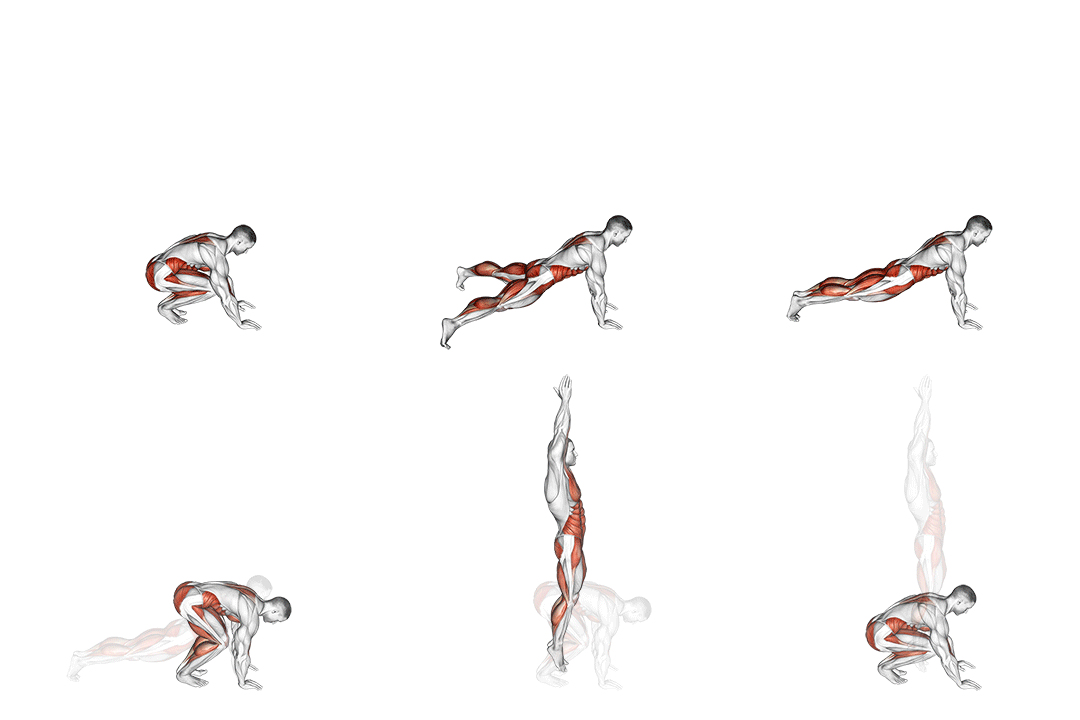
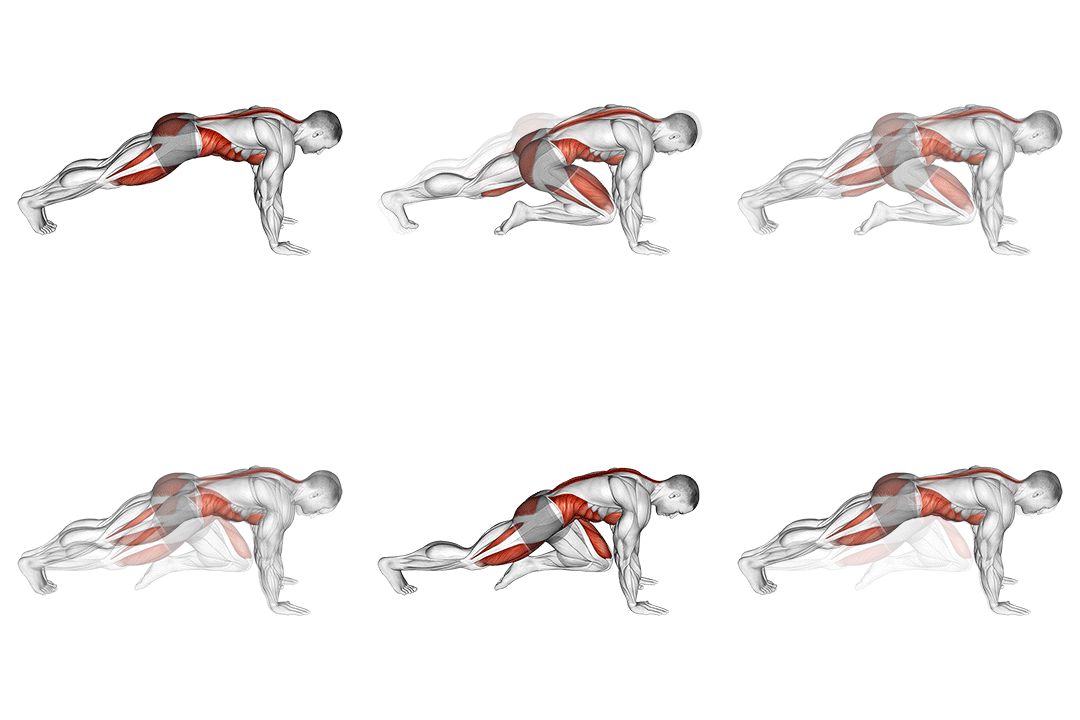
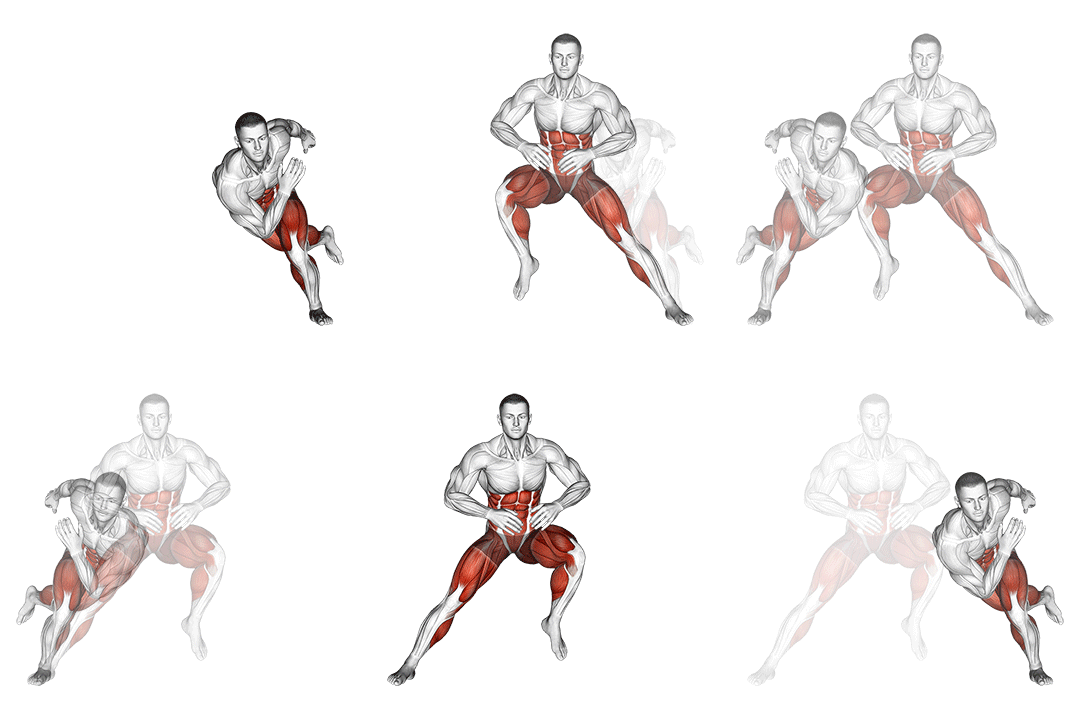
Skater hops are a lateral plyometric drill that mimics the cross-body motion of speed skating. From a standing position, you hop sideways onto one foot, swing the opposite leg behind, lightly tap the ground with the toe, then immediately hop back to the other side with the mirror motion. The continuous side-to-side hopping produces serious cardiovascular demand alongside lateral leg power and proprioceptive control. It's one of the most athletic-feeling cardio drills in bodyweight training, and the carryover to actual athletic movement is direct. Most cardio exercises move forward (running, treadmill) or in place (jumping jacks, mountain climbers). Skater hops train lateral and rotational movement that those alternatives miss entirely. This matters more than it sounds. Most sports — basketball, soccer, tennis, MMA, skiing — require lateral cutting and direction changes that pure straight-line cardio doesn't prepare for. Adding skater hops to a training program builds the specific lateral leg strength and coordination that translates directly to sport performance, whether for competitive athletes or weekend warriors who want to feel less wobbly during pickup games. The trade-off is the joint demand. Each hop concentrates landing impact on a single leg, which produces meaningful loading on the knee, ankle, and hip. Trainees with existing knee issues should approach skater hops carefully; the lateral loading pattern can aggravate problems that straight-line work doesn't. For healthy trainees programmed at appropriate volume, skater hops are excellent training. For trainees rehabbing knee issues, lower-impact lateral movement (lateral steps, lateral lunges) serves better.
Why train the Skater Hops?
- Trains lateral leg strength and power that straight-line cardio misses entirely.
- Improves athletic performance in sports requiring cutting, direction changes, and lateral movement.
- Spikes heart rate quickly through the explosive lateral demand.
- Builds single-leg balance and stabilization through repeated unilateral landings.
- Engages the glute medius (lateral glute) more directly than most other cardio drills.
- Develops proprioceptive control useful for injury prevention in athletic contexts.
How to do the Skater Hops: step by step
- 1Stand with your feet shoulder-width apart.
- 2Bend your knees slightly and jump to the right, landing on your right foot.
- 3As you land, swing your left leg behind your right leg and tap the ground with your left toes.
- 4Immediately jump to the left, landing on your left foot.
- 5As you land, swing your right leg behind your left leg and tap the ground with your right toes.
- 6Continue alternating sides, jumping and tapping the ground with each leg.
- 7Repeat for the desired number of repetitions.
Muscles worked
Primary
cardiovascular system
Secondary
quadriceps, hamstrings, glutes, calves
Common mistakes to avoid
Crashing into landings
Each landing should be soft, with the working knee bending immediately to absorb impact. Hard, stiff single-leg landings concentrate force on the knee and ankle and produce joint issues quickly. Aim to land lightly with significant knee bend on every hop.
Letting the working knee cave inward
On single-leg landings, the knee can twist toward the midline. This is the loading pattern most associated with knee injuries, especially ACL tears. Drive the working knee out in line with the toes throughout each landing. If the knee keeps caving, regress to lateral steps without the hop.
Going too far to each side
Excessive lateral distance increases the deceleration demand on landing and stresses the knee more. Start with moderate hops (1-2 feet to each side) and increase distance only as you build tolerance. Wider isn't necessarily better.
Going too fast at the start
Skater hops are deceptively demanding. The first sets should be moderate-paced, focused on landing form. Speed comes after the pattern is grooved; rushing the early sets produces messy landings that increase injury risk.
Not actually transferring weight
Some trainees treat the rear-leg toe tap as a separate position rather than a transition. The whole point is the dynamic transfer from one leg to the other. The rear leg tap should be brief — touch and immediately drive back. If the tap becomes a held position, it's not really skater hops anymore.
Easier and harder variations
Easier
Reduce or eliminate the airborne phase — perform lateral lunges with the rear-leg toe tap, stepping rather than hopping. The non-jumping version trains the lateral pattern with significantly less impact load. Or reduce lateral distance to 6-12 inches per hop.
Harder
Increase pace to maximum sustainable speed for 30-60 second intervals. Or increase lateral distance — the wider the hop, the more deceleration force on each landing. For combined cardio and strength, hold light dumbbells in each hand during the motion.
Alternative exercises
Lateral lunge
Step-version of similar lateral work without the hop. Lower-impact alternative when skater hops feel too demanding.
Lateral box step-up
Single-leg lateral work with controlled stepping. Good progression toward skater hops; useful for older adults.
Side shuffle
Lateral movement at moderate intensity. Use as warm-up before skater hops or as a lower-intensity alternative.
How to program the Skater Hops into your training
Skater hops work as interval cardio with lateral focus, or as part of athletic conditioning programs. The intensity makes long continuous sets impractical. Interval format: 30-45 seconds of skater hops, 30 seconds rest, 6-10 rounds. Total session: 8-15 minutes. This produces excellent cardiovascular and lateral leg conditioning. In an athletic conditioning circuit: 30 seconds skater hops, 30 seconds sprint, 30 seconds bear crawl, 30 seconds rest. Repeat 4-6 times for a 12-18 minute athletic conditioning session. As a warm-up before sport practice: 30-60 seconds of moderate-pace skater hops to activate the lateral leg muscles and prepare for cutting and direction changes. Frequency: 2-3 times per week is appropriate. The single-leg impact loading needs 48-72 hours between hard sessions for full recovery. For athletes in sports requiring lateral movement: integrate into the sport-specific training day. The transfer to sport demands proximity to other sport-specific work. For general fitness: 3 sets of 45 seconds with 60 seconds rest, 1-2 times per week as part of varied cardio rotation. For weight loss: skater hops fit well into HIIT protocols. 6-8 rounds of 30 seconds work with 30 seconds rest, 2 times per week, alongside strength training and dietary management. Don't program skater hops daily at high intensity — the single-leg joint load adds up faster than expected. 2-3 sessions per week with adequate recovery produces better results.
Recovery and frequency
Skater hops recover within 24-48 hours when programmed at moderate volume. Higher-intensity HIIT sessions need 48-72 hours. The main warning signs are knee discomfort during or after sessions, ankle soreness, and hip flexor tightness on the working sides. Knee discomfort warrants reviewing landing form (especially knee alignment) and reducing lateral distance. Ankle soreness suggests too much volume too soon. Hip flexor tightness benefits from daily mobility work alongside the training. Long-term, regular high-intensity skater hop training requires monthly easier weeks and pairing with daily lower-body mobility work. Sleep, hydration, and protein intake support the recovery demand.
Frequently asked questions
How long should I do skater hops for?
30-60 seconds per interval, 6-10 intervals per session. Total session of 8-15 minutes provides excellent cardio and lateral leg work. Longer continuous sets are impractical due to the intensity.
How often should I do skater hops?
2-3 times per week. The single-leg impact loading needs 48-72 hours between hard sessions. More frequent training tends to produce knee or ankle issues.
Are skater hops safe for beginners?
With careful progression, yes. Start with lateral lunges (no airborne phase) for 1-2 weeks to learn the pattern, build to moderate-pace skater hops, only progress to high-intensity intervals once basic form is grooved.
Skater hops vs lateral lunges: which is better?
Different intensities and stimuli. Lateral lunges are lower-impact and accessible to most fitness levels. Skater hops add the airborne component for more cardio intensity and athletic carryover. For general fitness, both work; for athletic conditioning, skater hops win.
Will this help my sport performance?
Yes for sports requiring lateral movement and cutting (basketball, soccer, tennis, MMA, skiing). The carryover to deceleration and direction-change ability is direct. For straight-line endurance sports, the value is smaller.
Can I do skater hops with knee issues?
Depends on the issue. The single-leg lateral loading can aggravate existing knee problems, especially ACL or meniscus issues. Consult a physiotherapist for current issues. For mild stiffness, start with lateral lunges (non-jumping) and progress cautiously.
Useful tools for this exercise
Build a workout with the Skater Hops
Puna gives you guided bodyweight workouts you can do anywhere — no equipment, no gym, just structured progressions that build real strength.