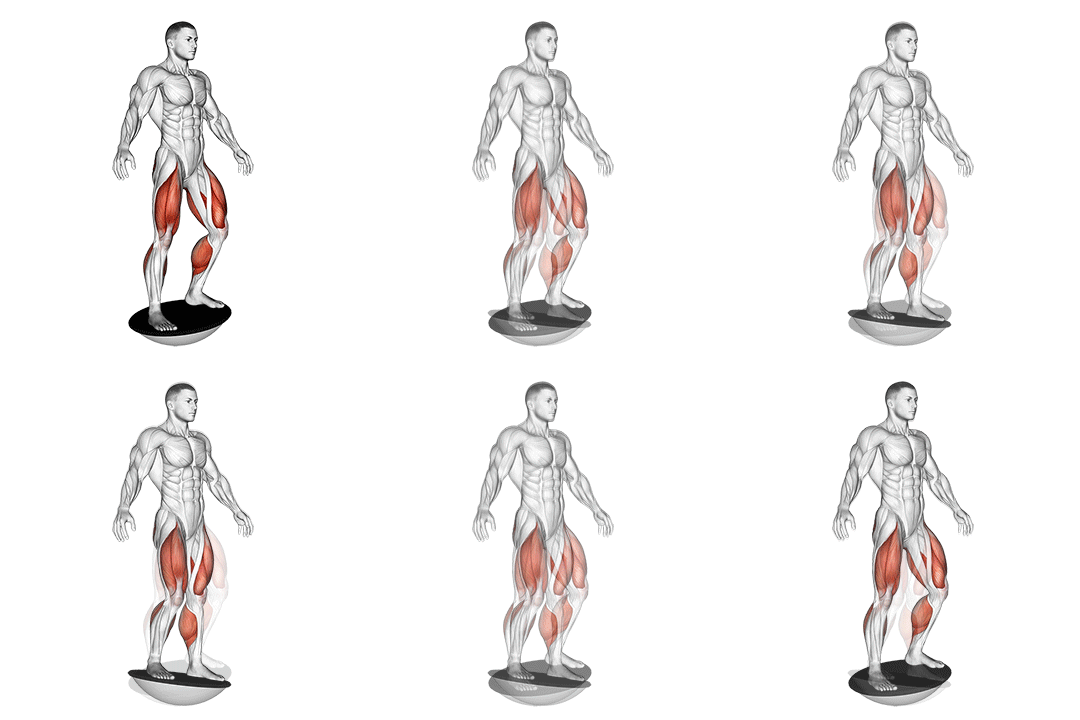
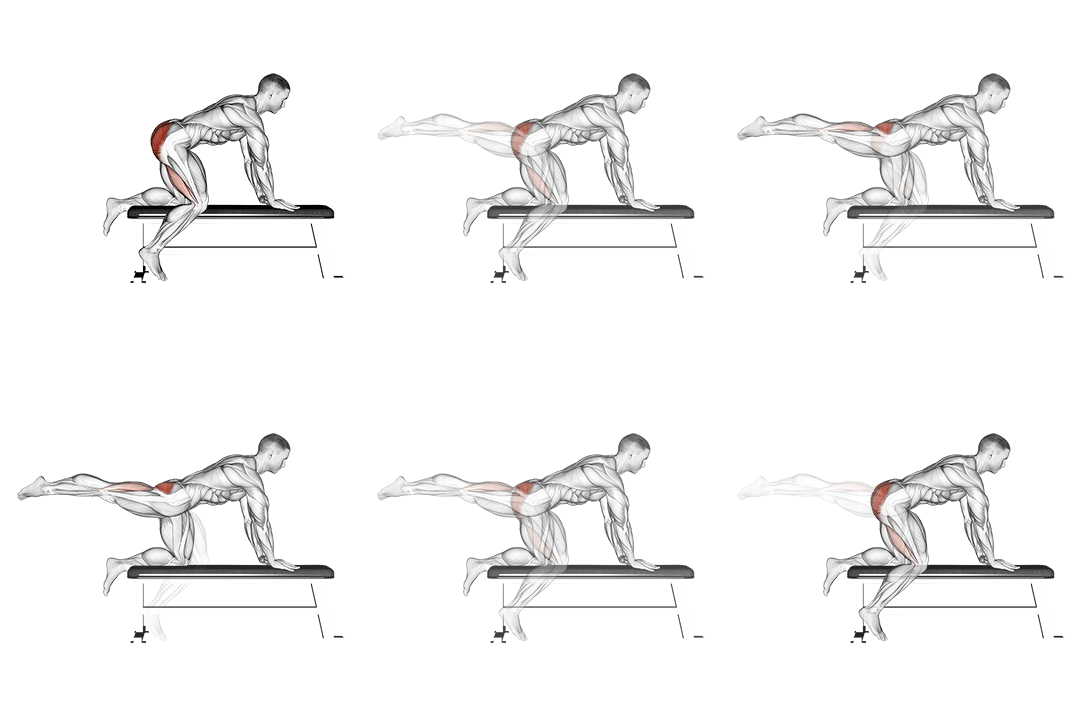
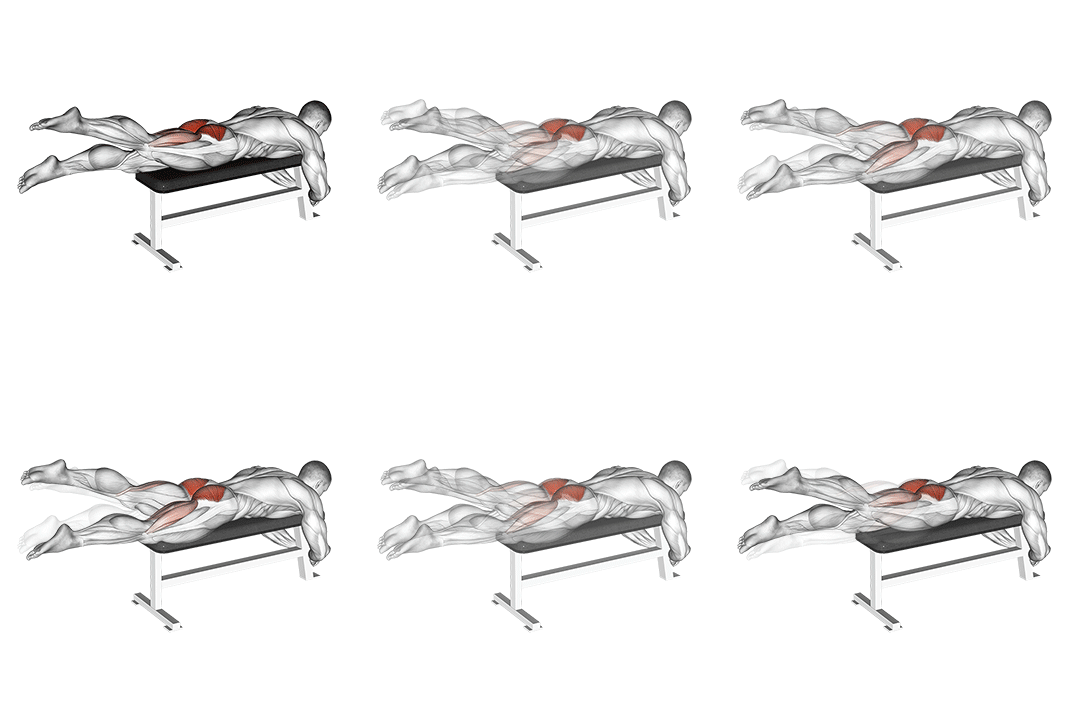
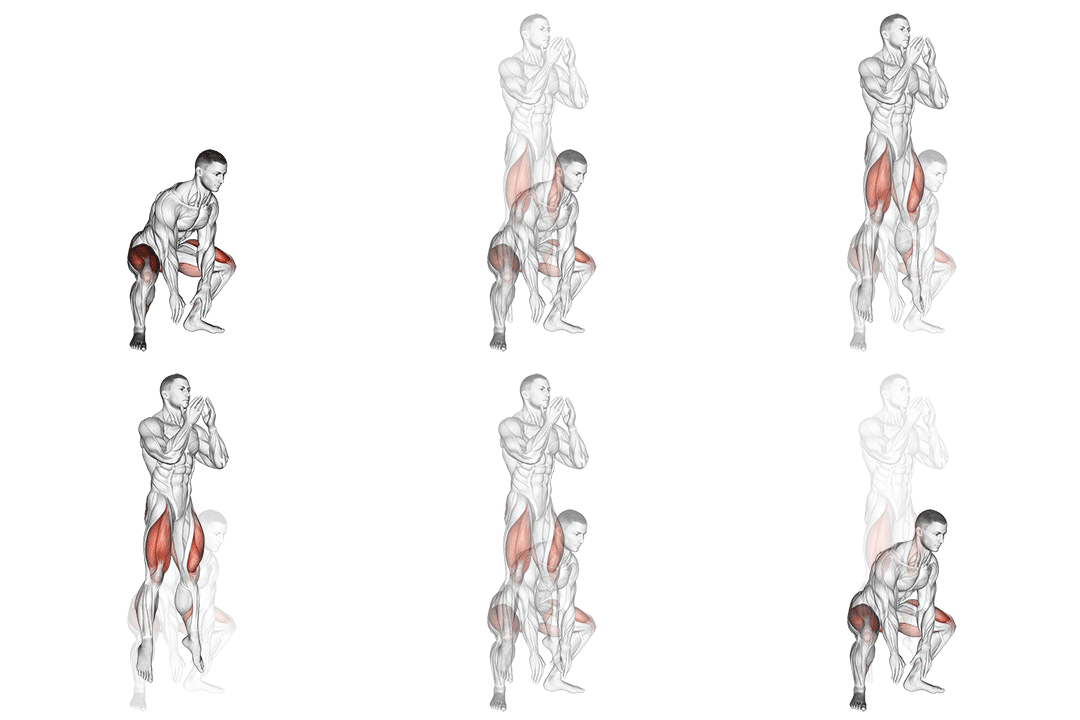
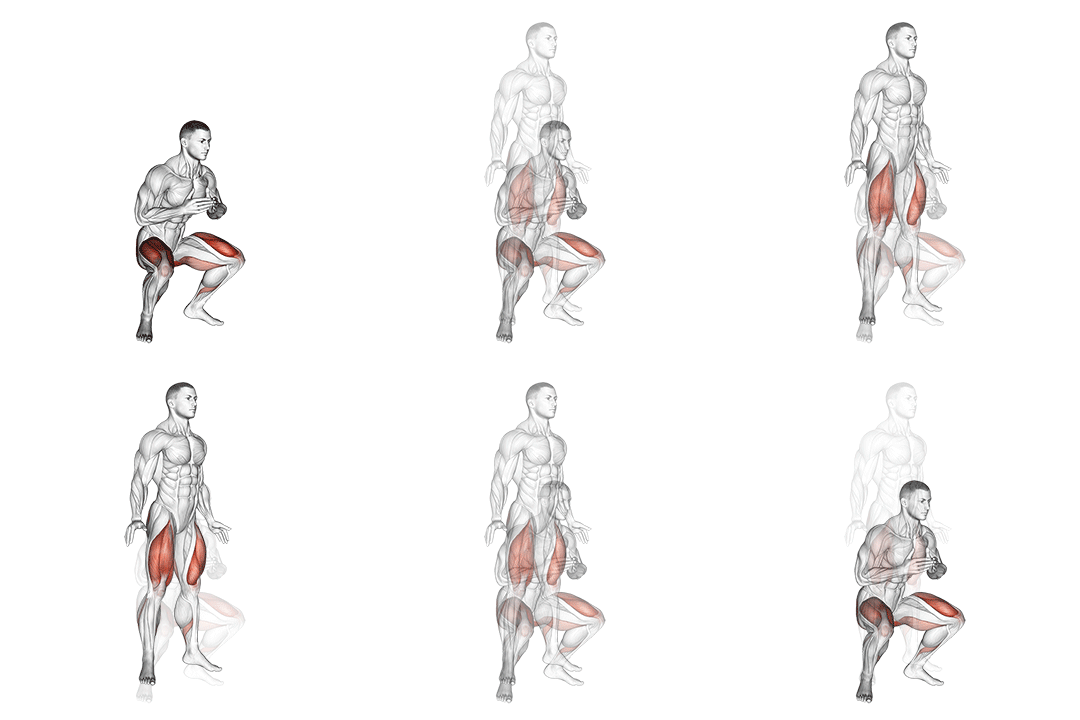
Sissy Squat
advanced strength exercise · body weight · targets quads
- Body part
- upper legs
- Primary target
- quads
- Equipment
- body weight
- Difficulty
- advanced
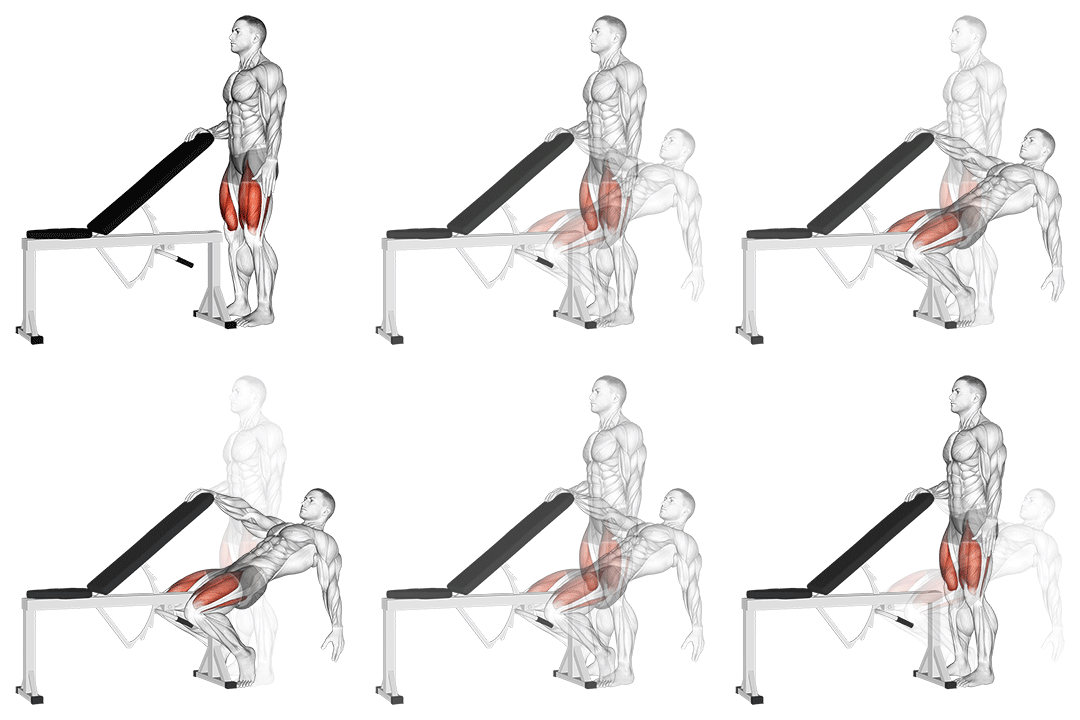
The sissy squat is one of the most controversial-looking but biomechanically focused quad exercises in any program. Performed by leaning the upper body backward while bending the knees forward over the toes (often holding onto a sturdy object for balance), you isolate the quadriceps in a way that no other bodyweight exercise quite matches. The torso stays roughly in line with the thighs throughout, and the entire range happens at the knee joint with minimal hip involvement. The name 'sissy' is ironic — it's a brutally demanding movement that exposes weak quads and quad-dominant athletes who can't actually isolate their quads through full range. Bodybuilders use it for quad development; gymnasts and martial artists use it for the kind of knee strength that supports landings, kicks, and explosive movements. Despite the unusual position, when done correctly with proper progression, it builds quad strength and resilience that translates to almost every lower-body movement. The knee position concerns are valid but often overstated. Healthy knees with strong quads tolerate the sissy squat well, especially when the motion is controlled and the depth is built gradually. Trainees with existing knee issues should avoid it or get medical clearance first. For everyone else, programmed cautiously over weeks rather than introduced at full range and volume from day one, the sissy squat earns its place as a unique quad-isolation exercise.
Why train the Sissy Squat?
- Isolates the quadriceps more directly than any other bodyweight squat variation.
- Builds knee strength and tendon resilience when programmed gradually.
- Carries over to gymnastics, martial arts, and any sport requiring strong quads in extended-knee positions.
- Doesn't require any equipment beyond a sturdy object for balance.
- Reveals quad-strength asymmetries that bilateral squats hide.
- Provides a unique stimulus that prevents the quads from adapting to standard squat patterns.
How to do the Sissy Squat: step by step
- 1Stand with your feet shoulder-width apart and your toes pointing slightly outward.
- 2Hold onto a stable object for balance if needed.
- 3Slowly lower your body by bending your knees and leaning back, keeping your torso upright.
- 4Continue lowering until your thighs are parallel to the ground or as far as you can comfortably go.
- 5Pause for a moment, then push through your heels to return to the starting position.
- 6Repeat for the desired number of repetitions.
Muscles worked
Primary
quads
Secondary
calves, glutes
Common mistakes to avoid
Going too deep too fast
Full-range sissy squats put significant stress on the patellar tendon. Start with a shallow lean (15-20 degrees back) and minimal knee bend; build depth over weeks, not days.
Letting the heels lift off the floor unintentionally
Some sissy squat variations involve heel lift; some don't. If you're doing the heels-down version (most common entry point), keep the heels firmly planted — heel lift turns the exercise into a different movement.
Not bracing the core enough
The leaned-back position requires significant core engagement to maintain. Brace the abs hard throughout the rep — losing core control means the lower back takes load it shouldn't.
Choosing the wrong support object
If the support wobbles or fails, the rep becomes a fall. Use only sturdy, immovable objects — a doorframe, a power rack, a sturdy pole. Test the stability before loading body weight against it.
Adding load before mastering bodyweight
Sissy squats are demanding even at body weight. Don't add weight (a plate held at the chest) until you can do 3 sets of 12 strict bodyweight reps with full range of motion.
Easier and harder variations
Easier
Use a wall or sturdy support and lean back less aggressively. Reduce knee bend depth — even 30 degrees of knee flexion is enough to start. Or perform with a slight body weight assist by holding the support firmly to take some load off the legs.
Harder
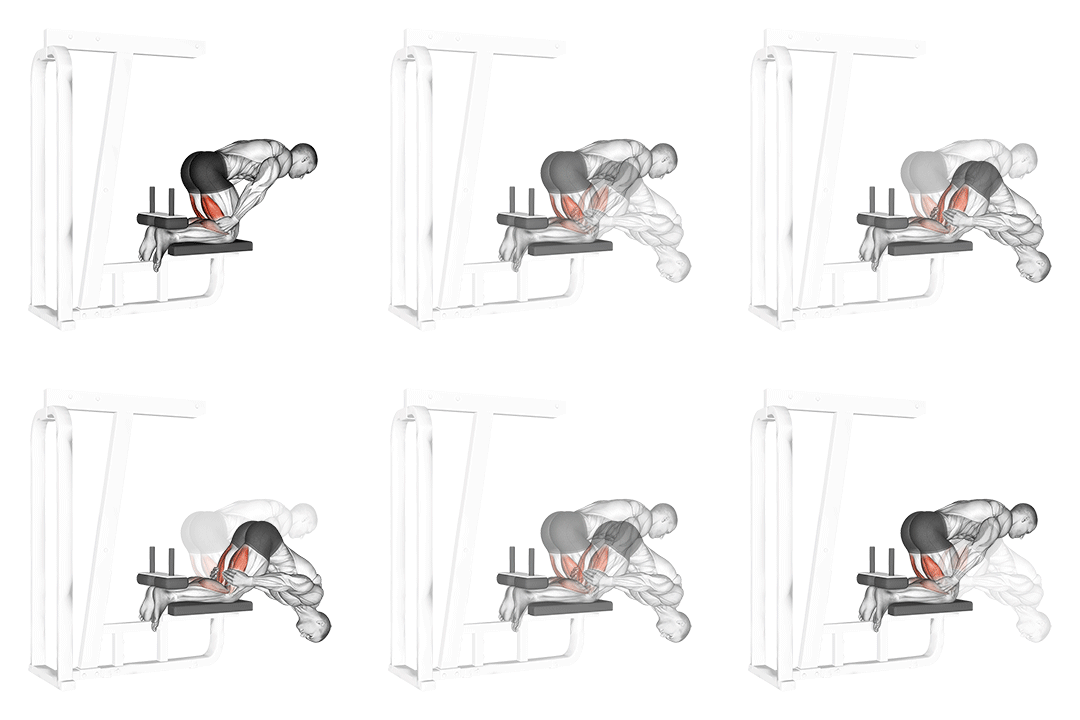
Add weight (a plate held at the chest). Increase the lean angle. Or progress to weighted sissy squats on a sissy squat machine for greater depth and control.
Alternative exercises
Bodyweight squat
Standard squat with full hip and knee involvement. Better for general lower-body strength; sissy squats are quad-specific.
Wall sit
Isometric quad exercise. Simpler than sissy squats with similar quad emphasis at moderate intensity.
Bulgarian split squat
Unilateral quad-emphasis exercise with normal squat mechanics. More functional than sissy squats for most general fitness goals.
How to program the Sissy Squat into your training
Sissy squats work as accessory or specialized quad work, not as the primary leg exercise of a session. Pair with squats, lunges, or deadlifts for complete lower-body development. Sets and reps: 3 sets of 8-12 reps with 60-90 seconds rest. Total weekly volume of 30-60 reps drives most adaptations. In a quad-focused leg session: 4 sets of 8 squats (main strength), 3 sets of 10 sissy squats (quad isolation), 3 sets of 10 walking lunges per leg (volume), 3 sets of 12 single-leg glute bridges per leg (posterior chain). Done twice per week. For athletes who need explosive knee strength (gymnasts, martial artists, downhill skiers): 2-3 weekly sessions with progressive sissy squat work over 8-12 week blocks. Do not program sissy squats more than twice per week, especially in the first 2 months of training the movement. Patellar tendon recovery is the limiting factor.
Recovery and frequency
Sissy squats are demanding on the knees and patellar tendons. 48-72 hours between sessions is the right cadence; daily training leads to tendinopathy quickly. Quad soreness in the first 2 weeks is normal and indicates the muscles are working through unfamiliar range. Sharp knee pain — particularly under or around the kneecap — is a stop signal. Address with rest, mobility work, and form review before continuing. Daily quad and IT band foam rolling helps recovery.
Frequently asked questions
How many sets and reps of sissy squats should I do?
3 sets of 8-12 reps with 60-90 seconds rest. Total weekly volume of 30-60 reps drives most adaptations.
How often should I train the sissy squat?
1-2 times per week with 48-72 hours between sessions. The knees and patellar tendons need recovery time.
Are sissy squats bad for the knees?
For healthy knees with proper progression, no — they build knee strength. For people with existing knee issues, yes — they can aggravate the problem. Get medical clearance first if you have known knee conditions.
Will sissy squats replace regular squats?
No — they isolate the quads but don't train the hip and posterior chain that regular squats develop. Use sissy squats as accessory work to standard squats, not as a replacement.
How deep should I go in a sissy squat?
Start shallow (30-45 degrees of knee bend) and build to 90+ degrees over weeks. Most experienced sissy squatters work in the 60-90 degree range — going deeper provides minimal additional benefit and significantly increases knee stress.
Why is the sissy squat called 'sissy'?
The name is sarcastic — historically attributed to bodybuilder Vince Gironda who named it because it requires significant balance and quad strength but doesn't look impressive. The name stuck despite (or because of) the irony.
Useful tools for this exercise
Build a workout with the Sissy Squat
Puna gives you guided bodyweight workouts you can do anywhere — no equipment, no gym, just structured progressions that build real strength.