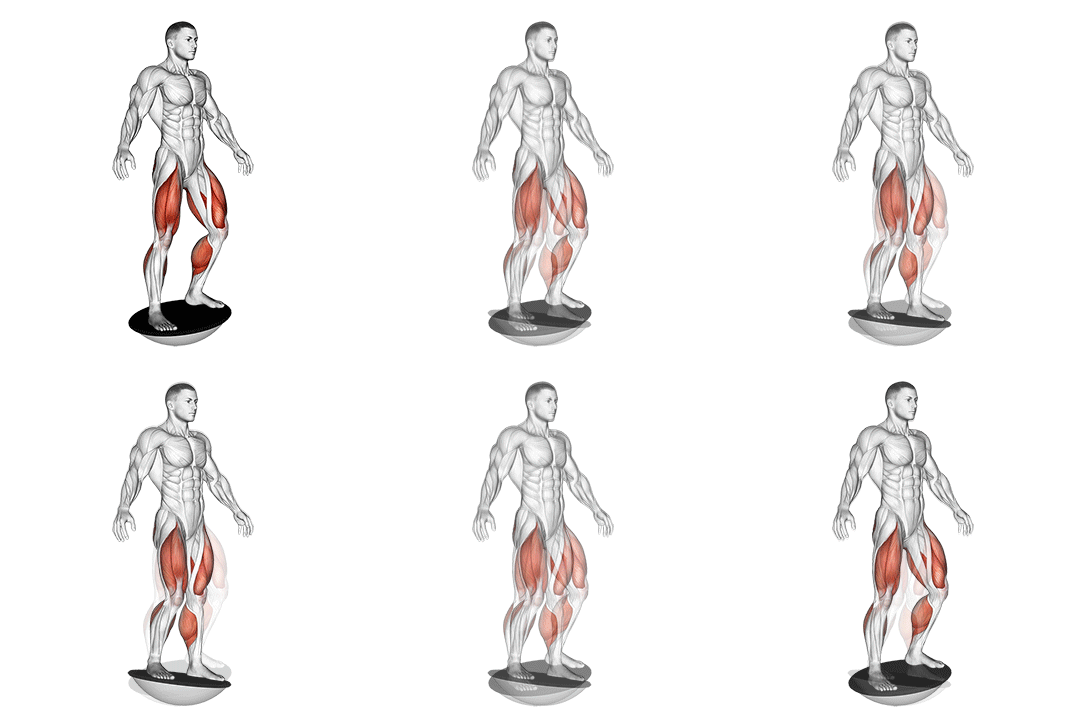
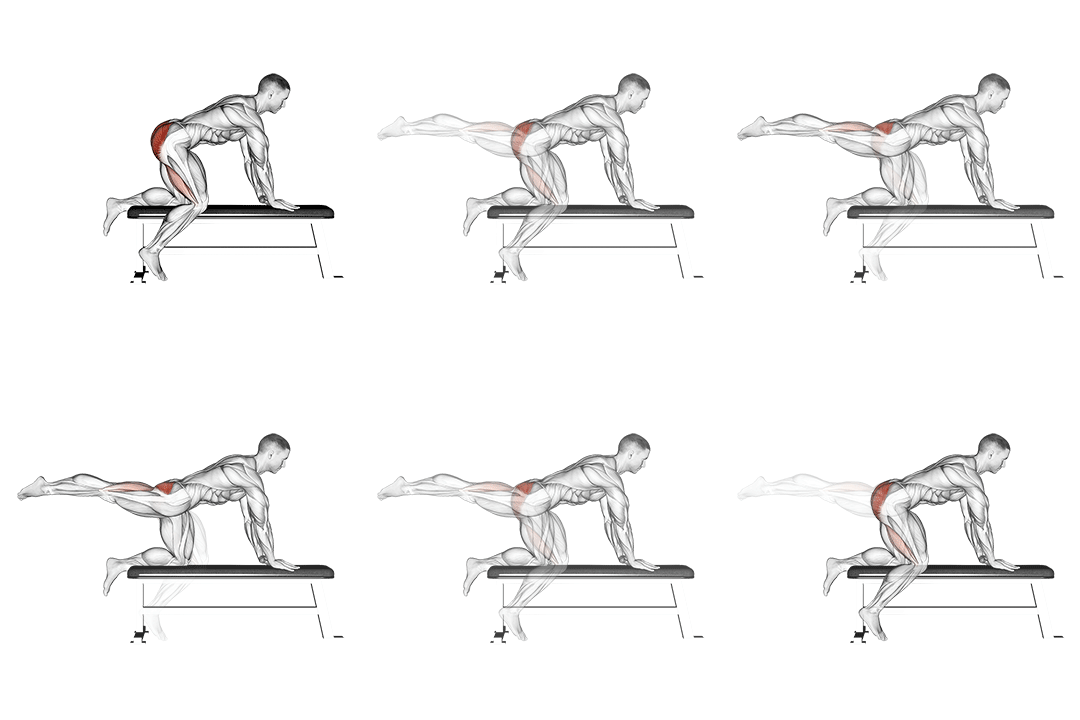
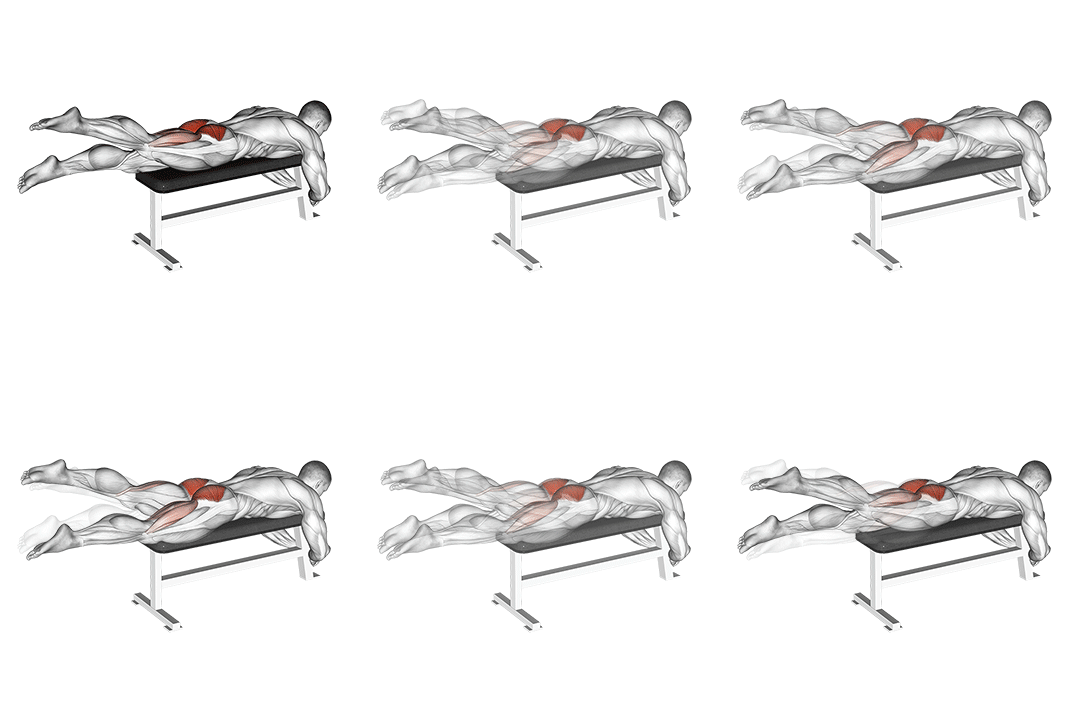
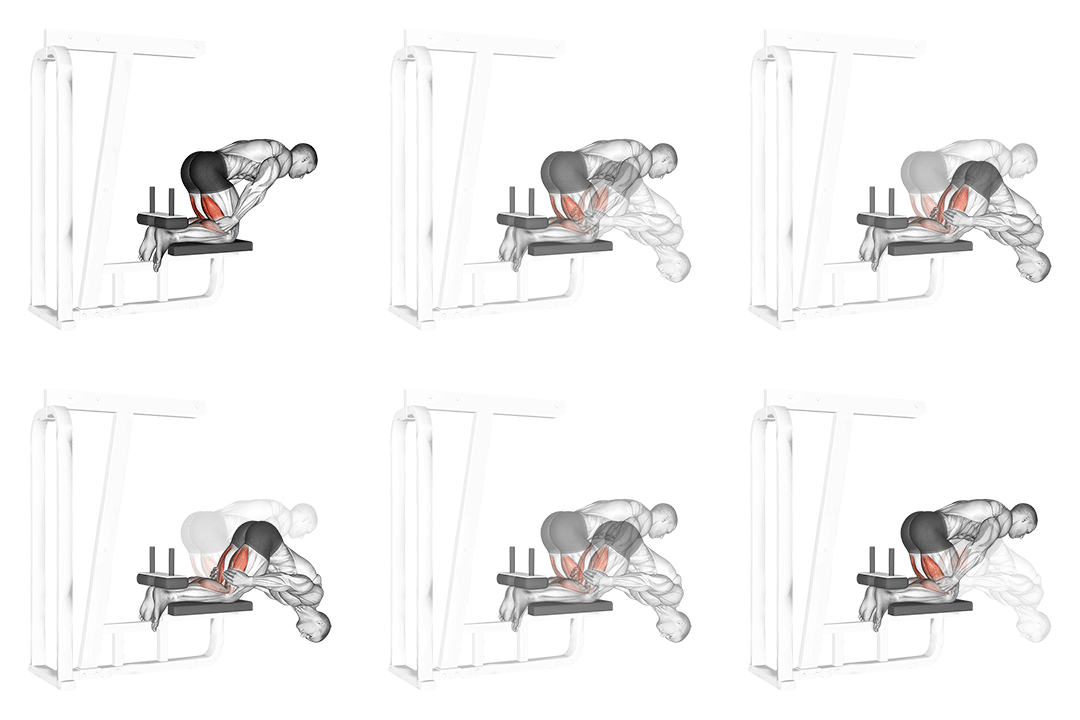
Single Leg Squat (pistol) Male
advanced strength exercise · body weight · targets glutes
- Body part
- upper legs
- Primary target
- glutes
- Equipment
- body weight
- Difficulty
- advanced
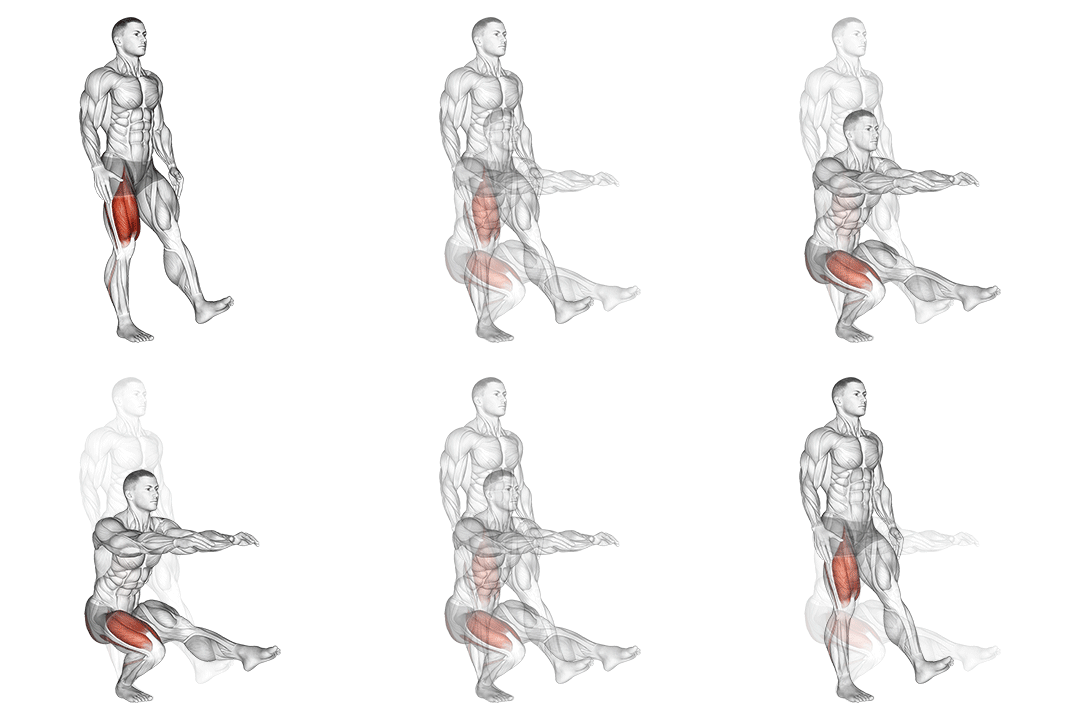
The pistol squat — also called the single leg squat — is the apex of bodyweight lower-body movements. From a standing position, you extend one leg straight in front of you and squat all the way down on the other leg until the back of the thigh touches the calf, then drive back up to standing without using the other leg or any support. The result is a full body-weight squat performed on a single leg through complete range of motion. Reaching a clean pistol squat takes most adults 6-18 months of dedicated training, depending on starting strength, mobility, and body weight. The exercise demands not just leg strength but also extreme ankle dorsiflexion (to keep the heel down at the bottom), hip mobility (to maintain depth without compromising the spine), and balance under load. Skip any of those qualities and the pistol either fails or becomes a partial movement. What makes the pistol worth the work is what it builds: genuine single-leg strength, hip and ankle mobility through full range, and balance that no bilateral exercise trains. For athletes, the carryover is significant — most sport movements happen on one leg, and the pistol squat develops the unilateral strength and control that supports them. For anyone, the pistol is one of the few bodyweight exercises that lets you keep adding strength challenge without ever touching a weight.
Why train the Single Leg Squat (pistol) Male?
- Builds maximum bodyweight unilateral leg strength achievable without equipment.
- Develops extreme ankle dorsiflexion and hip mobility through full range of motion.
- Reveals and corrects single-leg strength asymmetries that bilateral exercises hide.
- Trains balance and proprioception under heavy load — qualities that transfer to almost every sport.
- Provides clear progression milestones (assisted, partial, full) that drive long-term motivation.
- Once mastered, the pistol scales infinitely with weight (vest, dumbbells), tempo work, or pause variations.
How to do the Single Leg Squat (pistol) Male: step by step
- 1Stand with your feet shoulder-width apart and arms extended in front of you.
- 2Lift your right foot off the ground and extend it forward.
- 3Slowly lower your body down by bending your left knee and pushing your hips back.
- 4Keep your chest up and your back straight as you lower yourself down.
- 5Lower until your left thigh is parallel to the ground, or as low as you can comfortably go.
- 6Pause for a moment at the bottom, then push through your left heel to return to the starting position.
- 7Repeat for the desired number of repetitions, then switch legs.
Muscles worked
Primary
glutes
Secondary
quadriceps, hamstrings, calves
Common mistakes to avoid
Letting the heel lift off the floor at the bottom
If your heel rises during the descent, ankle mobility is the limiting factor. Use a 1/2-inch heel wedge while you build dorsiflexion through wall ankle rocks. Going up on the toes shifts load forward and stresses the knee.
Letting the knee track inward
Knee valgus (collapsing inward) is dangerous on a single leg under full body weight. Drive the knee out in line with the toes throughout the entire descent and ascent — even when fatigued.
Rounding the lower back to reach depth
If the lower back rounds at the bottom, hip mobility hasn't caught up to the depth you're attempting. Don't go all the way down — work the depth you can hold with neutral spine. Build the range over months.
Skipping the prerequisite work
Most failed pistol attempts come from people who couldn't yet do clean Bulgarian split squats or assisted pistols. Don't try the full movement until you have those prerequisites locked in. Rushing the progression usually leads to knee injury.
Using the floating leg for momentum
Some people swing the extended leg downward to lever the body up, which is cheating. The floating leg should stay relaxed and roughly horizontal throughout the rep — all the work comes from the standing leg.
Easier and harder variations
Easier
Assisted pistol squats (holding a TRX strap, pole, or doorframe with one hand for balance and partial unloading) are the standard progression. Box pistol squats (squatting down to a low bench so you can sit briefly) reduce the depth and balance demand. Negative pistols (slow descent only, then return to standing using both legs) build strength faster than partial reps.
Harder
Add weight (a dumbbell or kettlebell held at the chest, or a weighted vest). Slow the tempo (5 seconds down, 1-second pause, 1 second up). Or progress to deficit pistols — standing on a step so the back leg can hang lower at the bottom for added range.
Alternative exercises
Bulgarian split squat
Back foot elevated on a bench, front leg doing most of the work. Easier than a pistol but builds the same single-leg strength foundation.
Box pistol squat
Pistol down to a low box, briefly sit, stand back up. Bridges the gap between assisted and full pistols by removing the deepest portion of the range.
Cossack squat
Side-to-side wide squat that loads each leg unilaterally with less depth and balance demand. Useful complement for hip and ankle mobility.
How to program the Single Leg Squat (pistol) Male into your training
Pistol squat training is low-rep, high-effort, and demands long recovery. Once you've achieved your first rep, programming should respect that. Early phase (first 1-3 reps possible): 4-5 sets of 1-2 reps per leg, twice per week, with 2-3 minutes rest between sets. Pair with assisted pistols or Bulgarian split squats for volume work in the same session. Building phase (3-6 reps possible): 4-5 sets of 2-4 reps per leg, twice per week. Once you hit 3 sets of 5 strict reps per leg, start adding weight (a light dumbbell at the chest) instead of more reps. Maintenance phase (6+ clean reps): Reduce to once per week as a focused session, with Bulgarian split squats as the secondary work. For the progression toward your first rep, run cycles of 6-10 weeks alternating between strength-focused work (heavy Bulgarian split squats, 4 sets of 6 per leg) and skill-focused work (negative pistols, low reps, focus on form and balance). Total weekly leg volume should include both pistol work and bilateral squats. Pistols alone don't build maximum strength as efficiently as loaded bilateral squats — use the pistol as a movement skill and unilateral strength tool, not as your only leg exercise. Always pair pistol training with hip mobility work (deep squat hold, couch stretch, pigeon pose) — the demands on the hip joint are extreme and recover faster with consistent mobility maintenance.
Recovery and frequency
Pistol squats are demanding on the standing-leg knee, hip, and the small stabilizing muscles around the ankle. 72 hours between dedicated sessions is the right cadence for most people during the building phase. Patellar tendinopathy is the main injury risk — the front of the knee takes significant load through full range. If the knee starts feeling sore between sessions, reduce frequency and add knee-specific mobility work. Foam roll the quads, IT band, and glutes weekly to maintain the soft tissue mobility this exercise demands. Sleep is the biggest recovery lever; 8+ hours during heavy pistol training phases is non-negotiable.
Frequently asked questions
How many sets and reps of pistol squats should I do?
When you first achieve the movement, expect 4-5 sets of 1-2 reps per leg. Build to 5-6 reps per leg over 6-12 months before adding weight or progressing to harder variations.
How often should I train the pistol squat?
1-2 times per week with 72 hours between sessions. The standing-leg knee and hip take significant load that requires recovery.
How long does it take to learn a pistol squat?
Most adults reach a clean pistol in 6-18 months of consistent training, depending on starting strength, body weight, and mobility. Faster if you have strength training experience and good ankle/hip mobility; slower if starting from a deconditioned baseline.
Should I learn the Bulgarian split squat first?
Yes — Bulgarian split squats are the essential prerequisite. Build to 3 sets of 8-10 strict Bulgarian split squats per leg before serious pistol training. Skipping this step is the most common reason pistol progressions stall.
Are pistol squats bad for the knees?
Done with proper progression and adequate recovery, no — they build knee strength and ankle/hip mobility. Done by attempting the full movement before prerequisites are in place, yes — patellar tendinopathy and IT band issues are common in rushed trainees.
Will body weight affect my ability to do pistol squats?
Significantly. The exercise is body-weight-relative, so a 200-lb trainee has to control 200 lb on a single leg vs. a 150-lb trainee controlling 150 lb. Lighter, leaner trainees usually achieve their first pistol faster, all else equal.
Useful tools for this exercise
Build a workout with the Single Leg Squat (pistol) Male
Puna gives you guided bodyweight workouts you can do anywhere — no equipment, no gym, just structured progressions that build real strength.