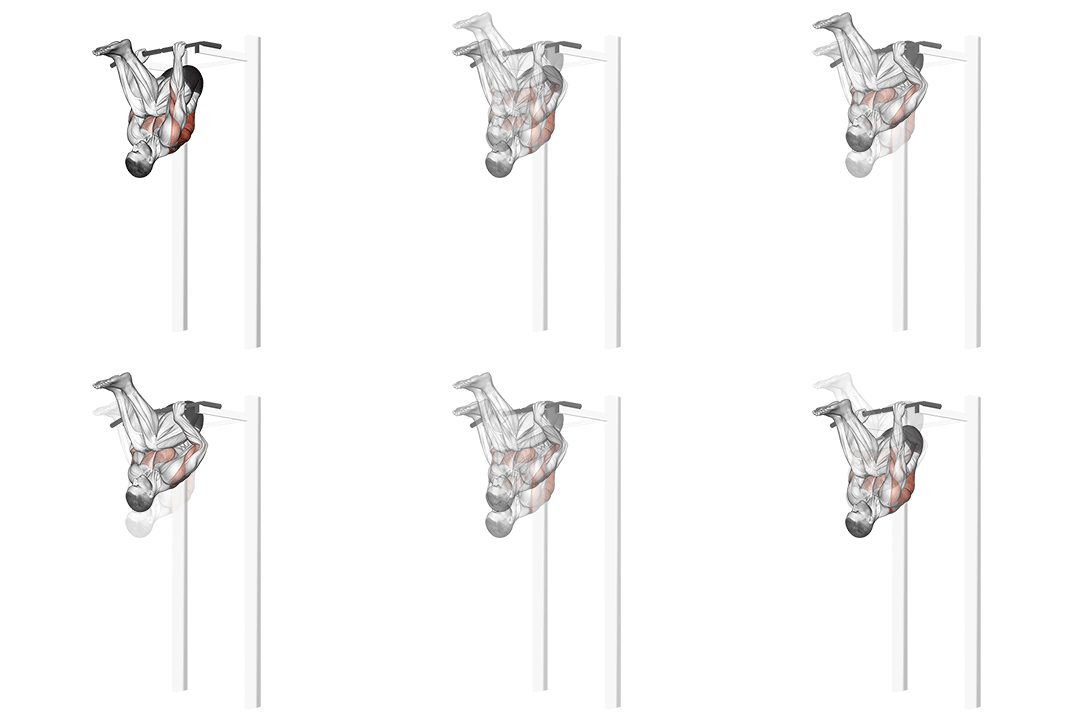
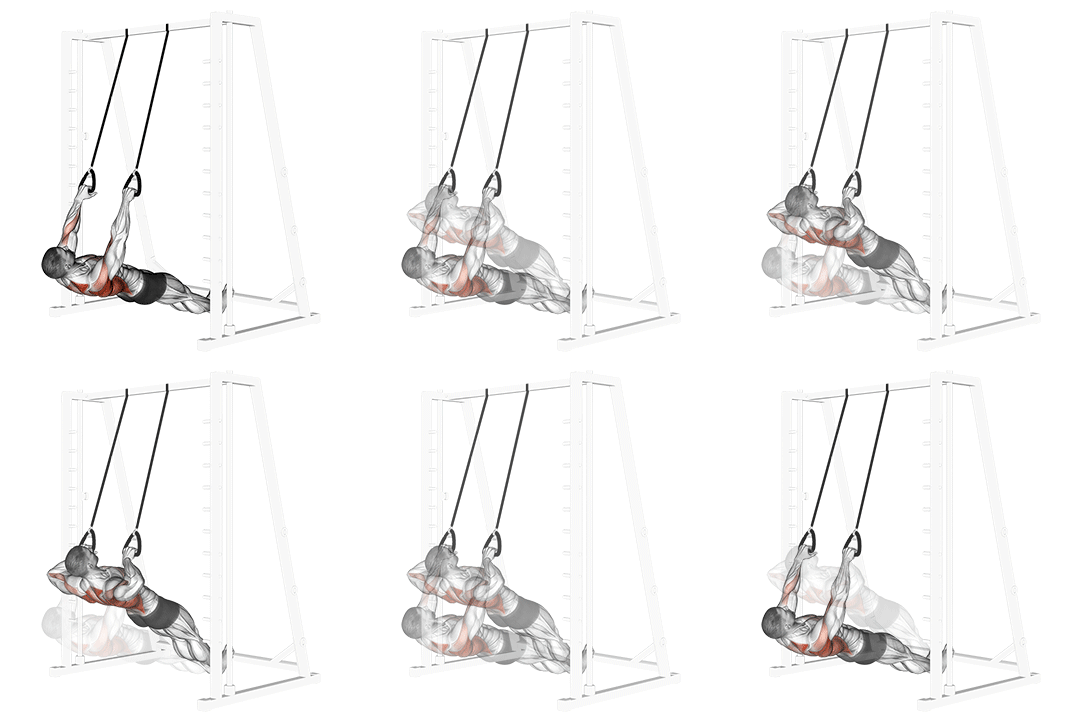
Side-to-side Chin
advanced strength exercise · body weight · targets lats
- Body part
- back
- Primary target
- lats
- Equipment
- body weight
- Difficulty
- advanced
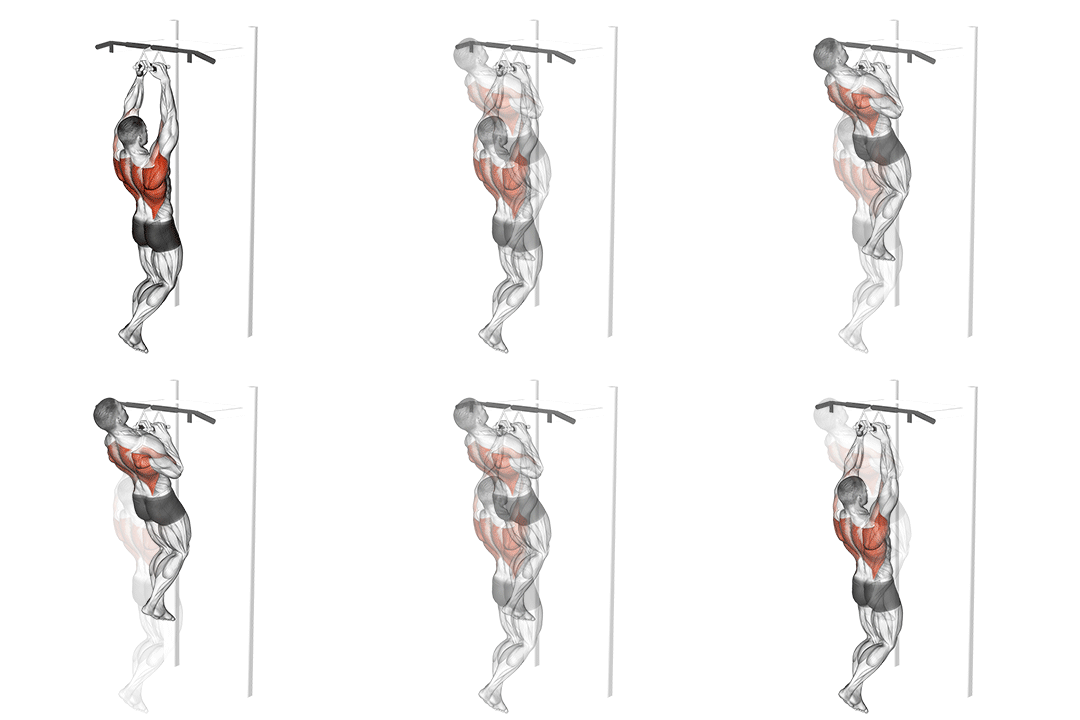
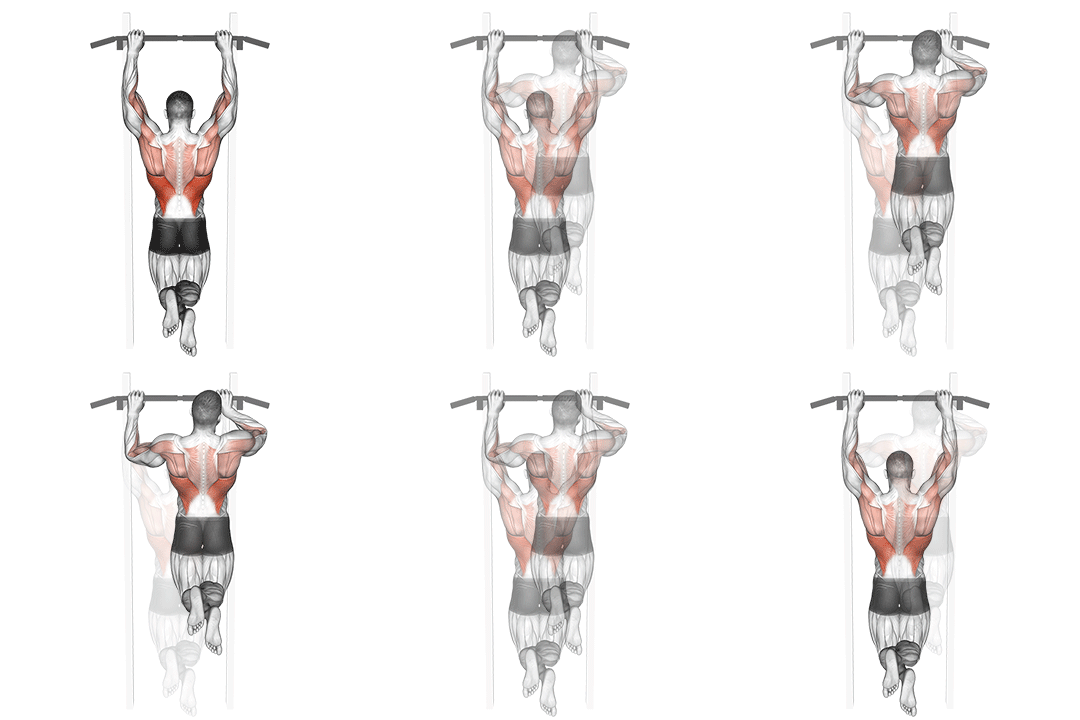
The side-to-side chin-up is an advanced pull-up variation where you alternate which side bears more of the load each rep — pulling so the chin clears the bar with the body shifted slightly to one side, then alternating to the other. The asymmetric pulling pattern bridges the gap between strict bilateral pull-ups and the holy grail of bodyweight pulling: the one-arm chin-up. Each rep concentrates more load on one arm, which builds the unilateral pulling strength that bilateral training can't develop. This variation is one of the most underrated tools in advanced bodyweight progression. Trainees building toward one-arm pull-ups need a way to expose the working arm to greater-than-bodyweight loads. Side-to-side chin-ups accomplish this without weight: by shifting body position, one arm becomes the primary mover while the other provides reduced assistance. The progressive shift over training cycles — gradually placing more body weight on one side — eventually leads to single-arm capability. The trade-off is the technique demand and shoulder loading pattern. Side-to-side movement during the pull stresses the shoulders asymmetrically, which can produce issues for trainees without solid shoulder stability. Prerequisites matter: 12+ strict pull-ups before introducing side-to-side variations, healthy shoulders, and 12+ months of consistent pull-up training. Without that foundation, the asymmetric loading produces injury rather than progress. With prerequisites met, programmed at 1-2 sessions per week with conservative volume, side-to-side chin-ups develop the unilateral pulling strength that opens up the next stages of bodyweight progression.
Why train the Side-to-side Chin?
- Builds unilateral pulling strength that bilateral training can't develop.
- Provides progression toward one-arm pull-ups for advanced bodyweight trainees.
- Exposes left-right pulling strength imbalances that bilateral pull-ups mask.
- Develops shoulder stability under asymmetric load, useful for athletic carryover.
- Provides clear progression milestone beyond standard pull-ups.
- Trains the core control needed to maintain alignment under unilateral loading.
How to do the Side-to-side Chin: step by step
- 1Stand with your feet shoulder-width apart and your knees slightly bent.
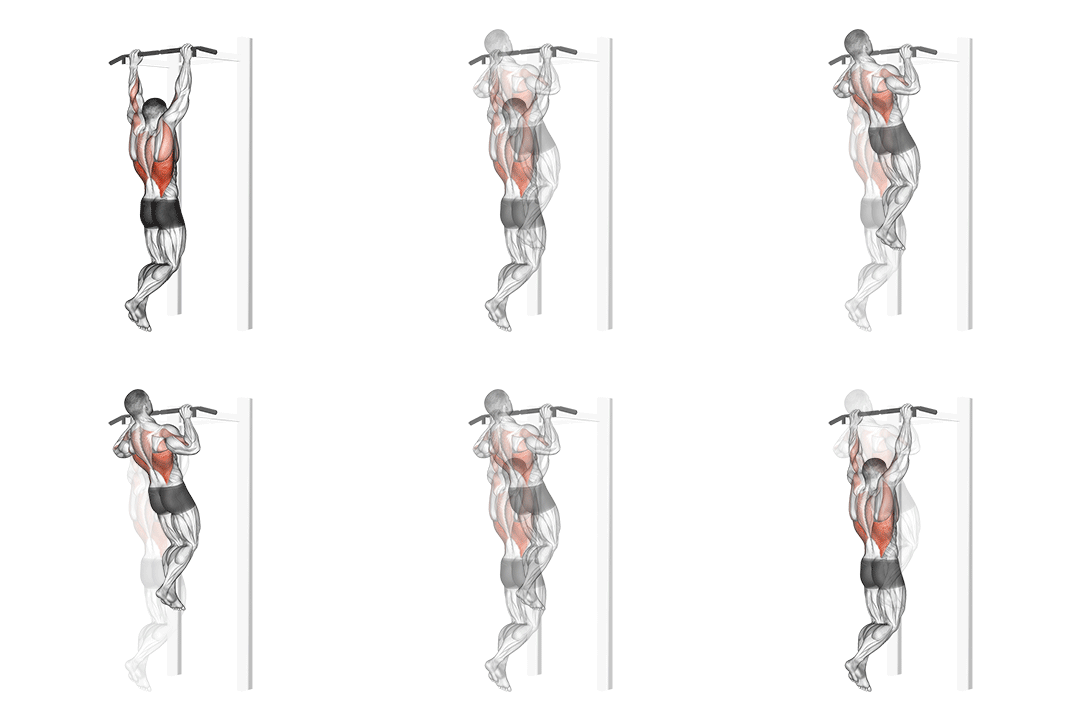
- 2Grasp a pull-up bar with an overhand grip, hands slightly wider than shoulder-width apart.
- 3Hang from the bar with your arms fully extended and your body relaxed.
- 4Pull yourself up by bending your elbows and bringing your chin towards the bar, while keeping your body straight.
- 5Once your chin is above the bar, lower yourself back down to the starting position.
- 6Repeat for the desired number of repetitions.
Muscles worked
Primary
lats
Secondary
biceps, forearms
Common mistakes to avoid
Insufficient prerequisites
Most failed side-to-side chin-up attempts come from trainees without solid base strength. Build to 12+ strict pull-ups before introducing this variation. Without that foundation, the asymmetric loading produces injury.
Letting the body twist excessively
While some side-to-side shift is the point, excessive twisting stresses the shoulders. Move the body laterally, not rotationally. Visualize sliding side to side, not turning.
Cutting depth
Full range matters even with the side shift: arms fully extended at the bottom, chin clearing the bar at the top. Partial range trains a partial pattern.
Always favoring the same side
Asymmetric strength compounds if you always start with the same side. Alternate which side leads each set or session to balance the loading and address imbalances.
Programming too frequently
The asymmetric shoulder loading benefits from longer recovery than standard pull-ups. 1-2 times per week is the cap; more produces accumulating shoulder stress.
Easier and harder variations
Easier
Reduce the lateral shift — start with subtle side-to-side movement and build distance over weeks. Or perform standard pull-ups for several months to build base strength before introducing the asymmetric pattern.
Harder
Increase the lateral shift until one arm is doing most of the work. Or progress to archer pull-ups (one arm fully extended, the other doing the pull) and then to assisted one-arm pull-ups. Eventually, one-arm pull-ups become the destination.
Alternative exercises
Archer pull-up
Similar asymmetric loading with the extended arm fully out to the side. The natural progression after side-to-side chin-ups.
One-arm pull-up
The ultimate progression. Requires exceptional strength but represents the pinnacle of bodyweight pulling.
Standard pull-up
The foundation that side-to-side variations build on. Maintain bilateral strength alongside unilateral progression.
How to program the Side-to-side Chin into your training
Side-to-side chin-ups belong in advanced bodyweight progressions toward one-arm work. Prerequisites: 12+ strict pull-ups, healthy shoulders, 12+ months of consistent pull-up training. Without these, the exercise produces injury rather than progress. Sets and reps: 3-4 sets of 4-8 reps per side with 90-120 seconds rest. Total weekly volume of 30-60 reps per side is appropriate. Frequency: 1-2 times per week. The asymmetric loading benefits from 72+ hours recovery between sessions. In an advanced upper-body session: place side-to-side chin-ups early when freshness matters. Sample order: 4 sets of 4 side-to-side chin-ups per side, 4 sets of 6 strict pull-ups, 4 sets of 8 push-ups, 3 sets of 30-second hollow holds. For trainees building toward one-arm pull-ups: progress through side-to-side chin-ups (4-6 weeks), archer pull-ups (8-12 weeks), assisted one-arm pull-ups (12+ weeks), full one-arm pull-ups (12+ months total). For general fitness: this exercise is largely optional. Standard pull-ups cover most needs without the unusual loading pattern. Don't program side-to-side chin-ups daily — the asymmetric load accumulates faster than expected.
Recovery and frequency
Side-to-side chin-ups have higher recovery cost than bilateral pull-ups due to the asymmetric loading. 72-96 hours between sessions is typical. The main warning signs are anterior shoulder pain, asymmetric soreness (one side significantly more sore than the other), and elbow tendinopathy. Anterior shoulder issues warrant reducing volume and adding rotator cuff prehab. Asymmetric soreness often indicates strength imbalance — increase volume on the weaker side. Long-term, regular training pairs with daily shoulder mobility work. Sleep, hydration, and protein intake support the recovery demand.
Frequently asked questions
How many sets and reps should I do?
3-4 sets of 4-8 reps per side with 90-120 seconds rest. Total weekly volume of 30-60 reps per side.
How often should I train side-to-side chin-ups?
1-2 times per week. The asymmetric loading benefits from 72+ hours recovery between sessions.
Is this a good progression toward one-arm pull-ups?
Yes, as part of a longer progression. Side-to-side chin-ups → archer pull-ups → assisted one-arm pull-ups → one-arm pull-ups. The full progression typically takes 12+ months.
Are these safe for beginners?
No — beginners should master 12+ strict pull-ups before introducing side-to-side variations. Without that foundation, the asymmetric loading produces injury.
Why do this instead of just more pull-ups?
Side-to-side chin-ups concentrate load on one arm at a time, building unilateral strength that bilateral pull-ups can't develop. Necessary for trainees pursuing one-arm pull-up progressions.
Should I worry if one side is weaker?
Common, especially in early training. Address by training the weaker side with slightly more volume. Most asymmetries close within 8-12 weeks of dedicated unilateral work.
Useful tools for this exercise
Build a workout with the Side-to-side Chin
Puna gives you guided bodyweight workouts you can do anywhere — no equipment, no gym, just structured progressions that build real strength.