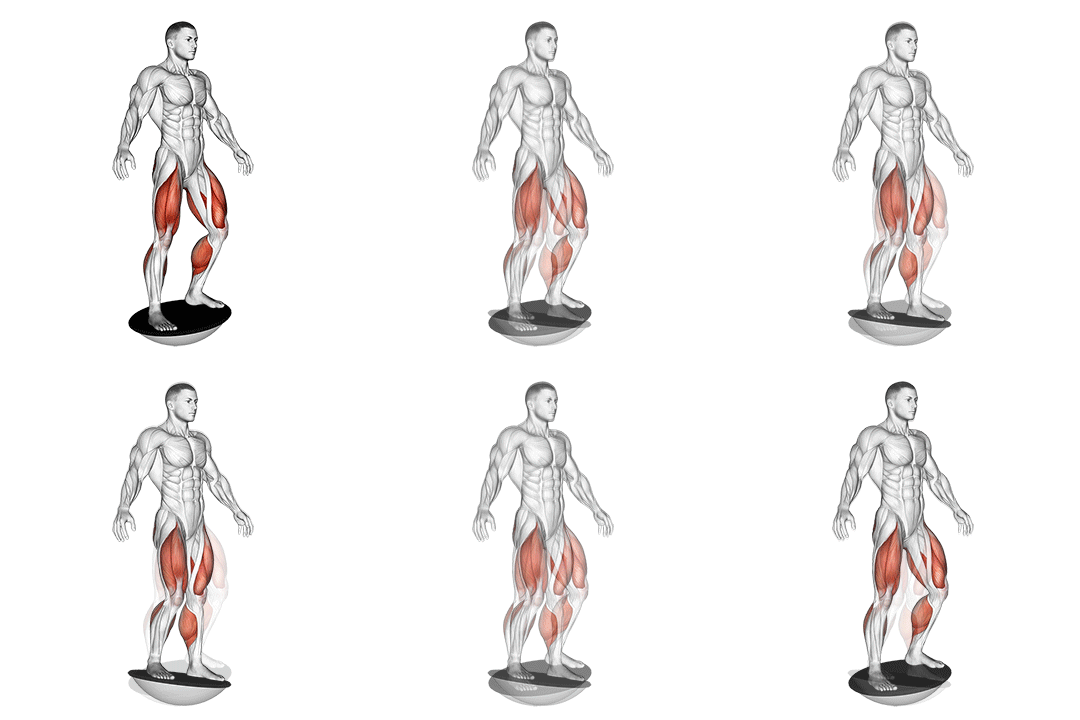
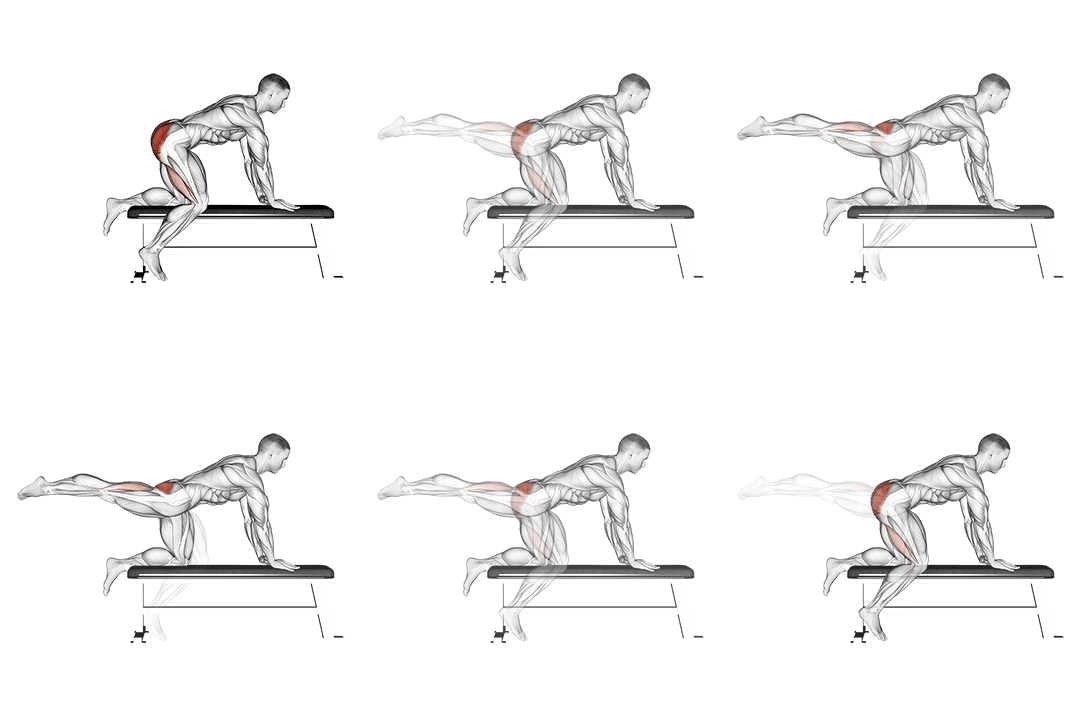
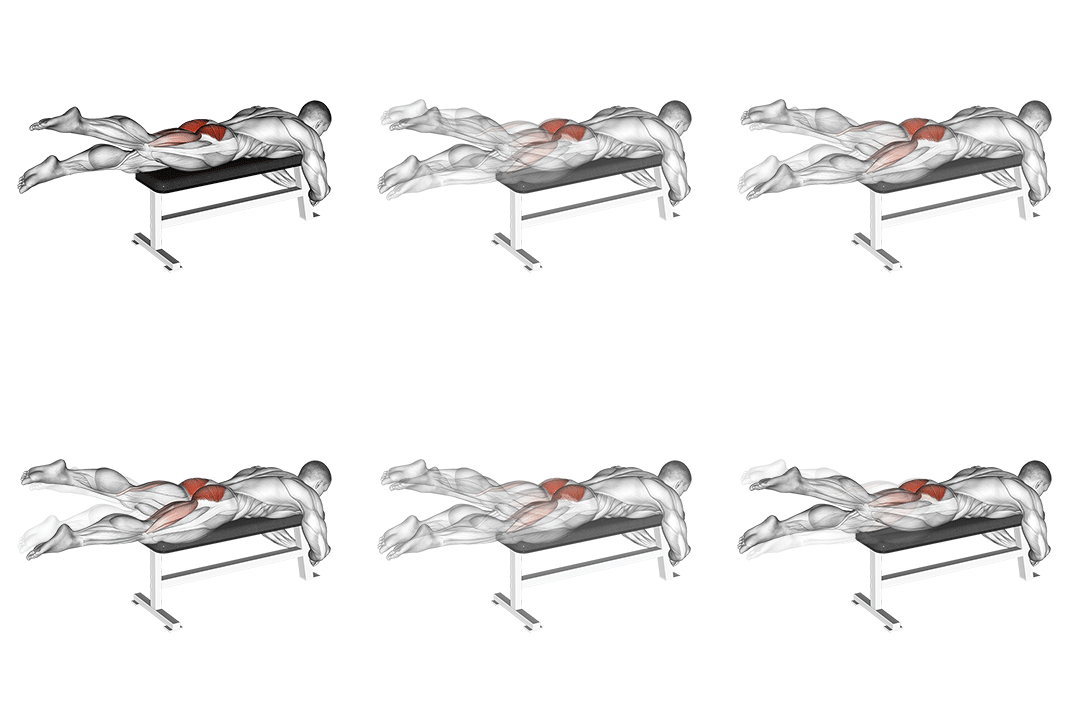
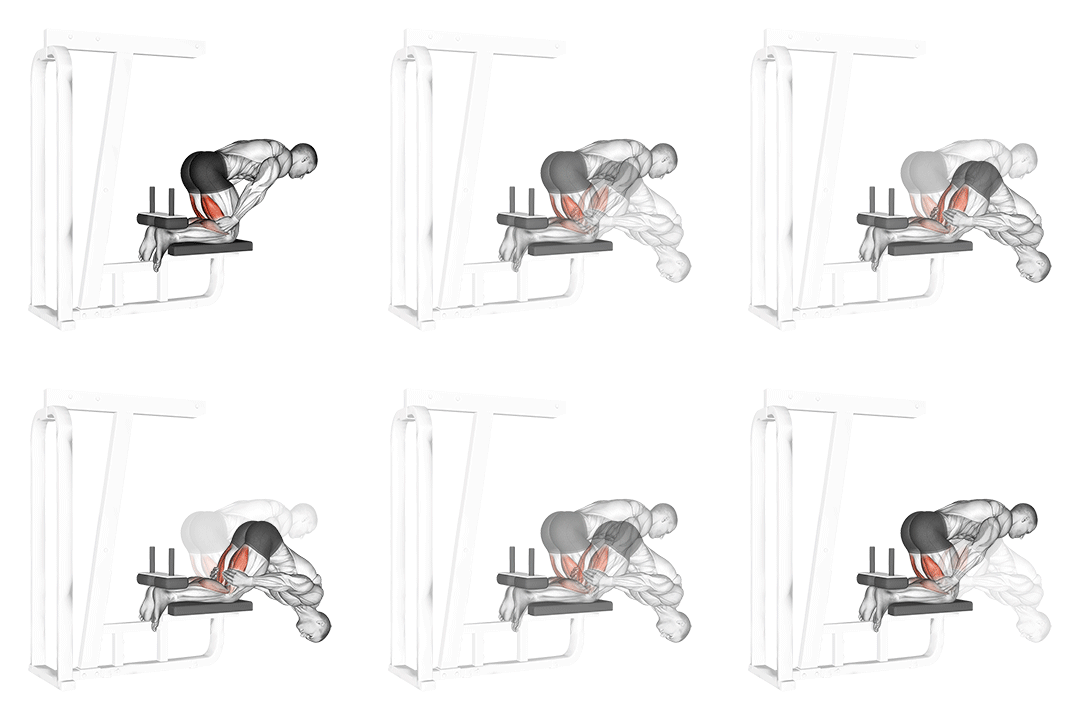
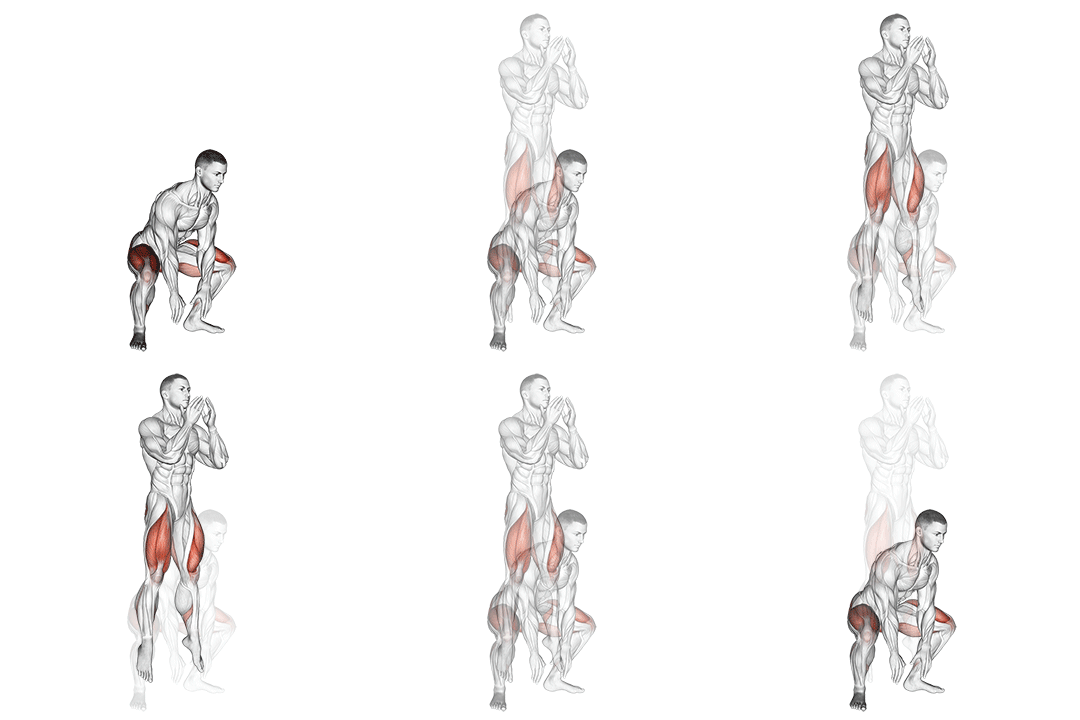
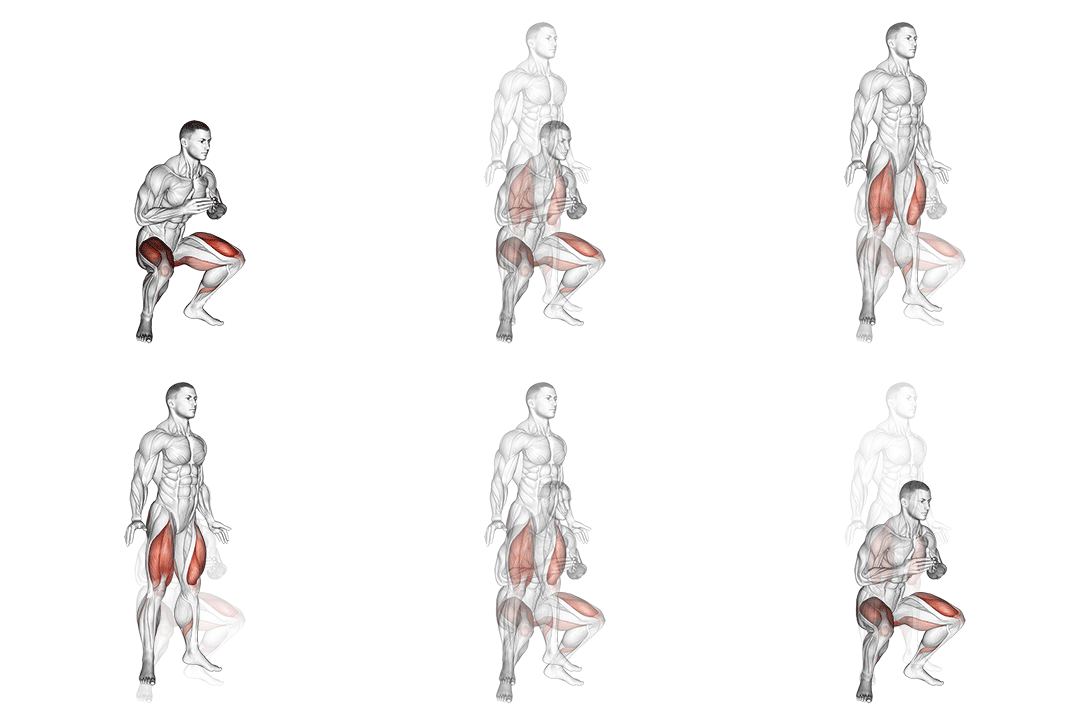
Side Plank Hip Adduction
advanced strength exercise · body weight · targets adductors
- Body part
- upper legs
- Primary target
- adductors
- Equipment
- body weight
- Difficulty
- advanced
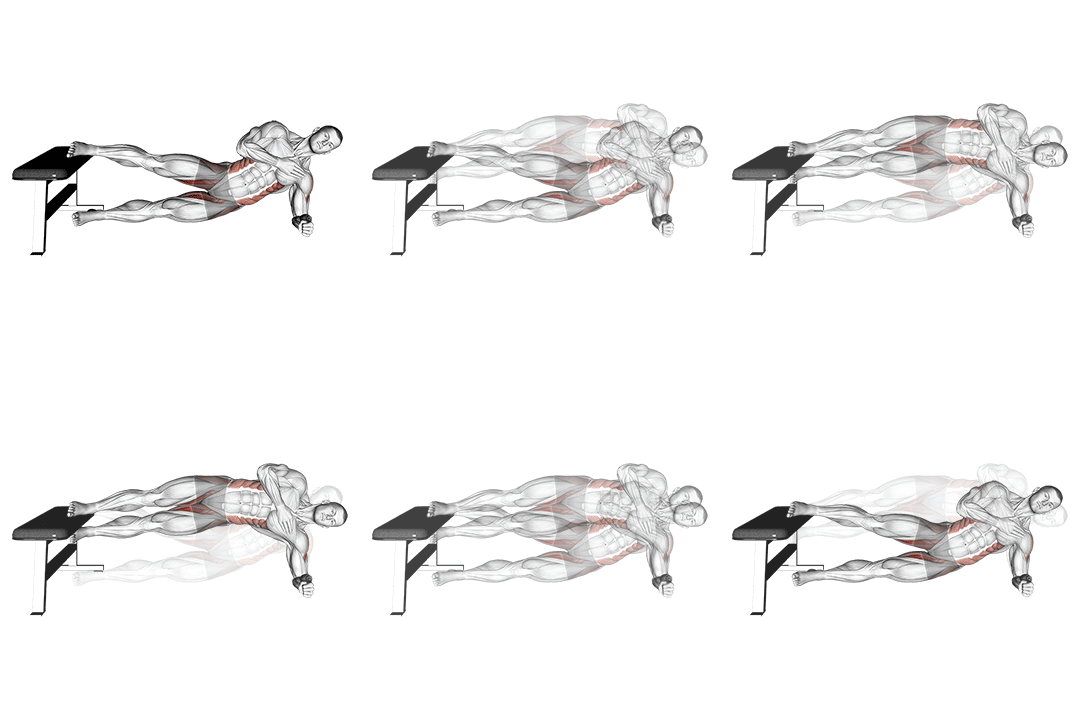
The side plank with hip adduction is an advanced unilateral hip and core exercise that combines a side plank with a leg lift focused on the inner thigh (adductor) muscles. From a side plank position with the bottom forearm on the floor and the body in a straight line, you lift the bottom leg (the one closest to the floor) toward the ceiling, contracting the inner thigh of that leg. This is one of the few bodyweight exercises that loads the adductors directly. Most lower-body exercises train the abductors (outer hip) or the legs as a whole; the adductors (inner thighs) are typically only trained with specialized machines or specific cable work. The side plank with hip adduction provides this work using only body weight, in a position that simultaneously trains the obliques and shoulder stabilizers. It's classified as advanced because the combined demand is significant: holding a side plank while lifting the bottom leg requires strong obliques, hip stability, and adductor strength all working together. Most beginners who can hold a 60-second side plank can manage only 5-8 hip adduction lifts per side in their first attempts. The exercise rewards patience — programmed twice per week, the strength builds quickly over 4-8 weeks.
Why train the Side Plank Hip Adduction?
- Trains the adductors (inner thighs) directly with bodyweight loading.
- Combines hip stability and core work in one efficient exercise.
- Reveals strength asymmetries between sides.
- Carries over to athletic movements requiring inner thigh and core stability.
- Useful for trainees with adductor weakness or hip stability issues.
- Requires no equipment.
How to do the Side Plank Hip Adduction: step by step
- 1Start by lying on your side with your legs extended and stacked on top of each other.
- 2Prop yourself up on your forearm, keeping your elbow directly below your shoulder.
- 3Engage your core and lift your hips off the ground, creating a straight line from your head to your feet.
- 4While maintaining the side plank position, lift your top leg towards the ceiling, keeping it straight.
- 5Slowly lower your leg back down to the starting position.
- 6Repeat for the desired number of repetitions, then switch sides.
Muscles worked
Primary
adductors
Secondary
obliques, glutes
Common mistakes to avoid
Letting the hips drop during the leg lift
The side plank position must be maintained — hips lifted, body in a straight diagonal line. If the hips drop as the leg lifts, you've lost the side plank component and the exercise becomes much less valuable.
Lifting the leg too high
The adductor's range of motion is small. Lift only 6-12 inches off the floor — trying to lift higher uses the hip flexor instead of the adductor and reduces the inner thigh work.
Going too fast for control
Whipping the leg up uses momentum and skips the adductor work. Move slowly: 1-2 seconds up, brief pause at the top with the inner thigh squeezed, 1-2 seconds down.
Choosing this before mastering side planks
If you can't hold a 60-second strict side plank, this exercise will be too demanding. Build the side plank base first.
Forgetting to pack the supporting shoulder
The supporting arm bears significant load. Pack the shoulder down (drive it away from the ear) and maintain that position throughout the set — this protects the rotator cuff.
Easier and harder variations
Easier
Standard side plank without the hip adduction (just the static hold). Or perform from a kneeling side plank position to reduce load.
Harder
Add a brief hold at the top (3-5 seconds with maximum adductor squeeze). Add ankle weights for resistance. Or progress to copenhagen planks (the side plank with the top leg supported on a bench, putting the adductor under heavier load).
Alternative exercises
Copenhagen plank
Side plank with the top leg supported on a bench, loading the adductors heavily. The advanced progression after this exercise.
Side plank
Static side plank without the hip adduction. Useful as a regression or warm-up.
Standing adductor squeeze
Ball or pillow squeezed between the knees while standing. Different position with similar inner thigh focus.
How to program the Side Plank Hip Adduction into your training
Side plank with hip adduction works as accessory unilateral hip and core work. Pair with anti-rotation exercises (Pallof press, dead bugs) for complete core development. Sets and reps: 3 sets of 6-10 reps per side with 60-90 seconds rest. Total weekly volume of 30-60 reps per side drives most adaptations. In a complete core circuit: 3 rounds of 8 hip adduction lifts per side, 30-second front plank, 12 reverse crunches, 30-second standard side plank per side. Done 2-3 times per week. For athletes building adductor strength: alternate weeks between this exercise and Cossack squats for variety in adductor loading. Do not pair with heavy side plank work or heavy adductor exercises in the same session.
Recovery and frequency
Side plank with hip adduction loads the obliques, adductors, and supporting shoulder. 48 hours between dedicated sessions is plenty. Inner thigh soreness in the first 1-2 weeks of training is normal. Sharp shoulder pain at the supporting arm is a stop signal.
Frequently asked questions
How many sets and reps of side plank hip adduction should I do?
3 sets of 6-10 reps per side with 60-90 seconds rest.
How often should I train this exercise?
2-3 times per week as part of a structured program.
Side plank hip adduction vs Copenhagen plank: what's the difference?
Side plank hip adduction lifts the bottom leg dynamically. Copenhagen plank statically supports the top leg on a bench while the bottom leg's adductors hold the body up. Both train adductors; Copenhagen is harder.
Should I count one rep as both sides or each side separately?
Each side separately. Counting per side reveals asymmetries and gives clearer progression tracking.
Why is one side so much harder than the other?
Hip and core asymmetry — almost everyone has it. The asymmetry typically narrows within 6-12 weeks of equal-rep practice.
Are adductor exercises important?
Yes — adductor weakness contributes to groin strains, hip pain, and reduced athletic performance. Most general training programs neglect adductors entirely; adding direct adductor work prevents many common injuries.
Useful tools for this exercise
Build a workout with the Side Plank Hip Adduction
Puna gives you guided bodyweight workouts you can do anywhere — no equipment, no gym, just structured progressions that build real strength.