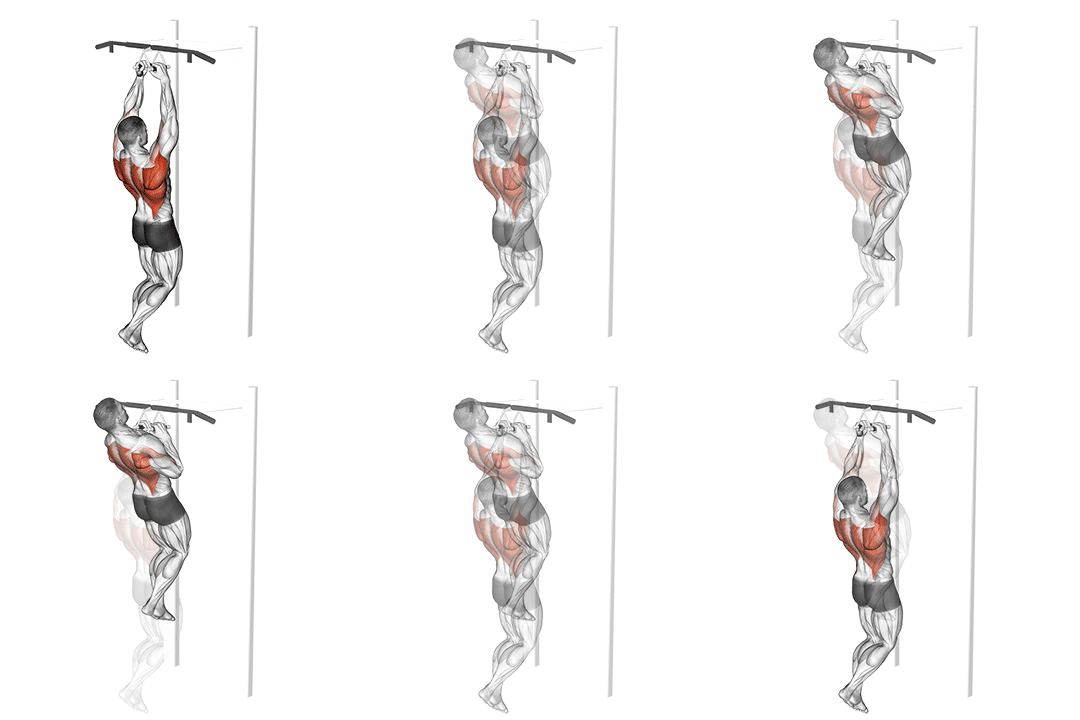
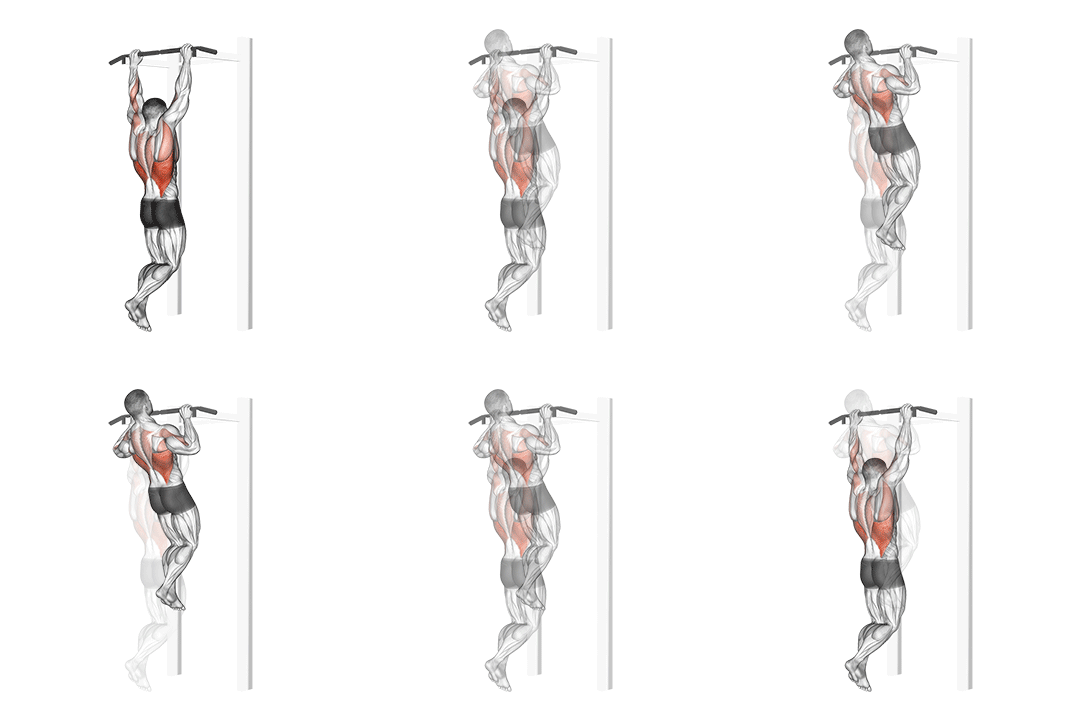
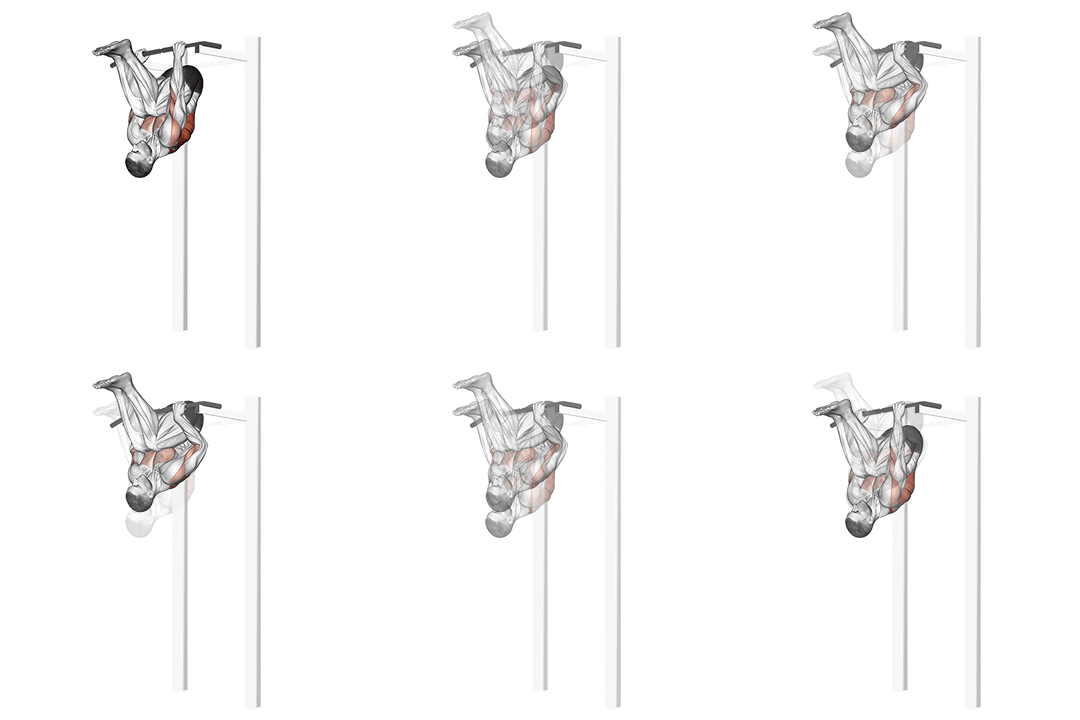
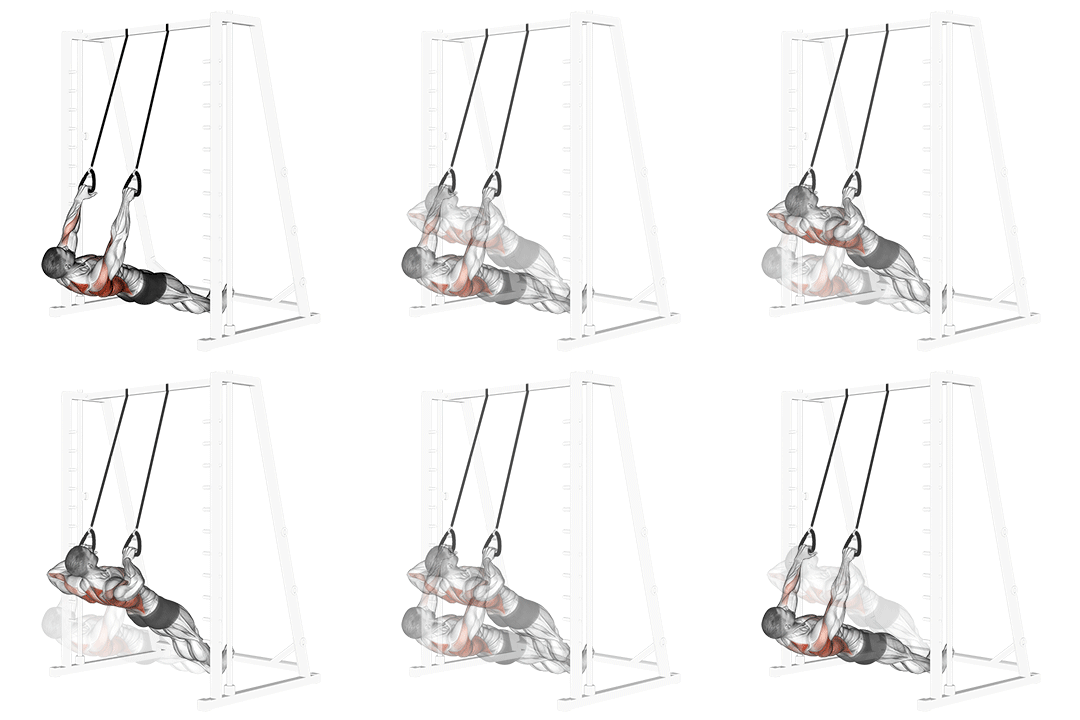
Shoulder Grip Pull-up
intermediate strength exercise · body weight · targets lats
- Body part
- back
- Primary target
- lats
- Equipment
- body weight
- Difficulty
- intermediate
The shoulder grip pull-up — sometimes called the shoulder-width pull-up — is performed with hands gripping the bar at exactly shoulder-width (palms facing away). This is essentially the standard pull-up position, with the 'shoulder grip' name emphasizing the precise hand placement at the trainee's specific shoulder width. The value of explicit shoulder-width labeling is precision. Some trainees use overly wide or overly narrow grips by default, which changes the loading pattern away from balanced lat-bicep work. The shoulder-grip variation explicitly trains the most balanced position — wide enough to engage the lats well, narrow enough to allow good bicep contribution and shoulder safety. Functionally, this is the standard pull-up that most pull-up programs prescribe. All the standard pull-up benefits apply: lat development, bicep growth, grip strength, shoulder stability. Programmed twice per week alongside other variety, the shoulder grip pull-up serves as the foundation movement of any vertical pulling program.
Why train the Shoulder Grip Pull-up?
- Most balanced pull-up grip — engages lats and biceps proportionally.
- Standard pull-up position with all the conventional benefits.
- Shoulder-friendly compared to extreme wide or narrow grips.
- Builds back width and arm strength simultaneously.
- Carries over to most pulling exercises and athletic movements.
- Requires only a pull-up bar.
How to do the Shoulder Grip Pull-up: step by step
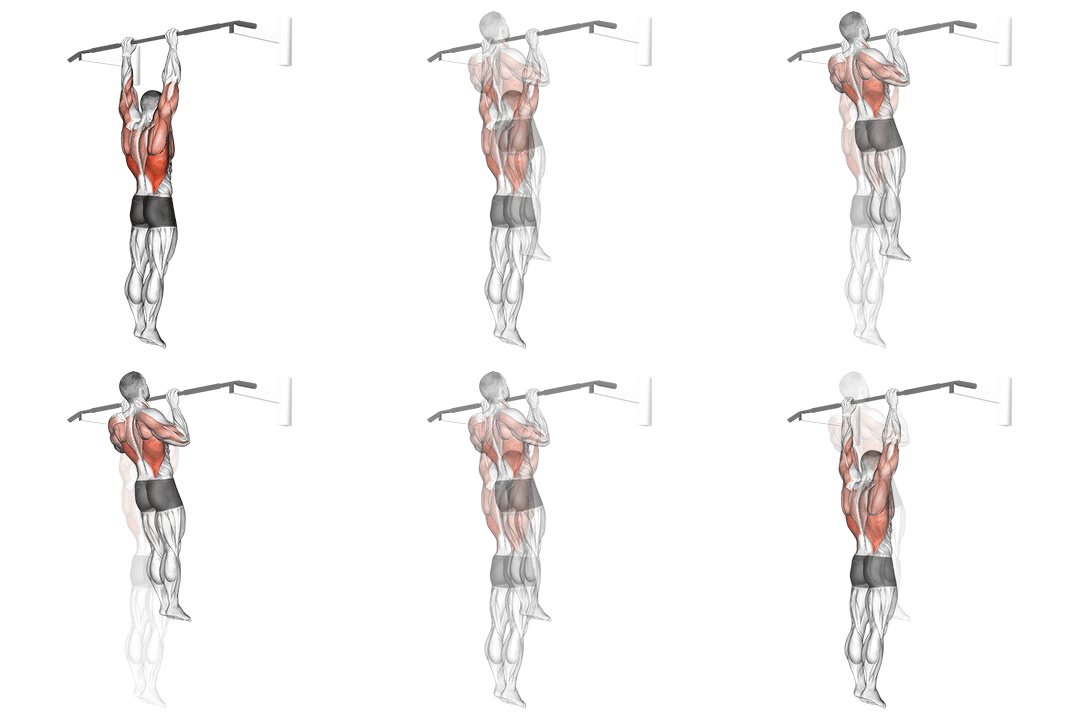
- 1Grab the pull-up bar with a shoulder-width grip, palms facing away from you.
- 2Hang freely with your arms fully extended.
- 3Engage your back muscles and pull your body up towards the bar until your chin is above the bar.
- 4Pause for a moment at the top, then slowly lower your body back down to the starting position.
- 5Repeat for the desired number of repetitions.
Muscles worked
Primary
lats
Secondary
biceps, forearms
Common mistakes to avoid
Kipping or swinging
Strict form means the body stays still — only the lats and arms move the body.
Not engaging the lats first
Before each rep, pack the shoulders down (drive them away from the ears) — this activates the lats. Without this cue, the exercise becomes more arm-focused.
Cutting depth at the bottom or top
Full range matters: arms fully extended at the bottom, chin clearing the bar at the top.
Letting the elbows flare wide
Wide elbows shift load away from the lats and biceps and into the shoulders. Keep elbows tracking close to the ribs.
Skipping prerequisite work
If you can't yet do a strict pull-up, build with negatives, dead hangs, and bench-assisted pull-ups first.
Easier and harder variations
Easier
Negative pull-ups (jump or step to top, lower slowly). Bench-assisted pull-ups. Or band-assisted pull-ups.
Harder
Add weight. Slow the tempo. Or progress to one-arm pull-up training.
Alternative exercises
Wide-grip pull-up
Hands wider than shoulders. More lat-specific but more demanding on shoulders.
Chin-up
Same shoulder-width grip with palms toward you. More bicep emphasis.
Inverted row
Horizontal pulling at lower load. Useful complement.
How to program the Shoulder Grip Pull-up into your training
Shoulder grip pull-ups work as the primary vertical pulling exercise in any back program. Sets and reps: For strength: 4 sets of 4-8 reps with 90-120 seconds rest, 2-3 times per week. For 5-15 reps: 2-3 sessions per week, 4 sets of 4-8 reps. Once you hit 3 sets of 8-10 strict pull-ups, start adding weight. A balanced upper body session: 4 sets of 5-8 pull-ups, 4 sets of 8-10 push-ups, 3 sets of 10 inverted rows, 3 sets of 30-second hollow holds. Done 2-3 times per week. Pair with horizontal pulling (rows) for balanced back development.
Recovery and frequency
Pull-ups are demanding on the lats, biceps, forearms, and grip. 48 hours between sessions is the minimum; 72 hours is safer in early weeks of dedicated training.
Frequently asked questions
How many sets and reps should I do?
For strength: 4 sets of 4-8 reps with 90-120 seconds rest, 2-3 times per week.
How often should I train shoulder grip pull-ups?
2-3 times per week with 48-72 hours between sessions.
Shoulder grip vs wide grip pull-ups: which is better?
Different tools. Shoulder grip is more balanced and shoulder-friendly. Wide grip is more lat-specific. For complete development, alternate between them.
Will shoulder grip pull-ups make my back wider?
Yes — the lats are engaged effectively at shoulder width. Visible changes typically appear within 2-4 months of consistent training.
How long until I can do my first pull-up?
Most untrained adults reach a first strict pull-up in 3-9 months of consistent training. Negatives and dead hangs are the fastest path.
Why isn't this just called a regular pull-up?
Some exercise databases distinguish between 'wide grip', 'shoulder grip', and 'narrow grip' pull-ups for precision. The shoulder grip is the conventional default — use it interchangeably with 'standard pull-up' in most contexts.
Useful tools for this exercise
Build a workout with the Shoulder Grip Pull-up
Puna gives you guided bodyweight workouts you can do anywhere — no equipment, no gym, just structured progressions that build real strength.