Short Stride Run
beginner cardio exercise · body weight · targets cardiovascular system
- Body part
- cardio
- Primary target
- cardiovascular system
- Equipment
- body weight
- Difficulty
- beginner
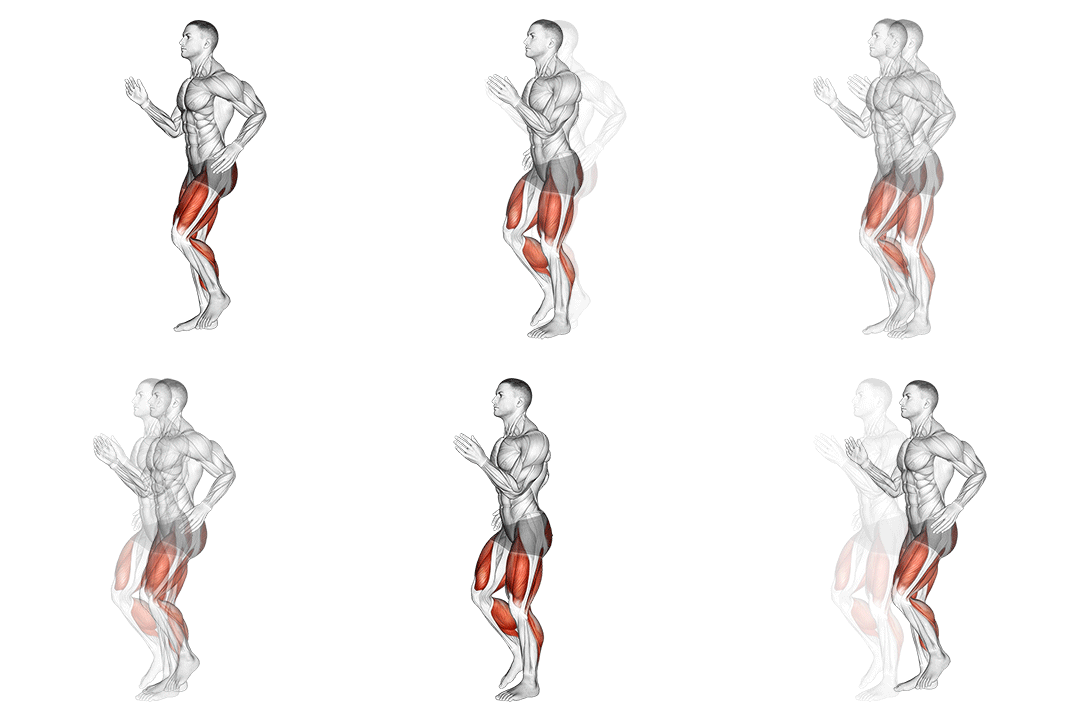
The short stride run is a running variation that emphasizes high turnover with minimal forward distance per step. Rather than running with full natural stride length, you deliberately shorten each stride to roughly half its normal length while maintaining or increasing cadence. The result is running that produces meaningful cardiovascular work with reduced impact load and stress per step. It's particularly useful for trainees building running tolerance, recovering from impact-related injuries, or focused on running form fundamentals. This approach to running has historical roots in track training, where coaches use short-stride running to teach proper form, build aerobic capacity at low impact, and develop the leg turnover speed that translates to faster racing pace. For general fitness trainees, the short stride approach offers an underrated entry point to running. Most running injuries stem from over-striding (landing with the foot ahead of the body's center of mass), which sends impact forces through the knees rather than absorbed by the muscles and tendons. Short-stride running enforces proper foot placement under the body, building good form patterns without explicit form coaching. Where short stride running earns its place is in the gap between walking and full running. New runners struggling with knee pain or shin splints often improve by switching to short-stride running for several weeks. Trainees returning from running injuries can rebuild aerobic capacity at lower impact. And for runners working on form, short-stride drills are a staple coaching tool. The trade-off is that pure short-stride running won't develop the same speed or distance-running specific adaptations as full-stride training; eventually, runners need to extend stride length to reach distance and pace goals.
Why train the Short Stride Run?
- Reduces impact load per step compared to full-stride running, useful for joint-sensitive trainees.
- Reinforces proper foot placement under the body's center of mass, addressing the most common form error.
- Builds aerobic capacity at lower joint stress than full-stride running.
- Develops leg turnover speed that translates to faster running pace at distance.
- Provides a useful entry point for new runners or those returning from injury.
- Burns substantial calories despite the reduced stride length, due to the high cadence.
How to do the Short Stride Run: step by step
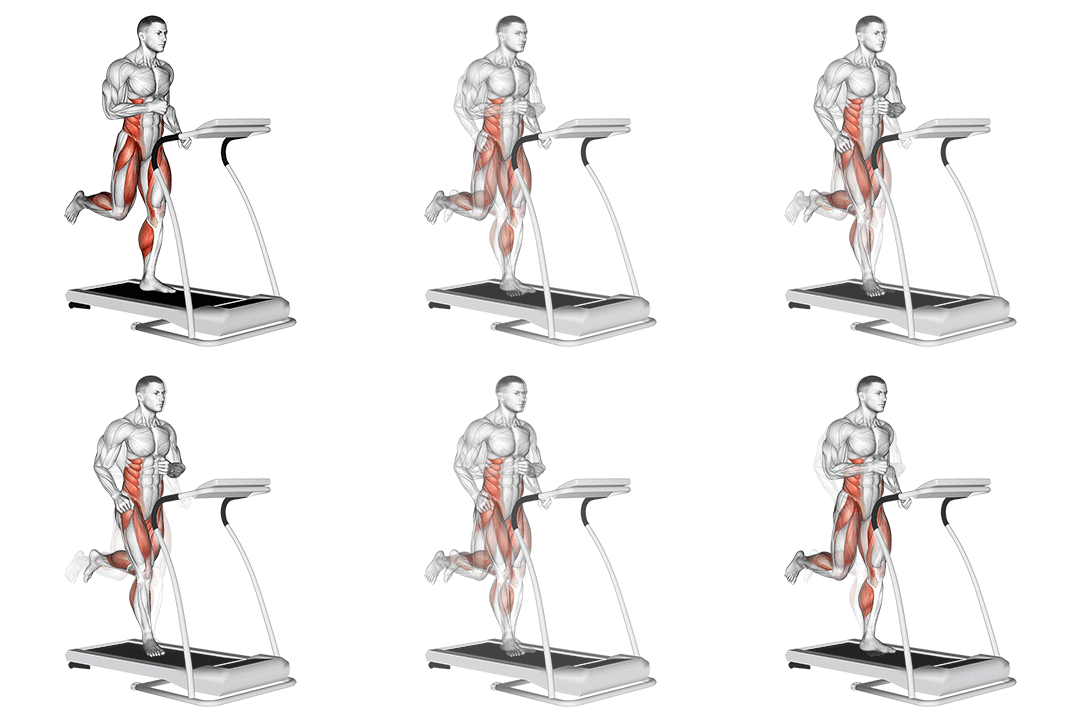
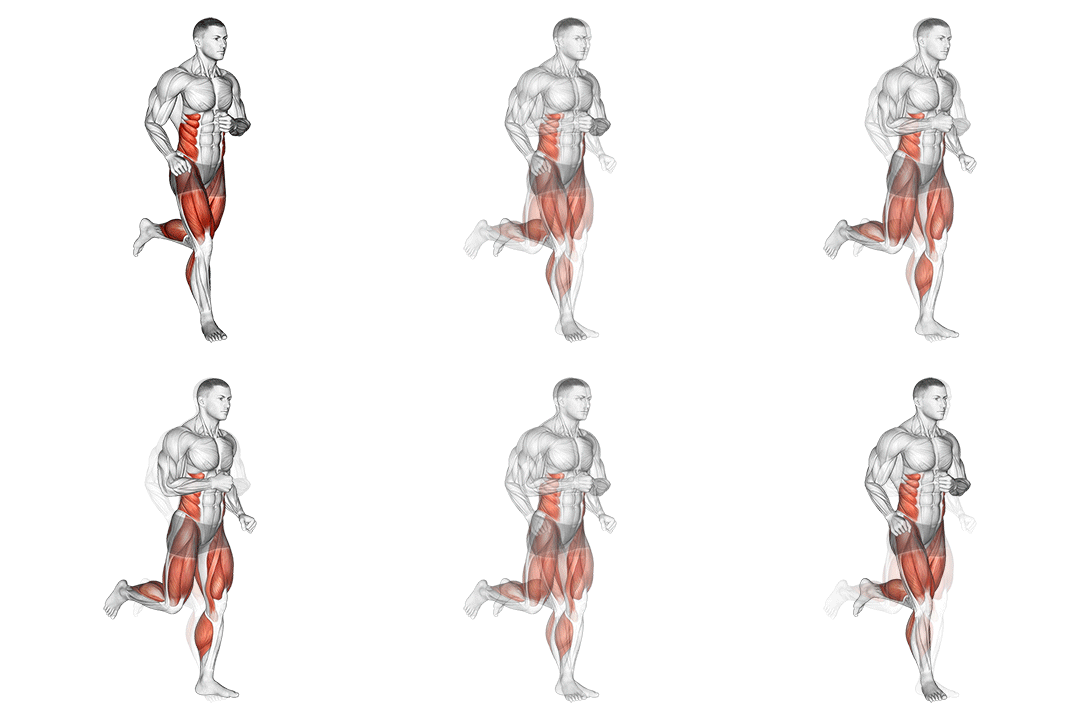
- 1Find an open space or a treadmill to perform the exercise.
- 2Stand tall with your feet hip-width apart.
- 3Start jogging in place, lifting your knees high and pumping your arms.
- 4After a few seconds, start taking short strides forward, maintaining a quick pace.
- 5Continue running with short strides for the desired duration or distance.
Muscles worked
Primary
cardiovascular system
Secondary
quadriceps, hamstrings, calves
Common mistakes to avoid
Reducing pace along with stride
Short-stride running should maintain or increase cadence, not just slow down overall pace. The point is high turnover with short steps, not slow shuffling. If you're not feeling cardio elevation, increase the cadence to compensate for the shorter stride.
Heel striking with overstride
Even short-stride runners can land with the foot ahead of the body if they emphasize reaching forward. The short stride is supposed to enforce foot placement under the body. If you find yourself reaching with each step, slow down and shorten the stride further until form is clean.
Tense upper body
High cadence running invites tension in the shoulders and neck. Keep the upper body relaxed — shoulders down, arms swinging naturally, jaw soft. Tense upper body wastes energy and reduces sustainable duration.
Treating it as just slow running
Short-stride running is a specific form-focused variation, not just a slower version of running. Focus on the high cadence and short steps as deliberate features, not just consequences of going slow.
Skipping the warm-up
Even at lower impact than full-stride running, short-stride work should be preceded by 5 minutes of brisk walking. Cold cardio of any kind raises injury risk; the warm-up reduces it without much time cost.
Easier and harder variations
Easier
Reduce the cadence to match comfortable walking pace — essentially marching with shorter steps. The lower-cadence version trains foot placement form without significant cardio demand. Or alternate 30 seconds of short-stride running with 60 seconds of brisk walking.
Harder
Increase the cadence to maximum sustainable speed (180+ steps per minute is the goal for many advanced runners). Or progress to short-stride hill running for added intensity. For maximum challenge, alternate 30 seconds of short-stride sprinting with 30 seconds of jogging recovery in interval format.
Alternative exercises
Standard running
Full-stride running produces greater speed and distance development. Use short-stride as a supplement or rehab option, full-stride as primary training.
Brisk walking
Lower-impact cardio alternative. Use as a starting point before short-stride running, or for those whose joints can't yet tolerate any running.
Marching in place
Even lower-impact than short-stride running. Useful for absolute beginners or as warm-up before short-stride work.
How to program the Short Stride Run into your training
Short-stride running works best as a form-focused training method or as a lower-impact alternative to full-stride running. For running form work: 1-2 short-stride sessions per week of 15-30 minutes each, alongside regular running. The form drilling complements full-stride training rather than replacing it. For injury rehabilitation: short-stride running becomes the primary running mode during return from impact-related injuries. Start with 10-15 minutes of short-stride running, building duration over weeks before reintroducing full-stride sessions. For new runners: alternate short-stride running with walking for the first 4-6 weeks of training. The combination builds aerobic capacity and proper form simultaneously without the impact load that often produces beginner injuries. Session structure: 5 minutes brisk walking warm-up, 15-30 minutes of short-stride running at moderate pace, 5 minutes walking cool-down. The warm-up and cool-down matter at any running intensity. Frequency: 3-4 times per week is appropriate. The lower impact load supports higher frequency than full-stride running for most trainees. For general fitness: short-stride running can replace some standard running sessions, especially during seasons when joint health is a concern. Mixing 2 short-stride sessions with 1-2 standard sessions per week provides varied stimulus. For experienced runners: short-stride drills are best programmed as 2-4 minute form blocks within standard runs, not as standalone sessions. The brief drills reinforce form without sacrificing the distance-running stimulus of full-stride work.
Recovery and frequency
Short-stride running has lower recovery cost than full-stride running due to the reduced impact load per step. 24 hours between sessions is plenty for most trainees; daily training is tolerable for many. The main warning signs are calf or shin discomfort from the high cadence, hip flexor fatigue, and persistent leg soreness. Calf and shin issues benefit from daily mobility work alongside the training. Hip flexor fatigue is normal in early sessions and improves with practice. Long-term, regular short-stride training pairs well with calf and ankle mobility work, plus occasional foam rolling for the lower legs. Standard recovery practices — sleep, hydration, reasonable nutrition — apply equally to all running forms.
Frequently asked questions
How long should I do short-stride running for?
15-30 minutes per session for form work or lower-impact cardio. Beginners can start at 10-15 minutes and build duration over weeks. The lower impact supports longer durations than full-stride beginner running.
How often should I do short-stride running?
3-4 times per week is appropriate. The reduced impact load supports higher frequency than full-stride running. Daily is tolerable for many trainees, especially during return from injury.
Short-stride vs full-stride running: which is better?
Different goals. Short-stride is better for form work, injury rehabilitation, and lower-impact training. Full-stride is better for speed development, distance training, and serious endurance goals. Most successful runners use both.
Will this help my running form?
Yes — short-stride running enforces foot placement under the body's center of mass, which addresses the most common running form error (overstriding with heel strike). Most runners who incorporate short-stride drills see noticeable form improvement within 2-4 weeks.
Can I do this with knee issues?
Often yes — the reduced impact per step is gentler on knees than standard running. Many physiotherapists recommend short-stride running as part of return-to-running protocols. Consult a physiotherapist for current issues.
How fast should the cadence be?
180+ steps per minute is the gold-standard cadence target for many running coaches. Beginners typically run at 160-170 spm and benefit from gradually increasing to 180. Use a metronome app to track if accurate cadence matters.
Useful tools for this exercise
Build a workout with the Short Stride Run
Puna gives you guided bodyweight workouts you can do anywhere — no equipment, no gym, just structured progressions that build real strength.