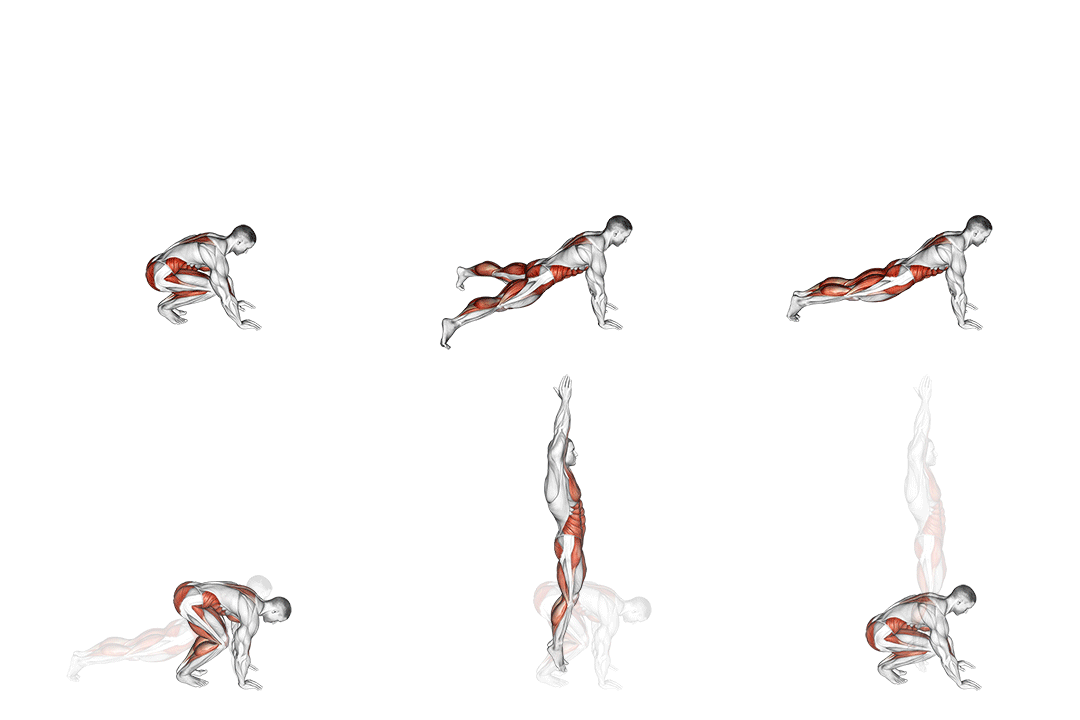
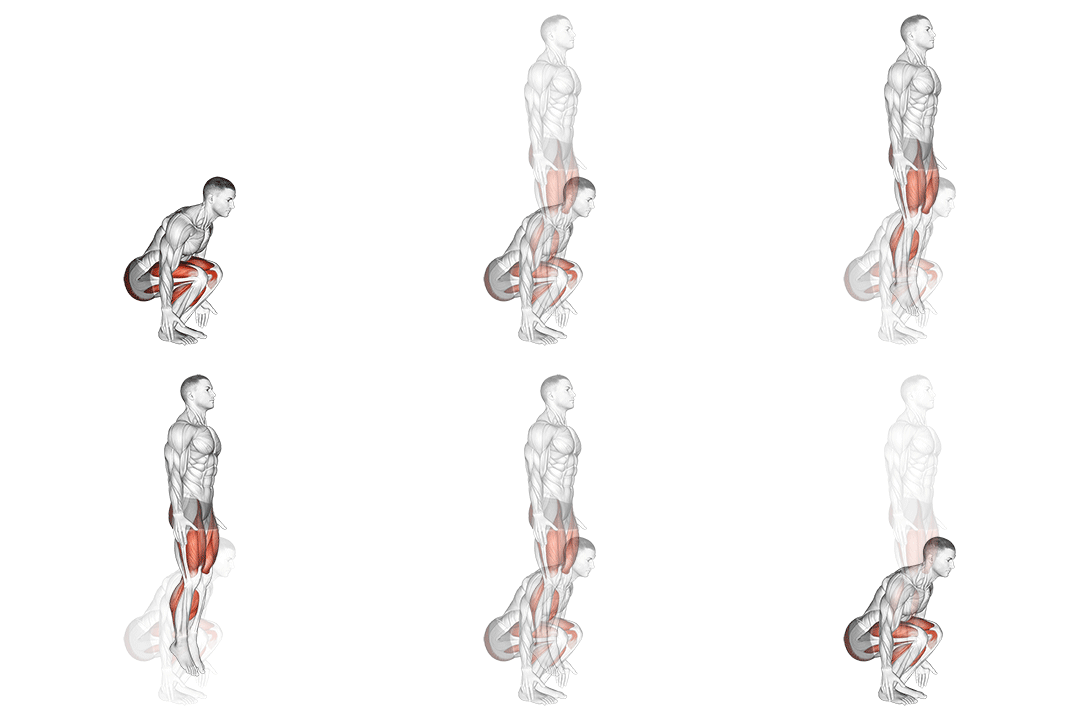
Semi Squat Jump (male)
intermediate cardio exercise · body weight · targets cardiovascular system
- Body part
- cardio
- Primary target
- cardiovascular system
- Equipment
- body weight
- Difficulty
- intermediate
The semi squat jump is a lower-amplitude version of a full jump squat. You drop into a quarter or half squat depth and explode upward without aiming for maximum height. The lower depth means each rep takes less time and less force production, which makes the exercise sustainable for cardio sets of 30+ reps without the joint fatigue you'd accumulate from full jump squats. It's the right tool when the goal is conditioning rather than max power — circuits, intervals, finishers — and it teaches reactive ankle and knee stiffness that translates well to running and sports that involve repeated short jumps. Think basketball defense slides, soccer changes of direction, or tennis baseline play. These movements aren't about jumping as high as possible once; they're about jumping repeatedly with consistent quality. The semi squat jump fills a niche that's often missed in calisthenics programming. Bodyweight cardio tends to default to burpees, mountain climbers, or jumping jacks — all useful, but none train the specific stretch-shortening cycle of the legs the way short, repeated jumps do. Adding 1-2 weekly sessions of semi squat jumps for 8-12 weeks generally produces noticeable improvements in single-leg jump height and short-distance sprinting.
Why train the Semi Squat Jump (male)?
- Builds reactive leg strength without the joint impact of deep jump squats.
- Sustainable for high-rep cardio circuits where full jump squats would force you to stop early.
- Trains the stretch-shortening cycle — the rapid eccentric-to-concentric transition athletes rely on.
- Elevates heart rate fast, making it useful as a metabolic finisher in 30-60 second intervals.
- Easier on the knees than deep jump squats, which matters if you're carrying extra weight or rehabbing.
- Doubles as a smart warm-up for activities that require repeated short jumps (basketball, jump rope, plyometric circuits).
How to do the Semi Squat Jump (male): step by step
- 1Stand with your feet shoulder-width apart.
- 2Bend your knees and lower your body into a squat position.
- 3Jump explosively, extending your hips and knees while swinging your arms for momentum.
- 4Land softly on the balls of your feet and immediately go into the next repetition.
- 5Repeat for the desired number of repetitions.
Muscles worked
Primary
cardiovascular system
Secondary
quadriceps, hamstrings, calves
Common mistakes to avoid
Landing flat-footed and stiff-legged
Landing without bending the knees and absorbing through the balls of the feet sends shock straight into the joints. Land on the balls of the feet first, then let the heels touch as the knees and hips bend to absorb.
Going too deep and turning it into a full jump squat
The semi part matters — depth past parallel changes the exercise into something heavier and slower. Stop the descent at quarter or half squat depth so each rep stays quick and reactive.
Letting the knees travel inward on the takeoff
When fatigue hits, the knees collapse toward each other. Drive your knees out in line with your toes through every rep, even when tired — knee valgus during repeated jumps is a top cause of patellar pain.
Pausing too long between reps
If you take 2 seconds between landings, you've broken the stretch-shortening cycle that makes the exercise valuable. Aim for 1 jump per second at moderate intensity, faster on cardio intervals.
Looking down at the floor
Dropping the head shifts your weight forward and disrupts the takeoff line. Keep eyes on the horizon — chest up, head tall, even when fatigued.
Easier and harder variations
Easier
Skip the jump entirely and do bodyweight squats at a fast tempo (1 second down, 1 second up). Build up your conditioning first, then add small hops as you progress.
Harder
Go deeper — full jump squats — or add a tuck (pull the knees up toward the chest at the top of each jump). For loaded progression, hold a light dumbbell in each hand.
Alternative exercises
Pogo jump
Even smaller amplitude — just bend at the ankles and knees minimally. Pure ankle stiffness work, useful for runners and jumpers.
Jump squat
Full-depth version. Trains higher peak power but is more demanding on the joints, so use it less frequently.
Box jump
Same takeoff mechanics with a soft landing target. Removes most of the impact while keeping the explosive quality.
How to program the Semi Squat Jump (male) into your training
Semi squat jumps fit best in conditioning blocks or as a warm-up for explosive work. They're not a strength exercise, so don't program them like one. For pure conditioning: work in time intervals of 30-45 seconds at a sustainable pace, with 30-60 seconds rest between rounds, for 6-10 rounds. Total work time of 4-6 minutes is enough to drive cardio adaptation without overusing the joints. For HIIT-style protocols: 20 seconds maximum effort, 10 seconds rest, 8 rounds (Tabata format). This is brutal — start with 4 rounds and build up over weeks. As a warm-up before lower body strength training: 2 sets of 10-15 reps at moderate pace, performed after light dynamic stretching and before squats or deadlifts. This primes the nervous system for explosive force production. Within a circuit: pair with upper body work like push-up variations or rows. Example: 30 seconds semi squat jumps, 30 seconds push-ups, 30 seconds rest, 5 rounds. Avoid stacking semi squat jumps with other lower body plyometrics in the same session — the cumulative load on the knees and ankles adds up faster than people expect. One plyometric exercise per leg session is usually plenty.
Recovery and frequency
Even though semi squat jumps are lower-impact than full jump squats, the cumulative landings still load the knees, ankles, and lower back. 48-72 hours between sessions is the right cadence; doing them daily leads to cranky tendons within a few weeks. Calf and quad soreness is normal in the first 2 weeks of training, especially if you're new to plyometric work. Sharp knee pain — particularly under or around the kneecap — is a signal to stop and reassess form before continuing. Daily calf stretches and ankle mobility work between sessions help the tissues handle repeated impact. If you train barefoot or in flat shoes, you'll notice ankle and arch fatigue more than someone in cushioned shoes; that's not a problem unless it becomes pain.
Frequently asked questions
How many sets and reps of semi squat jumps should I do?
For conditioning, work in time intervals: 30-45 seconds of work, 30-60 seconds of rest, for 6-10 rounds. For rep-based, 3-4 sets of 15-25 reps.
How often should I train the semi squat jump?
2-3 times per week, with at least one rest day between sessions. Even though they're lower-impact than full jump squats, the cumulative load on knees and ankles still requires recovery.
Are semi squat jumps cardio or strength training?
Primarily cardio with a power-endurance element. They burn calories like cardio but train the legs to produce force quickly — a useful combination, but not a substitute for actual strength work like loaded squats.
Will semi squat jumps improve my vertical jump?
Marginally on their own. They build the foundation of reactive strength but max vertical jump improvement requires deeper jumps and heavier loaded squats. Use them as a complement, not the main driver.
Can I do semi squat jumps if I have knee issues?
Cautiously, and not without first addressing the underlying issue. Semi squat jumps are easier on the knees than full jump squats but still involve repeated landings. Get cleared by a physical therapist first if you have known knee problems.
Why do my calves get so sore after semi squat jumps?
The calves do the bulk of the absorption work on landing. If they're particularly sore, it usually means you're not using your hips and knees enough to absorb impact — or you're new to landing mechanics. Add bodyweight calf raises into your warm-up to build tolerance.
Useful tools for this exercise
Build a workout with the Semi Squat Jump (male)
Puna gives you guided bodyweight workouts you can do anywhere — no equipment, no gym, just structured progressions that build real strength.