Seated Glute Stretch
beginner stretching exercise · body weight · targets glutes
- Body part
- upper legs
- Primary target
- glutes
- Equipment
- body weight
- Difficulty
- beginner
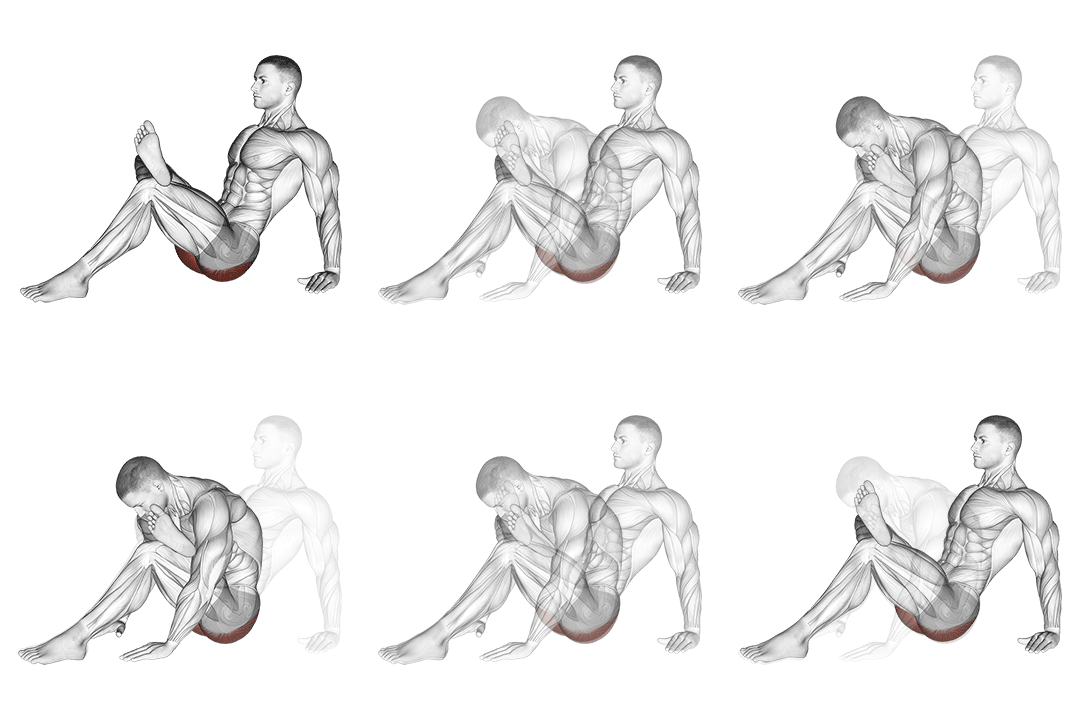
The seated glute stretch is a hip mobility drill performed sitting on the floor with one leg extended and the other crossed over with the foot near the opposite hip. Leaning forward gently from the hips creates a deep stretch through the glute of the crossed leg. The exercise targets the gluteus maximus and the deeper external rotators (piriformis) that contribute to chronic hip and lower-back tightness. Most adults have meaningful glute tightness from sedentary patterns. Hours of sitting compress the glutes; without dedicated stretching, they shorten and tighten over years. The result is restricted hip rotation, lower-back compensation patterns, and the chronic hip stiffness that many adults dismiss as inevitable. The seated glute stretch addresses this directly. Where this earns its place is as daily mobility maintenance for the glute and hip area. Combined with the iron cross stretch, hug knees, and other supine mobility drills, it forms part of a comprehensive hip and back-care routine. For trainees with chronic glute tightness, sciatic-feeling discomfort, or restricted squat depth from hip restrictions, daily seated glute stretching produces noticeable improvement over 4-6 weeks.
Why train the Seated Glute Stretch?
- Stretches the glute maximus and deeper external rotators (piriformis).
- Releases chronic glute tightness from sedentary patterns.
- Reduces sciatic-feeling discomfort that often traces to glute tightness.
- Improves hip rotation that contributes to better squat depth.
- Pairs naturally with hip flexor stretches for compound hip mobility.
- Useful as cooldown after lower-body workouts or pre-bed wind-down.
How to do the Seated Glute Stretch: step by step
- 1Sit on the ground with your legs extended in front of you.
- 2Bend your right knee and cross your right ankle over your left thigh.
- 3Place your right hand on the ground behind you for support.
- 4With your left hand, gently press down on your right knee to deepen the stretch.
- 5Hold the stretch for 30 seconds to 1 minute.
- 6Switch sides and repeat.
Muscles worked
Primary
glutes
Secondary
hamstrings
Common mistakes to avoid
Forcing the stretch
Aggressive pressure can stress the knee or lower back. Gentle persistent pressure produces the release.
Rounding the back excessively
The forward lean should come from the hips, not from rounding the spine. Hinge from the hips.
Holding too short
30-45 seconds per side produces meaningful tissue change.
Skipping the second side
Always do both sides equally.
Letting the working leg's knee lift
The crossed leg's knee should stay close to the floor or thigh. Lifting it reduces the stretch.
Easier and harder variations
Easier
Reduce forward lean depth. Or perform with hands behind for support.
Harder
Lean further forward with chest toward the crossed knee. Or progress to pigeon pose for deeper stretch.
Alternative exercises
Pigeon pose
Deeper version of similar stretch. Use as progression once seated version becomes easy.
Iron cross stretch
Supine version with rotation. Different angle for similar tissue.
Figure-4 stretch
Standing or lying variation. Useful when seated isn't accessible.
How to program the Seated Glute Stretch into your training
Daily routine: 1-2 sets of 30-45 seconds per side, once or twice per day. Post-workout protocol: After lower-body sessions for tissue length adaptation. For those with chronic glute tightness: 3-4 sessions per day combined with hip flexor and lower-back mobility.
Recovery and frequency
Zero recovery cost. Daily practice is safe.
Frequently asked questions
How long should I hold?
30-45 seconds per side, 1-2 sets per side.
How often?
Daily, especially for trainees with chronic hip tightness.
Will this help my sciatica?
Sometimes — if the sciatic-feeling discomfort is from glute/piriformis tightness, this stretch helps. Consult a physiotherapist for true sciatica.
Will this help my squat depth?
Often yes. Tight glutes and external rotators limit hip rotation needed for deep squats.
Why does my knee hurt?
Excessive force or improper alignment. Reduce intensity; ensure the knee is in a natural position.
Seated vs pigeon pose?
Seated is gentler and more accessible. Pigeon is deeper. Use seated as foundation.
Useful tools for this exercise
Build a workout with the Seated Glute Stretch
Puna gives you guided bodyweight workouts you can do anywhere — no equipment, no gym, just structured progressions that build real strength.