Rocky Pull-up Pulldown
intermediate strength exercise · body weight · targets lats
- Body part
- back
- Primary target
- lats
- Equipment
- body weight
- Difficulty
- intermediate
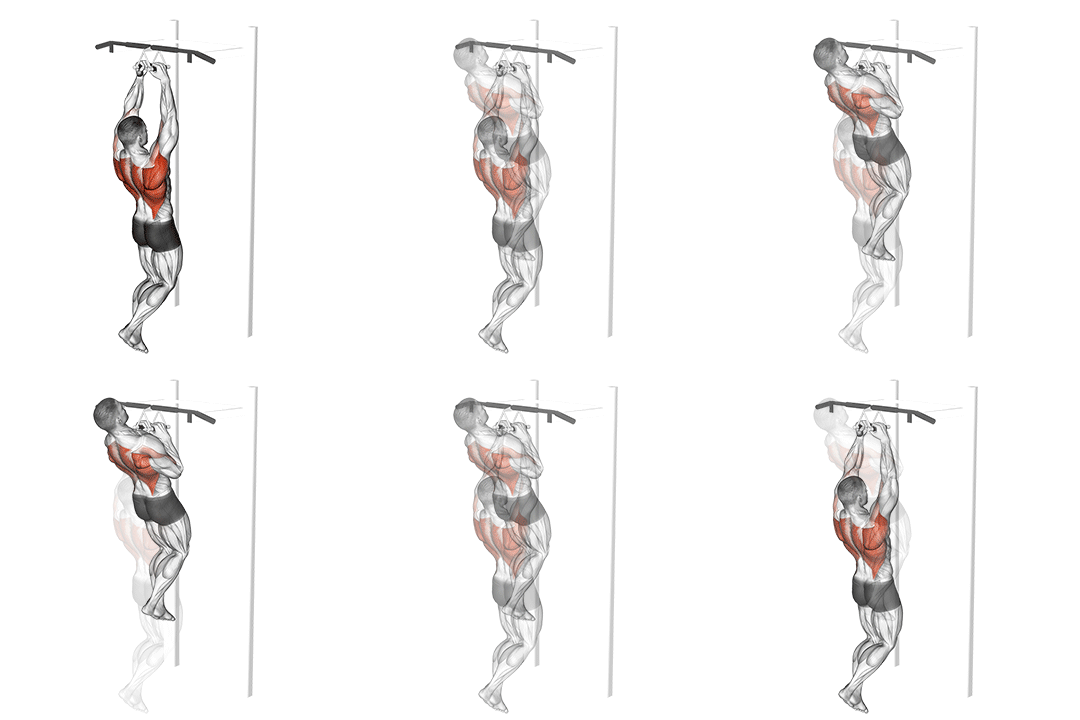
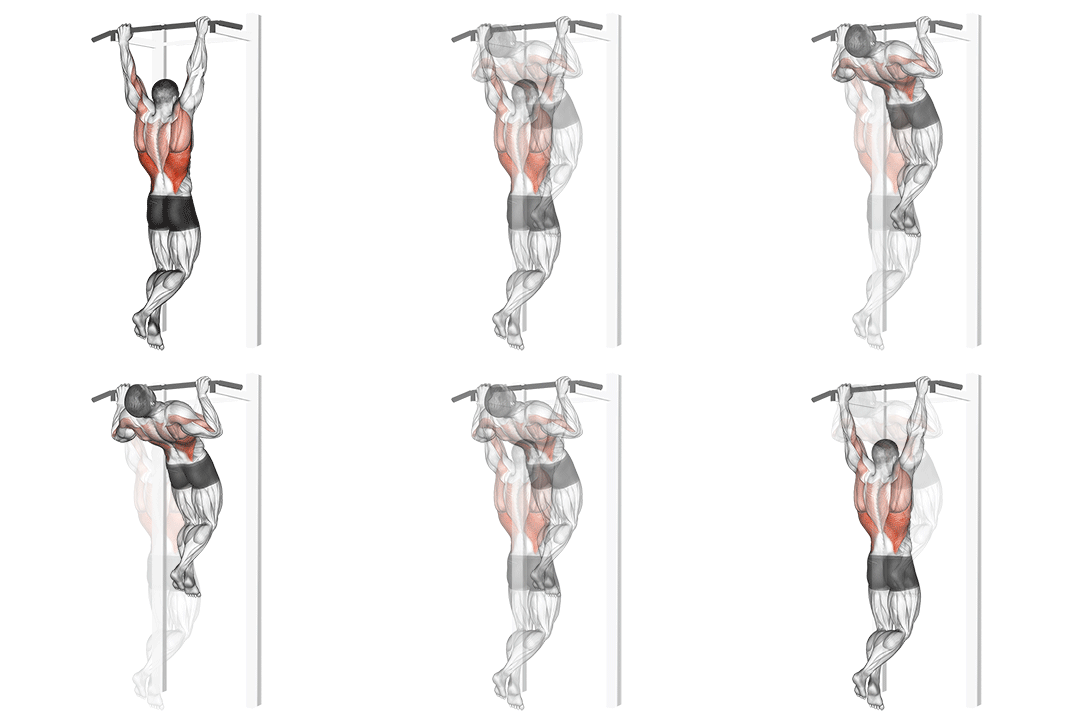
The Rocky pull-up pulldown — named after the iconic Rocky Balboa training scene — is a pull-up variation where you alternate pulling toward each side of the bar instead of straight up. From a hanging position with wide grip, you pull up shifting the body to one side so the chin comes over the bar near one hand, lower, then pull up to the other side. The alternation gives each side of the back a focused workout while still using both arms. This variation isn't just about style — it has real training merit. The asymmetric pulling pattern engages each lat more directly than a balanced pull-up, exposes side-to-side strength asymmetries, and adds a coordination element that pure pull-ups don't have. For trainees who can already do 8+ standard pull-ups and want a variation that addresses unilateral back strength, the Rocky version fills the role. It's classified as intermediate because it requires the strength to do clean wide-grip pull-ups plus the control to direct the body's path. Beginners attempting it usually end up doing partial reps with momentum. Build to 8 strict wide-grip pull-ups first; then add the Rocky variation as a 4-6 week intermediate progression that bridges toward harder unilateral back work like archer pull-ups.
Why train the Rocky Pull-up Pulldown?
- Engages each lat more directly than balanced pull-ups due to the asymmetric loading.
- Reveals side-to-side back strength asymmetries.
- Builds toward harder unilateral pulling variations like archer pull-ups.
- Adds variety to vertical pulling programming when standard pull-ups become routine.
- Trains coordination alongside strength.
- Requires only a pull-up bar — accessible in most settings.
How to do the Rocky Pull-up Pulldown: step by step
- 1Stand in front of a pull-up bar with your feet shoulder-width apart.
- 2Reach up and grab the bar with an overhand grip, slightly wider than shoulder-width apart.
- 3Hang from the bar with your arms fully extended and your body straight.
- 4Engage your back muscles and pull your body up towards the bar, leading with your chest.
- 5Pause for a moment at the top, then slowly lower your body back down to the starting position.
- 6Repeat for the desired number of repetitions.
Muscles worked
Primary
lats
Secondary
biceps, forearms
Common mistakes to avoid
Using momentum to swing side to side
Whipping the body side to side uses momentum and skips the strength work. Move the body intentionally — pull to one side under control, lower under control, then pull to the other side. The control is the exercise.
Cutting depth on either side
Each side of the pull should bring the chin clearly over the bar near the corresponding hand. Cutting depth on either side trains a partial pattern. If you can only get full depth on one side, regress to standard pull-ups until both sides can match.
Letting the body hang dead between reps
Some trainees fully relax in the bottom position between pulls. Maintain the active hang (shoulders packed down) throughout the set — passive hangs between reps means starting each rep cold.
Skipping prerequisite strength work
If you can't yet do 8+ strict standard pull-ups, the Rocky variation will likely become a momentum drill. Build standard pull-up strength first.
Counting one side's pull as a full rep
Convention varies, but for clearer programming, count each side separately (1 rep = pull to one side and back). This way, asymmetries between sides become visible in the rep counts.
Easier and harder variations
Easier
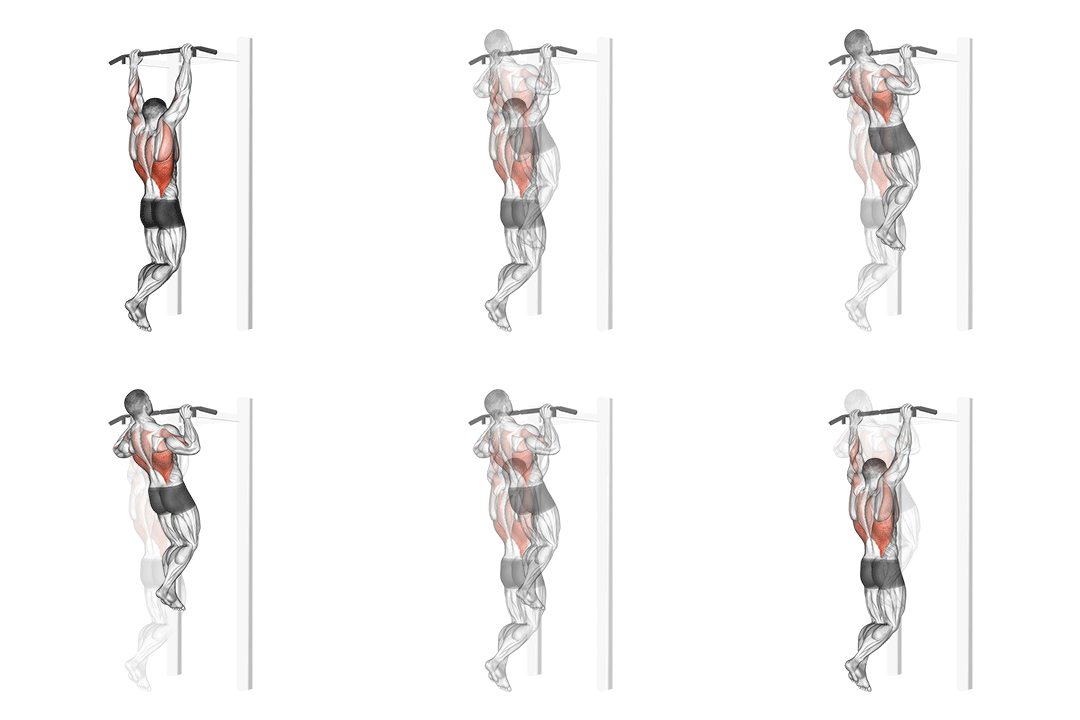
Standard pull-ups (no side-to-side variation). Or wide-grip pull-ups without the Rocky element. Or assisted Rocky pulldowns with a band looped around the bar.
Harder
Add weight (a vest or weight belt). Add holds at the top of each side (3-5 seconds at the chin-over-bar position). Or progress to archer pull-ups, which are the unilateral progression beyond Rocky pulldowns.
Alternative exercises
Archer pull-up
True unilateral pull-up with one arm doing the bulk of the work. The natural progression after Rocky pulldowns become easy.
Wide-grip pull-up
Same wide-grip starting position without the side-to-side variation. Easier and more lat-balanced.
Commando pull-up
Different asymmetric pull-up where one hand is in front of the other on the bar, pulling alternately to each side.
How to program the Rocky Pull-up Pulldown into your training
Rocky pull-ups work as accessory or specialized back work, not as the primary pulling exercise of a session. The asymmetric loading makes them more useful for variety than for primary back development. Sets and reps: 3 sets of 4-8 reps per side with 90-120 seconds rest. Total weekly volume of 20-40 reps per side drives most adaptations. In a back-focused session: 4 sets of 6 standard pull-ups (main pulling), 3 sets of 6 Rocky pulldowns per side (variety + asymmetric work), 3 sets of 10 inverted rows (horizontal pulling), 3 sets of 30-second hollow holds (core). For athletes building toward archer pull-ups, alternate weeks between Rocky pull-ups (Week 1) and archer pull-up progressions (Week 2). The combination addresses asymmetric pulling from both progression angles. Do not program Rocky pull-ups in your first few months of pull-up training. They're an intermediate variation — build standard pull-ups first.
Recovery and frequency
Rocky pull-ups load the lats, biceps, and shoulders similarly to other pull-up variations. 48-72 hours between sessions is the right cadence. Elbow tendinopathy is the main risk to watch — particularly with the asymmetric loading that can stress the elbow joint more than balanced pulls. Reduce volume immediately if you notice elbow soreness. Standard recovery practices cover the rest.
Frequently asked questions
How many sets and reps of Rocky pull-ups should I do?
3 sets of 4-8 reps per side with 90-120 seconds rest. Total weekly volume of 20-40 reps per side.
How often should I train the Rocky pull-up?
1-2 times per week with 48-72 hours between sessions. The intermediate-difficulty nature means moderate frequency is sufficient.
Rocky pull-ups vs standard pull-ups: which is better?
Different tools. Standard pull-ups are the foundation; Rocky pull-ups are a variation for asymmetric work and variety. Don't replace standard pull-ups with Rocky pulls; add them as accessory or alternate weeks.
Should I count one rep as both sides or each side separately?
Each side separately. Counting per side reveals asymmetries and gives clearer progression tracking.
Why is one side so much harder than the other in Rocky pull-ups?
Almost everyone has back strength asymmetry. The dominant-arm side is usually 5-15% stronger. The asymmetry typically narrows within 6-12 weeks of equal-rep practice.
Can I do Rocky pull-ups if I can't do regular pull-ups?
No — build to 8+ strict standard pull-ups first. Attempting Rocky pull-ups without that base usually means using momentum to fake the reps.
Useful tools for this exercise
Build a workout with the Rocky Pull-up Pulldown
Puna gives you guided bodyweight workouts you can do anywhere — no equipment, no gym, just structured progressions that build real strength.