Reverse Hyper On Flat Bench
beginner strength exercise · body weight · targets glutes
- Body part
- upper legs
- Primary target
- glutes
- Equipment
- body weight
- Difficulty
- beginner
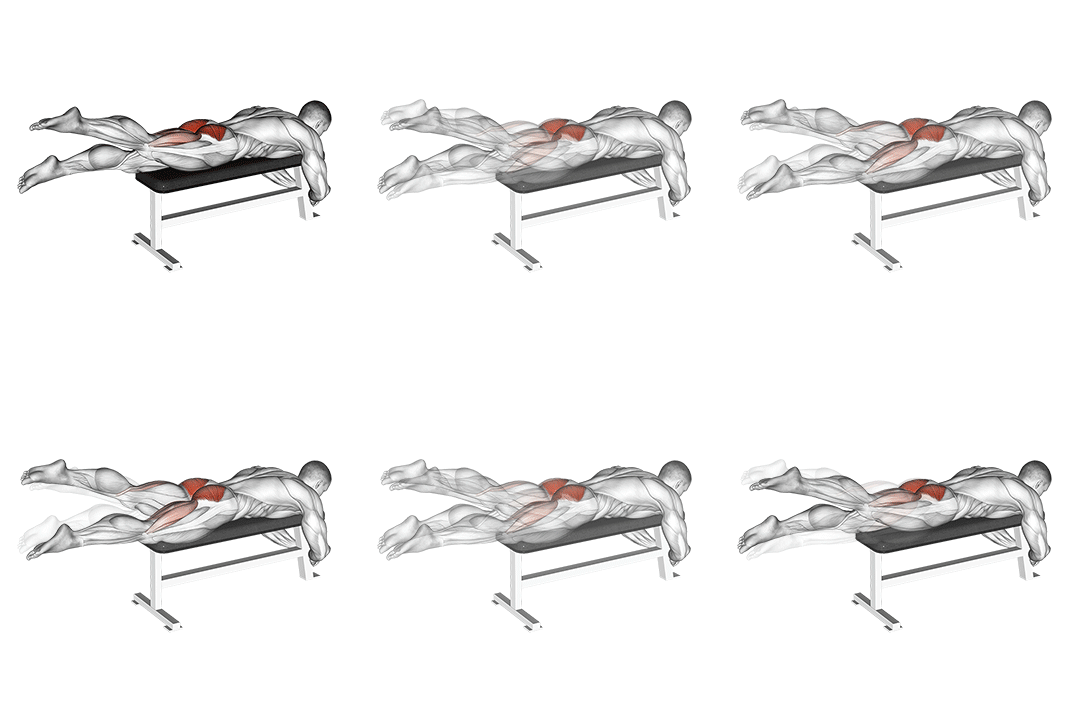
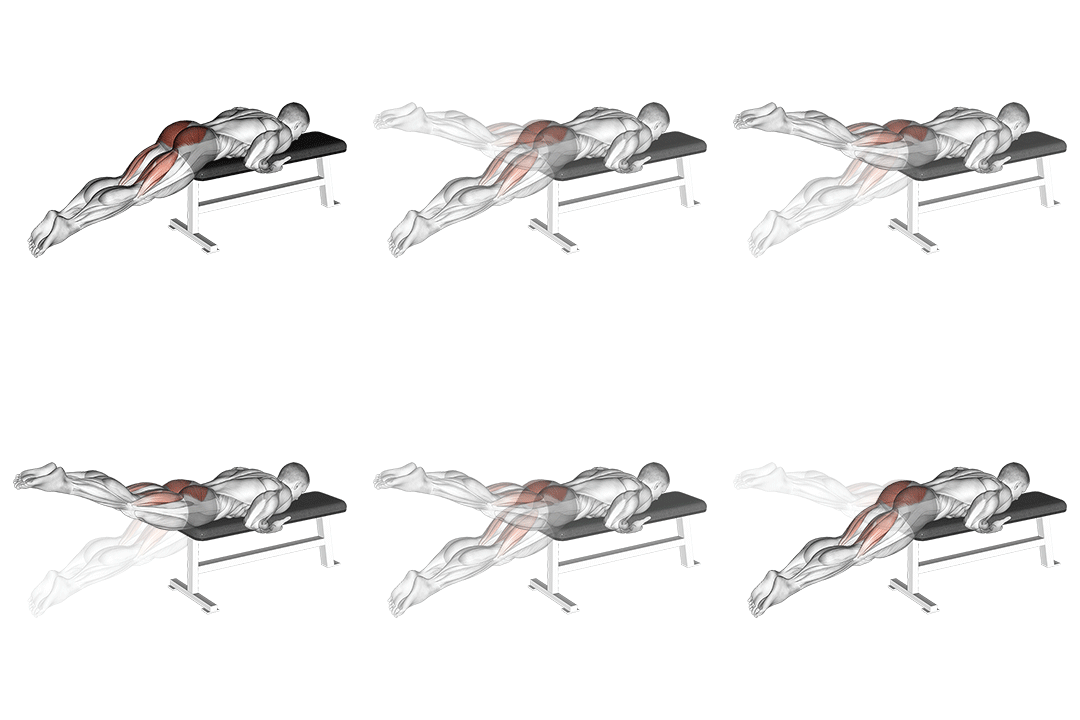
The reverse hyper on flat bench is a posterior chain exercise performed lying face-down on a sturdy bench with the hips at the edge and legs hanging off. From this position, you lift the legs through hip extension while the upper body anchors against the bench. The exercise targets the glutes, hamstrings, and lower back simultaneously through a hip-extension pattern that complements squats and deadlifts. The reverse hyper is one of the most effective accessory exercises for posterior chain development, popularized by powerlifting coaches like Louie Simmons. Dedicated reverse hyper machines exist; the bench version provides accessible bodyweight equivalent for home trainees. The exercise builds the glutes and lower back without significant spinal compression — useful during deload weeks or for trainees managing back issues. Where this earns its place is as low-impact posterior chain work that supports squats and deadlifts. The exercise can be done on rest days from heavy lifting without interfering with recovery, and provides direct glute and lower-back stimulus that compound lifts only partially train. For trainees with appropriate bench access, programmed 2-3 times per week, the reverse hyper produces meaningful posterior chain development.
Why train the Reverse Hyper On Flat Bench?
- Builds the glutes, hamstrings, and lower back without spinal compression.
- Useful during deload weeks or for trainees managing back issues.
- Provides direct hip extension stimulus complementing squats and deadlifts.
- Can be loaded with weight between the feet for progressive resistance.
- Accessible bodyweight version of dedicated reverse hyper machine work.
- Pairs naturally with hyperextensions for complete lower-back training.
How to do the Reverse Hyper On Flat Bench: step by step
- 1Lie face down on a flat bench with your hips at the edge and your legs hanging off the bench.
- 2Hold onto the bench for stability.
- 3Keeping your legs straight, raise them up towards the ceiling as high as you can.
- 4Squeeze your glutes at the top of the movement.
- 5Slowly lower your legs back down to the starting position.
- 6Repeat for the desired number of repetitions.
Muscles worked
Primary
glutes
Secondary
hamstrings, lower back
Common mistakes to avoid
Hyperextending the lower back
Stop the lift when the legs reach hip height (parallel to the floor). Going further stresses the lumbar spine without glute benefit.
Bouncing through reps
Controlled descent (2-3 seconds) drives more posterior chain stimulus.
Bending the knees
Keep legs straight throughout to maintain proper lever arm and glute focus.
Insufficient bench height
Bench must be tall enough that legs can hang straight down at the bottom of each rep.
Treating it as primary work
Reverse hypers are accessory work. Squats and deadlifts remain the primary posterior chain exercises.
Easier and harder variations
Easier
Bend the knees slightly to reduce lever arm. Or perform on a lower platform for shorter range.
Harder
Hold a weight plate or dumbbell between the feet. Or progress to single-leg reverse hypers for unilateral training.
Alternative exercises
Hyperextension on bench
Different lever (upper body lifting). Pair with reverse hypers for compound lower-back training.
Glute bridge
Floor-based hip extension. Easier setup for home trainees.
Romanian deadlift
Standing hip extension with weight loading. More productive for serious strength.
How to program the Reverse Hyper On Flat Bench into your training
Reverse hypers work as accessory posterior chain work. Sets and reps: 3 sets of 12-20 reps with 60 seconds rest. Frequency: 2-3 times per week. In a session: 3-4 sets of 15 reverse hypers as accessory after main lifts. For lower-back rehabilitation: 3 sets of 12 at bodyweight, 3 times per week. Don't program on the same day as heavy deadlifts.
Recovery and frequency
Recovery within 48 hours. Watch for lower-back discomfort.
Frequently asked questions
How many sets and reps?
3 sets of 12-20 reps with 60 seconds rest.
How often?
2-3 times per week.
Will this build glutes?
Yes, as accessory work. Combined with squats and bridges, contributes to complete glute development.
Reverse hyper vs hyperextension?
Reverse hyper lifts the legs; hyperextension lifts the upper body. Both target similar tissue from different angles.
Is this safe for back?
Generally yes when range stops at hip height. Going further stresses the lower back.
Should I add weight?
Eventually, yes. Build to 20 strict bodyweight reps first; then hold weight between the feet.
Useful tools for this exercise
Build a workout with the Reverse Hyper On Flat Bench
Puna gives you guided bodyweight workouts you can do anywhere — no equipment, no gym, just structured progressions that build real strength.