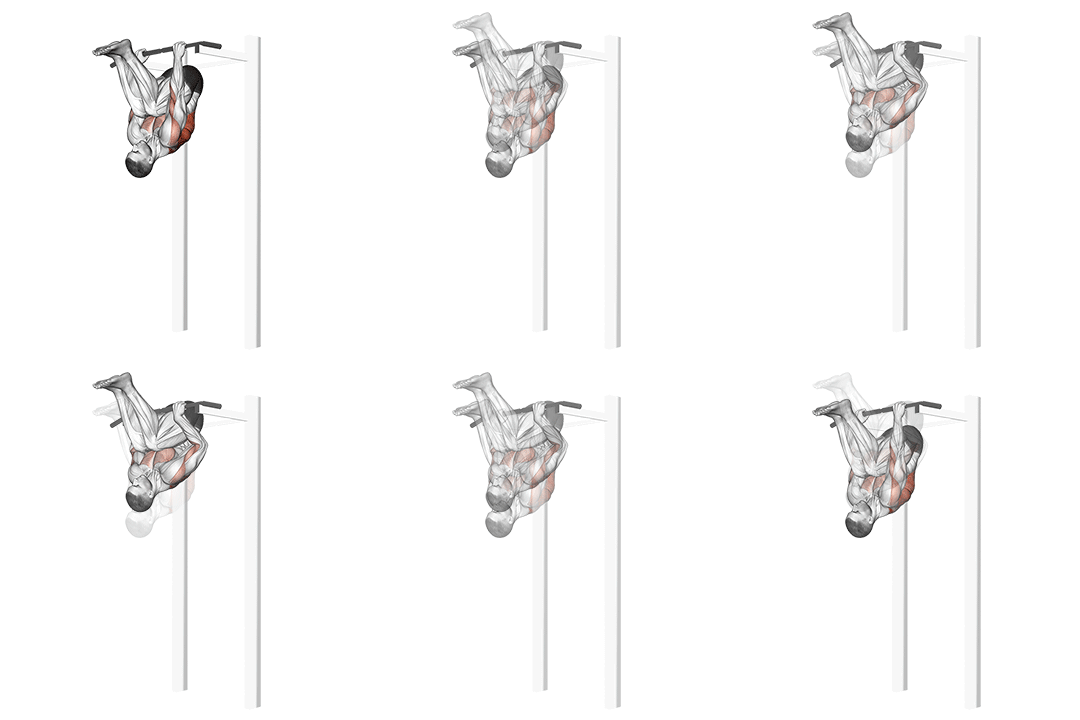
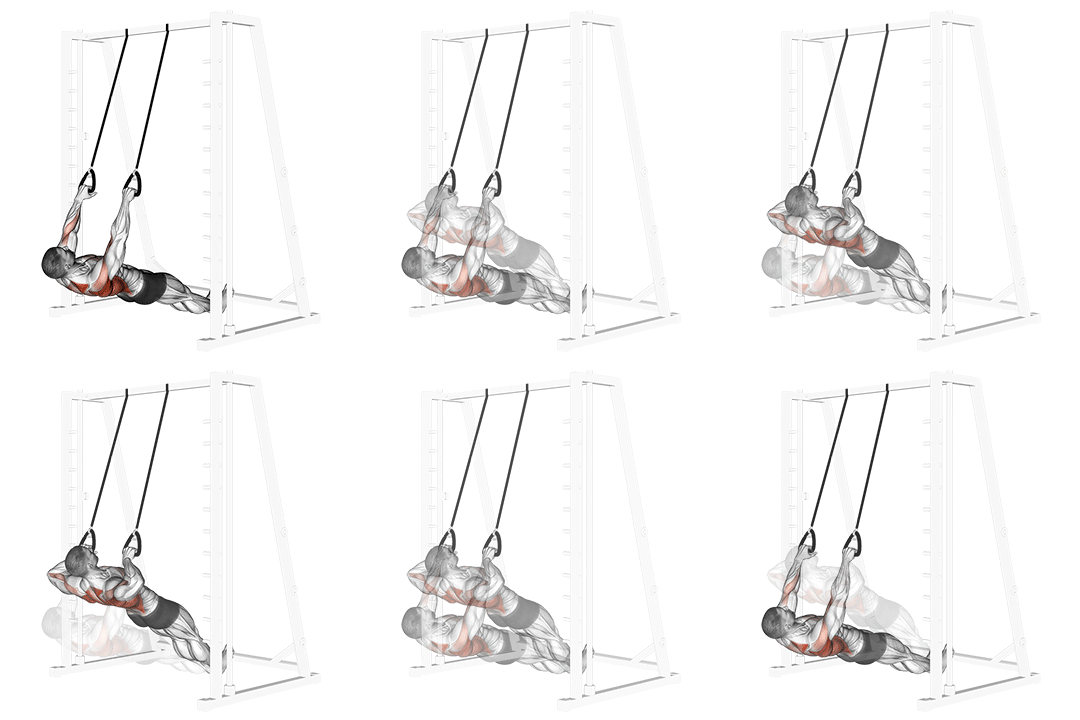
Reverse Grip Pull-up
intermediate strength exercise · body weight · targets lats
- Body part
- back
- Primary target
- lats
- Equipment
- body weight
- Difficulty
- intermediate
The reverse-grip pull-up — also known as the chin-up — is the supinated-grip cousin of the standard pull-up. With palms facing toward you instead of away, the biceps engage significantly more than in the standard variation, while the lats still do most of the pulling work. The result is an exercise that's typically 10-15% easier than a regular pull-up for the same trainee, while building bigger biceps as a side effect. This grip difference matters more than most people realize. The reverse-grip position is biomechanically more efficient for the biceps — they're in their strongest pulling position. That's why beginners often achieve their first chin-up before their first pull-up, and why programs designed to maximize bicep development emphasize chin-ups over pull-ups. The reverse-grip variation also tends to be friendlier on the shoulders for many trainees. The supinated grip allows for a slightly different shoulder position that some people find more comfortable, especially those with previous shoulder issues. That said, both variations have a place in any well-rounded program — alternating between them every 4-6 weeks builds well-rounded back and arm development.
Why train the Reverse Grip Pull-up?
- Engages the biceps significantly more than standard pull-ups while still hitting the lats hard.
- Typically 10-15% easier than a standard pull-up for the same trainee — useful regression or stepping stone.
- Often more comfortable on the shoulders than standard pull-ups due to the supinated grip.
- Useful for bicep hypertrophy without isolated bicep curls.
- Carries over to back development with similar effectiveness as pull-ups.
- Many beginners achieve their first chin-up before their first pull-up — a useful stepping stone to harder pulling work.
How to do the Reverse Grip Pull-up: step by step
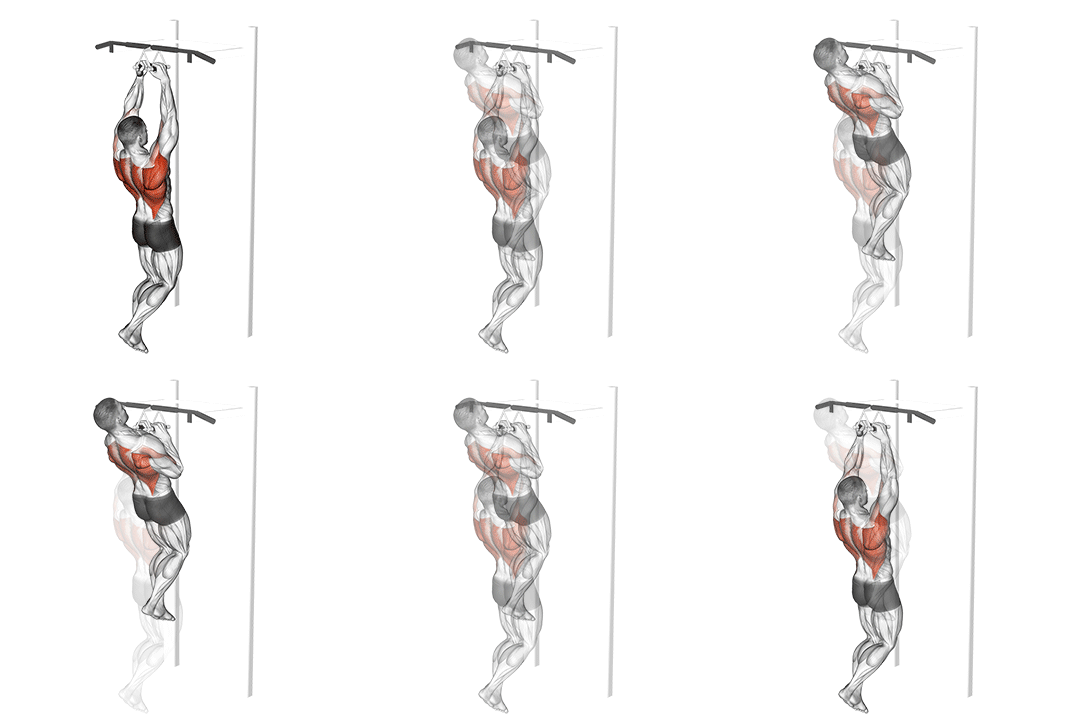
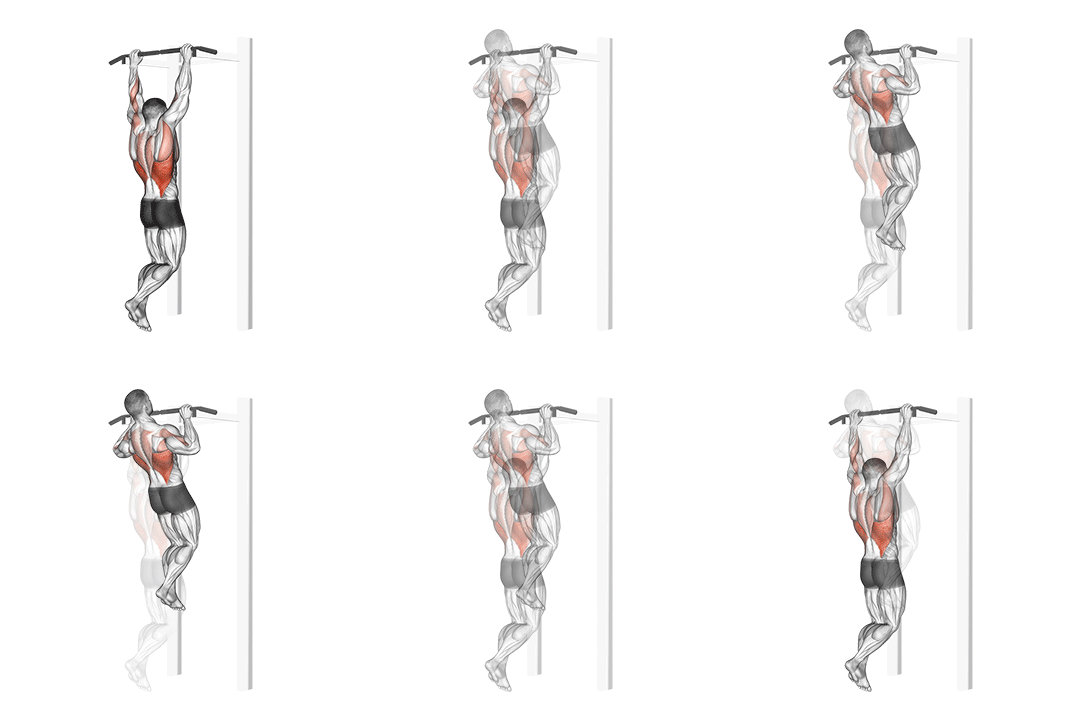
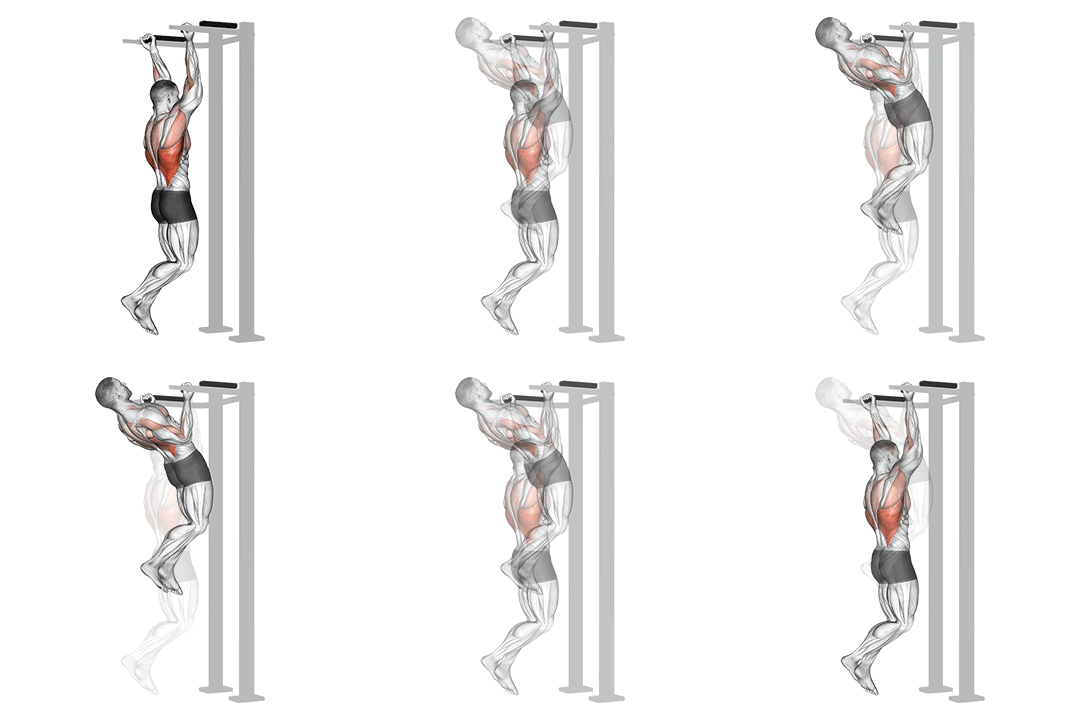
- 1Grab the pull-up bar with an underhand grip, hands shoulder-width apart.
- 2Hang from the bar with your arms fully extended and your body straight.
- 3Engage your back muscles and pull your body up towards the bar, leading with your chest.
- 4Continue pulling until your chin is above the bar.
- 5Pause for a moment at the top, then slowly lower your body back down to the starting position.
- 6Repeat for the desired number of repetitions.
Muscles worked
Primary
lats
Secondary
biceps, forearms
Common mistakes to avoid
Kipping or swinging to get the chin up
Using momentum to swing the body up isn't a chin-up — it's a momentum drill. Strict form means the body stays still during the pull, with the back and arms doing all the work. If you can't pull strictly, regress to negatives or assisted variations.
Not engaging the lats
Chin-ups can be done as primarily a bicep curl with the back as a passive participant. To get the back benefit, pack the shoulders down before each rep (drive them away from the ears) — this engages the lats. Without this cue, you're just doing a hard bicep curl.
Cutting depth at the bottom or top
Full range matters: arms fully extended at the bottom, chin clearing the bar at the top. Trainees who cut range build a partial pattern and miss the strength full range develops.
Letting the elbows flare wide
Wide elbows shift load away from the biceps and lats and into the shoulders in vulnerable positions. Keep the elbows tracking close to the ribs throughout the rep.
Skipping the prerequisite work
Even though chin-ups are easier than pull-ups, they still demand significant strength. If you can't yet do a strict chin-up, build with bench-assisted chin-ups, negatives, and dead hangs first.
Easier and harder variations
Easier
Bench-assisted chin-ups (feet on a bench to take some body weight off). Negative chin-ups (jump or step to the top, lower slowly for 5-10 seconds). Or band-assisted chin-ups with a resistance band looped around the bar.
Harder
Add weight (a vest or weight belt with a plate). Slow the tempo (3 seconds down, 1-second pause, 1 second up). Progress to one-arm chin-up training (years-long project) or weighted chin-up programming for strength.
Alternative exercises
Pull-up (overhand grip)
Standard pull-up with palms facing away. Slightly harder than chin-ups, more lat-emphasis and less bicep involvement.
Neutral grip pull-up
Palms facing each other. Splits the difference between pull-up and chin-up — biceps engaged but not as much as full chin-up.
Inverted row
Horizontal pulling at lower load. Useful complement to vertical pulling like chin-ups.
How to program the Reverse Grip Pull-up into your training
Reverse-grip pull-ups work as either the primary vertical pulling exercise or as a complement to standard pull-ups in a complete back program. For strength: 4 sets of 4-8 reps with 90-120 seconds rest, 2-3 times per week. Total weekly volume of 30-60 reps drives most adaptations. For those building toward their first strict chin-up: 3 sessions per week of negatives (3-5 sets of 3-5 slow eccentrics), bench-assisted chin-ups (3 sets of 5-8), and dead hangs (3 sets of 30-60 seconds). For 5-15 reps: 2-3 sessions per week, 4 sets of 4-8 reps. Once you hit 3 sets of 8-10 strict chin-ups, start adding weight rather than continuing rep progression. A balanced upper body session: 4 sets of 6 chin-ups, 4 sets of 8 push-ups, 3 sets of 8 inverted rows, 3 sets of 30-second hollow holds. Done 2-3 times per week. For athletes who want to develop both back width and bicep size, alternate weeks: Week 1 prioritize standard pull-ups, Week 2 prioritize chin-ups. Both variations get adequate volume without creating overuse issues.
Recovery and frequency
Chin-ups load the lats, biceps, forearms, and grip. 48 hours between sessions is the minimum; 72 hours is safer in early weeks of dedicated training. The biceps and grip are usually the limiting recovery factors. Elbow tendinopathy is the main risk to watch — particularly medial epicondylitis (golfer's elbow). Symptoms include pain on the inside of the elbow during or after sets. Reduce volume immediately if you notice these, and add forearm and wrist mobility work. Foam roll the lats weekly to maintain thoracic mobility. Standard recovery practices cover the rest.
Frequently asked questions
How many sets and reps of reverse-grip pull-ups should I do?
For strength: 4 sets of 4-8 reps with 90-120 seconds rest, 2-3 times per week. For higher rep training: 3 sets of 8-12 reps.
How often should I train the reverse-grip pull-up?
2-3 times per week with 48-72 hours between sessions. Forearms and biceps recover slower than the back; if those are still sore, push the next session back.
Pull-up vs chin-up: which is better?
Different tools. Pull-up (palms away) emphasizes the lats more and builds back width. Chin-up (palms toward you) involves the biceps more and is slightly easier for most people. For complete development, alternate between them.
Will chin-ups make my biceps bigger?
Yes — they're one of the most effective bicep-builders available, often more effective than isolated bicep curls because they allow for heavier loading. Many trainees who add chin-ups see noticeable bicep growth within 8-12 weeks.
Why is my chin-up max higher than my pull-up max?
The supinated grip allows the biceps to contribute more, and the biceps are typically a stronger contributor in this position. Most trainees can do 10-20% more chin-ups than pull-ups.
Are chin-ups bad for the elbows?
Done with proper progression and reasonable volume, no. Done at high frequency or with poor form (cheating reps with momentum), they can lead to medial epicondylitis. Build volume gradually and address any elbow discomfort immediately.
Useful tools for this exercise
Build a workout with the Reverse Grip Pull-up
Puna gives you guided bodyweight workouts you can do anywhere — no equipment, no gym, just structured progressions that build real strength.