Rear Pull-up
advanced strength exercise · body weight · targets lats
- Body part
- back
- Primary target
- lats
- Equipment
- body weight
- Difficulty
- advanced
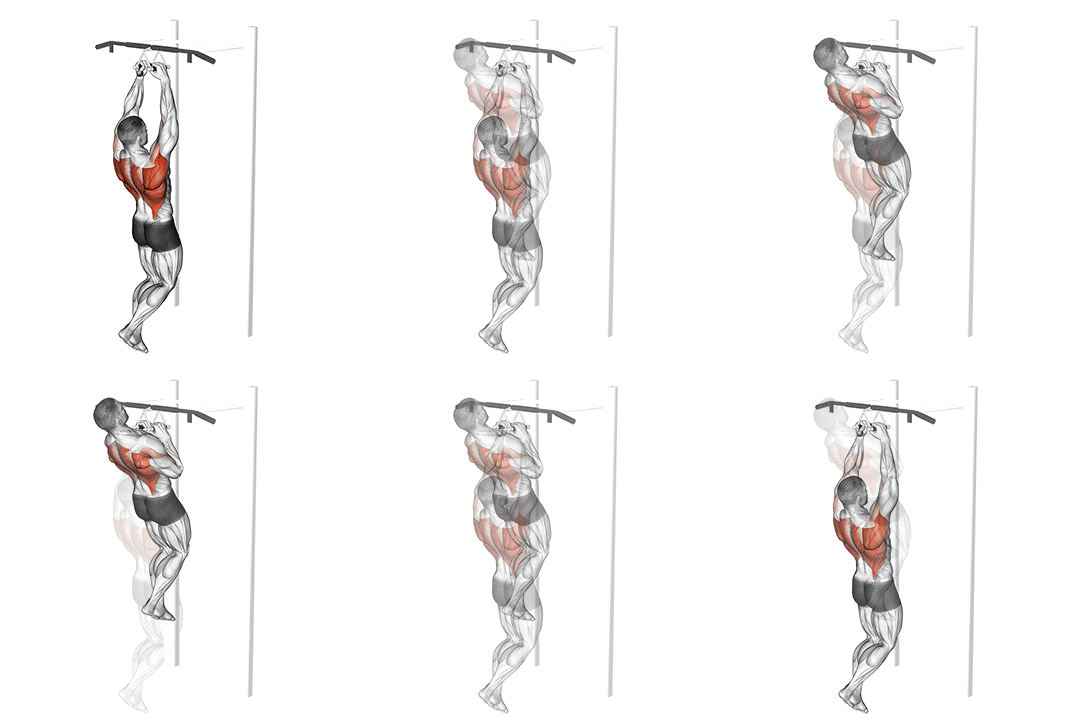
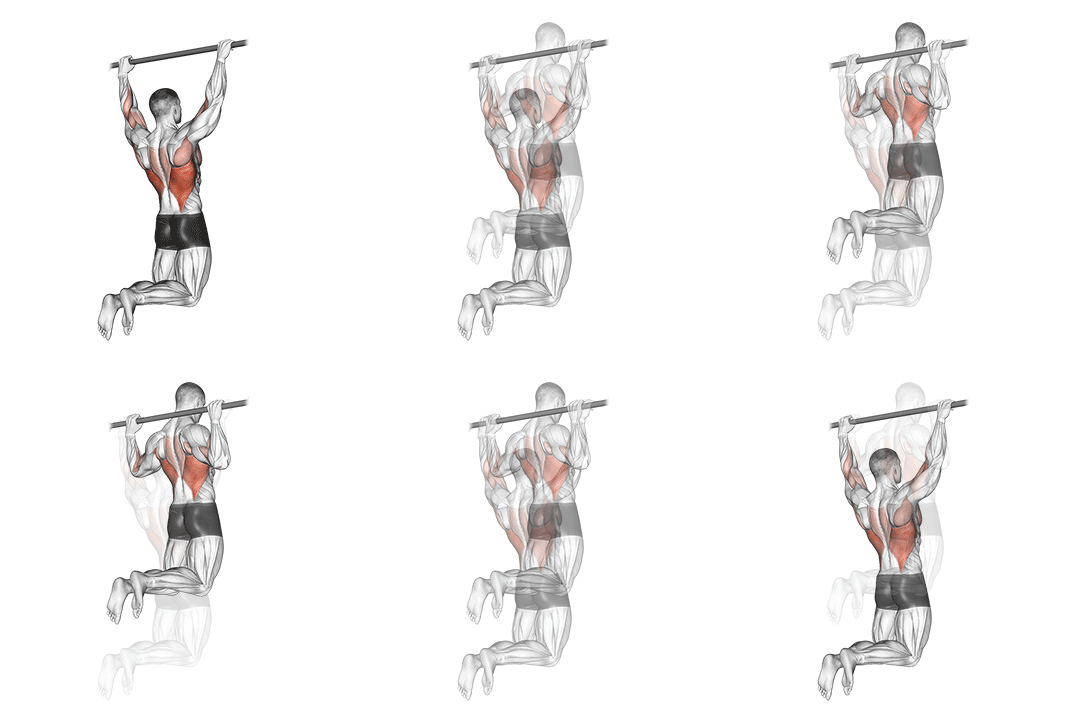
The rear pull-up — sometimes called the behind-the-neck pull-up — is performed by pulling the body up so the back of the neck approaches the bar instead of the chin clearing it from in front. The grip is typically wide, and the body stays in a more vertical line throughout the pull. The result is a variation that emphasizes the upper traps and the rear delts more than standard pull-ups, while loading the lats slightly differently. This is one of the more controversial pull-up variations. The behind-the-neck position requires significant shoulder mobility, particularly external rotation, and trainees without that mobility risk shoulder impingement or rotator cuff strain. For athletes with the prerequisite mobility — typically gymnasts, climbers, and people with naturally mobile shoulders — the rear pull-up adds back development work that standard pull-ups don't provide. For those without it, the exercise is best avoided in favor of safer variations. For advanced trainees who have already mastered standard wide-grip pull-ups, weighted pull-ups, and have demonstrated the shoulder mobility, the rear pull-up earns a place as a specialized variation. Programmed cautiously (1 session per week, low volume, conservative depth) it can add real upper back and rear delt development. Programmed without respect for the mobility demands, it leads to shoulder issues quickly.
Why train the Rear Pull-up?
- Emphasizes the upper traps and rear delts more than standard pull-ups.
- Adds rear-back development that standard variations don't fully address.
- Provides advanced progression for trainees who have outgrown standard pull-up variations.
- Carries over to overhead pressing and Olympic lifting that demand similar mobility.
- Trains the kind of shoulder external rotation that protects the joint when sufficient mobility exists.
- Useful for gymnastics-style training where the behind-neck position appears.
How to do the Rear Pull-up: step by step
- 1Grab the pull-up bar with an overhand grip, slightly wider than shoulder-width apart.
- 2Hang from the bar with your arms fully extended and your body straight.
- 3Engage your back muscles and pull your body up towards the bar, keeping your elbows close to your body.
- 4Continue pulling until your chin is above the bar.
- 5Pause for a moment at the top, then slowly lower your body back down to the starting position.
- 6Repeat for the desired number of repetitions.
Muscles worked
Primary
lats
Secondary
biceps, forearms
Common mistakes to avoid
Performing them without sufficient shoulder mobility
The behind-the-neck position requires significant external rotation. If you can't comfortably hold a barbell behind your neck (with arms in the W position) without straining, you don't have the mobility for rear pull-ups. Build the mobility first — or stick with standard pull-ups.
Going too deep at the top
Bringing the bar down to the back of the neck is impressive but stresses the cervical spine. Bring it only as low as the upper traps without forcing — even 2-3 inches above the upper traps is enough range for the training benefit.
Using too wide a grip
Extreme wide grips make the shoulder demand even more demanding. Use shoulder-width or just slightly wider — wider doesn't necessarily mean better, especially in this variation.
Kipping or swinging
Strict form is critical with this variation because the shoulder is in a vulnerable position. Don't use momentum — if you can't pull strictly, regress to standard pull-ups.
Skipping the warm-up
The shoulders need extensive warm-up before rear pull-ups. Spend 3-5 minutes on shoulder mobility (band dislocates, wall slides, scapular pull-ups) before the first set.
Easier and harder variations
Easier
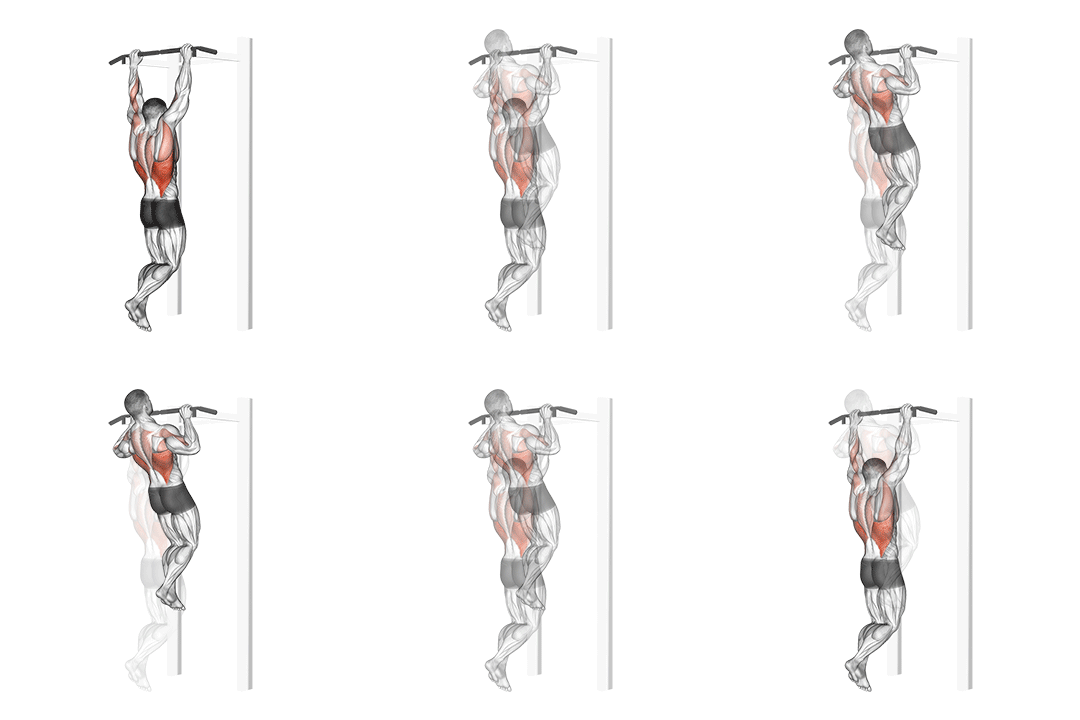
Standard front pull-ups (chin clears the bar from in front). Or partial rear pull-ups — only come halfway up (chin level with the bar) instead of bringing the bar to the back of the neck.
Harder
Add weight (a vest or weight belt). Slow the tempo. Or progress to behind-the-neck press training, which combines the same shoulder demand with overhead pressing.
Alternative exercises
Standard pull-up
Front-of-bar version that's significantly safer for most trainees. The default vertical pulling exercise.
Wide-grip pull-up
Front-of-bar version with the wide grip emphasis. Provides similar upper back development with much less shoulder demand.
Face pull
Different exercise (cable or band) that targets the rear delts and upper traps without the shoulder mobility demand of rear pull-ups.
How to program the Rear Pull-up into your training
Rear pull-ups work as accessory or specialized back work, not as the primary pulling exercise. They should be programmed conservatively due to the shoulder demand. Sets and reps: 3 sets of 4-8 reps with 90-120 seconds rest. Total weekly volume of 12-25 reps drives the adaptation without overloading the shoulders. In a back-focused session: 4 sets of 6 standard pull-ups (main pulling), 3 sets of 5 rear pull-ups (specialty work), 3 sets of 10 inverted rows (horizontal pulling), 3 sets of 30-second hollow holds (core). For advanced trainees only — never include rear pull-ups in beginner or early intermediate programming. Build to 12+ strict standard pull-ups before considering this variation. Do not program rear pull-ups more than once per week. The shoulder demand requires extensive recovery between sessions.
Recovery and frequency
Rear pull-ups load the lats, upper traps, rear delts, and shoulders. 72-96 hours between sessions is the right cadence. The shoulders are the limiting recovery factor — sharp anterior shoulder pain after sessions is a signal to back off the exercise entirely, not just reduce volume. Elbow tendinopathy can develop if volume ramps too aggressively. Foam roll the lats and chest weekly to maintain thoracic mobility. Sleep is critical for the shoulder recovery this exercise demands.
Frequently asked questions
How many sets and reps of rear pull-ups should I do?
3 sets of 4-8 reps with 90-120 seconds rest. Total weekly volume of 12-25 reps.
How often should I train the rear pull-up?
1 time per week max, with 72-96 hours of recovery between sessions. The shoulder demand requires extensive recovery.
Are rear pull-ups bad for the shoulders?
For trainees with sufficient shoulder mobility, performed correctly, they can be useful. For trainees without that mobility, yes — they cause impingement and rotator cuff issues. Test your shoulder mobility before attempting.
How do I know if I have the mobility for rear pull-ups?
Can you comfortably hold a broomstick behind your neck (overhead, arms in W position) for 30 seconds without shoulder strain? If yes, you have basic mobility for rear pull-ups. If no, work on shoulder mobility first.
Rear pull-ups vs front pull-ups: which is better?
Front (standard) pull-ups are better for most trainees — safer, more accessible, similar back development. Rear pull-ups are a specialty variation for advanced trainees with specific mobility and back development goals.
Should beginners do rear pull-ups?
No. Build to 12+ strict standard pull-ups and demonstrate the prerequisite shoulder mobility before considering rear pull-ups. Most trainees never need them — standard pull-up variations cover their goals.
Useful tools for this exercise
Build a workout with the Rear Pull-up
Puna gives you guided bodyweight workouts you can do anywhere — no equipment, no gym, just structured progressions that build real strength.