Rear Decline Bridge
beginner strength exercise · body weight · targets glutes
- Body part
- upper legs
- Primary target
- glutes
- Equipment
- body weight
- Difficulty
- beginner
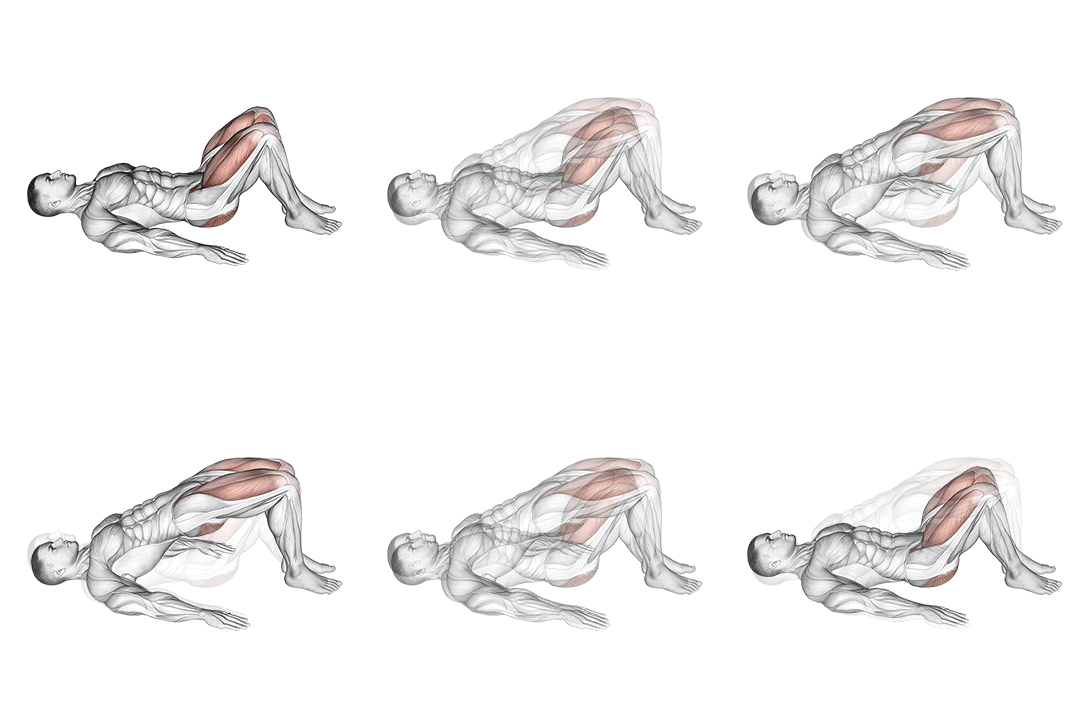
The rear decline bridge is a glute bridge variation performed with the feet elevated on a low surface and shoulders on the floor, then lifting the hips to create a straight line from shoulders to knees. The decline angle (feet higher than shoulders) increases the lever arm and load on the glutes compared to standard glute bridges, producing more meaningful stimulus per rep. For trainees focused on glute development, this variation is significantly more productive than flat-floor bridges. Glute bridges in any form address the chronic glute weakness common in modern adults. Hours of sitting deactivate the glutes; without dedicated training, they stay weak and underutilized during compound lifts like squats and deadlifts. The result is reduced power output, anterior pelvic tilt issues, and lower back tightness that traces back to glute weakness. Bridge variations address this directly. The rear decline version specifically loads the glutes more aggressively than flat bridges through the increased lever arm. For trainees who've outgrown flat bridges (3 sets of 20+ reps feel easy), the decline version provides natural progression. The trade-off is the equipment requirement (a low bench or step at appropriate height) and the slightly more challenging position. For home trainees with appropriate furniture, the exercise produces meaningful glute development without weights.
Why train the Rear Decline Bridge?
- Loads the glutes more aggressively than flat-floor bridges through increased lever arm.
- Addresses chronic glute weakness common in sedentary adults.
- Builds the foundational hip extension strength supporting squats and deadlifts.
- Improves anterior pelvic tilt by strengthening the underactive glutes.
- Reduces lower-back tightness traced to glute weakness.
- Pairs naturally with single-leg variations for unilateral progression.
How to do the Rear Decline Bridge: step by step
- 1Lie on your back with your feet flat on the ground and your knees bent.
- 2Place your arms by your sides with your palms facing down.
- 3Engage your glutes and hamstrings, and lift your hips off the ground until your body forms a straight line from your knees to your shoulders.
- 4Hold this position for a few seconds, then slowly lower your hips back down to the starting position.
- 5Repeat for the desired number of repetitions.
Muscles worked
Primary
glutes
Secondary
hamstrings, lower back
Common mistakes to avoid
Pushing through the lower back instead of glutes
The lift should come from glute contraction, not lumbar arching. Squeeze the glutes to drive the lift; if the lower back arches dramatically, you're using lumbar extension instead.
Insufficient hip extension
Stop the lift when the body forms a straight line from shoulders to knees — not before, not after. Going beyond this position strains the lower back; stopping short reduces glute stimulus.
Bouncing through reps
Slow controlled tempo (2 seconds up, 1-second hold at top, 2 seconds down) drives more glute stimulus than fast bouncing.
Inadequate hold at the top
The 1-second squeeze at the top is what drives most glute development. Skipping the hold reduces effective training stimulus.
Wrong elevation height
The bench should be 12-18 inches high for most trainees. Too low reduces the decline benefit; too high makes the position unstable.
Easier and harder variations
Easier
Reduce elevation height to 6-12 inches. Or perform standard glute bridge on the floor before progressing to decline.
Harder
Add weight (plate held against pelvis). Or progress to single-leg rear decline bridges. For maximum challenge, weighted single-leg decline bridges produce serious glute development.
Alternative exercises
Glute bridge (floor)
Standard version without elevation. Use as foundation; progress to decline once 20+ reps feel easy.
Hip thrust
Bench-supported version with shoulders elevated on bench. Different lever; pairs well with bridges.
Single-leg glute bridge
Unilateral progression. Use to address strength imbalances or as harder version.
How to program the Rear Decline Bridge into your training
Rear decline bridges work as primary glute work in any lower-body program. Sets and reps: 3-4 sets of 12-20 reps with 60 seconds rest. Total weekly volume of 100-200 reps. Frequency: 2-3 times per week. Glutes recover within 48 hours. In a session: 4 sets of 15 rear decline bridges, 4 sets of 8 squats, 3 sets of 10 lunges, 3 sets of 12 calf raises. For glute emphasis: 4 sets of 15-20 reps, 3 times per week, paired with hip thrusts and Bulgarian split squats. Don't program decline bridges on the same day as heavy deadlifts — cumulative posterior chain load can exceed tolerance.
Recovery and frequency
Recovery within 48 hours from moderate volume. Watch for lower-back discomfort (warrants stopping) and persistent glute tightness.
Frequently asked questions
How many sets and reps?
3-4 sets of 12-20 reps with 60 seconds rest.
How often?
2-3 times per week. Glutes recover within 48 hours.
Will this build my glutes?
Yes — the increased lever arm produces more glute stimulus than flat bridges.
Decline vs flat bridge?
Decline is harder due to increased lever. Flat is more accessible. Use both at different stages.
Should I add weight?
Eventually, yes. Build to 20 strict bodyweight reps first, then add load.
Is this safe for back?
Generally yes when form stops at neutral hip extension (not hyperextended). Sharp lower-back pain warrants stopping.
Useful tools for this exercise
Build a workout with the Rear Decline Bridge
Puna gives you guided bodyweight workouts you can do anywhere — no equipment, no gym, just structured progressions that build real strength.