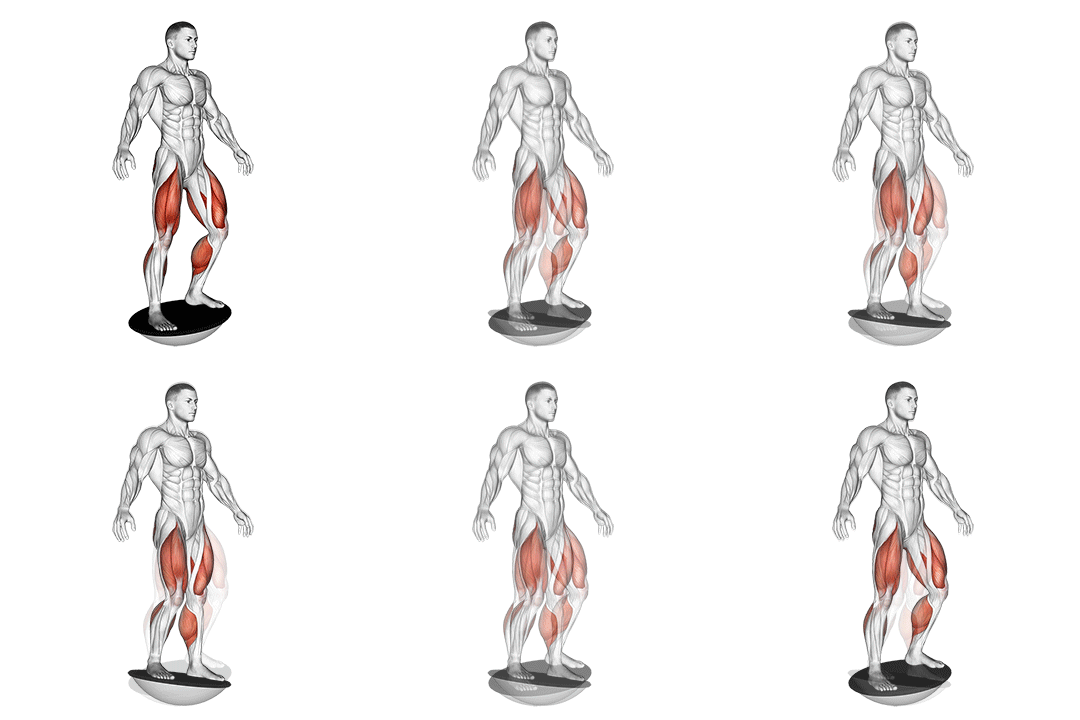
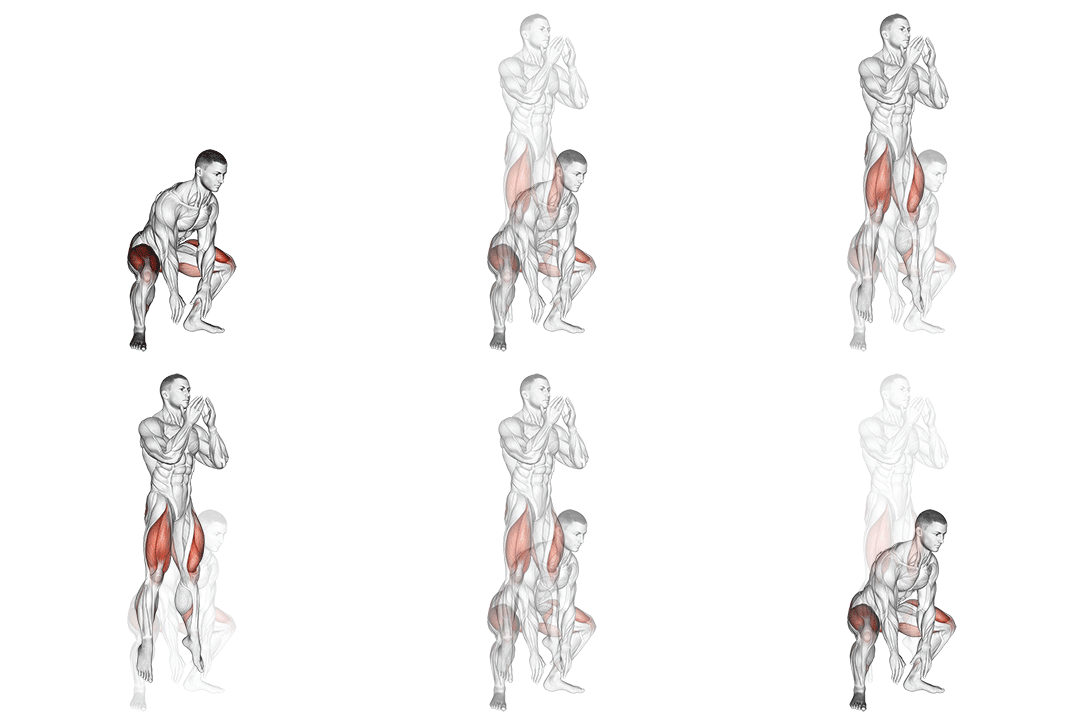
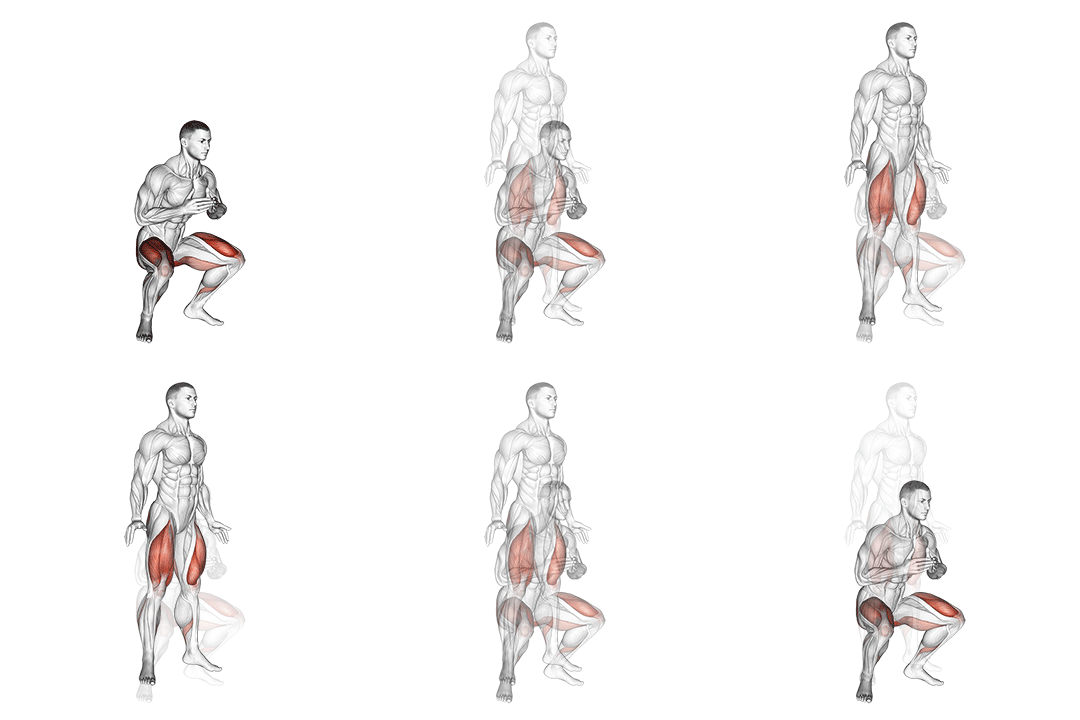
Quick Feet V. 2
beginner cardio exercise · body weight · targets quads
- Body part
- upper legs
- Primary target
- quads
- Equipment
- body weight
- Difficulty
- beginner
Quick feet is a cardio agility drill where you stand in place and move the feet up and down rapidly, alternating quick taps as if running on hot coals. The exercise produces fast cardiovascular elevation through high-tempo lower-body motion while training quick-twitch muscle fibers in the calves, ankles, and quads. Despite its simplicity, quick feet is one of the most demanding bodyweight cardio drills available — sustained 30-second sets produce serious heart rate spikes. This is a foundational athletic conditioning drill. The high cadence engages the lower-leg fast-twitch fibers more than any steady-state cardio, building the kind of explosive calf and ankle conditioning that translates to sprinting, sport agility, and reactive athletic movement. For athletes in cutting sports or anyone wanting to develop foot speed and cardiovascular conditioning simultaneously, quick feet earns its place. The trade-off is the joint demand. Sustained high-frequency foot strikes load the calves, ankles, and knees with significant impact. Programmed thoughtfully (2-3 times per week, conservative volume) with adequate recovery, this isn't a problem. Programmed daily without rest, joint issues accumulate quickly.
Why train the Quick Feet V. 2?
- Spikes heart rate quickly through high-tempo lower-body motion.
- Trains quick-twitch fibers in calves, ankles, and quads.
- Builds foot speed and cardiovascular conditioning simultaneously.
- Time-efficient for HIIT-style training.
- Useful as warm-up activation before athletic training.
- Carries over to sport agility and sprint performance.
How to do the Quick Feet V. 2: step by step
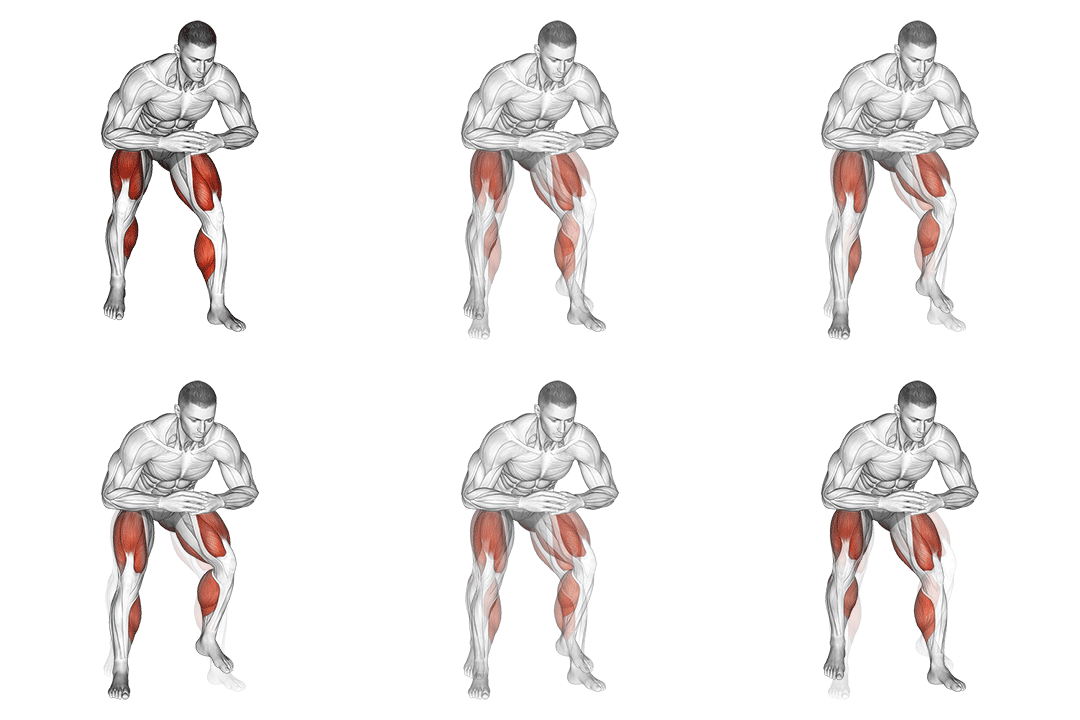
- 1Stand with your feet shoulder-width apart and your arms by your sides.
- 2Begin by rapidly moving your feet up and down, as if you were running in place.
- 3Keep your movements quick and light, focusing on staying on the balls of your feet.
- 4Continue for the desired duration or number of repetitions.
Muscles worked
Primary
quads
Secondary
calves, hamstrings
Common mistakes to avoid
Lifting feet too high
Quick feet is about cadence, not height. Tiny rapid foot lifts produce more cardio benefit than higher slower lifts.
Stiff ankles or knees
The motion requires loose, springy joints. Tense rigidity prevents the rapid cadence that's the point.
Heel striking
Stay on the balls of the feet. Heel-striking each rep stresses the joints.
Going too long per set
Sets longer than 60 seconds usually involve form degradation. Stop at 30-45 seconds for clean cadence.
Programming too frequently
2-3 times per week is the cap. Daily quick feet produces ankle and knee issues.
Easier and harder variations
Easier
Reduce cadence to slower foot tapping. Or use lower-impact alternatives like marching in place.
Harder
Increase cadence to maximum sustainable speed. Or add lateral motion (side-to-side quick feet). Or perform on a balance pad for added proprioceptive demand.
Alternative exercises
Jump rope
Similar cadence-based cardio with different stimulus. Pair for variety.
High knees
Higher lift version with different demand.
Mountain climbers
Plank-position cardio. Different position; similar intensity.
How to program the Quick Feet V. 2 into your training
Sets and reps: 3 sets of 30-45 seconds with 30-60 seconds rest. Frequency: 2-3 times per week. In a HIIT circuit: 30 seconds quick feet, 30 seconds rest, alternating with other drills. As warm-up: 30 seconds before athletic training. Don't program quick feet daily.
Recovery and frequency
Recovery within 24-48 hours. Watch for ankle or knee discomfort.
Frequently asked questions
How long?
30-45 seconds per set, 3 sets per session.
How often?
2-3 times per week.
Will this make me faster?
Some carryover to athletic foot speed and conditioning. Direct sport-specific work matters more for serious sport gains.
Quick feet vs jump rope?
Jump rope adds equipment but provides smoother cadence. Quick feet requires no equipment.
Are there knee implications?
Yes — repeated foot strikes stress knees. Reduce volume if knee discomfort appears.
Is this for athletes only?
Useful for general HIIT cardio. Athletes get more sport-specific benefit but anyone can use this for cardio variety.
Useful tools for this exercise
Build a workout with the Quick Feet V. 2
Puna gives you guided bodyweight workouts you can do anywhere — no equipment, no gym, just structured progressions that build real strength.