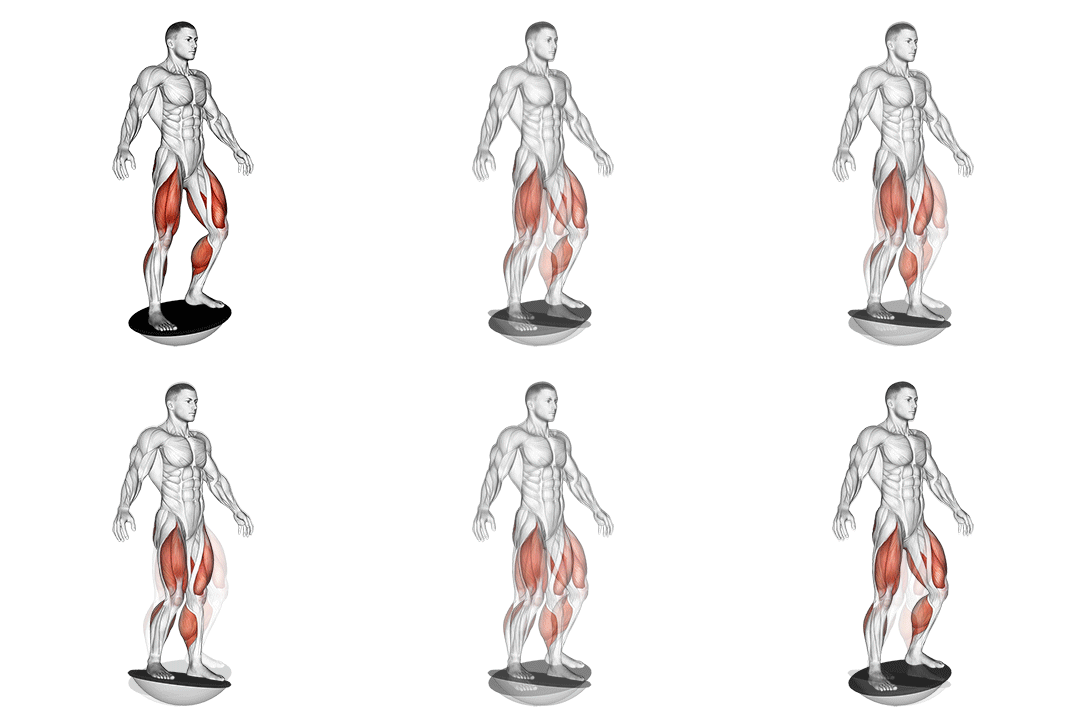
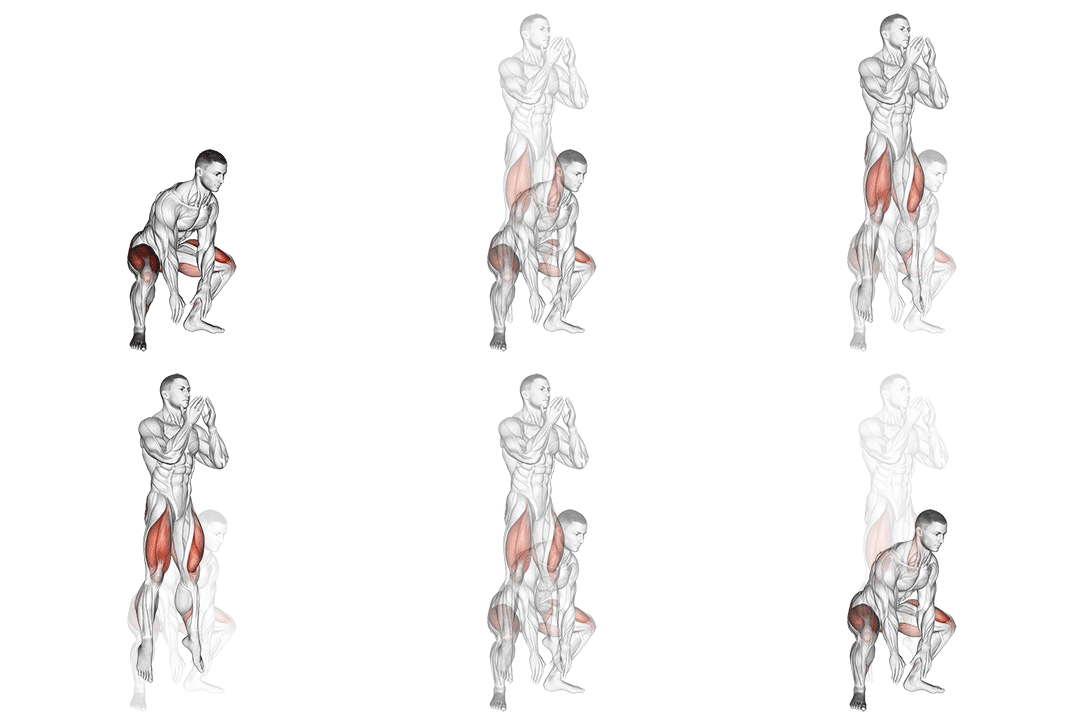
Quads (bodyweight Squat)
beginner strength exercise · body weight · targets quads
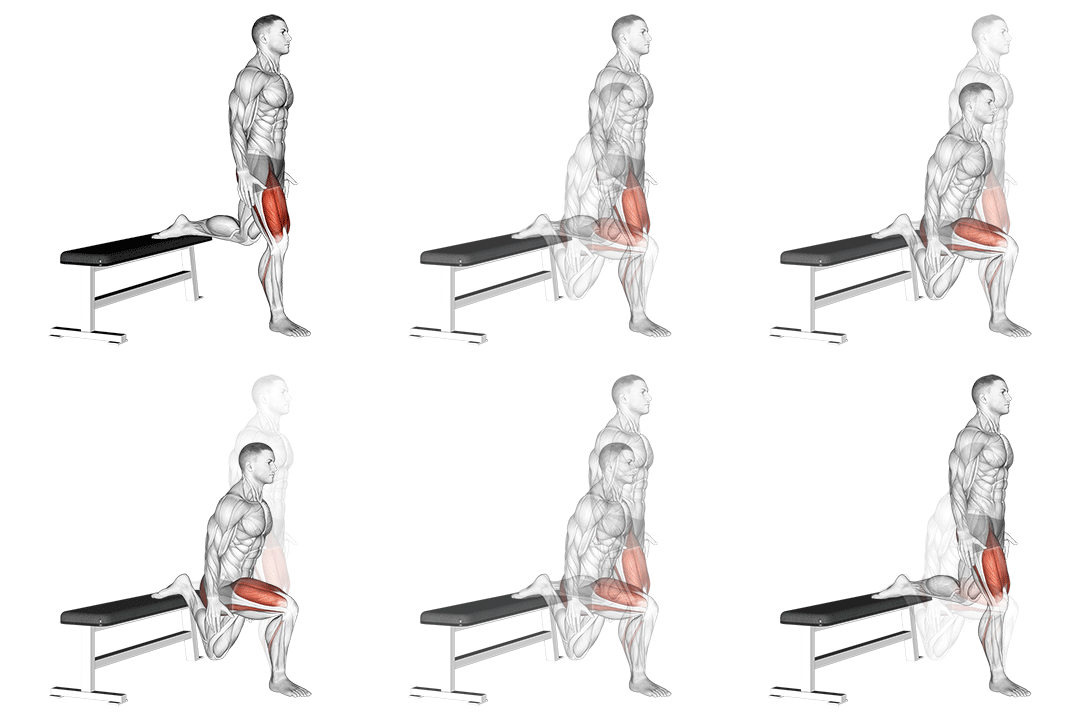
- Body part
- upper legs
- Primary target
- quads
- Equipment
- body weight
- Difficulty
- beginner
The bodyweight squat is the foundational lower-body movement — the pattern that humans use to sit, stand, lift, climb, and play. From a standing position, you bend at the hips and knees to lower your body until the thighs are roughly parallel to the floor, then drive back up to standing. The exercise trains the quadriceps, glutes, hamstrings, and core all at once, while teaching the body the mechanics that underpin every other lower-body movement, from running to deadlifts to climbing stairs. Its simplicity is deceptive. Almost everyone can do a bodyweight squat, but few do it well. Common errors — knees caving inward, heels lifting, lower back rounding at depth, weight shifting onto the toes — are so widespread that experienced coaches will spend months working with athletes just on this single movement. The good news: cleaning up your bodyweight squat pays dividends in every other exercise, and the corrections are mostly intuitive once someone points them out. For general fitness, the bodyweight squat earns its place as a daily-practicable staple. For strength building beyond the early stages, you'll eventually need added load (goblet squats, barbell squats, etc.), but bodyweight squats remain useful for warm-ups, mobility work, and high-rep endurance training throughout your life.
Why train the Quads (bodyweight Squat)?
- Trains every major lower-body muscle group in one efficient movement.
- Improves hip and ankle mobility through full range of motion.
- Builds the foundational pattern needed for every loaded squat variation.
- Requires zero equipment and minimal space — works in any room.
- Scales infinitely: from assisted (using a pole or doorframe) to weighted (goblet, barbell) for years of progression.
- Improves balance and proprioception by demanding control through a full lower-body range.
How to do the Quads (bodyweight Squat): step by step
- 1Stand with your feet shoulder-width apart.
- 2Lower your body by bending your knees and pushing your hips back as if sitting on a chair.
- 3Keep your chest up and your back straight.
- 4Lower yourself until your thighs are parallel to the ground.
- 5Push through your heels to return to the starting position.
- 6Repeat for the desired number of repetitions.
Muscles worked
Primary
quads
Secondary
hamstrings, glutes
Common mistakes to avoid
Knees caving inward at the bottom of the squat
When the knees collapse toward each other, the inner knee structures take stress they shouldn't. Drive your knees out in line with your toes throughout the movement — the knees should track over the second and third toes, never inside them.
Heels lifting off the ground
If your heels rise during the squat, ankle mobility is the limiting factor. Use a small heel wedge (1/2 inch) while you build dorsiflexion through wall ankle rocks. Squatting on toes shifts load forward and stresses the knees.
Lower back rounding at depth
A rounded lower back at the bottom means hip mobility hasn't caught up to the depth you're attempting. Don't go as deep — squat only as low as you can hold a neutral spine. Build the depth over time through hip mobility work.
Weight shifting forward onto the toes
If your weight is on the balls of your feet, the squat becomes a quad-dominant exercise that misses the glutes and hamstrings. Sit back into your hips so your weight stays in your heels and mid-foot — you should be able to wiggle your toes at the bottom of every rep.
Looking up at the ceiling during the movement
Tilting the head back hyperextends the cervical spine and shifts the body's center of gravity. Keep the gaze on the horizon or slightly down — the neck should stay in line with the spine throughout.
Easier and harder variations
Easier
Use a pole, doorframe, or sturdy chair for support — hold on with one or both hands as you squat. Reduce squat depth to whatever you can do without rounding the back. Build to unsupported parallel squats over 4-8 weeks.
Harder
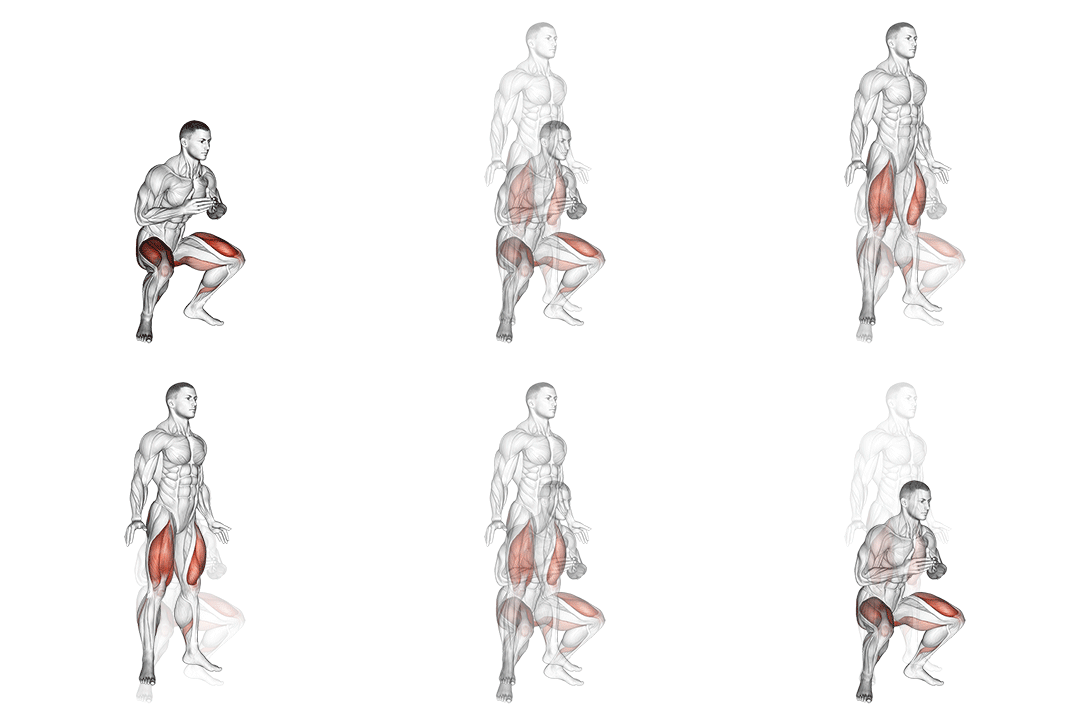
Add load (goblet squat with a kettlebell or dumbbell at chest height). Or progress to single-leg variations (split squats, Bulgarian split squats, eventually pistol squats). Tempo squats (3-5 seconds down, brief pause, 1-2 seconds up) add demand without weight.
Alternative exercises
Goblet squat
Bodyweight squat with a kettlebell or dumbbell at chest height. The added load makes the squat easier to balance and adds a strength stimulus.
Box squat
Squat down to a low box or bench, briefly pause, then stand up. Builds hip strength and removes momentum from the bottom of the rep.
Wall sit
Isometric variation. Slide down a wall until thighs are parallel to the floor, hold for 30-60 seconds. Builds quad endurance and teaches the squat depth position.
How to program the Quads (bodyweight Squat) into your training
Bodyweight squats can be programmed at any frequency — daily for mobility, 3 times per week for strength, or as warm-up volume for any lower-body session. For strength: 3 sessions per week, 3-4 sets of 12-20 reps with 60-90 seconds rest. Once you can hit 4 sets of 25-30 reps without fatigue, the load is too low for further strength gains — add a goblet squat or progress to single-leg variations. For mobility: daily practice of 3 sets of 10-15 slow squats focusing on depth and form. Pair with potty squat holds and ankle mobility drills. As a warm-up: 2 sets of 10-15 reps before any heavier lower-body training. This wakes up the hips, knees, and ankles without depleting the legs for the main lifts. A full beginner home workout: 3 sets of 15 bodyweight squats, 3 sets of 8-10 push-ups (or modified), 3 sets of 8-10 inverted rows or band rows, 3 sets of 30-second planks. Done 3 times per week, this covers every major movement pattern and builds general fitness. For an interval-style workout, EMOM (every minute on the minute) format works well: 15 squats at the top of each minute for 10 minutes. This builds work capacity in addition to strength.
Recovery and frequency
Bodyweight squats in moderate volume have minimal recovery cost — most people can train them every other day without issues. Higher volumes (50+ reps per session) or progression to harder variations (single-leg, jumping) increase recovery demand. Quad and glute soreness in the first 2 weeks of training is normal and fades quickly. Knee discomfort during the squat is a different signal — usually a form error (knees caving, heels lifting) rather than the exercise itself. Address the form issue and consult a physical therapist if discomfort persists. Hip and ankle mobility work between sessions (couch stretch, calf stretch, deep squat hold) speeds recovery and improves the next session's quality.
Frequently asked questions
How many sets and reps of bodyweight squats should I do?
For strength: 3-4 sets of 12-20 reps with 60-90 seconds rest. For endurance: 3 sets of 25-50 reps with shorter rest. For mobility: 3 sets of 10-15 slow squats focusing on depth and form.
How often should I train the bodyweight squat?
3 times per week for strength gains; daily is fine for mobility and movement practice. The light load means recovery isn't a major concern unless volumes are very high.
Are bodyweight squats enough for leg strength?
For early adaptation and general fitness, yes. For ongoing strength gains beyond 6-12 months, you'll typically need added load (goblet squats, barbell squats) or harder variations (single-leg work, jumping squats) to keep progressing.
How deep should I squat?
Aim for thighs parallel to the floor or slightly below, while maintaining a neutral spine and heels on the ground. If you can't reach parallel without form breaking down, work hip and ankle mobility before chasing depth.
Are bodyweight squats bad for the knees?
Done with proper form, no — they're often part of knee rehabilitation programs. Knee pain during squats usually points to form errors (knees caving, heels lifting) or pre-existing issues, not the exercise itself.
How many bodyweight squats should I do daily?
There's no magic number — it depends on your goal. For general fitness, 3 sets of 15-20 reps every other day is plenty. For mobility maintenance, 30-50 daily slow squats build and preserve hip and ankle range. For high-volume challenges (100+ daily), watch knee feedback and back off if discomfort develops.
Useful tools for this exercise
Build a workout with the Quads (bodyweight Squat)
Puna gives you guided bodyweight workouts you can do anywhere — no equipment, no gym, just structured progressions that build real strength.