Push To Run
intermediate cardio exercise · body weight · targets cardiovascular system
- Body part
- cardio
- Primary target
- cardiovascular system
- Equipment
- body weight
- Difficulty
- intermediate
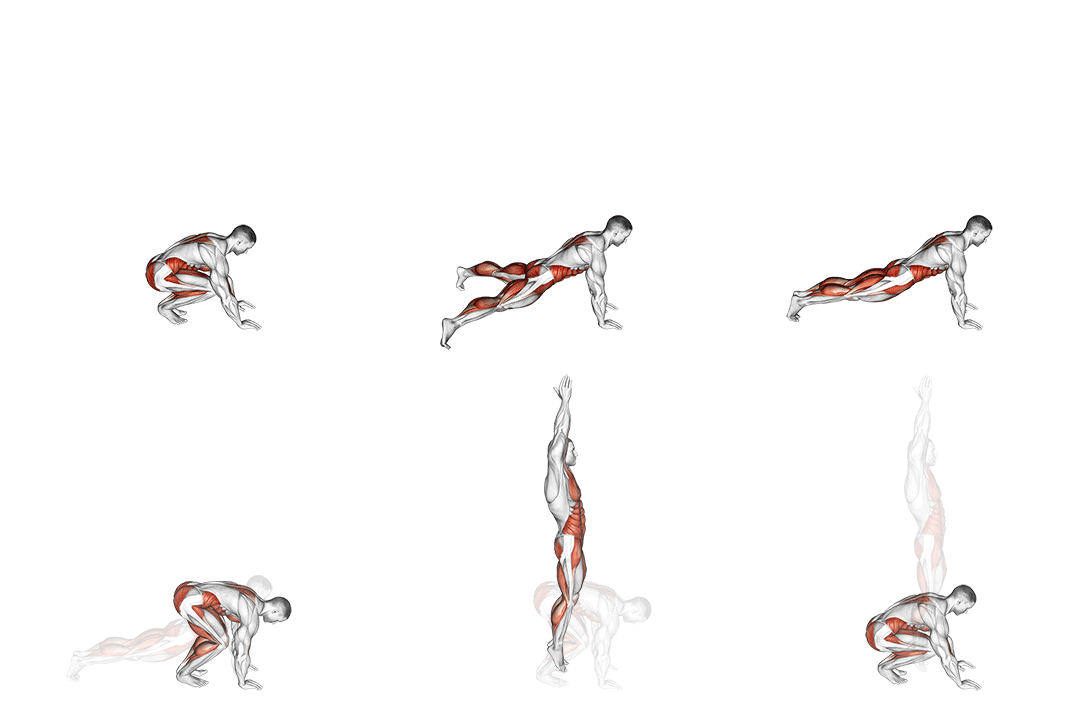
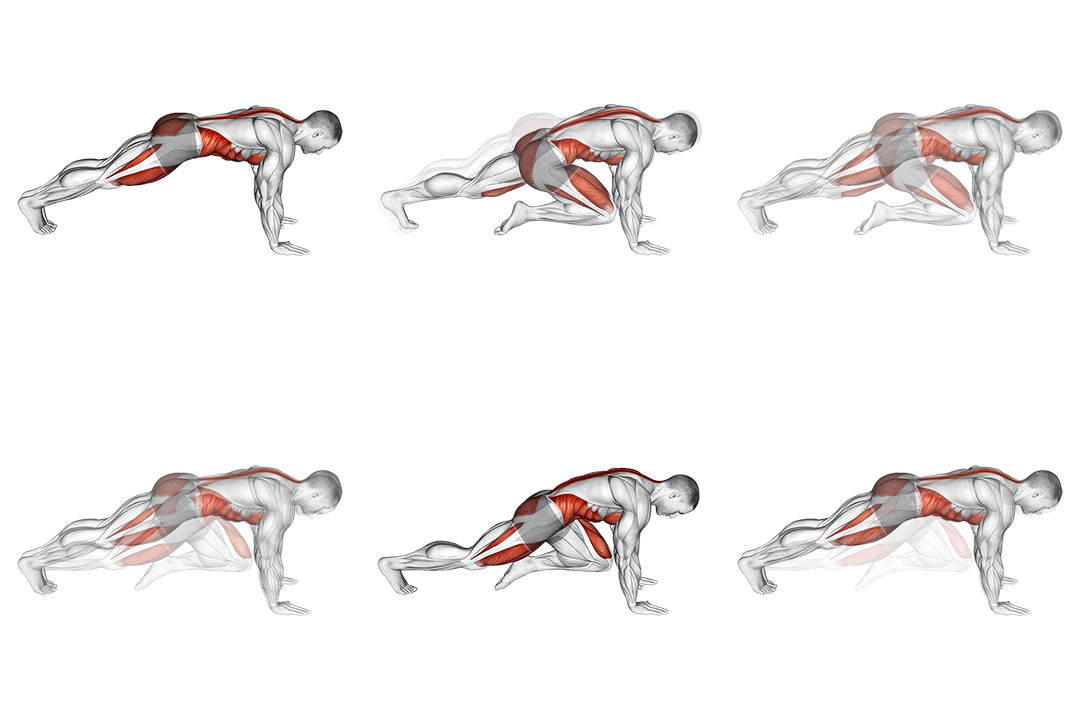
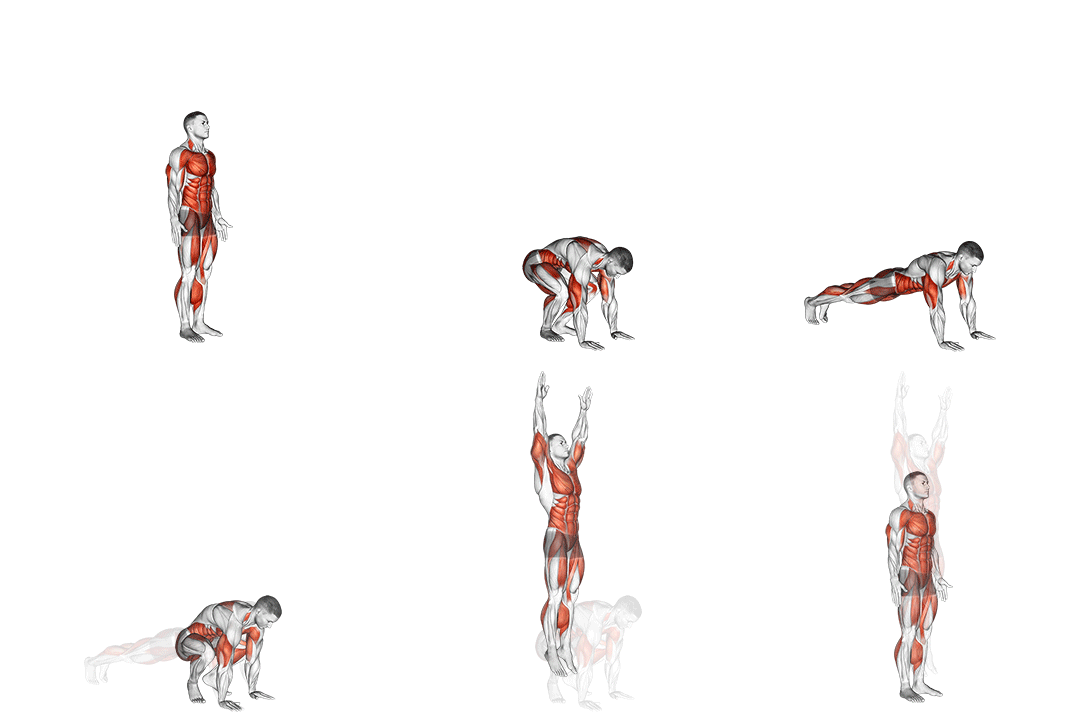
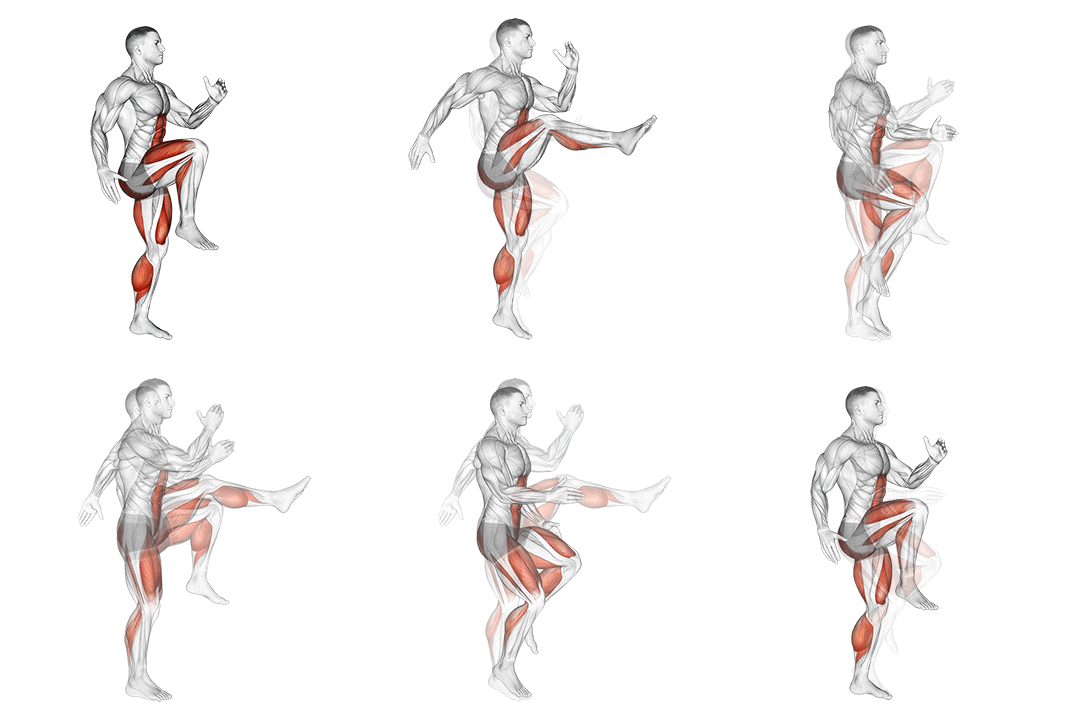
The push to run is a hybrid bodyweight exercise that combines a push-up with mountain climbers in alternating sequence. From a high plank position, you perform a complete push-up, then immediately drive the knees alternately toward the chest in a running-in-place motion before returning to the next push-up. The continuous transition between strength and cardio modes produces a unique training stimulus that pure push-ups or pure mountain climbers can't match alone. This is one of the more effective time-efficient training drills available. The push-up phase loads the chest, shoulders, and triceps. The mountain climber phase elevates heart rate dramatically and engages the core, hip flexors, and lower legs. The transition between the two phases trains the body to maintain core control and breathing rhythm under shifting demands. For trainees with limited training time, the push-to-run produces strength and cardio benefit simultaneously in a way that separately performed exercises don't quite replicate. The trade-off is the demand. The push-up component requires baseline pressing strength; the mountain climber component requires reasonable hip flexor and core endurance. Trainees missing either prerequisite struggle through messy reps that train neither well. For trainees with both prerequisites, programmed thoughtfully into HIIT or circuit work, the push-to-run is a powerful tool. The wrist load also matters — the sustained plank position with dynamic mountain climber transitions stresses the wrists more than either exercise alone.
Why train the Push To Run?
- Combines pressing strength training with high-intensity cardio in a single drill.
- Spikes heart rate quickly while still building meaningful chest and triceps work.
- Engages full-body coordination through the transitions between push-up and mountain climber phases.
- Time-efficient — produces strength and cardio benefit simultaneously.
- Builds core endurance through sustained plank position with dynamic leg movement.
- Requires no equipment — usable in any space large enough for a plank position.
How to do the Push To Run: step by step
- 1Start in a push-up position with your hands shoulder-width apart and your body in a straight line.
- 2Lower your chest towards the ground by bending your elbows, keeping your body straight.
- 3Push through your hands to extend your arms and return to the starting position.
- 4Quickly bring one knee towards your chest, then quickly switch and bring the other knee towards your chest.
- 5Continue alternating knees as fast as you can while maintaining good form.
- 6Continue for the desired duration or number of repetitions.
Muscles worked
Primary
cardiovascular system
Secondary
quadriceps, hamstrings, calves
Common mistakes to avoid
Hips sagging during push-ups
As fatigue builds across the combined drill, the hips often drop during push-ups, especially after the cardio segment. Brace the abs and glutes throughout. The body should travel as a single unit during the push-up; the lifted-knee mountain climber position should restore alignment.
Poor knee drive in the running phase
The mountain climber portion should drive the knees toward the chest aggressively, not just shuffle the feet. The full knee drive is what produces the cardio demand and core engagement. Quick shuffling without real knee drive is just messy footwork.
Insufficient strength prerequisites
Trainees who can't do 10+ strict push-ups will struggle to maintain form across the drill. Build the push-up base first; the push-to-run becomes productive when the underlying push-up strength supports clean execution.
Going too fast at the start
The temptation is to chain reps as fast as possible. The first sets should be moderate-paced, focused on form quality across both phases. Speed comes after the pattern is grooved; rushing the early sets produces messy reps that train nothing well.
Holding the breath
Many trainees hold their breath during the push-up phase, especially under fatigue. This spikes blood pressure and reduces cardio capacity. Establish rhythmic breathing — inhale on the descent, exhale on the press, continuous breathing through the running phase.
Easier and harder variations
Easier
Drop to your knees for the push-up portion or skip the push-up entirely (just hold the plank position during the 'press' phase). The reduced upper-body demand makes the cardio component the main stimulus. Or reduce the running phase to slower-paced knee drives rather than aggressive mountain climbers.
Harder
Increase the running phase pace and duration — perform 8-10 mountain climber reps between each push-up rather than just a few. Or progress to push-up with single-leg mountain climber, where one leg holds extended while the other drives. For maximum challenge, perform with explosive plyometric push-ups followed by sprint-pace mountain climbers.
Alternative exercises
Burpee
Similar full-body conditioning combining strength and cardio. More movement complexity but trains similar combined demands.
Mountain climbers (alone)
Just the cardio component without the push-up phase. Use when push-up strength isn't available or when pure cardio is the goal.
Push-up (alone)
Just the strength component. Use when cardio is being addressed elsewhere in the training session.
How to program the Push To Run into your training
Push-to-run works as cardio-strength HIIT or as part of conditioning circuits. The combined demand makes long continuous sets impractical. Interval format: 30-45 seconds of push-to-run, 30 seconds rest, 6-10 rounds. Total session: 8-15 minutes. This produces excellent combined strength and cardio stimulus with bodyweight only. In a circuit: 30 seconds push-to-run, 30 seconds bodyweight squats, 30 seconds rest. Repeat 6-8 times for a 12-18 minute full-body session. As a finisher: 2-3 sets of 30-45 seconds at the end of an upper-body session. The combined cardio and pressing demand provides metabolic finishing work after primary strength volume. Frequency: 2-3 times per week is appropriate. The combined upper-body and core demand needs 48-72 hours between hard sessions for full recovery. For general fitness HIIT: 3 sets of 45 seconds with 60 seconds rest, 2 times per week as part of varied cardio rotation. Pairs naturally with strength training on alternating days. For weight loss: push-to-run fits well into HIIT protocols. 6-8 rounds of 30 seconds work with 30 seconds rest, 2 times per week, alongside strength training and dietary management. For athletes: useful as conditioning work that doesn't require equipment. The combined strength-cardio demand produces broader carryover than pure cardio. Don't program push-to-run daily — the combined cumulative demand on shoulders, wrists, and core needs adequate recovery. 2-3 sessions per week produces better results than daily volume.
Recovery and frequency
Push-to-run recovers within 24-48 hours when programmed at moderate volume. Higher-intensity HIIT sessions need 48-72 hours. The main warning signs are wrist soreness from the sustained plank position, shoulder fatigue from the combined demand, and inner elbow discomfort. Wrist soreness usually means too much volume too soon — reduce frequency and add wrist preparation work. Shoulder fatigue is normal in early sessions and improves with practice. Long-term, regular push-to-run training pairs well with daily wrist mobility (5 minutes of circles, prayer stretches, eccentric work) to maintain wrist tolerance. Standard recovery practices — sleep, hydration, protein intake — apply.
Frequently asked questions
How long should I do push-to-run for?
30-45 seconds per interval, 6-10 intervals per session. Total session of 8-15 minutes provides excellent combined strength and cardio stimulus.
How often should I do push-to-run?
2-3 times per week. The combined upper-body and core demand needs 48-72 hours between hard sessions for full recovery.
Is this safe for beginners?
Only if push-up basics are established. Build to 10+ strict push-ups before introducing the combined drill. Beginners without push-up base should focus on push-up progression first; the push-to-run becomes productive when the underlying strength supports clean execution.
Push-to-run vs burpee: which is better?
Both combine strength and cardio. Burpees add a vertical jump and full body-to-floor transition. Push-to-run is slightly less demanding and easier on the wrists. Most well-rounded HIIT programs use both.
Will this build muscle?
The push-up component contributes some chest, shoulder, and triceps stimulus, but the high-rep cardio nature limits the strength load per rep. For pure muscle building, dedicated push-up training works better. Push-to-run produces moderate muscle stimulus alongside significant cardio benefit.
Can I do push-to-run with shoulder issues?
Depends on the issue. The sustained plank and dynamic transitions can aggravate existing shoulder problems. Consult a physiotherapist for current issues. For mild stiffness, start with the kneeling variation and stop if discomfort appears.
Useful tools for this exercise
Build a workout with the Push To Run
Puna gives you guided bodyweight workouts you can do anywhere — no equipment, no gym, just structured progressions that build real strength.