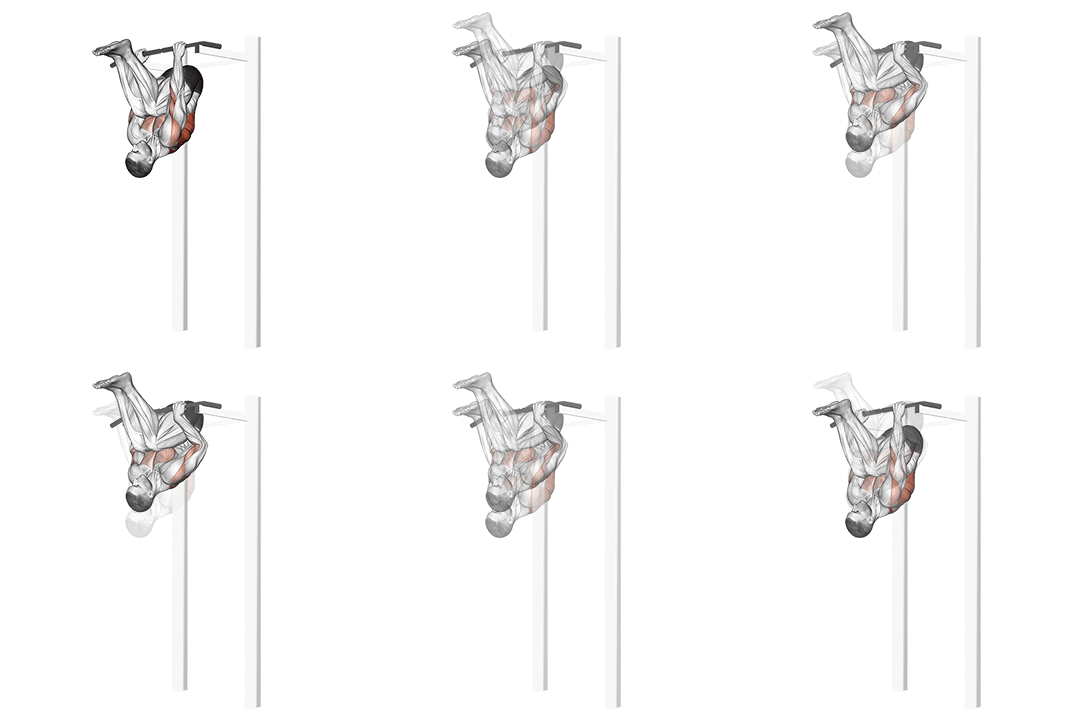
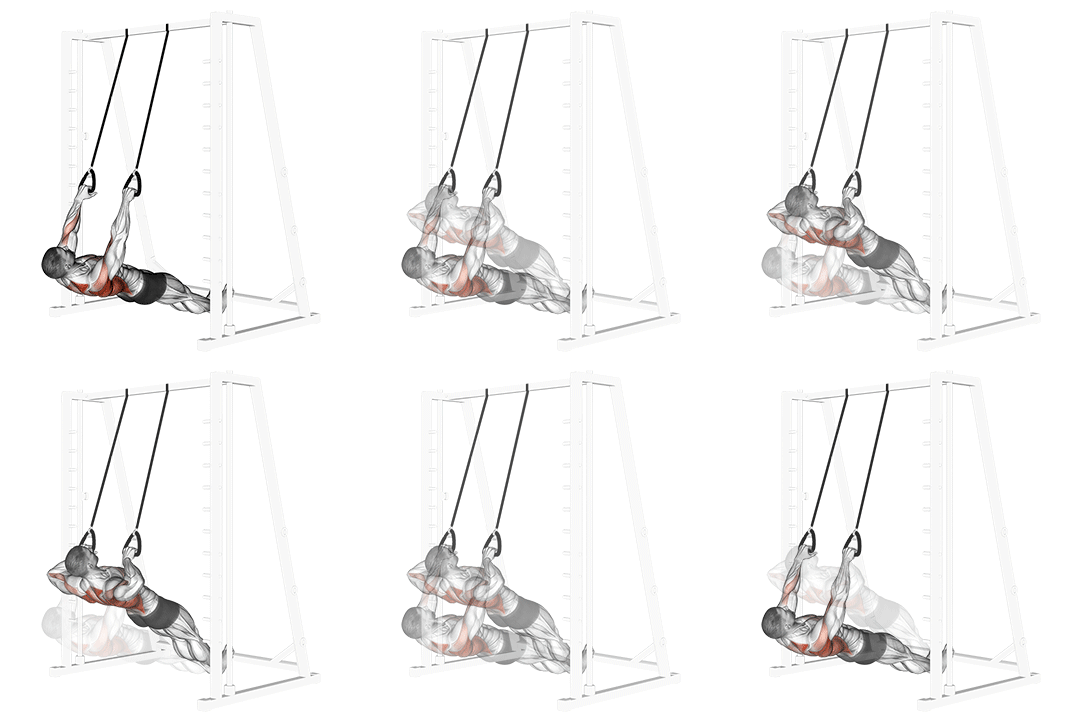
Pull Up (neutral Grip)
intermediate strength exercise · body weight · targets lats
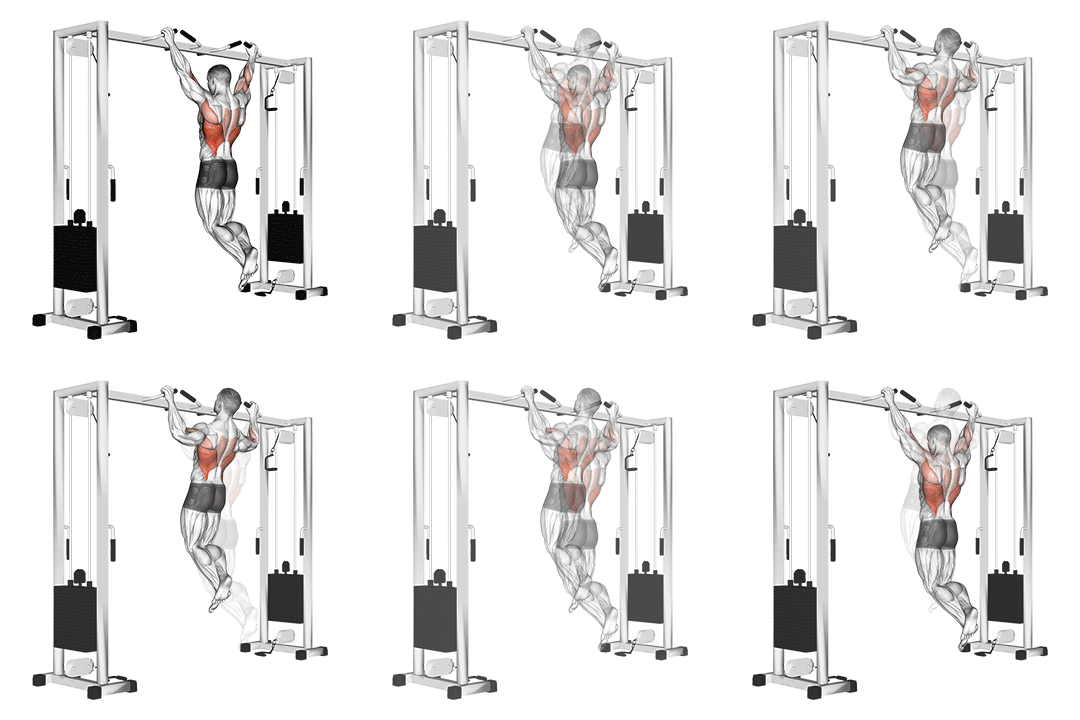
- Body part
- back
- Primary target
- lats
- Equipment
- body weight
- Difficulty
- intermediate
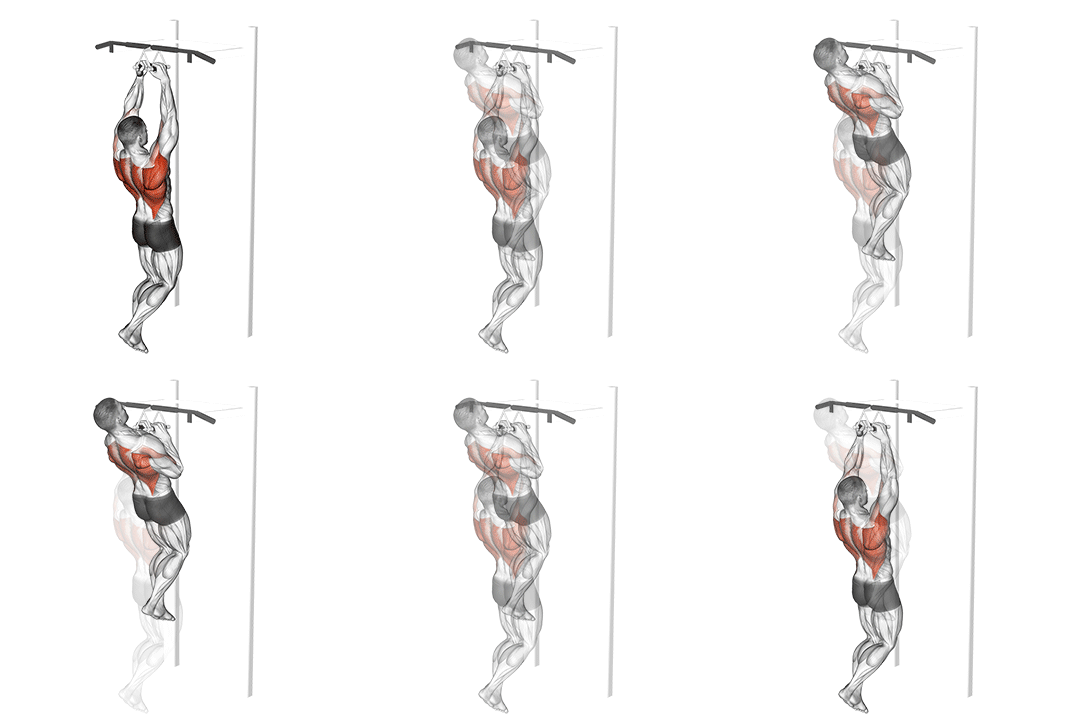
The pull-up with neutral grip — palms facing each other on parallel handles — is generally the most shoulder-friendly vertical pulling variation. The neutral grip orientation reduces rotational stress on the shoulder joint compared to the overhand pull-up (palms away) or underhand chin-up (palms toward), making it useful for trainees with anterior shoulder issues or general shoulder mobility limitations. This variant occupies a middle ground in muscle emphasis. The lats and middle back work hard (similar to standard pull-ups), and the biceps and brachialis contribute meaningfully (similar to chin-ups). The mixed emphasis makes neutral pull-ups particularly useful for trainees who want balanced upper-body pulling work without the specific shoulder loading patterns of either extreme grip orientation. Many strength coaches consider the neutral grip the safest default for trainees with any history of shoulder issues. The limitation is equipment access. Standard pull-up bars don't have neutral handles. A doorway pull-up bar with parallel handles, a power tower with parallel grip stations, or gymnastic rings (which allow any grip orientation) provide access. For home trainees with these options, the neutral grip pull-up earns a place as a primary vertical pulling variation. For those without specialized equipment, standard pull-ups and chin-ups cover most needs.
Why train the Pull Up (neutral Grip)?
- Most shoulder-friendly vertical pulling variation, reducing rotational stress on the joint.
- Provides balanced lat, middle back, and biceps stimulus in one exercise.
- Useful for trainees with anterior shoulder issues that flare up during pull-ups or chin-ups.
- Builds the same general back development as standard pull-ups with reduced shoulder demand.
- Provides variety in pulling mechanics for comprehensive back training.
- Pairs naturally with horizontal pulling (rows) for complete back development.
How to do the Pull Up (neutral Grip): step by step
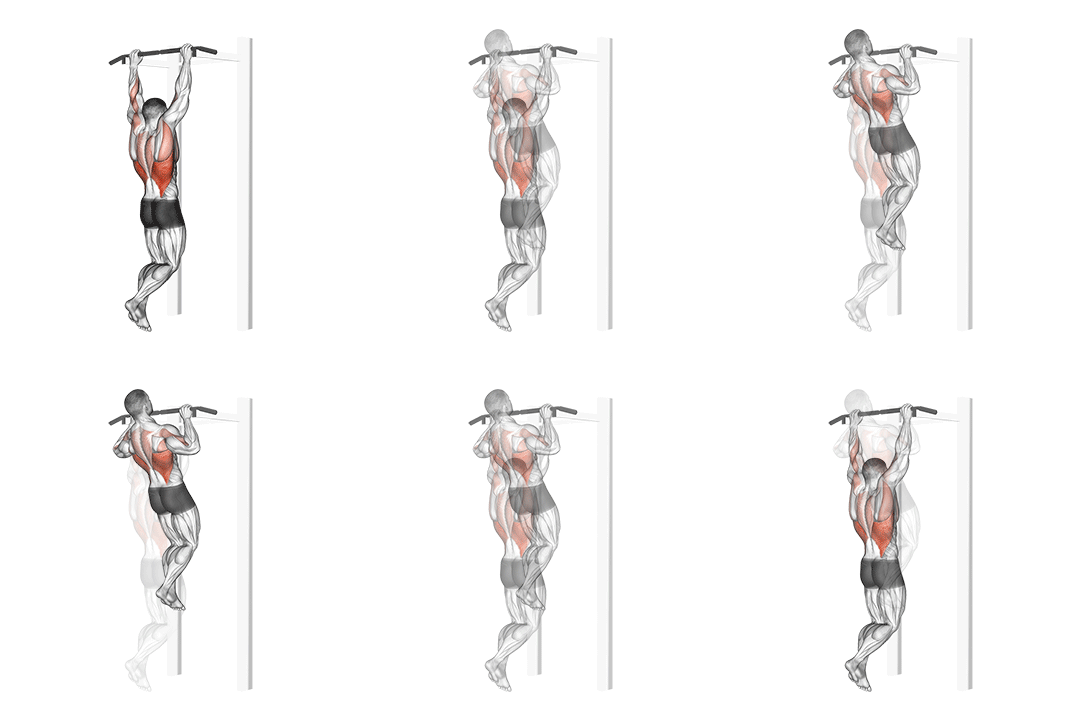
- 1Hang from a pull-up bar with a neutral grip (palms facing each other) and your arms fully extended.
- 2Engage your core and squeeze your shoulder blades together.
- 3Pull your body up towards the bar by bending your elbows and driving your elbows down towards your hips.
- 4Continue pulling until your chin is above the bar.
- 5Pause for a moment at the top, then slowly lower your body back down to the starting position with control.
- 6Repeat for the desired number of repetitions.
Muscles worked
Primary
lats
Secondary
biceps, forearms
Common mistakes to avoid
Kipping or swinging to get the chin up
Using momentum to swing the body up isn't a real pull-up. Strict form means the body stays still during the pull, with the back and arms doing all the work. If you can't pull strictly, regress to negatives or assisted variations.
Cutting depth at the bottom or top
Full range matters: arms fully extended at the bottom, chin clearing the bar at the top. Trainees who cut range to inflate rep counts build a partial pattern and miss the strength that full range develops.
Letting the shoulders shrug toward the ears
Active shoulders matter. Before each rep, pack the shoulders down — this engages the lats and protects the rotator cuff. Shrugged shoulders shift load to the upper traps and away from the back.
Going too narrow or wide on the parallel handles
Hand placement matters even on neutral grips. Aim for shoulder-width or slightly wider. Too narrow stresses the wrists; too wide reduces the neutral-grip benefit. Find the position that feels stable through the rep.
Skipping prerequisite work
Most failed pull-up progressions come from skipping the foundational dead hangs and negatives. These prerequisites build grip and shoulder tolerance the full movement demands. Don't skip them.
Easier and harder variations
Easier
Negative pull-ups (jump or step to the top, then lower slowly for 5-10 seconds) build pulling strength faster than any assisted variation. Or use a resistance band looped around the bar with a foot in it for assistance. Bench rows and inverted rows work as preparation.
Harder
Add weight (a vest or weight belt with a plate). Try archer pull-ups (one arm doing more work per rep), or progress toward the one-arm pull-up — a multi-year goal. Or extend range with rope climbs and gymnastic ring work using the neutral grip orientation.
Alternative exercises
Standard pull-up (overhand)
Palms facing away. Emphasizes lats and middle back more than neutral grip. Different shoulder loading; useful for variety.
Standard chin-up (underhand)
Palms facing you. Emphasizes biceps more. Different shoulder loading; useful for variety in rotation.
Inverted row
Horizontal pulling at lower load. Bodyweight prerequisite for pull-up training. Use as accessory work.
How to program the Pull Up (neutral Grip) into your training
Neutral grip pull-up training follows the same general patterns as other pull-up variations. For people working toward their first rep: 3-4 sessions per week, focusing on negatives, dead hangs, and assisted pulls. Build foundational strength over 3-6 months. For those who can do 1-5 reps: 3 sessions per week, 4-5 sets of 1-3 reps with 2-3 minutes rest. For 5-15 reps: 2-3 sessions per week, 4 sets of 4-8 reps with 90-120 seconds rest. For 15+ reps: 2 sessions per week, with weighted progression. A balanced upper body session: 4 sets of 5-8 neutral grip pull-ups, 4 sets of 8-10 push-ups, 3 sets of 10 inverted rows, 3 sets of 30-second hollow holds. For trainees with shoulder issues: neutral grip is often the safest pull-up choice. 3 sets of 4-6 reps, 2 times per week, paired with rotator cuff prehab work. Over 8-12 weeks of consistent training, most shoulder-issue trainees develop the strength to manage other grip variations. For variety in long-term pulling programming: rotate neutral grip pull-ups with standard pull-ups and chin-ups across training cycles. The varied loading patterns produce more complete back development than any single variation alone. Don't skip horizontal pulling (rows) in favor of vertical work alone. Vertical pulling without horizontal pulling produces incomplete back development.
Recovery and frequency
Neutral grip pull-ups recover within 48 hours from moderate volume work. The shoulder-friendly position makes this variation generally easier on the joint than standard pull-ups, supporting slightly higher frequency for some trainees. The main warning signs are biceps tendinopathy, elbow soreness, and grip fatigue persisting beyond 48 hours. Standard back, biceps, and forearm soreness fades within 48 hours and indicates appropriate stimulus. Long-term, regular neutral grip pull-up training pairs well with horizontal pulling work and direct shoulder mobility. Sleep, hydration, and protein intake support the recovery demand.
Frequently asked questions
How many sets and reps of neutral grip pull-ups should I do?
For strength: 4 sets of 4-8 reps with 90-120 seconds rest, 2-3 times per week. The same general programming as standard pull-ups.
How often should I do neutral grip pull-ups?
2-3 times per week. Same recovery patterns as other pull-up variations.
Why neutral grip instead of standard pull-up?
More shoulder-friendly position. The neutral grip reduces rotational stress on the shoulder, making it useful for trainees with anterior shoulder issues. The general back stimulus is similar to standard pull-ups.
Do I need special equipment?
Yes — most standard pull-up bars don't have neutral grip handles. A doorway bar with parallel handles, a power tower with parallel grips, or gymnastic rings work.
Will this build my back?
Yes, similar to standard pull-ups. The general back development is comparable; the secondary benefit is reduced shoulder stress for trainees with shoulder limitations.
Should I do this instead of standard pull-ups?
Only if shoulder issues prevent comfortable standard pull-ups. For healthy shoulders, the variations are roughly equivalent for back development. Most well-rounded programs include both for variety.
Useful tools for this exercise
Build a workout with the Pull Up (neutral Grip)
Puna gives you guided bodyweight workouts you can do anywhere — no equipment, no gym, just structured progressions that build real strength.