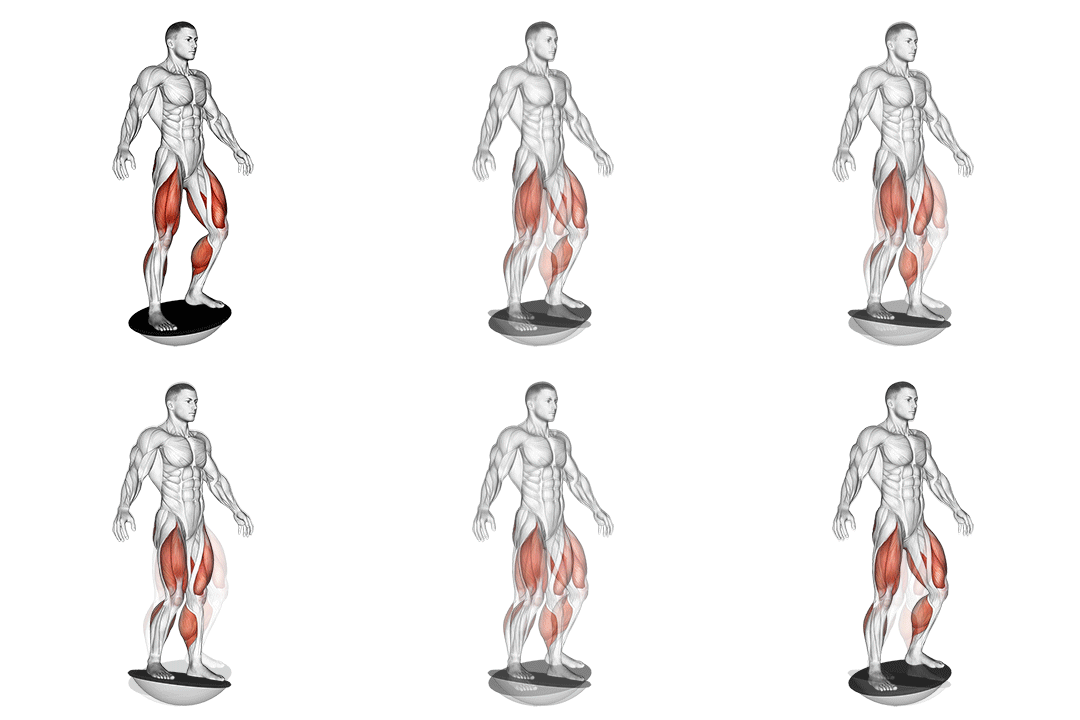
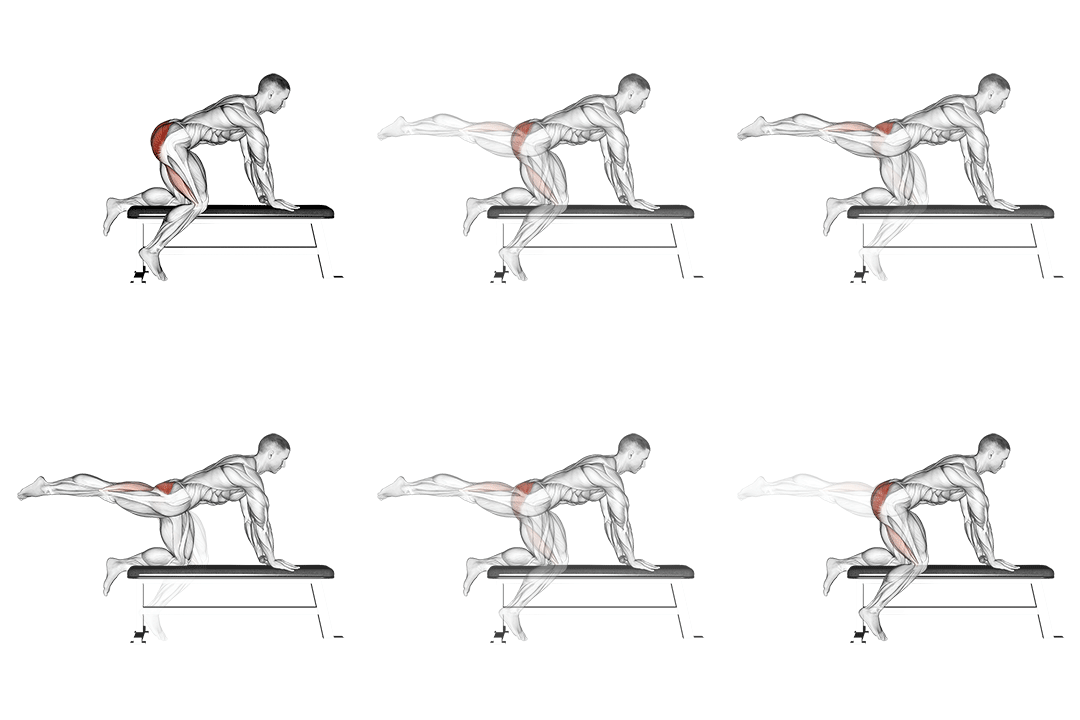
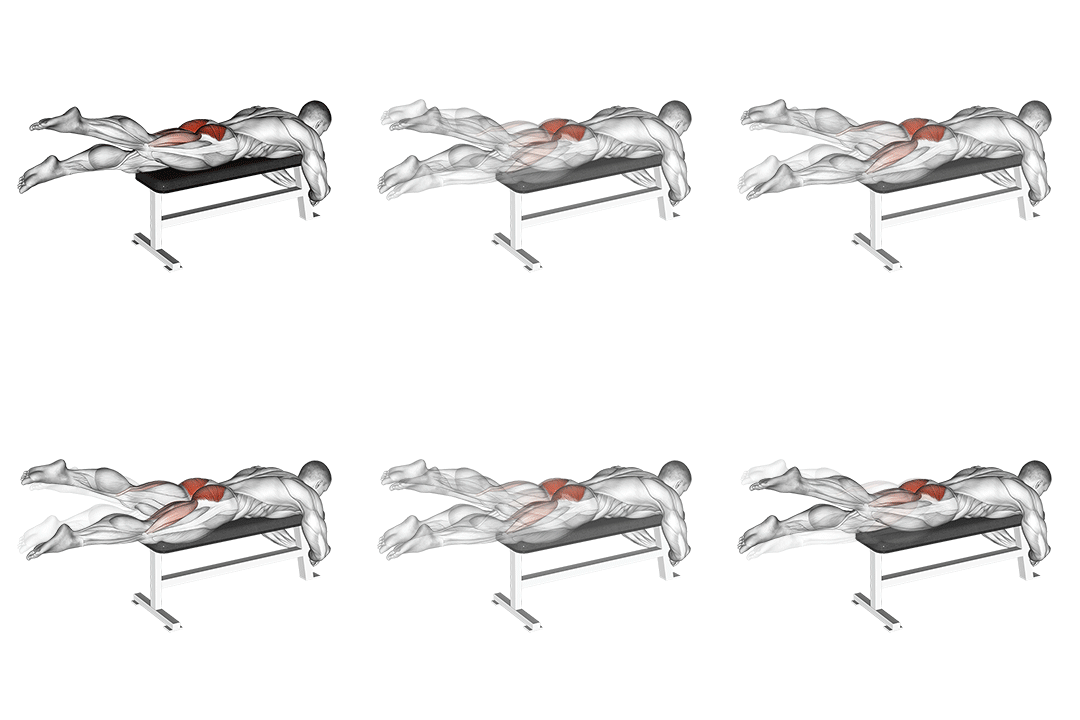
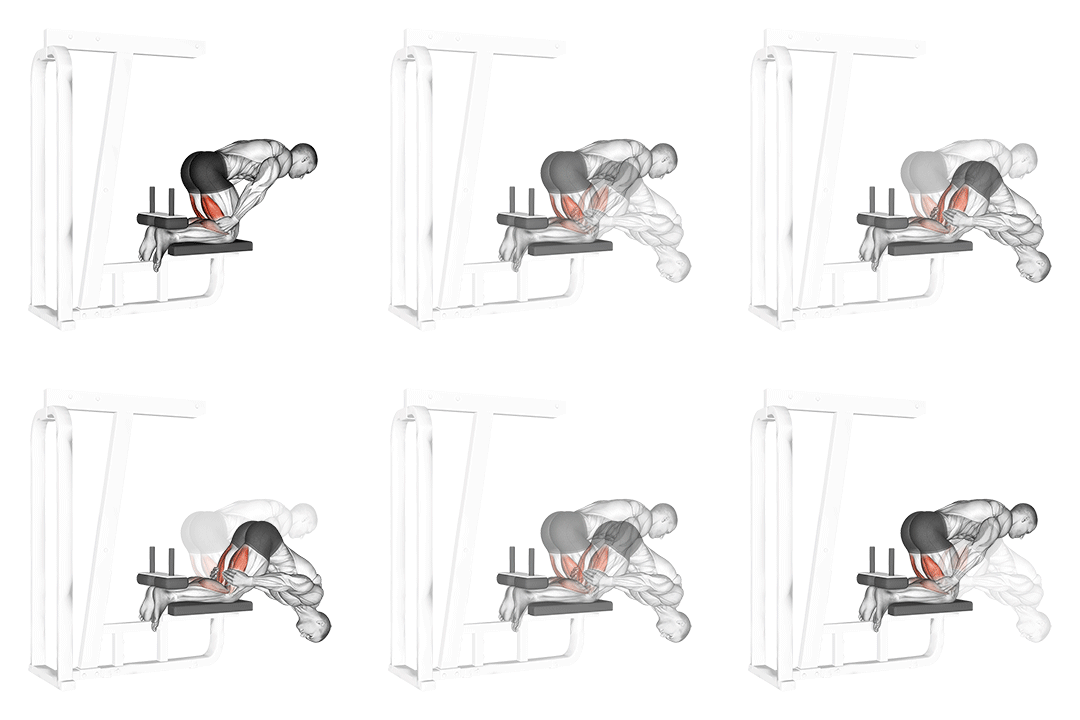
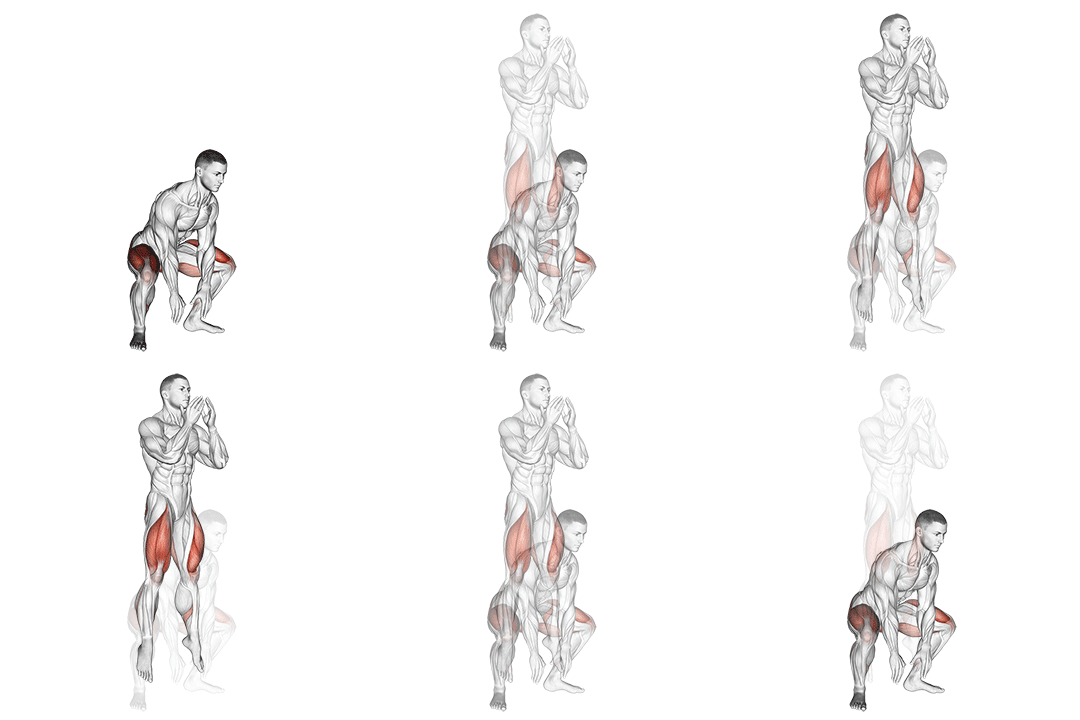
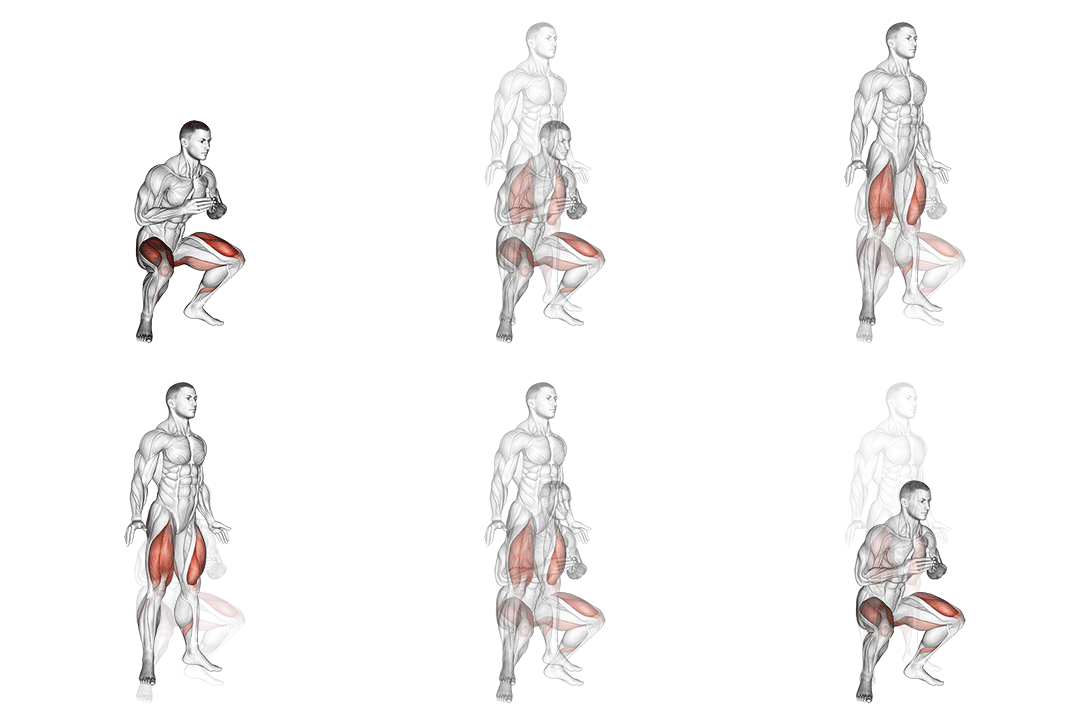
Potty Squat With Support
beginner strength exercise · body weight · targets glutes
- Body part
- upper legs
- Primary target
- glutes
- Equipment
- body weight
- Difficulty
- beginner
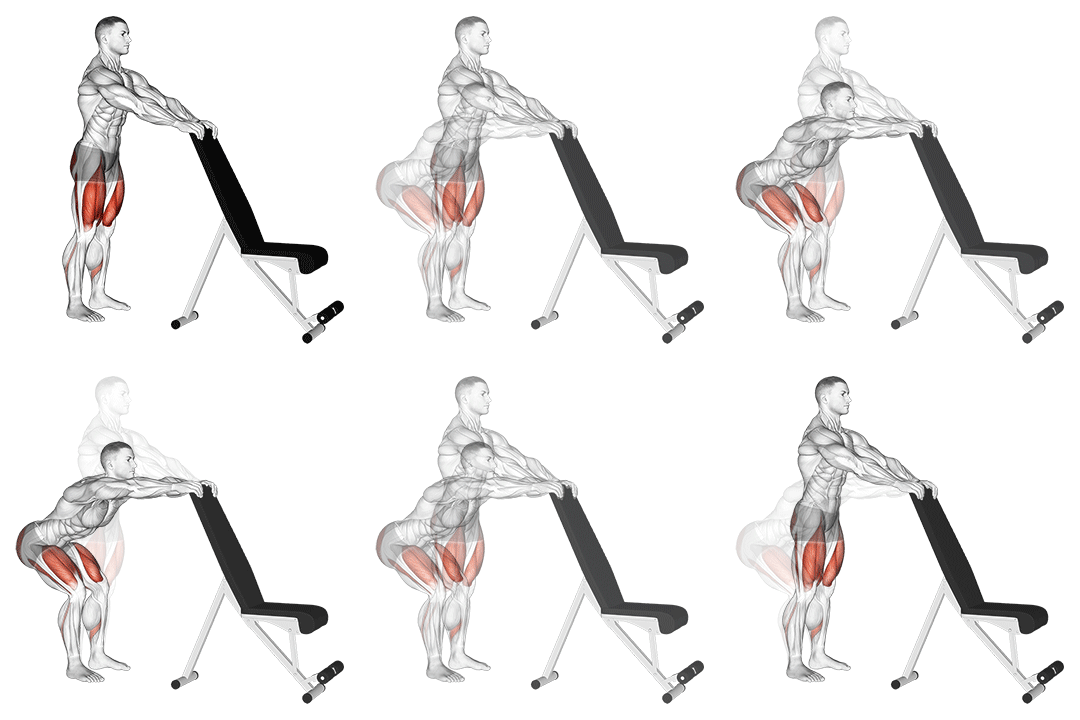
The potty squat with support is the assisted version of the deep squat hold — performed by gripping a sturdy object (doorframe, pole, or strap) in front of you while sinking into the deep squat position. The support takes some body weight off the legs and helps maintain balance, making the deep squat position accessible to people who can't yet hold it unassisted. This is the right entry point for most adults working toward unassisted deep squats. Modern desk-bound lifestyles leave most people with restricted hip and ankle mobility — the kind that makes unassisted deep squats feel impossible. The supported version gives you a way to spend time in the position without falling backward, which is the prerequisite for ever holding it freely. Like all mobility work, the value comes from frequent exposure rather than long single sessions. A few 60-second supported holds throughout the day, accumulated over weeks, restore the hip and ankle range that lets you eventually do unsupported deep squats. Most adults who practice supported potty squats daily for 4-8 weeks can transition to unsupported versions; from there, the deep squat becomes a permanent practice.
Why train the Potty Squat With Support?
- Accessible entry point to deep squat training for adults with restricted mobility.
- Lets you spend time in the deep position safely without falling backward.
- Restores hip and ankle mobility that desk-bound lifestyles erode.
- Decompresses the lower back when held for 30+ seconds.
- Bridges the gap between standard squats and unassisted deep squats.
- Requires only a sturdy object to grip.
How to do the Potty Squat With Support: step by step
- 1Stand with your feet shoulder-width apart, toes pointing slightly outward.
- 2Hold onto a stable support, such as a chair or wall, for balance.
- 3Lower your body down into a squat position by bending your knees and pushing your hips back.
- 4Keep your chest up and your back straight throughout the movement.
- 5Pause for a moment at the bottom, then push through your heels to return to the starting position.
- 6Repeat for the desired number of repetitions.
Muscles worked
Primary
glutes
Secondary
quadriceps, hamstrings, calves
Common mistakes to avoid
Pulling too hard on the support
The support is for balance and partial unloading, not for active pulling. If you're hauling yourself down with the arms, you're not actually loading the position. Use minimum support necessary to stay balanced.
Letting heels lift off the ground
Even with support, the heels should stay flat. If they rise, ankle mobility is the limiting factor. Use a small heel wedge until you build dorsiflexion.
Rounding the lower back at depth
A rounded back at the bottom means hip mobility hasn't caught up to the depth. Don't go all the way down — hold the depth where neutral spine is possible.
Treating it as reps instead of holds
The deep squat is a position to accumulate time in, not reps to count. Hold for 30-60 seconds, stand briefly, repeat.
Skipping it because it 'looks easy'
If the position is hard for you, the supported version is essential — don't skip ahead to unsupported versions before you're ready.
Easier and harder variations
Easier
Use more support (two hands, sturdier object, more aggressive pulling for partial unloading). Or hold for shorter durations (15-20 seconds) and build up over weeks.
Harder
Use less support (one hand, lighter touch). Hold for longer durations. Or progress to unassisted potty squat holds.
Alternative exercises
Potty squat
Unassisted deep squat hold. The natural progression once supported version becomes easy.
Goblet squat hold
Hold a kettlebell or dumbbell at the chest in deep squat position. The counterweight makes balance easier.
90/90 hip stretch
Floor-based hip mobility drill that addresses similar restrictions without requiring deep squat ankle range.
How to program the Potty Squat With Support into your training
Supported potty squats are daily mobility practice, not workouts. Best implementation: accumulate 2-5 minutes per day at the bottom, broken into 30-60 second segments. Anchor the practice to existing daily habits: hold while waiting for the kettle, while brushing your teeth, while playing with kids on the floor. For dedicated mobility sessions, work the supported deep squat at the start: 3 rounds of 60 seconds at the bottom, with 30 seconds of standing rest between. Follow with calf stretches and other hip mobility drills. Daily practice for 4-8 weeks usually produces enough mobility to transition to unsupported deep squat training. Be patient — mobility compounds slowly but reliably.
Recovery and frequency
Supported potty squats have essentially zero recovery cost. Daily practice is ideal and the more frequent the exposure, the faster the mobility improvements. If knee or hip discomfort appears in the first week, reduce duration and check that the support is being used appropriately (not pulling too hard, not too aggressive on depth).
Frequently asked questions
How many sets and reps of supported potty squats should I do?
Treat it as a hold, not a rep exercise. Accumulate 2-5 minutes per day at the bottom, broken into 30-60 second segments.
How often should I train the supported potty squat?
Daily. Mobility work compounds with frequency — 2 minutes every day will give you better results than 14 minutes once a week.
How long until I can do an unsupported deep squat?
Most adults reach unsupported deep squat holds within 4-8 weeks of daily supported practice, depending on starting mobility.
What can I use as support?
Sturdy doorframes, poles, sturdy chairs, TRX straps, or anything immovable. Avoid anything that could shift or fail under your body weight.
Are deep squats bad for the knees?
Research shows deep squats are not damaging to healthy knees. Most knee discomfort comes from form errors or pre-existing restrictions, not the depth itself.
Can I do supported potty squats every day?
Yes — daily practice is ideal for mobility development.
Useful tools for this exercise
Build a workout with the Potty Squat With Support
Puna gives you guided bodyweight workouts you can do anywhere — no equipment, no gym, just structured progressions that build real strength.