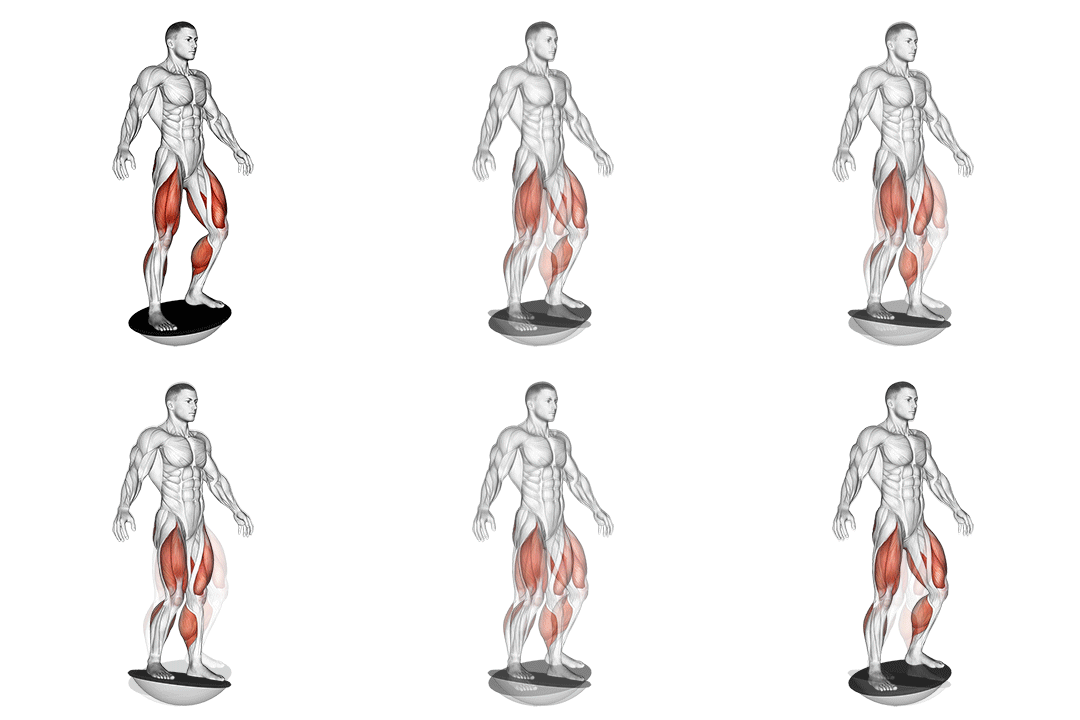
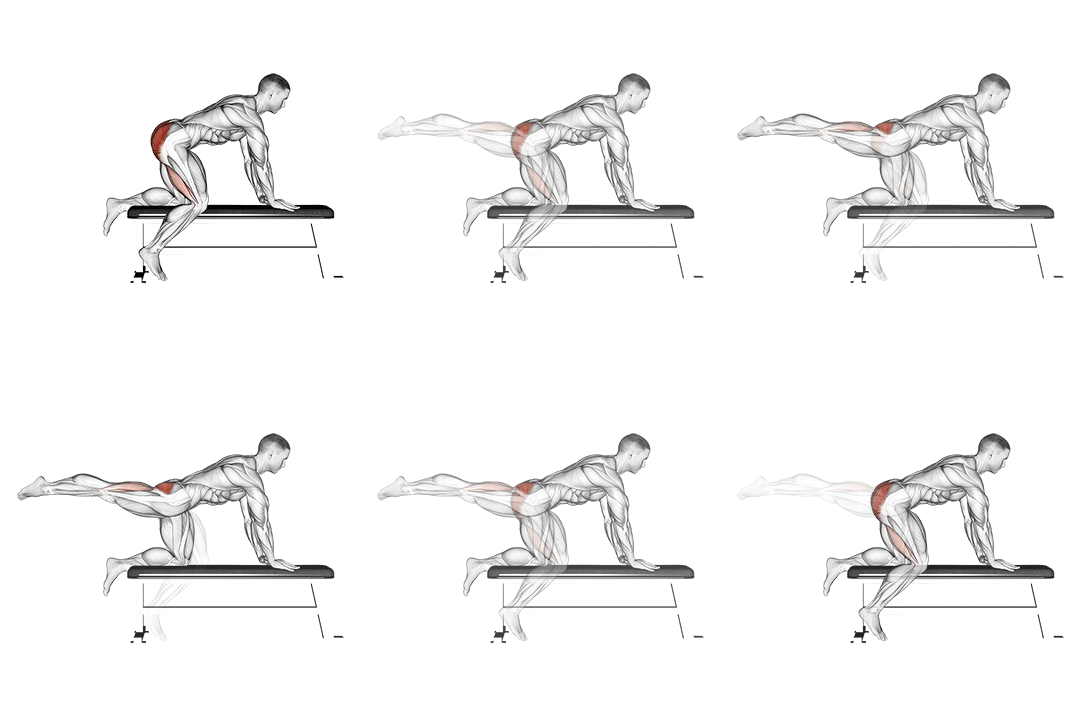
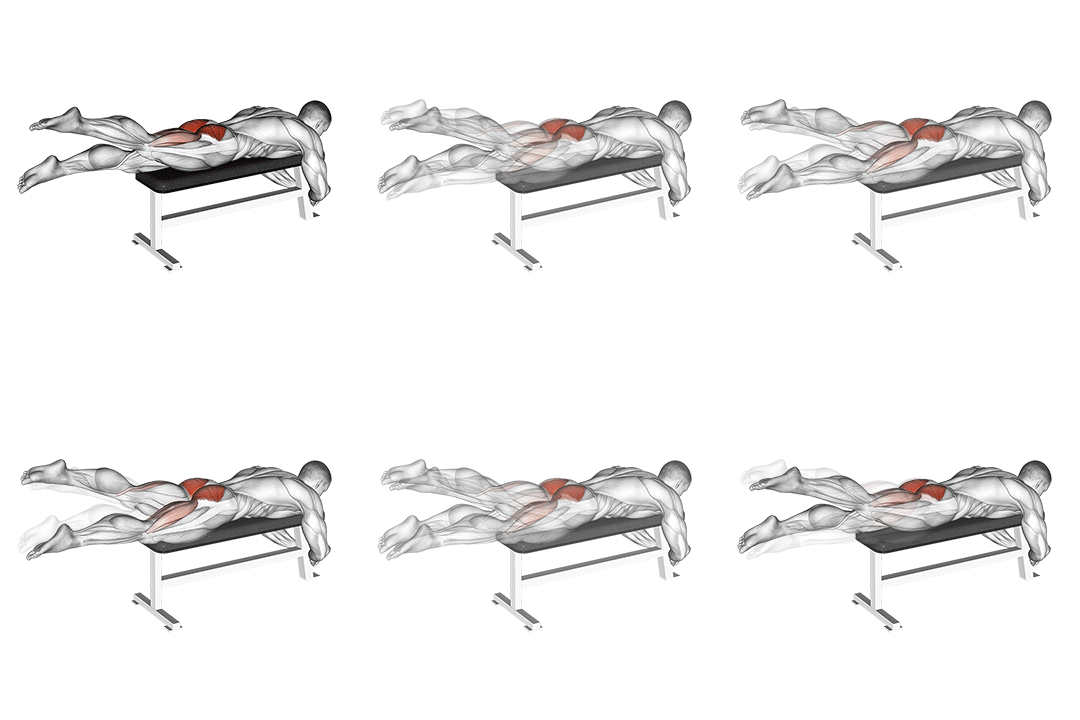
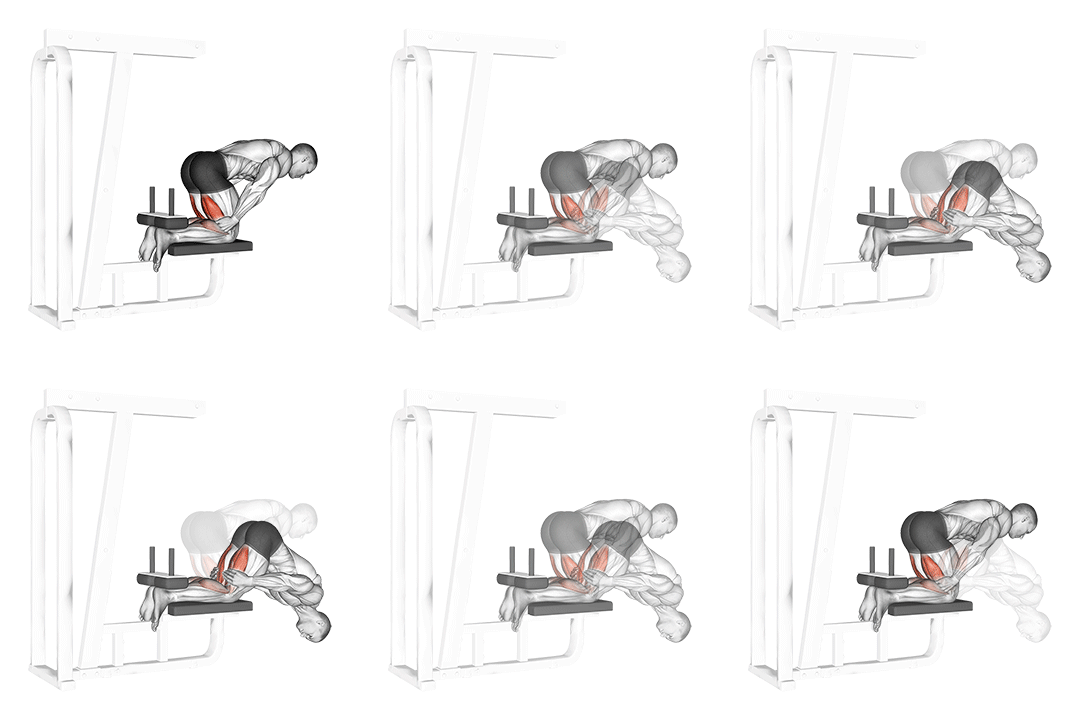
One Leg Squat
advanced strength exercise · body weight · targets glutes
- Body part
- upper legs
- Primary target
- glutes
- Equipment
- body weight
- Difficulty
- advanced
The one leg squat is the broad family of single-leg squat variations — including the pistol squat, the Bulgarian split squat, the shrimp squat, and others. The defining feature is that one leg bears the body's full weight (or nearly so) through the squat range while the other leg is held off the ground in some position. The result is unilateral lower-body strength training that exposes asymmetries and demands more balance, mobility, and core control than any bilateral squat variation. This broad-category exercise covers a progression that takes most adults 6-18 months to traverse. Beginners typically start with assisted single-leg squats (using a pole, doorframe, or TRX strap for partial support), progress to box pistol squats (squatting down to a low bench), then to Bulgarian split squats (back foot elevated), and eventually to full pistol squats with no assistance. What makes the one-leg squat family worth the time investment is that it scales infinitely without requiring weights. From assisted variations for absolute beginners to weighted pistol squats for advanced athletes, the same basic pattern drives unilateral leg strength for years. For home trainers who want serious lower-body strength without barbells, mastering the one-leg squat progression is the highest-leverage path available.
Why train the One Leg Squat?
- Trains unilateral lower-body strength to a higher level than any bilateral squat can achieve at body weight.
- Reveals and corrects strength asymmetries that bilateral exercises hide.
- Develops hip and ankle mobility through the demanding deep range.
- Builds balance and proprioception that transfers to almost every sport.
- Provides clear progression milestones (assisted, box, Bulgarian, full) that motivate years of training.
- Requires no equipment for most variations — works anywhere with floor space.
How to do the One Leg Squat: step by step
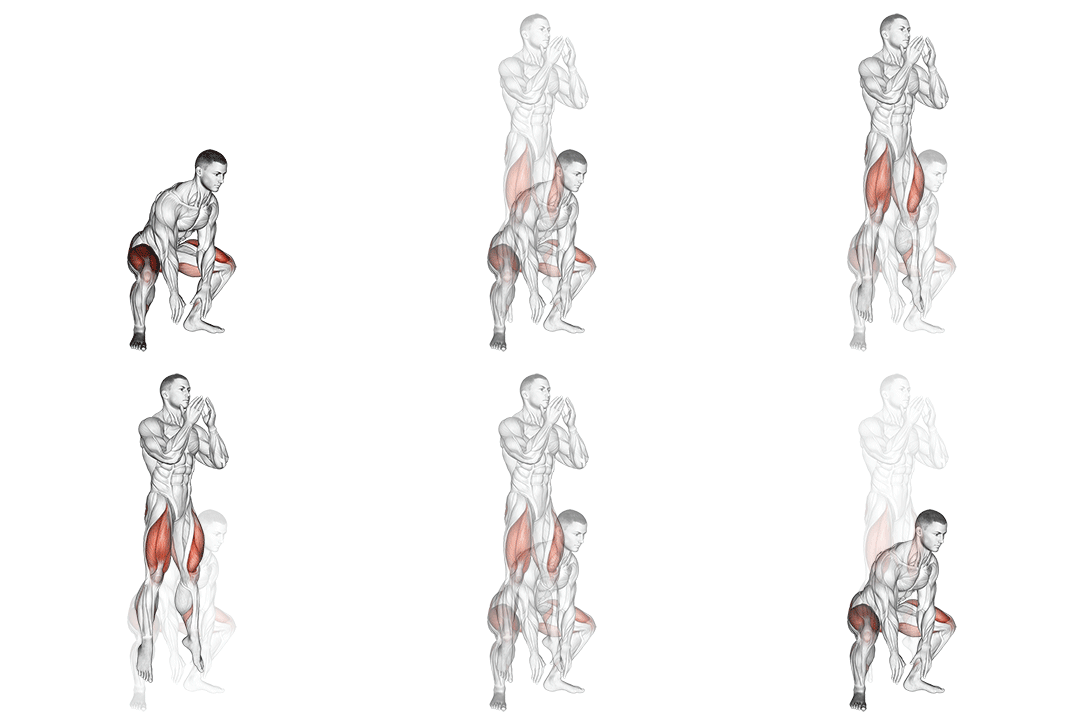
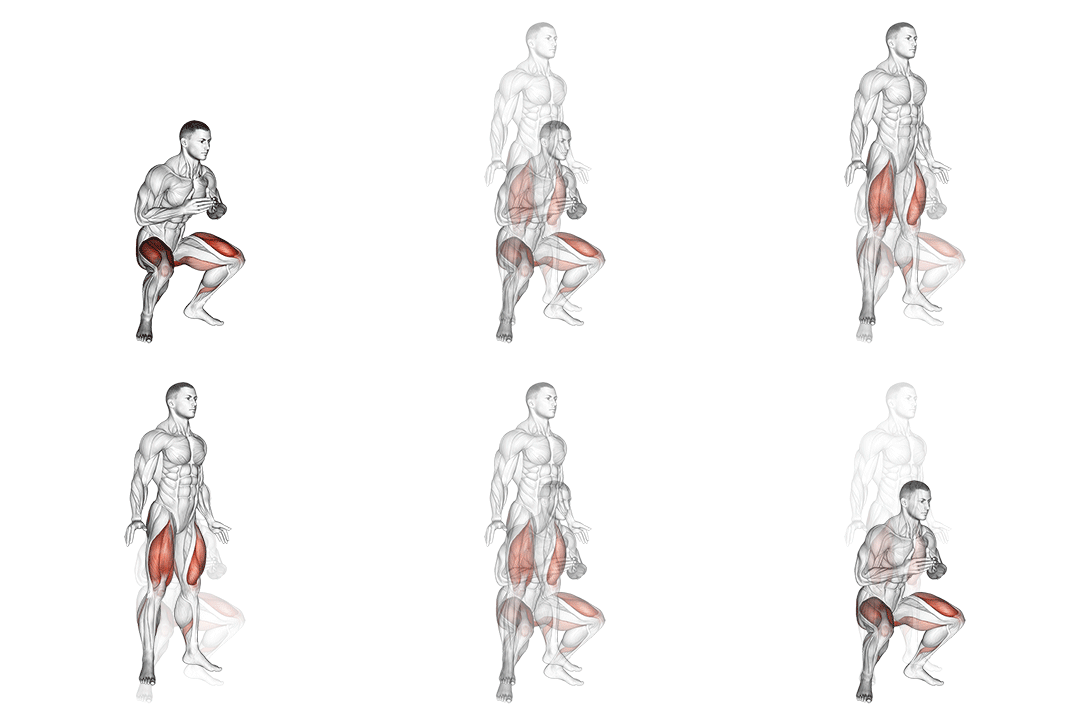
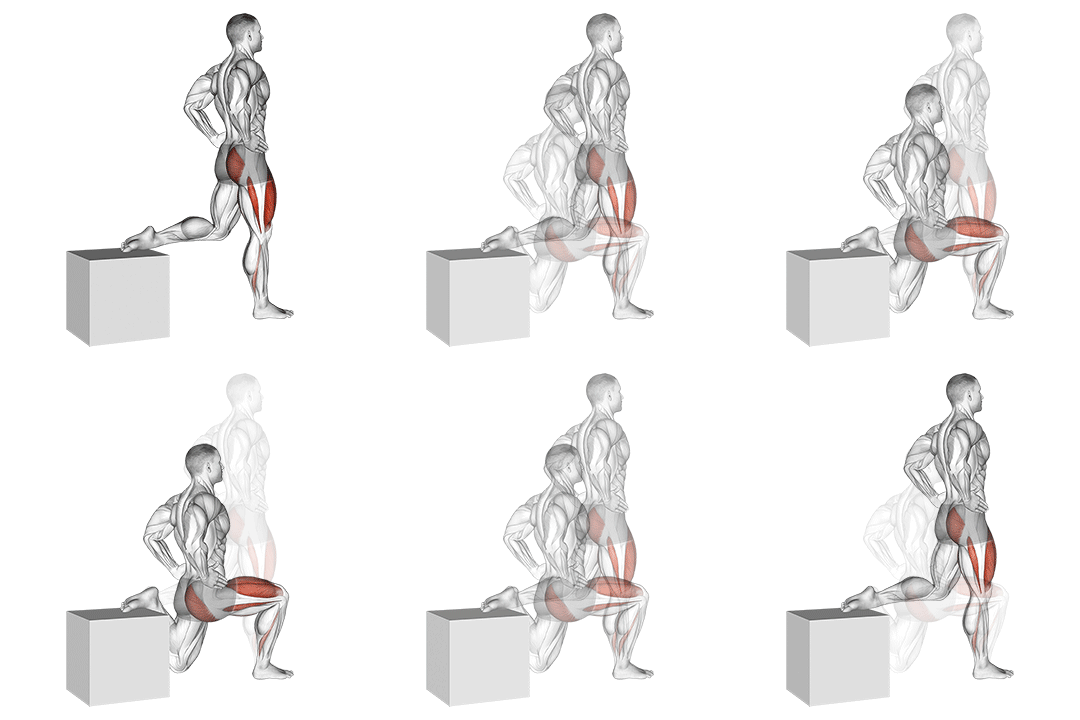
- 1Stand with your feet shoulder-width apart.
- 2Extend one leg forward, keeping it off the ground.
- 3Bend your standing leg and lower your body down as if sitting back into a chair.
- 4Keep your chest up and your back straight.
- 5Push through your heel to return to the starting position.
- 6Repeat with the other leg.
Muscles worked
Primary
glutes
Secondary
quadriceps, hamstrings, calves
Common mistakes to avoid
Letting the heel lift off the floor at the bottom
If your heel rises during the descent, ankle mobility is the limiting factor. Use a 1/2-inch heel wedge while you build dorsiflexion through wall ankle rocks. Going up on the toes shifts load forward and stresses the knee.
Letting the knee track inward
Knee valgus (collapsing inward) is dangerous on a single leg under full body weight. Drive the knee out in line with the toes throughout the descent and ascent — even when fatigued.
Rounding the lower back to reach depth
If the lower back rounds at the bottom, hip mobility hasn't caught up to the depth. Don't go all the way down — work the depth you can hold with neutral spine. Build the range over months.
Skipping prerequisite progressions
Most failed one-leg squat attempts come from people who couldn't yet do clean Bulgarian split squats or assisted single-leg squats. Don't try the full version until you have the prerequisites — rushing usually leads to knee or hip injury.
Choosing the wrong variation for your level
Trying a full pistol squat when you can only do assisted single-leg squats teaches bad form. Pick the variation where you can do 3 sets of 5-8 strict reps per leg — that's the right level. Progress when you exceed that range.
Easier and harder variations
Easier
Assisted one-leg squats (holding a pole, doorframe, or TRX for partial support). Box single-leg squats (squatting down to a low bench so you can briefly sit). Bulgarian split squats (back foot elevated on a bench, front leg doing most of the work).
Harder
Full pistol squats with no assistance. Add weight (a dumbbell or kettlebell at the chest). Slow tempo (5 seconds down, 1-second pause, 1 second up). Or progress to deficit pistol squats (standing on a step for added range).
Alternative exercises
Pistol squat
The full unassisted version with the non-working leg extended forward. The classic one-leg squat advanced milestone.
Bulgarian split squat
Most accessible serious one-leg squat variation. Back foot elevated, both legs working but front doing most of the work.
Shrimp squat
Single-leg squat variation with the non-working leg held behind the body. Different mobility demand than pistols.
How to program the One Leg Squat into your training
One-leg squat training is low-rep, high-effort, and demands careful programming. The variation you use should match your current strength level. For beginners (assisted variations): 3-4 sets of 6-10 reps per leg with 60-90 seconds rest, twice per week. Reduce assistance gradually over weeks. For intermediate (Bulgarian split squats or partial pistols): 3-4 sets of 6-10 reps per leg with 90-120 seconds rest, twice per week. For advanced (full pistols or weighted variations): 4-5 sets of 3-6 reps per leg with 2-3 minutes rest, twice per week. In a balanced lower body session: 4 sets of 8 bilateral squats (bilateral strength), 3 sets of 6 one-leg squats per leg (unilateral), 3 sets of 12 single-leg glute bridges per leg (posterior chain), 3 sets of 30-second front planks (core). For athletes building toward pistols, alternate weeks: Week 1 emphasize the strength side (heavy Bulgarian split squats, 4 sets of 6 per leg), Week 2 emphasize the skill side (negative pistols, 3 sets of 3-5 per leg with slow descents). Always pair one-leg squat work with hip and ankle mobility (deep squat hold, couch stretch, calf stretches). The ranges of motion required recover faster with consistent mobility maintenance.
Recovery and frequency
One-leg squats are demanding on the standing-leg knee, hip, and the small stabilizing muscles around the ankle. 72 hours between dedicated sessions is the right cadence during the building phase. Patellar tendinopathy is the main injury risk — the front of the knee takes significant load through full range. If the knee starts feeling sore between sessions, reduce frequency and add knee-specific mobility work. Foam roll the quads, IT band, and glutes weekly. Sleep is the biggest recovery lever.
Frequently asked questions
How many sets and reps of one-leg squats should I do?
3-4 sets of 5-10 reps per leg, depending on which variation you're using. Adjust the variation difficulty so the last 2 reps feel hard within the set range.
How often should I train one-leg squats?
1-2 times per week with 72 hours between sessions. The standing-leg knee and hip take significant load that requires recovery.
How long does it take to learn a one-leg squat?
Most adults reach a clean unassisted one-leg squat in 6-18 months of consistent progression, depending on starting strength, body weight, and mobility.
Should I learn the Bulgarian split squat first?
Yes — Bulgarian split squats are the essential prerequisite for harder one-leg squat variations like pistols. Build to 3 sets of 8-10 strict Bulgarian split squats per leg before serious pistol training.
Are one-leg squats bad for the knees?
Done with proper progression and adequate recovery, no — they build knee strength. Done by attempting the full version before prerequisites, yes — patellar tendinopathy and IT band issues are common in rushed trainees.
What's the difference between a pistol squat and a one-leg squat?
The pistol squat is a specific type of one-leg squat with the non-working leg extended straight forward. 'One-leg squat' is a broader category that includes pistols, shrimps, Bulgarian split squats, and other unilateral squat variations.
Useful tools for this exercise
Build a workout with the One Leg Squat
Puna gives you guided bodyweight workouts you can do anywhere — no equipment, no gym, just structured progressions that build real strength.