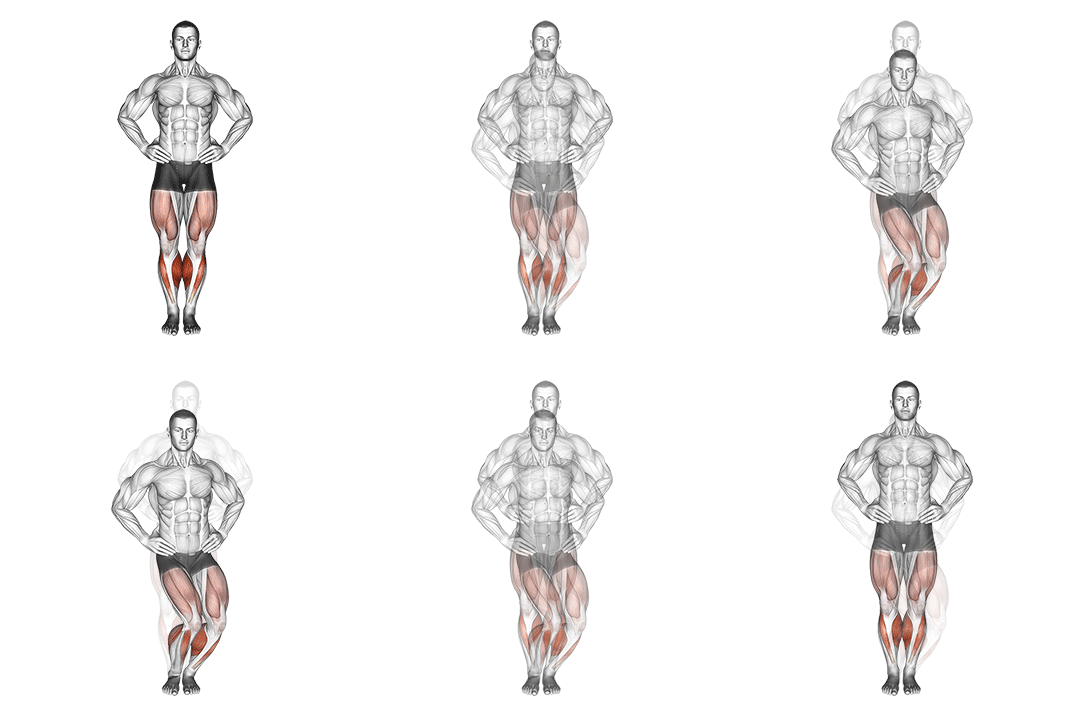
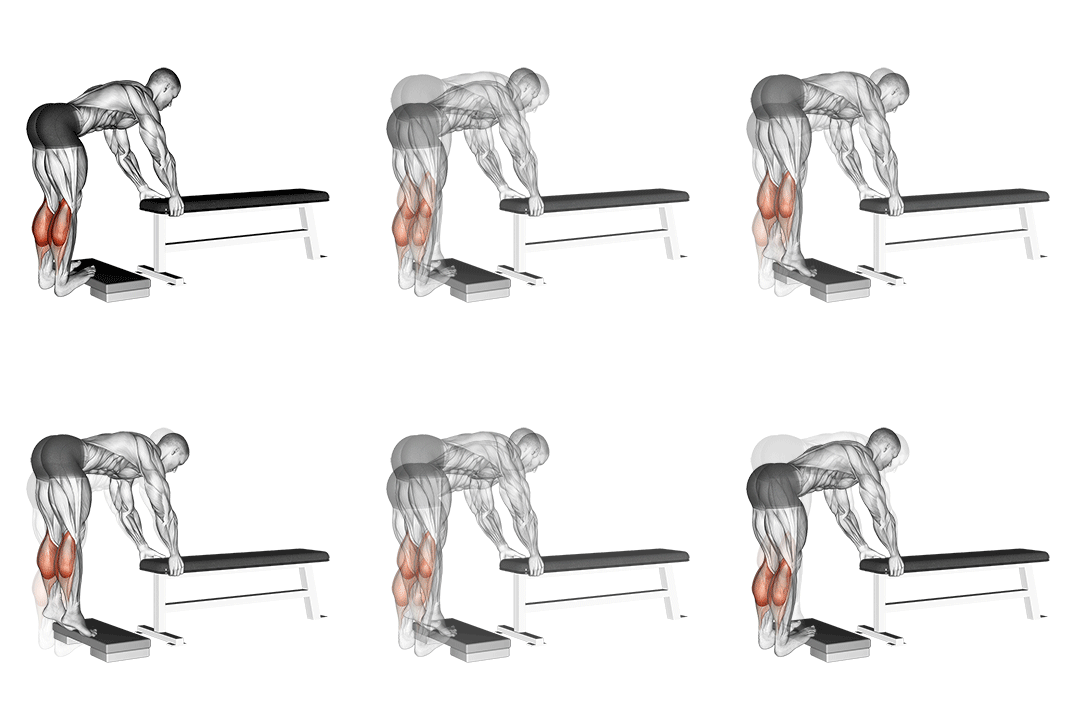
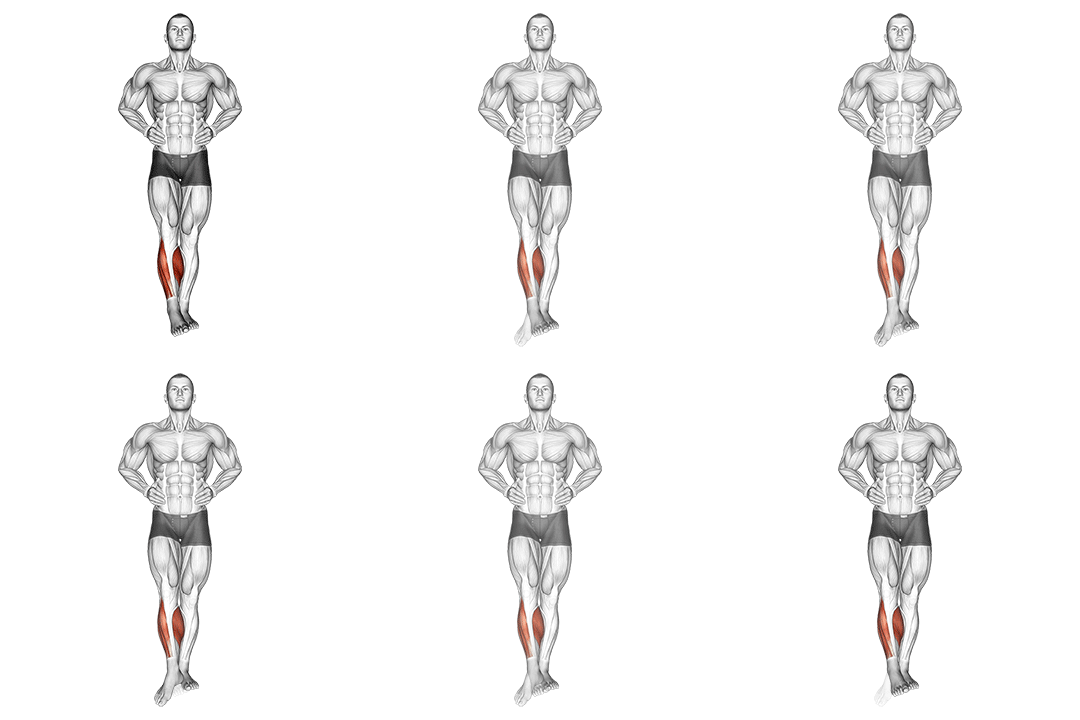
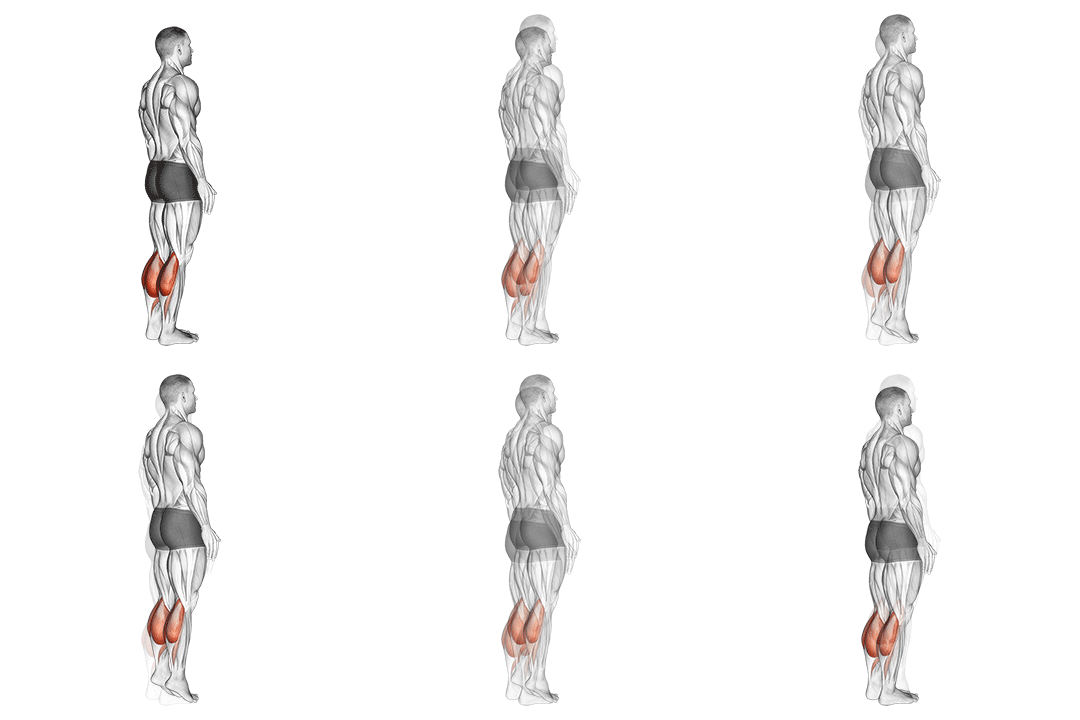
One Leg Floor Calf Raise
beginner strength exercise · body weight · targets calves
- Body part
- lower legs
- Primary target
- calves
- Equipment
- body weight
- Difficulty
- beginner
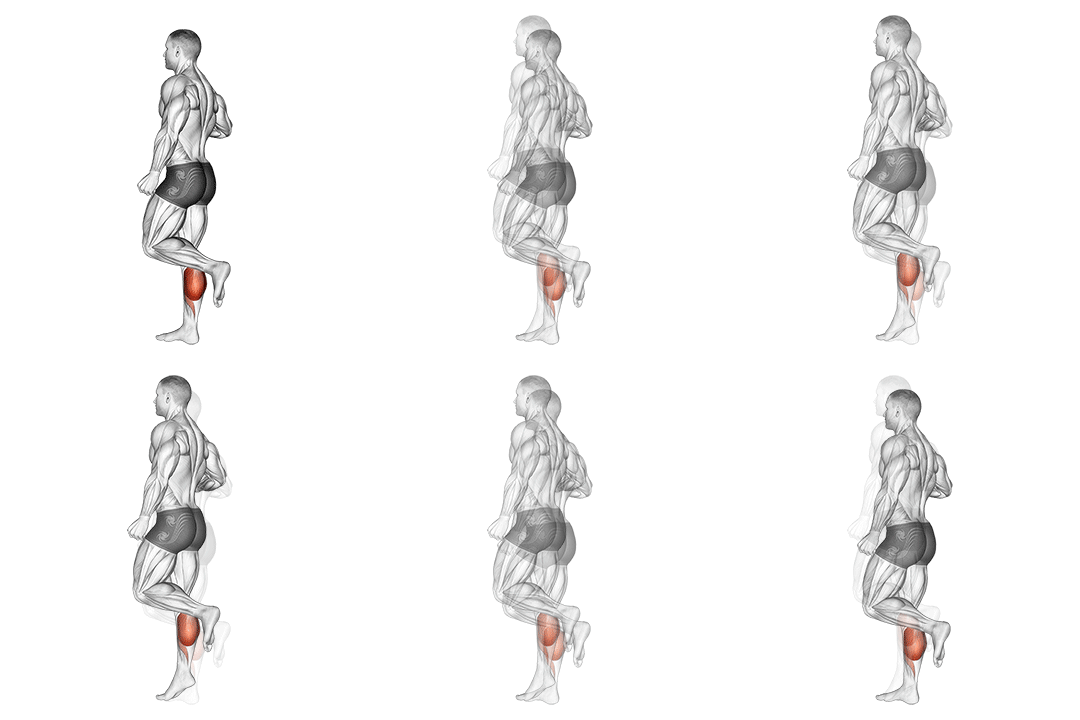
The one-leg floor calf raise is the flat-floor single-leg version of the classic calf raise — performed standing on one foot with the other leg lifted, raising the heel as high as possible, and lowering under control. Without the toe elevation that the donkey variation provides, this version trains the calf only through the upper portion of its working range. The result is a useful but suboptimal calf builder compared to elevated variations. This exercise sits in a specific niche. For trainees without access to a step, block, or staircase, the flat-floor single-leg raise becomes the default option for unilateral calf work. It's also useful for older adults or those with balance issues where the elevated position would be too unstable. As a beginner introduction to single-leg calf training, it serves as a stepping-stone before progressing to single-leg donkey raises which require both balance AND the additional stretch range of the elevated position. The core trade-off is the limited range of motion. Flat-floor calf raises only train the top 50-70% of the calf's working range — the bottom (stretched) portion is missing entirely because there's no elevation to allow the heel to drop below toe level. This matters because stretched-position loading drives more growth than top-only contraction. If a step or block is available, single-leg donkey raises are a better choice. If not, flat-floor single-leg raises do enough to build basic calf strength and size, especially with high enough volume. As a portable home exercise that requires literally no equipment except a wall for balance, it earns its place.
Why train the One Leg Floor Calf Raise?
- Provides single-leg calf training when no elevation surface is available.
- Improves balance and ankle stabilization through the unilateral position.
- Suitable for older adults or those with balance issues where elevated variations might be unsafe.
- Builds calf endurance through high-rep training, supporting walking and running gait.
- Requires no equipment beyond a wall for balance — usable in any home environment.
- Exposes left-right strength imbalances that two-legged calf work masks.
How to do the One Leg Floor Calf Raise: step by step
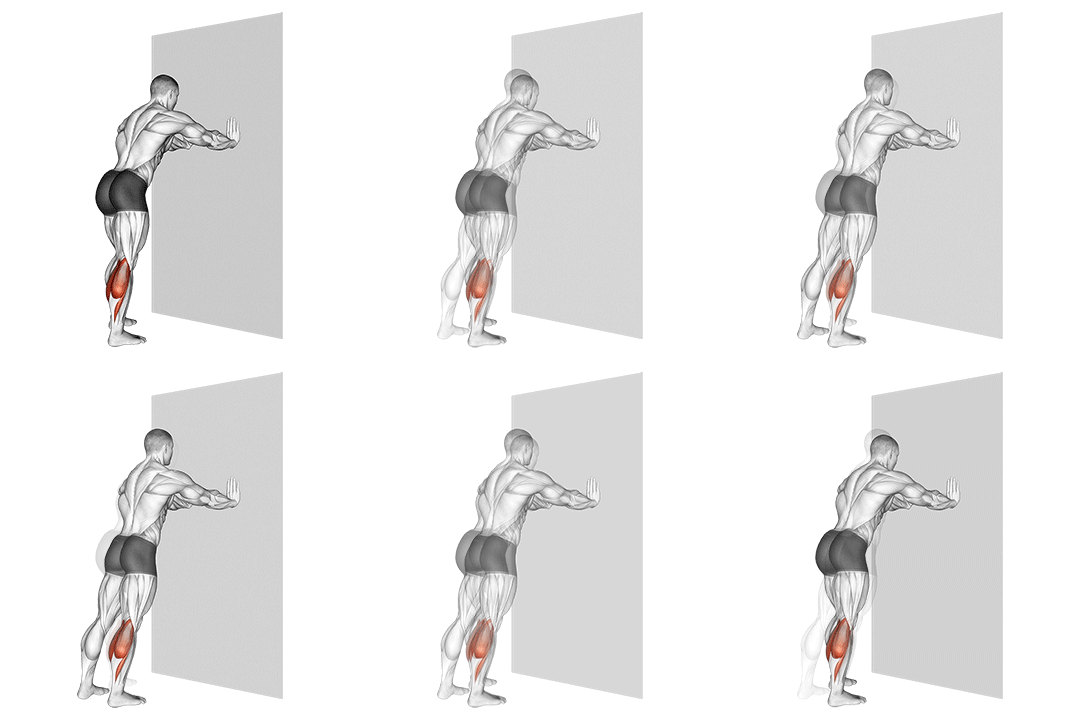
- 1Stand with your feet hip-width apart and place your hands on a wall or sturdy object for balance.
- 2Lift one foot off the ground and balance on the other foot.
- 3Slowly raise your heel off the ground, lifting your body up onto the ball of your foot.
- 4Pause for a moment at the top, then slowly lower your heel back down to the starting position.
- 5Repeat for the desired number of repetitions, then switch legs and repeat.
Muscles worked
Primary
calves
Secondary
ankles, feet
Common mistakes to avoid
Cutting range at the top
Many trainees stop short of full plantarflexion at the top — barely lifting the heel before lowering. The peak contraction is where the calf works hardest. Drive the heel up as high as possible on every rep, holding the peak position for 1 second.
Bouncing instead of contracting
Calves are full of fast-twitch fibers that respond to bouncing — but only after foundational strength is built. Slow, deliberate reps with a 2-3 second lowering and a pause at the top develop the muscle better than quick reps.
Leaning heavily on the wall
Resting body weight on the wall takes load off the working calf and turns the exercise into a balance drill. The hand should be on the wall for steadiness only, not weight-bearing. If you're depending on the wall to hold yourself up, regress to two-legged variations.
Skipping a step or block when one is available
If a step, sturdy block, or staircase is nearby, single-leg donkey raises are simply a better exercise — they train the full calf range rather than just the upper portion. Use this exercise when no elevation is available, not when one is at hand.
Stopping at fatigue too early
Calves can take many more reps than you'd expect. Pushing sets to 20-30 reps before form breaks down is appropriate — stopping at 12 because they 'feel worked' under-stimulates the muscle and slows progress.
Easier and harder variations
Easier
Use both feet (two-legged calf raise) until 25-30 reps feel easy, then progress to single-leg work. Or use the non-working leg for assistance — touch the toe lightly to the floor to provide partial support during the rep.
Harder
Add weight by holding a dumbbell, kettlebell, or backpack in the same-side hand. The added load drives meaningful calf development. Or progress to single-leg donkey calf raises (toes elevated on a step) for the additional range of motion. Eventually, weighted single-leg donkey raises produce serious calf development.
Alternative exercises
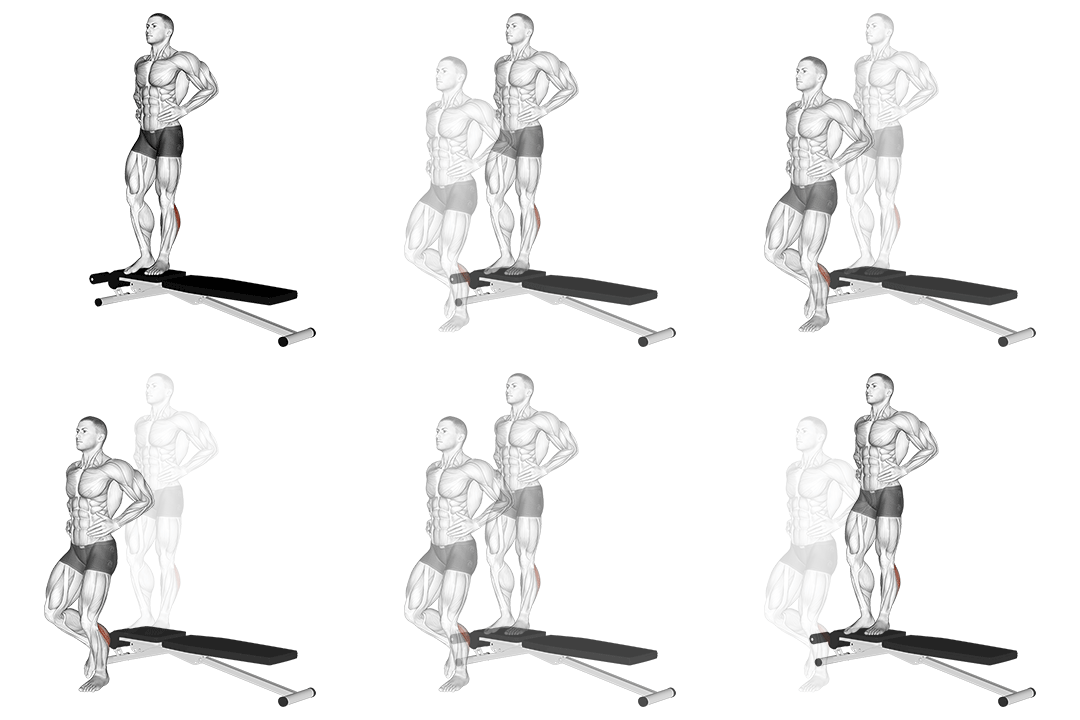
Single-leg donkey calf raise
Same single-leg work but with toes elevated for full calf range. Significantly better for size and strength gains. Use whenever a step or block is available.
Two-legged calf raise
Easier regression. Use when the single-leg version is too demanding, or as accessory volume after primary single-leg sets.
Jump rope (single leg)
Trains the calves dynamically on one leg at a time. Different stimulus (reactive) but excellent complement for athletic calf training.
How to program the One Leg Floor Calf Raise into your training
The one-leg floor calf raise serves as primary calf training when no elevation surface is available, and as accessory volume otherwise. Sets and reps: 4 sets of 15-25 reps per leg with 30-45 seconds rest. Total weekly volume of 150-250 reps per leg drives most adaptation. The flat-floor limitation means more reps are needed than with elevated variations to drive equivalent stimulus. Frequency: 3-4 times per week for size and strength goals. The calves recover fast and tolerate high frequency. A simple split: 2 dedicated calf sessions per week (4 sets of 20 single-leg floor raises) plus 2 'add-on' sessions (3 sets of 15 reps after lower-body training). For general fitness: 3 sets of 15-20 reps per leg, 2-3 times per week, is enough to maintain calf health and basic strength. Combine with walking or running for compound benefit. For older adults focused on balance and fall prevention: 3 sets of 10-15 reps per leg, 3 times per week. The single-leg position trains balance alongside calf strength. Pair with single-leg balance drills for compound benefit. For runners: add 4 sets of 15-20 reps per leg after each easy run, 3 days per week. The increased calf strength reduces shin splint risk and improves running economy. If a step or block is available, prioritize single-leg donkey raises over flat-floor single-leg raises. The full range of motion drives more growth and trains better calf development. Use this exercise primarily when elevation isn't available.
Recovery and frequency
Calves recover faster than almost any other muscle group. 24-48 hours between sessions is enough for most people, and many tolerate daily training without issue. The main soreness signal to watch is in the Achilles tendon area, not the calf belly itself. Tendon soreness or stiffness suggests the volume jumped too fast — back off slightly and let the tendon adapt over 1-2 weeks. Standard muscle soreness in the calf belly is normal and fades within 48 hours. No special protocols needed beyond sleep, hydration, and reasonable hamstring mobility. Daily ankle and calf mobility work supports recovery between hard training sessions.
Frequently asked questions
How many sets and reps of one-leg floor calf raises should I do?
4 sets of 15-25 reps per leg with 30-45 seconds rest, 3-4 times per week. The flat-floor limitation means slightly more reps are needed compared to elevated variations.
How often should I do this exercise?
3-4 times per week is the sweet spot for growth. Calves recover fast and tolerate frequent training.
Floor calf raise vs donkey calf raise: which is better?
Donkey raises (toes elevated) are significantly better for calf development due to the deeper range of motion. Use floor calf raises when no elevation is available; otherwise prioritize donkey variations.
Will this build calves?
Yes, with adequate volume and frequency, but more slowly than elevated variations. The limited range of motion means more total reps are needed to drive equivalent stimulus. Most trainees see noticeable change within 8-12 weeks of consistent practice.
When should I progress to single-leg donkey raises?
As soon as a step or block becomes available — even a 2-inch elevation provides meaningfully better calf training. There's no advantage to staying with flat-floor variations once an elevation surface is at hand.
Can I do this as a daily exercise?
Yes for most people. Calves recover quickly and tolerate daily training. Keep volume per session moderate (3-4 sets) if you train daily, rather than ramping each session into a max-volume burnout.
Useful tools for this exercise
Build a workout with the One Leg Floor Calf Raise
Puna gives you guided bodyweight workouts you can do anywhere — no equipment, no gym, just structured progressions that build real strength.