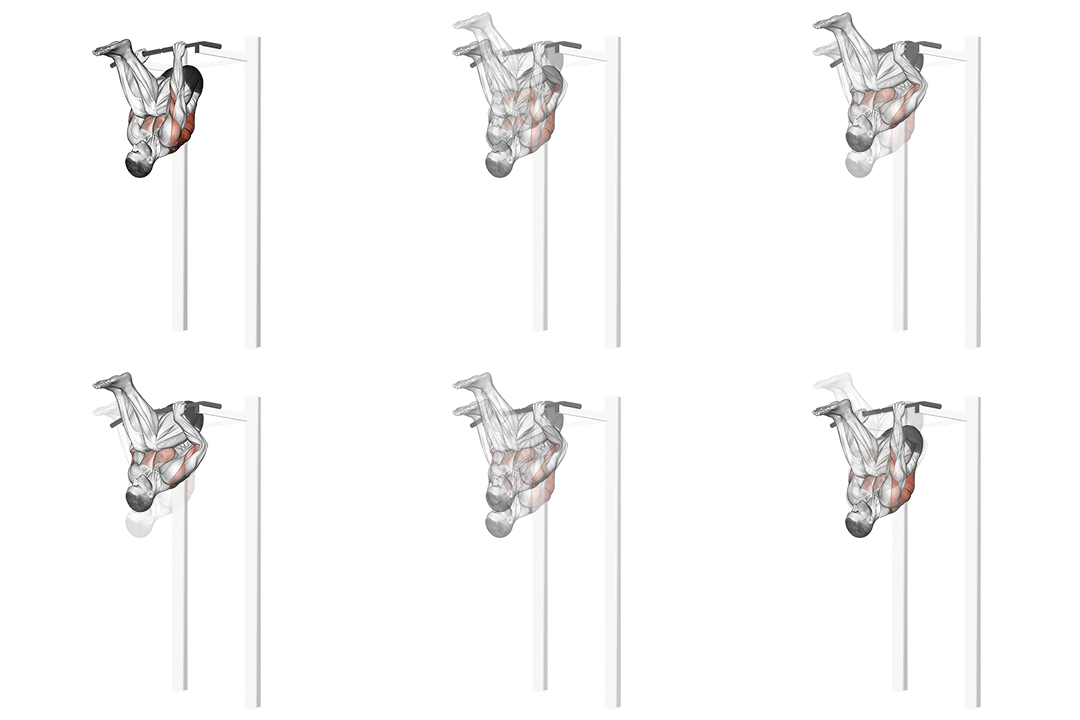
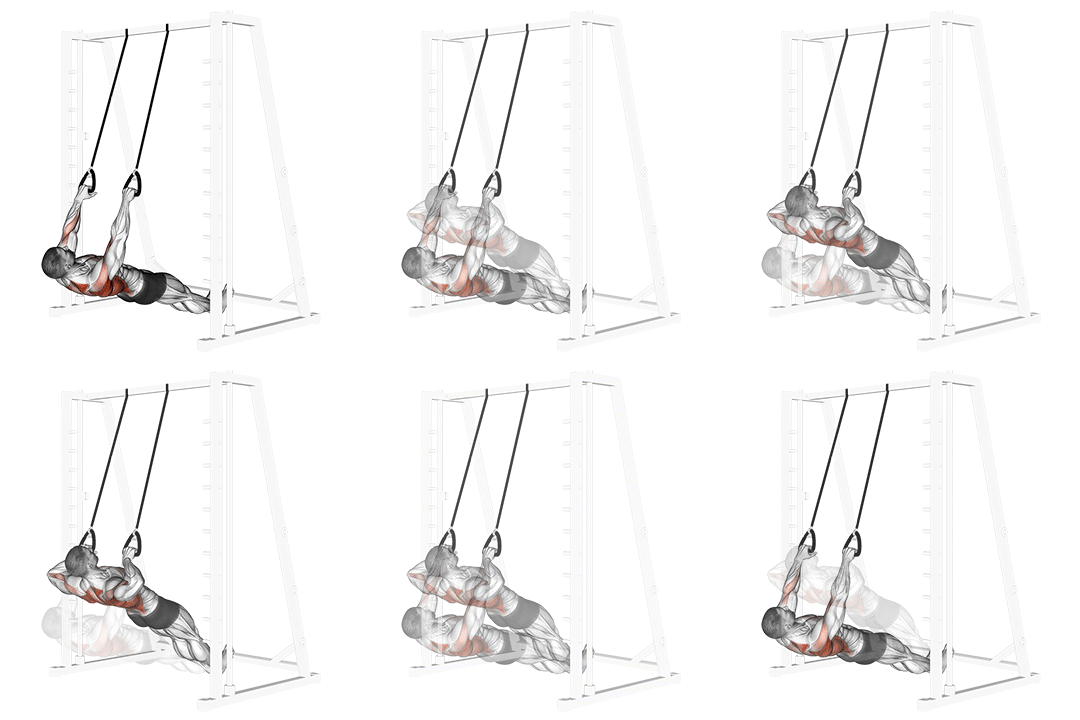
One Arm Chin-up
advanced strength exercise · body weight · targets lats
- Body part
- back
- Primary target
- lats
- Equipment
- body weight
- Difficulty
- advanced
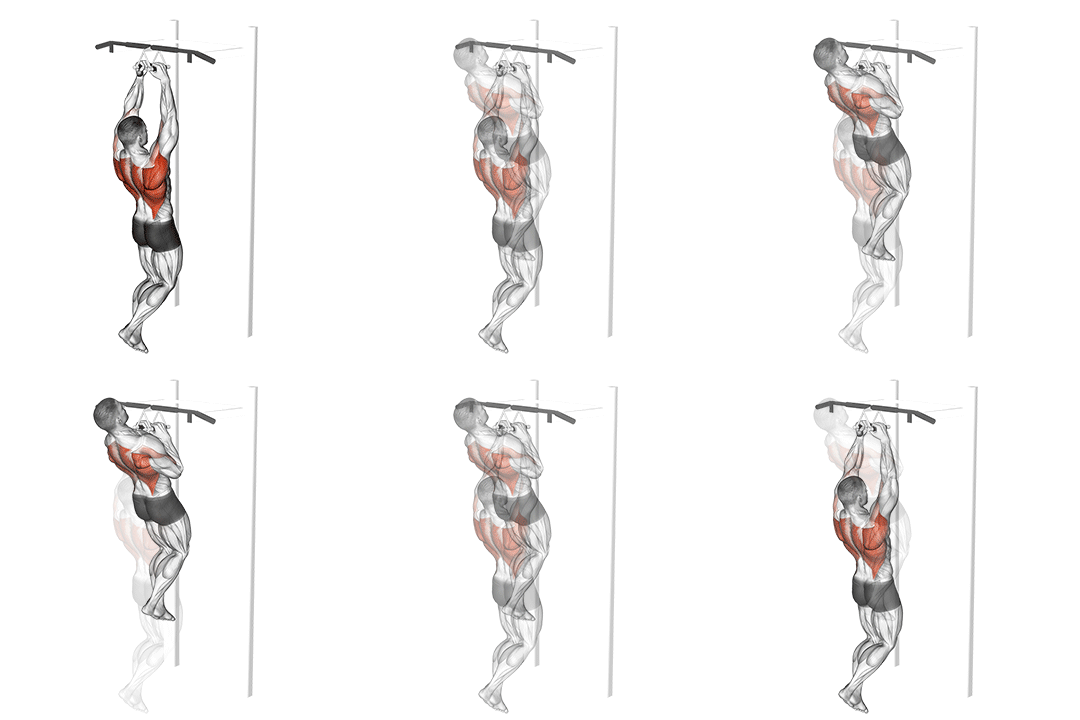
The one-arm chin-up is the holy grail of bodyweight pulling — a single-arm pull from full extension with the chin clearing the bar, performed without any momentum or assistance. The exercise demands such extreme strength that few trainees ever achieve it, even after years of dedicated training. For those who do, the one-arm chin-up represents the pinnacle of bodyweight pulling capability and a level of relative strength that places them in elite company. The strength prerequisites are intense. To attempt one-arm chin-ups productively, you should be able to do 15+ strict standard chin-ups, 12+ chest-to-bar pull-ups, and have spent significant time training assisted one-arm progressions (archer chin-ups, side-to-side chin-ups, weighted chin-ups). Without that base, attempting one-arm work produces shoulder injury rather than progress. The progression typically takes 2-5 years of dedicated bodyweight training, sometimes longer, and many trainees never reach it regardless of effort. What the description in the data suggests — gripping the bar with one hand while the other holds the wrist for support — isn't really a one-arm chin-up; it's an assisted variation where the supporting arm bears some load. The true one-arm chin-up uses only one hand on the bar with the other arm hanging free or held to the side. The variation in the data is a useful prerequisite drill for working toward the full skill, but conflating it with the actual one-arm chin-up obscures the difference. For programming purposes, treat this as 'assisted one-arm chin-up' regardless of name.
Why train the One Arm Chin-up?
- Builds the most extreme single-arm pulling strength achievable with bodyweight.
- Develops asymmetric load tolerance that translates to climbing, gymnastics, and athletic contexts.
- Provides clear progression pathway that can take years to fully achieve.
- Trains shoulder stability under unilateral maximum load.
- Carries over to one-arm push-ups, levers, and other elite bodyweight skills.
- Demonstrates exceptional relative strength relative to bodyweight.
How to do the One Arm Chin-up: step by step
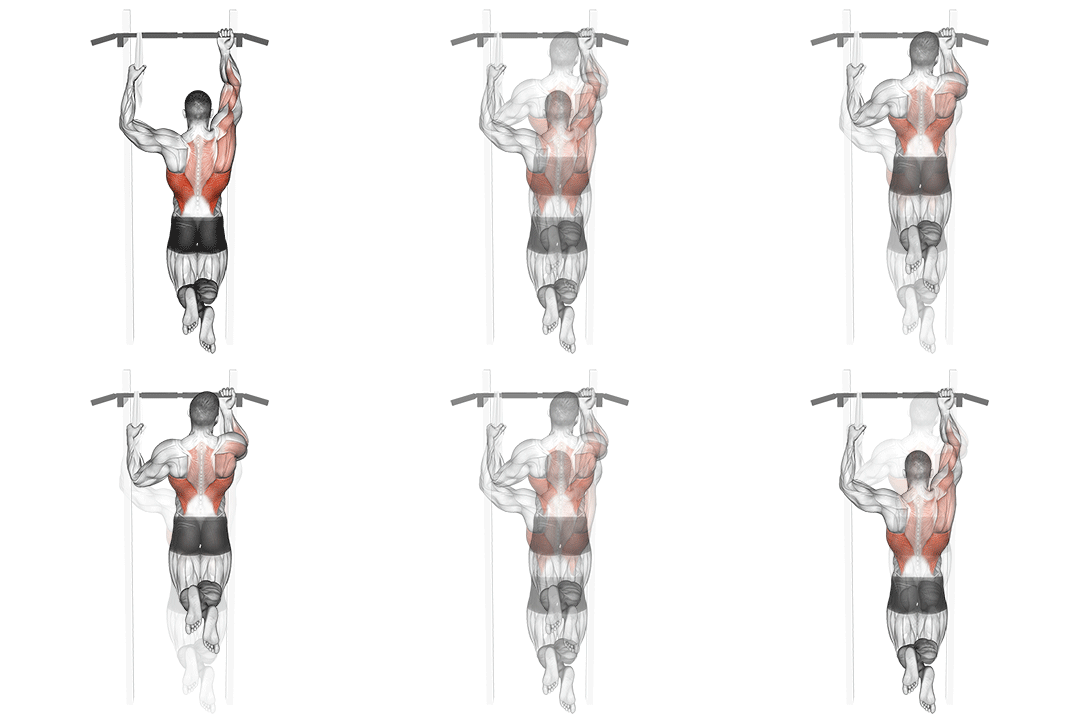
- 1Stand facing a pull-up bar with your feet shoulder-width apart.
- 2Reach up and grab the bar with an underhand grip, with one hand gripping the bar and the other hand holding your wrist for support.
- 3Hang from the bar with your arm fully extended, keeping your body straight and your core engaged.
- 4Pull yourself up towards the bar by bending your elbow and squeezing your back muscles.
- 5Continue pulling until your chin is above the bar, then slowly lower yourself back down to the starting position.
- 6Repeat for the desired number of repetitions, then switch arms and repeat.
Muscles worked
Primary
lats
Secondary
biceps, forearms
Common mistakes to avoid
Insufficient prerequisites
Most failed one-arm chin-up attempts come from trainees with inadequate base strength. Build to 15+ strict chin-ups, 12+ chest-to-bar pull-ups, and significant assisted unilateral work before genuine one-arm attempts.
Using the supporting arm too much
If the assisting hand actively pulls during the assisted version, it's not really progressing toward one-arm work. The supporting hand should provide minimal stabilization, with the working arm doing the bulk of the pull.
Programming too aggressively
The advanced load demands significant recovery. More than 1-2 sessions per week of one-arm work produces accumulating shoulder stress and stagnation.
Skipping the assisted progressions
Side-to-side chin-ups → archer chin-ups → assisted one-arm chin-ups → full one-arm chin-ups. Each step takes months. Skipping steps almost always produces injury rather than progress.
Ignoring shoulder stability work
One-arm work loads the shoulder asymmetrically in ways that demand significant stability. Daily rotator cuff prehab, scapular control work, and band exercises support the demands. Without this, shoulder issues are nearly inevitable.
Easier and harder variations
Easier
Use a thicker band looped around the bar for assistance — the band reduces effective bodyweight. Or perform negative one-arm chin-ups (jump or use both arms to top, lower slowly with one arm). Or use the assisted version with the other hand holding the wrist as in the data description.
Harder
Progress to weighted one-arm chin-ups (vest or weight belt with plate). For most trainees, achieving the bodyweight one-arm chin-up alone is the lifetime goal; weighted progression beyond that is for elite specialists.
Alternative exercises
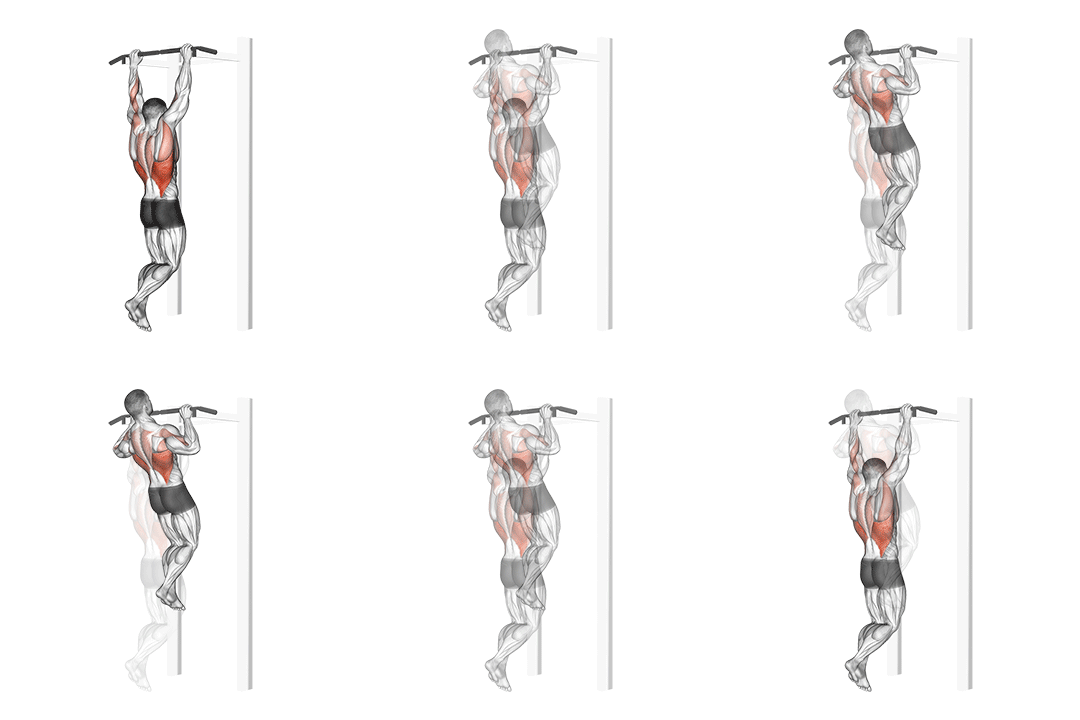
Archer chin-up
Bilateral grip with one arm bearing more load. The natural progression toward one-arm work.
Side-to-side chin-up
Earlier progression with bilateral grip but asymmetric loading. Use as preparation.
Weighted chin-up
Builds the absolute strength foundation that one-arm work rests on. Often more practical goal than full one-arm chin-up.
How to program the One Arm Chin-up into your training
One-arm chin-up training belongs in elite bodyweight progressions only. It earns no place in general fitness routines. Prerequisites: 15+ strict chin-ups, 12+ chest-to-bar pull-ups, healthy shoulders, 2+ years of consistent advanced pulling training, significant work in archer chin-ups and side-to-side variations. Sets and reps: 3-4 sets of 1-3 reps per side with 3-5 minutes rest. The extreme load means very low reps drive the stimulus. Total weekly volume of 6-15 reps per side. Frequency: 1-2 times per week. The shoulder needs 72-96 hours between sessions. For trainees building toward one-arm chin-ups: progression takes 2-5 years through the full path. Don't expect rapid progress; consistency over years is the predictor of success. In an advanced training session: place one-arm work early when freshness matters most. Sample order: warm-up, 4 sets of 2 assisted one-arm chin-ups per side, 4 sets of 6 standard chin-ups, 4 sets of 6 push-ups, 3 sets of 30-second hollow holds. Don't program one-arm chin-up work during deload weeks or when fatigued.
Recovery and frequency
One-arm chin-up training has very steep recovery cost. The shoulder absorbs extreme unilateral loading. 72-96 hours between sessions is the minimum. The shoulder is usually the limiting factor — anterior shoulder pain, popping, or persistent fatigue warrants attention. Long-term, regular one-arm chin-up training requires monthly deload weeks. Daily shoulder mobility and rotator cuff prehab are non-negotiable. Sleep, hydration, and protein intake all support the high recovery demand.
Frequently asked questions
How many sets and reps?
3-4 sets of 1-3 reps per side with 3-5 minutes rest. Total weekly volume of 6-15 reps per side.
How often?
1-2 times per week maximum. The shoulder needs 72-96 hours between sessions.
How long does this take to learn?
2-5 years of consistent advanced training. Many trainees never achieve true one-arm chin-ups regardless of effort. Patience and adequate prerequisites matter more than enthusiasm.
Is the assisted version the same exercise?
No — true one-arm chin-ups use only one hand on the bar. The assisted version with the other hand on the wrist is a useful prerequisite drill but should be labeled as such.
Is this safe for advanced trainees?
Yes when prerequisites are met and shoulder mobility is solid. Without prerequisites, this is one of the most likely exercises to produce shoulder injury in bodyweight training.
Should I aim for one-arm chin-ups?
Only if you genuinely want it and accept the multi-year commitment. For most trainees, weighted chin-ups produce more practical strength gains than chasing one-arm work. Choose based on goal.
Useful tools for this exercise
Build a workout with the One Arm Chin-up
Puna gives you guided bodyweight workouts you can do anywhere — no equipment, no gym, just structured progressions that build real strength.