One Arm Against Wall
beginner strength exercise · body weight · targets lats
- Body part
- back
- Primary target
- lats
- Equipment
- body weight
- Difficulty
- beginner
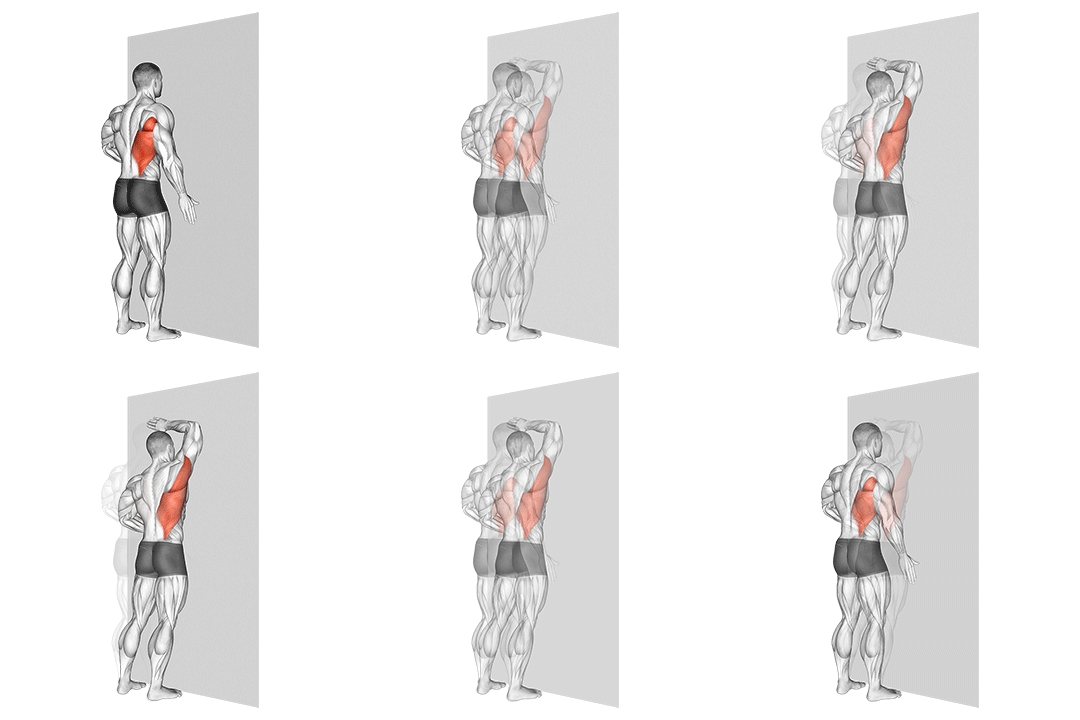
The one arm against wall is a low-load isometric lat activation drill that's better described as a learning exercise than a strength builder. Standing facing a wall with one arm extended forward and palm pressed against the surface, you lean the body forward while pressing through the palm, engaging the lats to resist the lean. The motion is small and the load is modest — it's primarily a mind-muscle connection drill rather than a serious strength exercise. This is one of the most useful drills for trainees who struggle to feel their lats engage during pulling exercises. Many beginners do pull-ups and rows with their arms doing the bulk of the work; the lats engage almost by accident rather than as primary movers. The wall press isolates the lat contraction in a low-load, low-fatigue context where you can focus entirely on feeling the muscle work. Once the connection is built, it transfers to pull-ups and rows where the lats become the deliberate driver of pulling force. Where this drill earns its place is as a learning tool and as a brief warm-up activation before pulling sessions. For 4-6 weeks of daily practice, it builds the mind-muscle connection that pays off in every other pulling exercise. After that, the drill becomes optional — its main value has been transferred to your other training. For pure strength building, the drill is too light to drive serious adaptation; for connection-building, it's hard to beat.
Why train the One Arm Against Wall?
- Builds the mind-muscle connection between intention and lat activation that transfers to pull-ups and rows.
- Provides a low-fatigue context to learn lat engagement without the pulling load of compound exercises.
- Useful as a brief warm-up activation before pull-ups, rows, or other pulling work.
- Accessible to absolute beginners, older adults, or anyone returning from injury.
- Costs nothing and requires only a wall — usable in any home or office environment.
- Pairs well with band pull-aparts as part of pre-pulling activation routines.
How to do the One Arm Against Wall: step by step
- 1Stand facing a wall with your feet shoulder-width apart.
- 2Extend one arm straight out in front of you and place your palm against the wall.
- 3Engage your core and lean your body forward, keeping your arm straight and your back flat.
- 4Slowly push against the wall with your palm, activating your lat muscles.
- 5Hold the position for a few seconds, then release and repeat with the other arm.
Muscles worked
Primary
lats
Secondary
shoulders, triceps
Common mistakes to avoid
Pressing with the chest instead of the lats
If you press through the palm using the chest and shoulders, the drill becomes a mini push-up rather than lat activation. Visualize pulling the arm down into the side of the body using the lat — even though the arm doesn't move. The mental cue is what creates the lat engagement.
Leaning too far forward
Excessive lean shifts the work to gravity and reduces lat involvement. The lean should be modest — just enough to require lat engagement to resist falling forward.
Holding the breath
Many trainees hold their breath during isometric work. Breathe slowly and deeply throughout the hold. Synchronized breathing supports the engagement quality.
Treating it as a strength exercise
If you're using this drill for strength, you're using the wrong tool. The load is too light for meaningful strength gain. Use this for mind-muscle connection; use pull-ups and rows for strength.
Skipping the contralateral practice
Always practice both sides equally. Asymmetric practice reinforces asymmetric connection patterns, which can produce uneven lat engagement during compound pulling.
Easier and harder variations
Easier
Reduce the lean — almost no forward lean, just gentle palm pressure. The minimum-effort version still teaches the mind-muscle connection without any fatigue.
Harder
Add a slow tempo (5-10 second holds) to increase isometric demand. Or perform with an actual resistance band attached to a stable point, providing real resistance. Eventually, transition to pull-ups and rows where the connection you've built shows up in productive strength training.
Alternative exercises
Band straight-arm pulldown
Similar lat activation drill with actual resistance. More effective once mind-muscle connection is built.
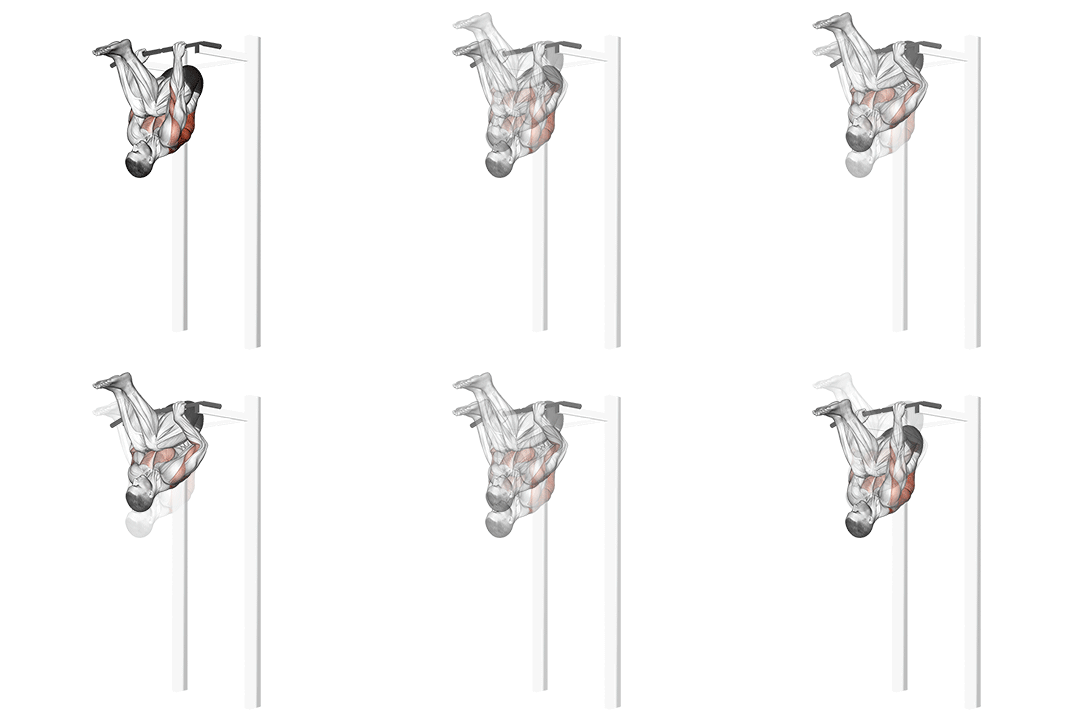
Wide-grip pull-up
The natural progression where lat engagement matters under real load. Use after building the connection through wall practice.
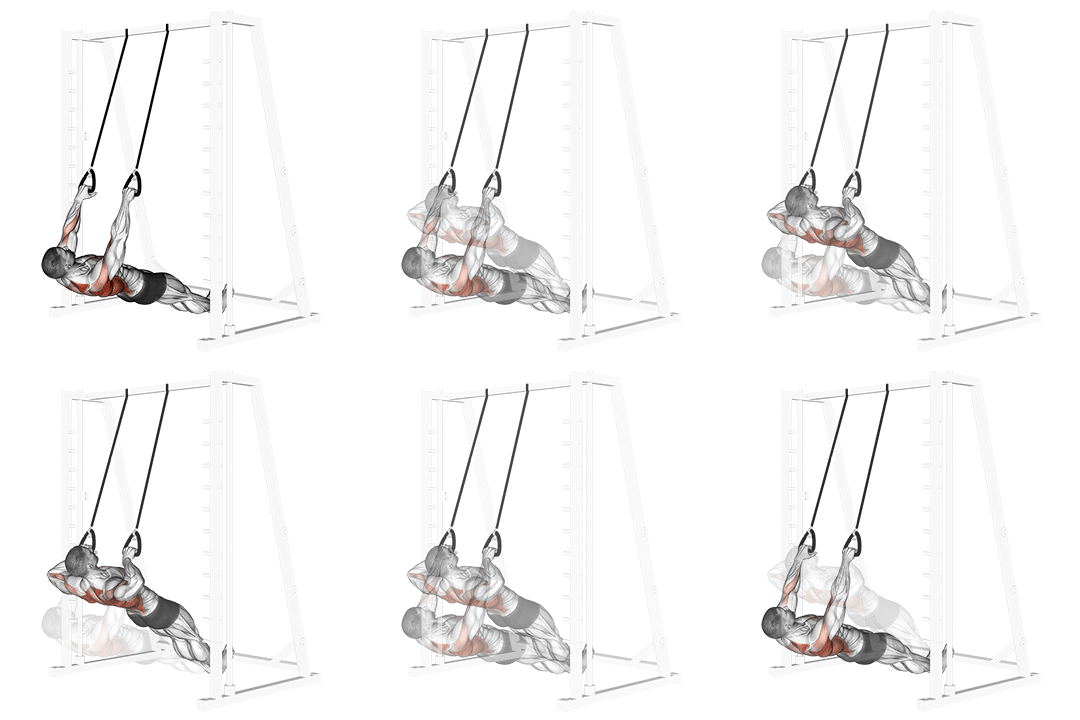
Inverted row
Bodyweight pulling with full lat engagement. Use for actual strength building once connection is built.
How to program the One Arm Against Wall into your training
The one arm against wall works as a learning drill or brief activation, not as a primary exercise. As a learning drill: 3 sets of 10-second holds per side, performed daily for 2-4 weeks. The goal is mind-muscle connection development. As a warm-up activation: 1-2 sets of 5-10 seconds per side before pull-up or row sessions. Brief activation primes the lats for engagement during the main work. Daily routine: 1-2 minutes total per day, distributed across 2-3 mini-sessions. The low intensity supports daily practice without recovery concerns. For beginners learning lat engagement: 2-3 weeks of daily practice usually establishes the connection. After that, the drill becomes optional warm-up work rather than necessary practice. For general fitness: this drill is largely optional once the connection is built. Move to actual strength training (pull-ups, rows, lat pulldowns) for ongoing back development. Don't use this as a substitute for compound pulling work. The light load won't drive strength adaptation; it's purely a learning tool.
Recovery and frequency
The one arm against wall has no recovery cost. The light isometric load produces minimal fatigue. Daily practice is safe and tolerable. No special warning signs apply. The exercise is gentle enough that it rarely produces issues even with frequent practice.
Frequently asked questions
How long should I hold this drill?
5-10 seconds per side, 2-3 sets per side. The brief duration is intentional — this is learning work, not strength work.
How often should I do this?
Daily for 2-4 weeks while building the mind-muscle connection. After that, occasional pre-pulling warm-up use only.
Will this build my back?
Honestly, no. The load is too light for strength adaptation. The drill builds mind-muscle connection that improves your other pulling exercises, not direct strength.
Why don't I feel my lats?
Most people don't initially. The whole point of the drill is learning to feel them. Visualize pulling the arm down into the side using the lat. With consistent practice, the connection builds within 2-4 weeks.
When should I move on from this drill?
Once you can feel your lats engage during pull-ups and rows — typically 2-4 weeks of daily practice. The connection transfers to your real training; the drill becomes optional.
Should I do this if I already feel my lats during pull-ups?
If you already feel the connection, the drill offers minimal additional benefit. Use it occasionally as warm-up activation but don't make it a primary practice.
Useful tools for this exercise
Build a workout with the One Arm Against Wall
Puna gives you guided bodyweight workouts you can do anywhere — no equipment, no gym, just structured progressions that build real strength.